Choosing the right workspace can make or break your productivity. The amenities a coworking space offers directly impact how well you work, how comfortable you feel, and whether you’ll actually want to show up each morning. Understanding what makes a workspace functional versus exceptional helps you make smarter decisions about where to invest your time and money.
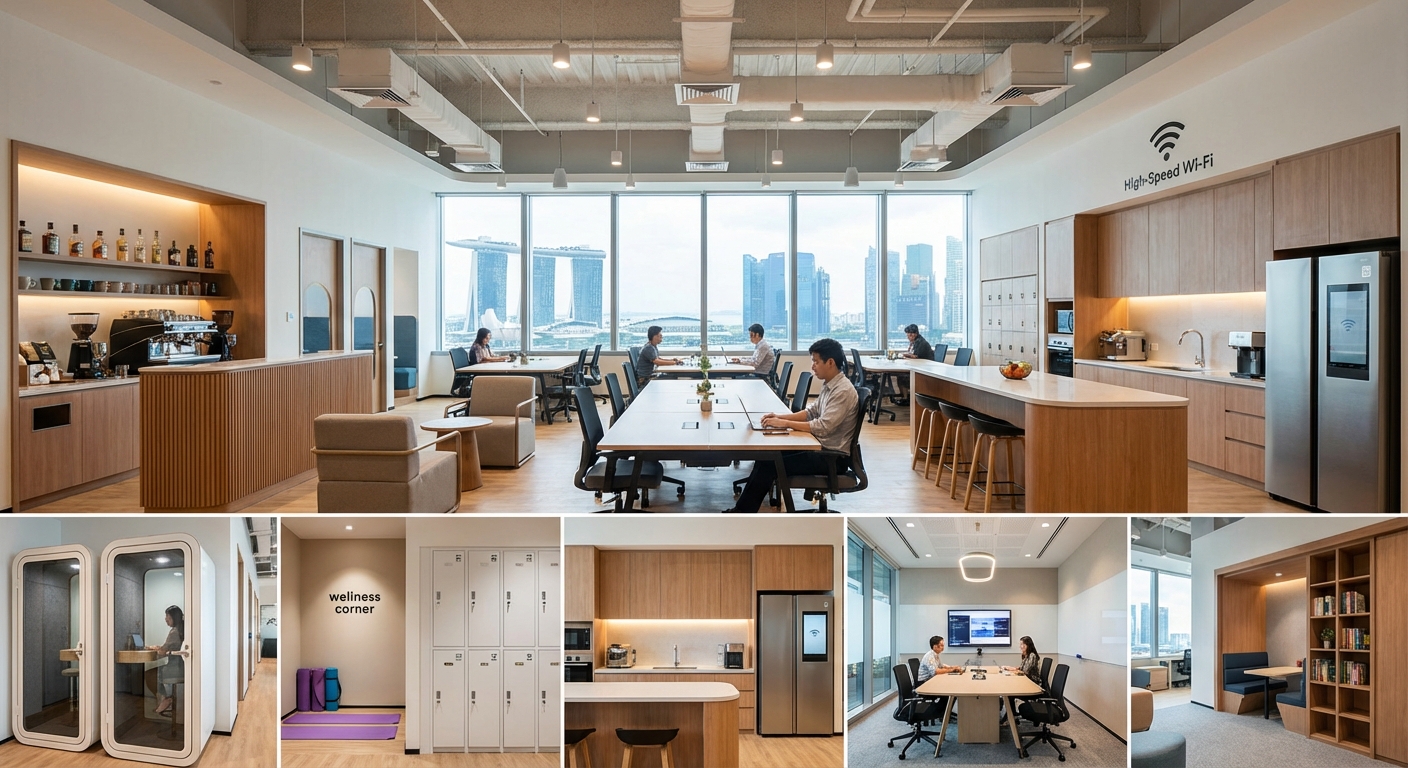
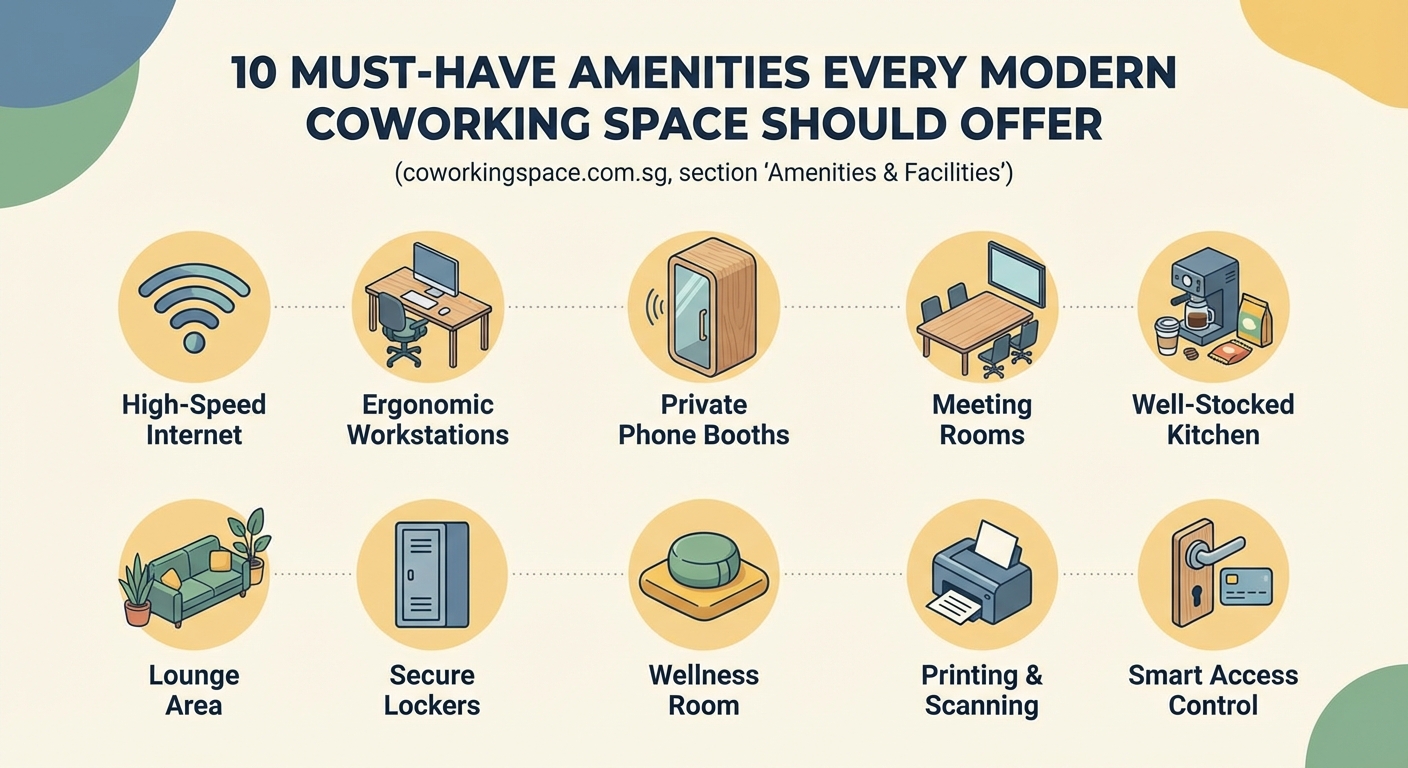
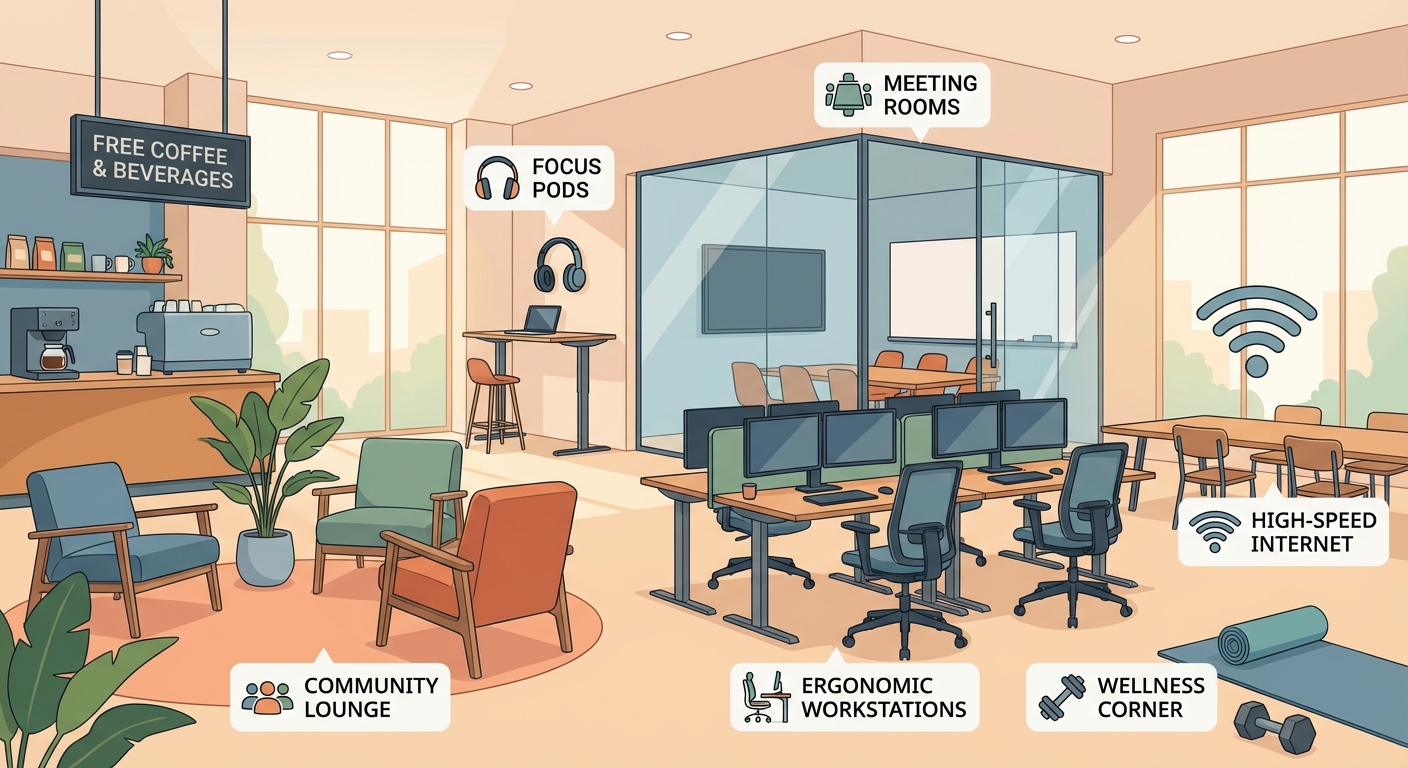
Modern coworking spaces need more than desks and WiFi to support productive work. Essential amenities include reliable high-speed internet, ergonomic furniture, private meeting rooms, professional-grade printing equipment, secure storage, quiet zones, kitchen facilities, community spaces, flexible membership options, and accessible locations. These features directly affect your daily comfort, workflow efficiency, and ability to collaborate effectively with clients and team members.
High-Speed Internet That Actually Works
Internet connectivity isn’t just an amenity anymore. It’s the foundation everything else sits on.
Most coworking spaces advertise WiFi, but the quality varies wildly. You need consistent speeds of at least 100 Mbps for basic work. Video calls, file uploads, and cloud-based tools require even more bandwidth.
Ask about backup connections before signing up. Power outages happen. Internet providers have technical issues. Spaces with redundant systems keep you online when problems arise.
Look for spaces that offer ethernet ports at dedicated desks. WiFi works fine for casual browsing, but wired connections provide more stability for bandwidth-intensive tasks.
Some spaces in Singapore now provide speeds exceeding 1 Gbps. That might sound excessive, but when 50 people share the same network during peak hours, you’ll appreciate the extra capacity.
The difference between adequate internet and excellent internet is the difference between constantly checking if your file uploaded and actually finishing your work.
Ergonomic Furniture That Supports Your Body
Cheap chairs and wobbly desks create more problems than they solve.
You’ll spend hours at your workspace. Poor posture leads to back pain, neck strain, and reduced focus. Quality ergonomic chairs with adjustable height, lumbar support, and armrests prevent these issues.
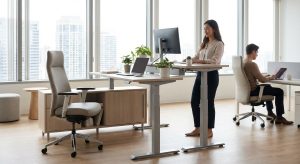
Standing desks or adjustable workstations give you options throughout the day. Sitting for eight straight hours damages your health regardless of how good your chair is.
Are standing desks and ergonomic chairs worth it in coworking spaces? The research says yes. Even alternating between sitting and standing for 30-minute intervals improves circulation and energy levels.
Monitor arms help position screens at eye level. Laptop stands serve the same purpose. Looking down at a screen all day strains your neck muscles.
Footrests, keyboard trays, and desk lighting might seem like minor details. They’re not. These small adjustments accumulate into significant comfort improvements over weeks and months.
Private Meeting Rooms for Confidential Conversations
Open floor plans work great until you need to take a client call.
Professional meeting rooms with soundproofing allow you to conduct business without disturbing others or worrying about eavesdroppers. These spaces should include:
- Video conferencing equipment with quality cameras and microphones
- Large displays or projectors for presentations
- Whiteboards or digital collaboration tools
- Comfortable seating for multiple participants
- Climate control independent from the main workspace
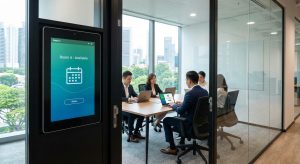
Booking systems matter as much as the rooms themselves. Meeting room booking systems at Singapore coworking spaces should let you reserve space easily through an app or website, see real-time availability, and modify bookings without contacting staff.
Phone booths serve a different purpose than full meeting rooms. These single-person pods give you privacy for calls without requiring a larger space. They’re perfect for 15-minute check-ins or sensitive conversations.
Professional Printing and Office Equipment
Digital workflows dominate modern business, but physical documents still matter.
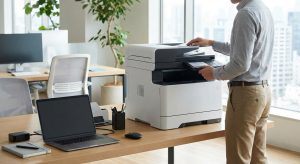
Access to reliable printing, scanning, and copying equipment saves trips to external print shops. Look for spaces that provide:
- Color and black-and-white printing options
- High-speed scanners with document feeders
- Binding and laminating equipment
- Shredders for confidential documents
- Mailing supplies and package handling services
Some spaces charge per page while others include printing credits in membership fees. The complete guide to printing, scanning, and office equipment access in coworking spaces breaks down which pricing model saves you more based on your usage patterns.
Maintenance matters. Equipment breaks down. Toner runs out. Spaces with dedicated staff who monitor and maintain equipment prevent frustrating delays when you need to print client proposals before a meeting.
Secure Storage Solutions
Carrying your laptop, chargers, notebooks, and supplies back and forth gets old fast.
Personal lockers or storage cabinets let you leave items at the workspace. This convenience matters more than you might think. Forgetting your charger at home when you have back-to-back meetings creates unnecessary stress.
Security features to look for include:
- Individual locks with unique keys or codes
- CCTV coverage in storage areas
- Access control systems limiting who enters storage zones
- Insurance coverage for stored items
- Climate-controlled environments for sensitive equipment
Dedicated desk members typically get more storage than hot desk users. If you need to store client files, product samples, or specialized equipment, factor storage capacity into your membership type decision.
Quiet Zones for Focused Work
Open collaboration spaces foster community, but sometimes you need silence.
Designated quiet zones with enforced noise policies create environments for deep work. These areas typically prohibit phone calls, meetings, and loud conversations.
Sound management goes beyond just rules. Physical design matters:
- Acoustic panels absorb ambient noise
- Carpeting reduces footstep sounds
- Separate rooms isolate quiet zones from active areas
- White noise systems mask remaining disturbances
How to eliminate distractions and stay focused in a shared workspace becomes easier when the space itself supports concentration. Some members need absolute silence for tasks like writing, coding, or financial analysis.
Balance matters. Spaces that are too quiet feel sterile and uncomfortable. The best quiet zones maintain a library-like atmosphere rather than complete silence.
Kitchen Facilities and Refreshments
Coffee runs interrupt workflow and drain your wallet.
Full kitchen facilities with refrigerators, microwaves, and dishwashers let you bring lunch from home. This saves money compared to eating out daily and gives you more control over your diet.
Complimentary beverages separate good spaces from great ones:
- Fresh coffee from quality machines, not instant packets
- Tea varieties beyond basic black tea
- Filtered water dispensers
- Occasional snacks or fruit
Some premium spaces offer catered lunches or subsidized meal programs. These perks add value but also increase membership costs. Calculate whether you’d actually use these services before paying extra for them.
Cleanliness in shared kitchens reveals how well a space manages communal areas. Dirty dishes piling up and expired food in refrigerators signal poor management.
Community Events and Networking Opportunities
Working alone in a shared space misses half the value proposition.
Regular community events help members connect and collaborate. Effective programming includes:
- Industry-specific networking sessions
- Skill-sharing workshops
- Social gatherings outside work hours
- Mentorship programs pairing experienced and new members
- Collaborative projects between members
Five community events that make coworking spaces worth the investment typically focus on providing genuine value rather than forced networking. The best events happen organically and match member interests.
Community managers facilitate connections without being pushy. They remember member names, understand what people do, and make relevant introductions when appropriate.
Not everyone wants constant social interaction. Do introverts thrive in coworking communities? Yes, when spaces respect different working styles and don’t require participation in every event.
Flexible Membership Options
Your needs change as your business grows.
Spaces offering multiple membership tiers let you start small and scale up without switching locations. Common options include:
| Membership Type | Best For | Typical Features |
|---|---|---|
| Day passes | Occasional users or travelers | Pay-per-visit access to common areas |
| Hot desks | Freelancers working 2-3 days weekly | Shared seating, basic amenities |
| Dedicated desks | Regular members needing consistency | Assigned workspace, storage, full amenities |
| Private offices | Teams requiring privacy | Lockable space, custom setup, 24/7 access |
Month-to-month agreements provide more flexibility than annual contracts. Starting a business involves uncertainty. Committing to 12 months of payments before knowing if you’ll need the space creates unnecessary risk.
Are coworking spaces worth the cost? That depends on how well the membership structure aligns with your actual usage patterns. Paying for a dedicated desk when you only visit twice weekly wastes money.
Convenient Location and Accessibility
The best amenities mean nothing if you dread the commute.
Proximity to public transportation reduces travel time and stress. Spaces near MRT stations in Singapore offer significant convenience advantages over locations requiring bus transfers or long walks.
Parking availability matters for members who drive. Some spaces include parking in membership fees while others charge separately or offer no parking at all.
24/7 access gives you flexibility to work during off-peak hours. Early risers and night owls appreciate the ability to choose their own schedules. Spaces with limited hours force you to adapt to their schedule rather than your natural rhythm.
Neighborhood amenities extend beyond the workspace itself. Nearby restaurants, gyms, banks, and services make it easier to handle errands without traveling across the city.
How to choose your first coworking space in Singapore starts with identifying which neighborhoods match your lifestyle and work patterns.
Evaluating Amenities Before Committing
Visiting spaces in person reveals what marketing materials hide.
Most coworking spaces offer free day passes or tours. Use these opportunities to test amenities during typical working hours. Morning and afternoon visits show different aspects of space usage and noise levels.
Ask existing members about their experiences. Staff will highlight positives, but current members provide unfiltered feedback about what works and what doesn’t.
Check these specific details during visits:
- Test the internet speed using your own devices
- Sit in different chairs and try standing desks
- Make a test call from phone booths to check soundproofing
- Examine the cleanliness of kitchens and bathrooms
- Review the booking calendar to see meeting room availability
- Talk to members about community culture
Five common coworking mistakes that new members make often involve choosing spaces based on price alone without evaluating whether the amenities support their work requirements.
Create a checklist ranking amenities by importance to your specific situation. A graphic designer needs different features than a financial consultant or software developer.
Comparing Amenity Value Across Price Points
Premium spaces charge more for a reason, but higher prices don’t always mean better value.
Budget spaces around $200-300 monthly typically provide basic amenities: internet, desks, chairs, and shared facilities. Mid-range spaces at $400-600 add better furniture, private meeting rooms, and community programming. Premium spaces exceeding $800 include dedicated support staff, higher-end equipment, and additional perks.
Calculate the true cost beyond membership fees:
- Coffee purchases if the space doesn’t provide beverages
- Printing costs if charged separately
- Meeting room fees on top of base membership
- Parking expenses
- Storage locker rentals
What Singapore remote workers need to budget beyond coworking membership fees includes these hidden costs that significantly impact total spending.
Some amenities provide measurable value while others offer intangible benefits. Reliable internet directly affects your ability to work. Community events might lead to client referrals but won’t guarantee them.
What Really Matters for Your Work Style
Generic amenity lists miss the point. Your specific work determines which features matter most.
Client-facing professionals need impressive meeting rooms and professional presentation equipment. Developers and designers require powerful internet and quiet spaces for concentration. Consultants who travel frequently benefit from flexible membership terms and day pass options.
The psychology behind coworking shows that environment affects performance differently based on personality and work type. Extroverts thrive in collaborative open spaces while introverts prefer quiet corners with minimal interruption.
Match amenities to your actual daily workflow. If you rarely print documents, don’t prioritize printing facilities. If you take client calls constantly, soundproof phone booths become essential rather than optional.
Test your assumptions through trial periods. What you think you need often differs from what you actually use. Many members overestimate how often they’ll attend community events or use standing desks.
Making Amenities Work for Your Team
Growing teams face different considerations than solo workers.
Private offices accommodate multiple people but cost significantly more than individual memberships. Calculate the per-person cost and compare it to dedicated desks in open areas.
Team collaboration requires different amenities:
- Shared storage for project materials
- Multiple meeting room bookings simultaneously
- Team-sized kitchen facilities
- Dedicated areas for group work without disturbing others
Why coworking spaces are perfect for hybrid teams in Singapore relates to how well amenities support both in-person collaboration and remote work integration.
Some spaces offer team packages with bundled amenities at discounted rates. Others charge per person regardless of whether you’re part of a group. Understanding pricing structures helps you negotiate better terms.
Getting the Most Value from Available Amenities
Paying for amenities you don’t use wastes money. Underutilizing included features leaves value on the table.
Track your actual usage patterns for the first month. Note which amenities you use daily, weekly, or never. This data helps you decide whether to upgrade, downgrade, or switch spaces.
Many members don’t realize their membership includes certain perks. Review your agreement and ask staff about included services. Some spaces offer free guest passes, discounted event tickets, or partnerships with local businesses.
Building a personal productivity system that works in any coworking environment means adapting your habits to take advantage of available resources rather than working against the space design.
Provide feedback to space managers about amenities that need improvement. Good operators listen to member input and make adjustments. Your suggestions might lead to changes that benefit everyone.
Finding Your Ideal Workspace Match
The right coworking space amenities transform your work experience from adequate to excellent. Start by identifying your non-negotiable requirements, then evaluate which additional features provide genuine value for your situation. Visit multiple spaces, test their amenities during real working hours, and talk to current members about their experiences. Remember that the most expensive space isn’t always the best fit, and the cheapest option rarely provides everything you need. Your workspace should support your productivity, not hinder it. Choose amenities that align with how you actually work rather than how you think you should work. The investment in the right environment pays dividends in focus, comfort, and professional success.