
Walking into a coworking space for the first time feels exciting. You’ve got your laptop, your coffee, and big plans for productivity. But within a few weeks, many new members realize they’re not getting the value they expected. Some struggle with focus. Others feel isolated despite being surrounded by people. A few end up paying for amenities they never use. These problems aren’t random. They’re the result of common coworking mistakes that nearly every new member makes.
New coworking members often make avoidable mistakes like choosing the wrong membership type, ignoring community opportunities, and failing to establish boundaries. Understanding these pitfalls before joining helps you maximize productivity, build valuable connections, and get real value from your investment. Most issues stem from unrealistic expectations and lack of preparation rather than the space itself.
Picking the wrong membership type right from the start
Most people choose their first coworking membership based on price alone. They see a hot desk option for $200 per month and jump on it without considering how they actually work.
Hot desks sound flexible. You can sit anywhere, anytime. But if you need to take client calls regularly, you’ll spend half your day hunting for a quiet corner or booking meeting rooms. That “affordable” membership suddenly costs more when you factor in the hourly meeting room charges you didn’t anticipate.
Understanding coworking membership types helps you match your work style to the right plan. Someone doing deep focus work needs different features than someone hosting client meetings three times a week.
Here’s what to consider before signing up:
- Track your typical work week for five days
- Note how many calls you take and their duration
- Count how often you need private space
- List the equipment you use daily
- Calculate meeting room needs per month
A dedicated desk costs more upfront but saves money if you’re booking meeting rooms constantly. A private office makes sense for teams of three or more, even if the monthly rate seems high.
The mistake isn’t choosing hot desks or dedicated spaces. The mistake is choosing without understanding your actual work patterns.
Treating the space like a coffee shop instead of an office
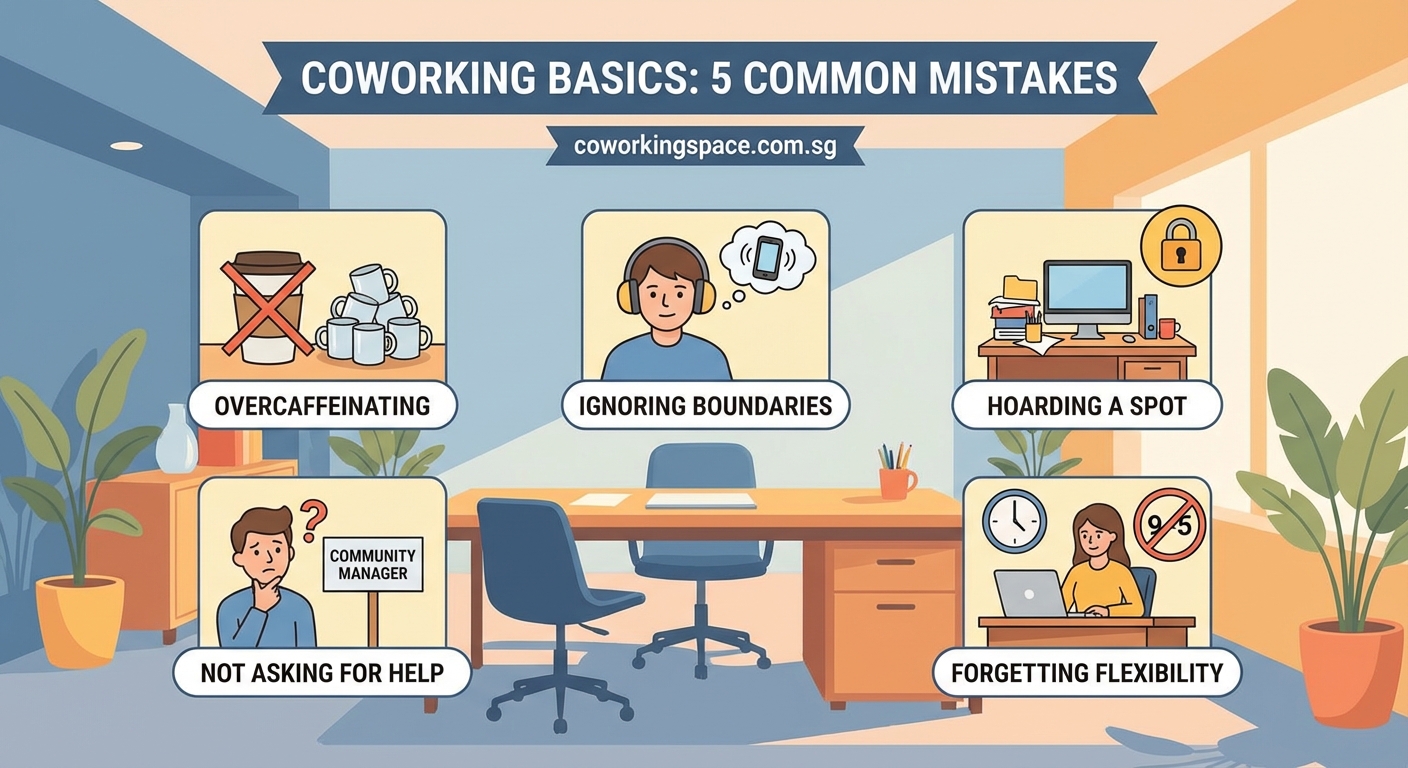
New members often approach coworking spaces the same way they’d use a cafe. They show up whenever, leave their belongings unattended, and treat every area as fair game for phone calls.
This creates problems fast.
Coworking spaces have unwritten rules that regular members follow instinctively. Taking calls in the open workspace disturbs everyone around you. Leaving your laptop on a hot desk while you grab lunch means someone else can’t use that spot. Playing music without headphones, even quietly, breaks the focus for others.
The solution isn’t complicated. Observe for a few days before settling into habits. Notice where people take calls. See how they signal they’re stepping away versus leaving for the day. Watch how they interact in common areas versus work zones.
Most spaces designate specific areas for different activities. Choosing between open workspace and quiet zones becomes easier once you understand these invisible boundaries.
| Area Type | Appropriate Activities | What to Avoid |
|---|---|---|
| Quiet zones | Deep work, reading, writing | Phone calls, group discussions, eating |
| Open workspace | Collaborative work, casual calls | Loud conversations, video calls without headphones |
| Phone booths | Private calls, video meetings | Long personal calls during peak hours |
| Lounges | Networking, casual chats, breaks | Focused work requiring silence |
| Meeting rooms | Client calls, team meetings | Solo work when others need the space |
Respecting these zones isn’t about being uptight. It’s about making the space work for everyone, including you.
Skipping the community entirely and missing the real value
Some people join coworking spaces purely for the desk and wifi. They put on headphones the moment they arrive and leave without speaking to anyone. Six months later, they wonder why they’re paying premium prices for what feels like an expensive desk rental.
The community is half the value. Maybe more.
Professional connections made in coworking spaces lead to client referrals, partnership opportunities, and problem solving help. But these relationships don’t happen automatically. You need to show up to events, introduce yourself, and be open to conversations.
This doesn’t mean forcing yourself to be social eight hours a day. It means being strategic about connection opportunities.
Attend one community event per month. Introduce yourself to people working near you. Join the Slack or WhatsApp group and participate occasionally. Offer help when you have relevant expertise.
Building professional networks in Singapore happens through consistent, small interactions rather than forced networking marathons.
“The best opportunities I’ve found came from casual conversations in the kitchen, not formal networking events. But I had to be present and approachable for those conversations to happen.” – Member at a Raffles Place coworking space
Even introverts can benefit from selective community participation. Introverts in coworking communities thrive when they engage on their own terms rather than avoiding connection entirely.
Ignoring productivity systems and wondering why focus disappeared
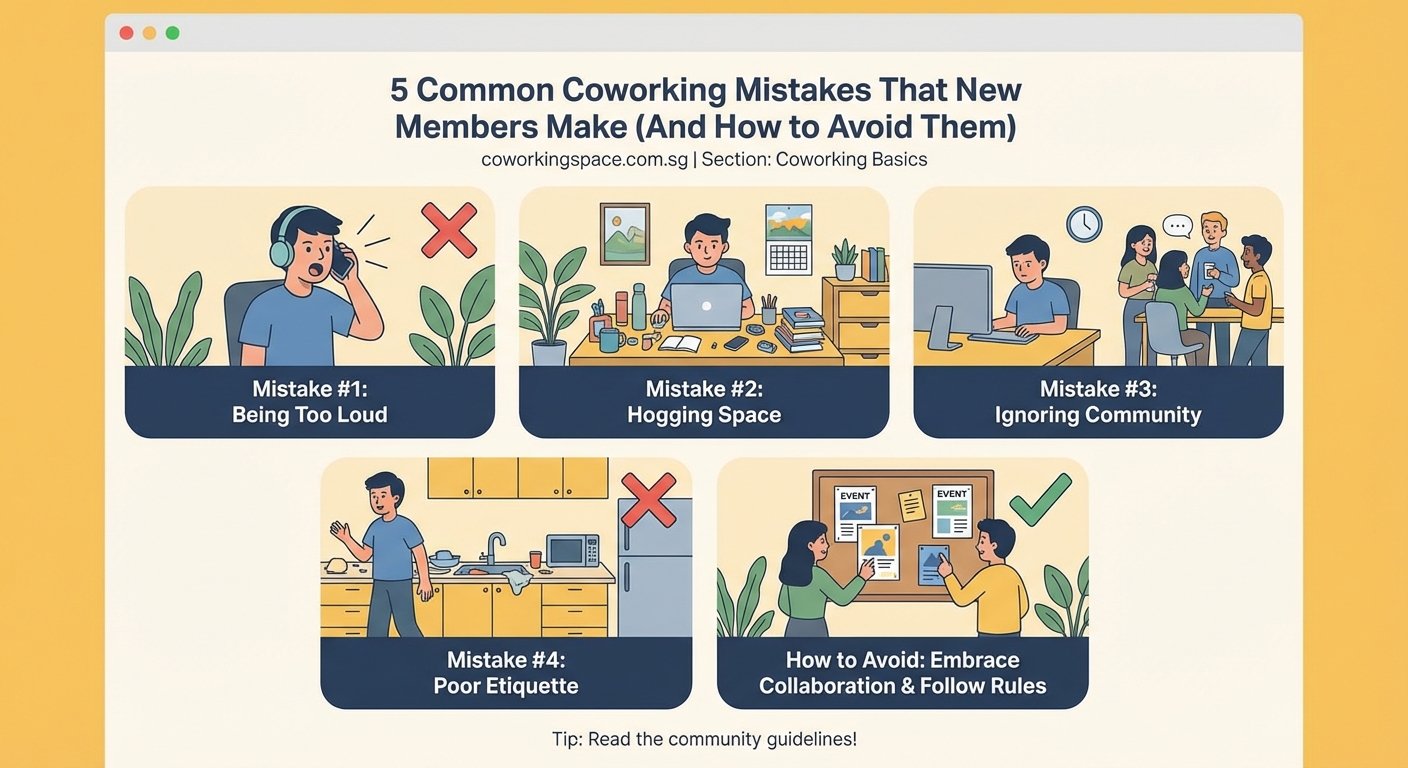
Working from home had its problems, but at least you had your routine. Then you join a coworking space and suddenly your productivity tanks. You blame the environment, the noise, the people walking past your desk.
Usually, the problem isn’t the space. It’s the lack of a system for working in a shared environment.
Coworking spaces require different productivity approaches than home offices or traditional offices. You need clear signals for when you’re available versus focused. You need strategies for managing interruptions. You need boundaries that work in a semi-public setting.
Start with these fundamentals:
- Set specific work blocks using time blocking methods
- Use visual signals like headphones to indicate focus time
- Establish arrival and departure routines
- Create transition rituals between tasks
- Plan your week based on space availability and energy levels
Building a personal productivity system that adapts to shared spaces takes experimentation. What worked at home might not work here.
The Pomodoro Technique works particularly well in coworking environments. Time blocking in coworking spaces gives you natural break points to step away, chat briefly, then return to focus.
Track your productive hours for two weeks. Note which times of day you focus best, which areas of the space work for different tasks, and which days feel most effective. Use this data to build a schedule that works with the space’s rhythm rather than against it.
Overlooking the practical details that drain time and money
New members often ignore the small logistical details that add up to major frustrations. They don’t ask about printing costs until they need to print a 50 page document. They assume meeting rooms are always available and then can’t host an important client call. They don’t clarify what “24/7 access” actually means and get locked out at 9pm on a Sunday.
These aren’t dramatic mistakes. They’re death by a thousand small inconveniences.
Before you commit to any coworking space, get specific answers to practical questions:
- What’s included in your membership versus what costs extra?
- How far in advance can you book meeting rooms?
- Are there limits on guest access or visitor policies?
- What happens if you need to cancel or downgrade?
- Which amenities have additional fees?
Evaluating a coworking space thoroughly before signing up saves headaches later. Visit during different times of day. Test the wifi speed. Check if power outlets are plentiful. See how crowded it gets during peak hours.
The printing and scanning policies alone can make a huge difference. Office equipment access in coworking spaces varies wildly between providers. Some include unlimited printing. Others charge per page. Some restrict color printing or large format documents.
Meeting room booking deserves special attention. Meeting room systems in Singapore range from simple to complex. Know the rules before you need an urgent booking.
Budget beyond the membership fee. Factor in coffee if it’s not included, printing costs, extra meeting room hours, and guest day passes. What to budget beyond membership fees gives you a realistic picture of total costs.
Getting distracted by amenities instead of focusing on work quality
Fancy coffee machines, game rooms, and rooftop terraces look amazing in photos. New members often choose spaces based on these perks, then realize they never actually use them.
You’re not paying for a lifestyle Instagram backdrop. You’re paying for a productive work environment.
Yes, amenities matter. But they matter in specific ways for specific work styles. A podcast studio is valuable if you produce audio content. It’s irrelevant if you’re a graphic designer. A gym membership sounds great until you realize you never have time between meetings to use it.
Must have amenities in modern coworking spaces focuses on features that actually impact daily work quality. High speed internet matters more than a pool table. Ergonomic seating affects your health more than free beer Fridays.
Prioritize these core features first:
- Reliable, fast internet connectivity
- Comfortable, adjustable seating
- Good lighting and temperature control
- Adequate power outlets at every workspace
- Clean, well maintained facilities
Everything else is bonus. Recreational facilities that stand out can enhance your experience, but they shouldn’t be the deciding factor.
Consider whether standing desks and ergonomic chairs matter for your health and comfort. These practical features impact your daily experience more than flashy extras.
Location deserves more weight than amenities in most cases. A space with basic amenities near your home beats a feature packed space requiring a 90 minute commute. Choosing your first coworking space in Singapore means balancing practical needs with aspirational wants.
Failing to establish work life boundaries in a flexible environment
Flexibility sounds perfect until you realize you’re working 12 hour days because there’s no clear end to your workday. The coworking space is always there. Your desk is always available. The temptation to “just finish one more thing” becomes constant.
New members often struggle with this transition. Without the structure of traditional office hours or the physical separation of a home office, work bleeds into every hour of the day.
Set firm boundaries from day one:
- Establish consistent arrival and departure times
- Use calendar blocking for personal time
- Create shutdown rituals that signal end of workday
- Resist the urge to “just check email” after hours
- Communicate your availability clearly to clients and colleagues
The 24/7 access that seems like a benefit can become a trap. Just because you can work at midnight doesn’t mean you should.
Some members find that building an effective hybrid work schedule helps maintain balance. Mixing coworking days with home days or other locations prevents burnout.
Avoiding common time wasting habits includes recognizing when flexibility becomes an excuse for poor boundaries.
The psychology of shared spaces affects productivity in complex ways. Why shared spaces boost productivity works only when you maintain healthy work habits.
Making the most of your coworking investment from the start
These mistakes aren’t character flaws. They’re natural responses to a new work environment. Every experienced coworking member made at least a few of these errors when starting out.
The difference is how fast you recognize and correct them.
Start by being honest about your work style and needs. Choose a membership that matches your actual patterns, not your ideal vision of how you’d like to work. Engage with the community in ways that feel authentic rather than forced. Build systems that help you stay productive in a shared environment.
Most importantly, give yourself permission to adjust. Your first membership choice doesn’t have to be permanent. Your initial routine will evolve. The connections you make will develop naturally over time.
The goal isn’t perfection. The goal is continuous improvement based on real experience rather than assumptions. Pay attention to what works, adjust what doesn’t, and remember that getting real value from coworking spaces takes intention and effort.
Your coworking experience improves dramatically once you understand these common pitfalls. Take the time to set yourself up properly from the beginning, and you’ll avoid months of frustration and wasted money.