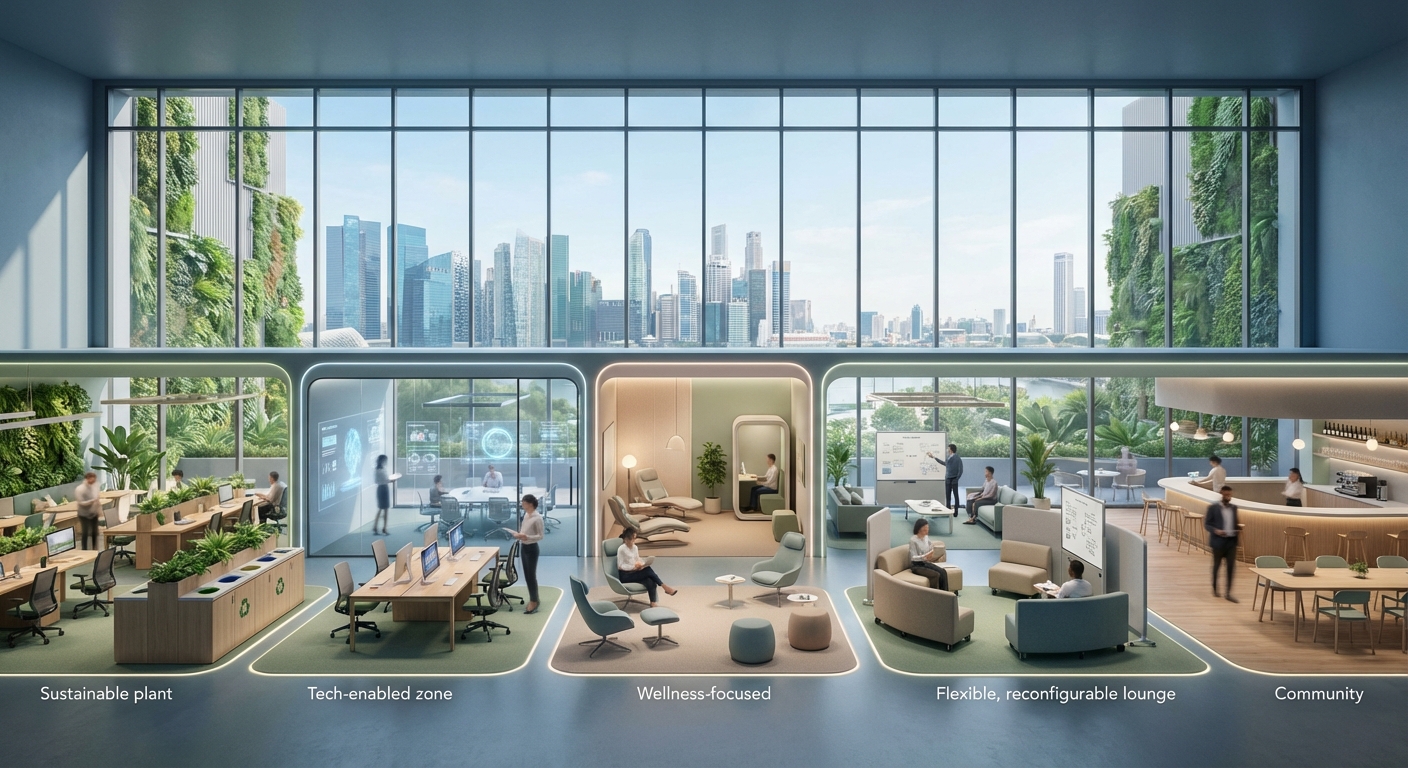
Singapore’s workspace landscape is changing faster than most business owners realize. The traditional office setup that worked five years ago feels outdated today, and what’s coming in 2026 will reshape how your team works, collaborates, and stays productive.
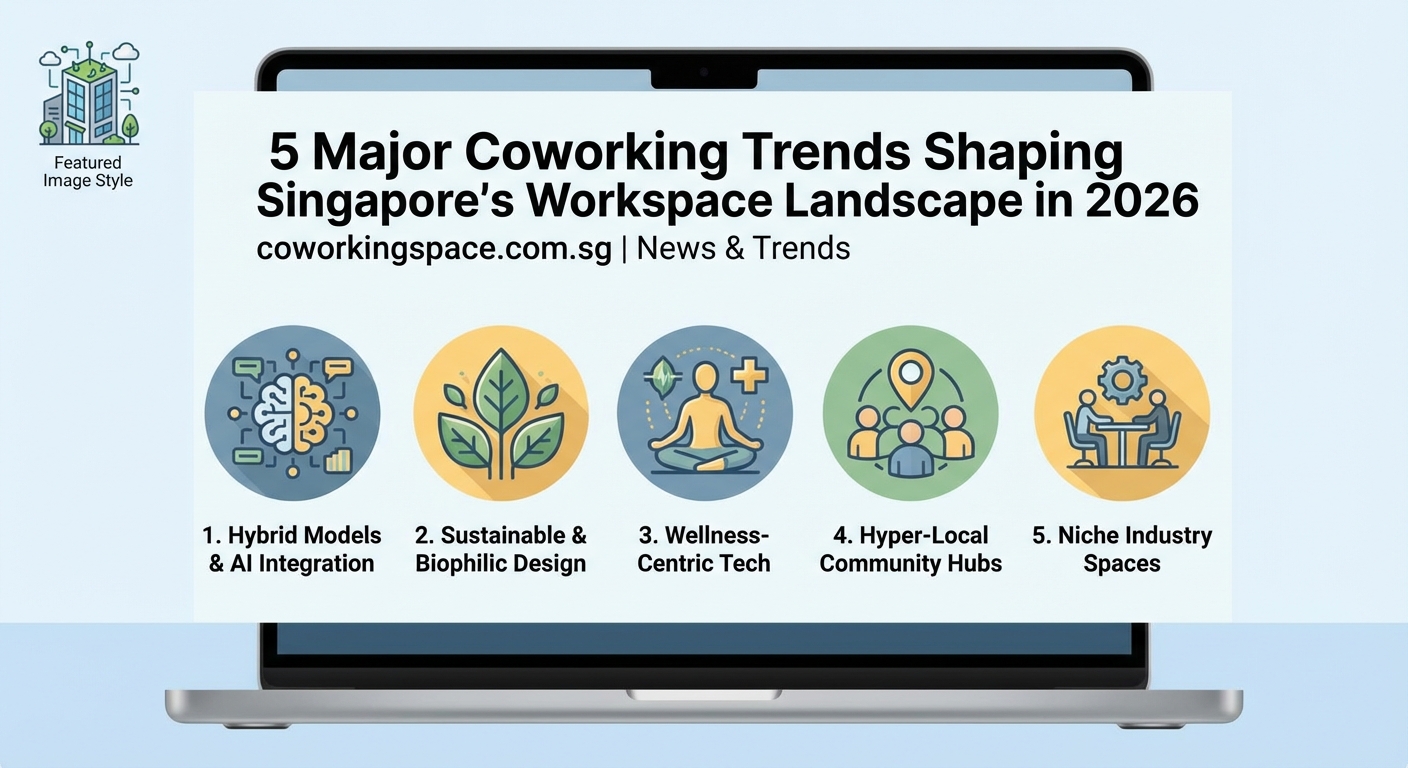
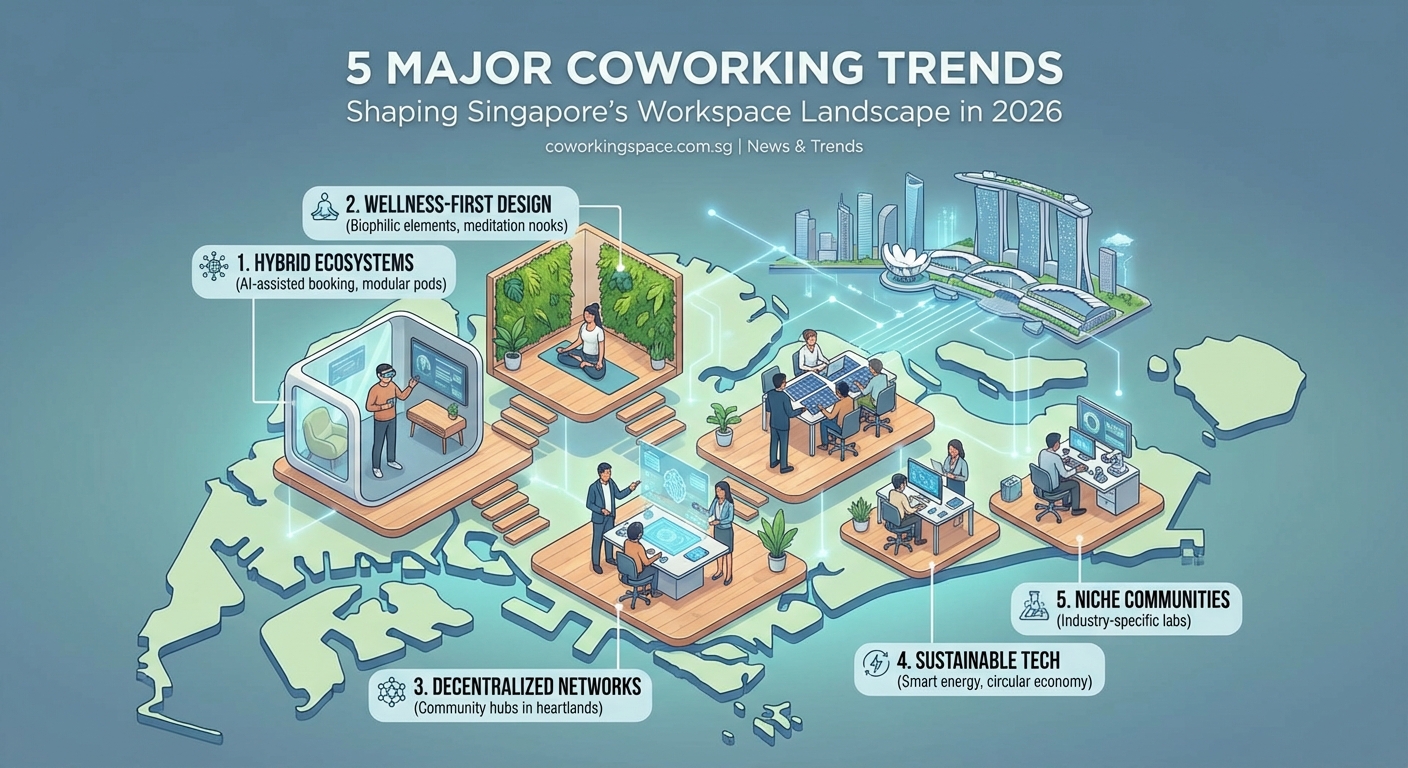
Coworking trends Singapore 2026 centers on five major shifts: AI-powered workspace automation, industry-specific niche spaces, hybrid work optimization, integrated wellness programs, and mandatory sustainability standards. These changes affect pricing, membership structures, and how businesses choose flexible workspaces. Understanding these trends helps companies make smarter real estate decisions and prepare teams for the future of work.
AI automation is reshaping workspace operations
Artificial intelligence isn’t just a buzzword anymore. It’s running the show at modern coworking spaces across Singapore.
Walk into a 2026 workspace and you’ll notice the difference immediately. Facial recognition handles entry. Smart sensors adjust lighting and temperature based on occupancy. Meeting room booking happens through voice commands.
The technology goes deeper than convenience. AI systems track space utilization patterns, helping operators maximize every square foot. They predict peak hours and adjust staffing accordingly. Some spaces now use machine learning to match members with similar industries or complementary skills.
How AI and smart technology are transforming coworking spaces in 2026 shows how these systems work behind the scenes. The impact on your daily workflow is significant.
Personalization reaches new levels too. Your preferred desk height, monitor setup, and even coffee order get remembered and prepared automatically. The workspace adapts to you, not the other way around.
Security improves dramatically. AI monitors unusual access patterns, protects sensitive data zones, and manages visitor credentials without human intervention. This matters for companies handling confidential information.
The cost implications surprise most business owners. While technology-heavy spaces charge premium rates, the efficiency gains often justify the expense. Teams spend less time on administrative tasks and more time on actual work.
Niche coworking spaces dominate the market
Generic coworking spaces are losing ground to specialized alternatives. Singapore’s 2026 landscape features workspaces designed for specific industries, work styles, and business stages.
Fintech hubs cluster in Raffles Place. Creative studios populate Tiong Bahru. Healthcare startups gather in spaces near research institutions. This concentration creates unexpected networking value.
The benefits extend beyond location. The rise of industry-specific coworking spaces: why niche workspaces are taking over Singapore explains how specialized equipment, relevant mentors, and targeted events attract companies willing to pay more for the right fit.
Consider a biotech startup. A general coworking space offers desks and wifi. A biotech-focused space provides lab equipment, regulatory compliance support, and connections to investors who understand the industry.
Legal and compliance considerations drive some of this specialization. Certain industries need specific certifications, security protocols, or physical infrastructure. Niche spaces handle these requirements from day one.
The downside? Less flexibility. Committing to a niche space means betting on your industry focus. Companies pivoting to new markets might find themselves in the wrong environment.
Pricing varies wildly. Specialized spaces charge 30-50% more than general coworking options, but members report higher satisfaction and faster business growth.
“The right workspace isn’t about finding the cheapest desk. It’s about surrounding yourself with people who understand your challenges and can help solve them. That’s worth paying for.” – Industry analyst at Singapore Workspace Association
Hybrid work models reshape membership structures
The five-day office week is dead. Companies need flexible arrangements that accommodate remote work, client meetings, and occasional team gatherings.
Traditional monthly memberships don’t fit this reality. Coworking spaces in 2026 offer modular packages that match actual usage patterns.
Here’s how membership options have evolved:
| Membership Type | Best For | Average Cost | Flexibility Level |
|---|---|---|---|
| Flex Credits | Occasional users | $200-400/month | Highest |
| Hybrid Pass | 2-3 days/week | $350-600/month | High |
| Team Pods | Small groups | $800-1500/month | Medium |
| Dedicated Suite | Full-time presence | $2000-4000/month | Low |
Why coworking spaces are perfect for hybrid teams in Singapore breaks down how these options work in practice.
Credit-based systems let you bank unused days or share access across team members. This flexibility matters when your sales team travels frequently or your developers prefer home offices.
The technology supporting these models has matured significantly. Apps track your credit balance, let you book spaces hours in advance, and provide usage analytics that help optimize your membership level.
Companies save money by right-sizing their workspace commitments. Instead of paying for empty desks, they purchase capacity that matches actual needs.
The challenge comes with planning. Popular spaces and times book up fast. Teams need to coordinate schedules more carefully than in traditional offices.
Some businesses maintain small dedicated spaces while purchasing flex credits for additional capacity. This hybrid approach provides stability while preserving flexibility.
Wellness programs become standard features
Mental health and physical wellbeing are no longer optional perks. They’re expected features at premium coworking spaces.
The shift reflects broader workplace trends. Burnout rates climbed during remote work periods. Companies recognize that productive teams need support beyond fast internet and comfortable chairs.
Modern coworking spaces integrate wellness in multiple ways:
- On-site fitness classes during lunch hours
- Meditation rooms with guided sessions
- Standing desk options at no extra charge
- Healthy meal delivery partnerships
- Mental health counseling access
- Ergonomic assessments included in membership
- Natural lighting and biophilic design elements
- Air quality monitoring and purification systems
Are standing desks and ergonomic chairs worth it in coworking spaces? examines the physical health side of this trend.
The business case is straightforward. Healthier members take fewer sick days, maintain better focus, and renew memberships at higher rates. Spaces investing in wellness programs report 20-30% better retention.
Some operators partner with corporate wellness platforms, giving members access to broader health resources. These integrations track fitness goals, provide nutritional guidance, and offer stress management tools.
The cost gets built into membership fees, but most members consider it worthwhile. Companies can often expense these features as employee health benefits.
Skeptics worry about privacy. Health data collection raises legitimate concerns. Reputable spaces maintain strict data policies and make wellness programs optional rather than mandatory.
The trend extends to community programming. Networking events now include walking meetings, yoga sessions, and healthy cooking classes alongside traditional happy hours.
Sustainability standards become mandatory
Green building certifications and environmental practices are shifting from nice-to-have to deal-breakers. Corporate sustainability goals drive this change.
Companies face pressure from investors, customers, and employees to reduce their environmental footprint. Office space represents a significant portion of that impact.
Singapore’s regulatory environment accelerates this trend. Government incentives reward sustainable workspace choices. Some industries face requirements around environmental reporting that include office operations.
What sustainability looks like in practice:
- Energy monitoring systems that track and reduce consumption
- Renewable energy sources or carbon offset programs
- Waste reduction and comprehensive recycling systems
- Water conservation through smart fixtures and monitoring
- Sustainable materials in furniture and construction
- Green cleaning products and practices
- Bike storage and public transit incentives
- Paperless operations and digital-first workflows
The financial impact varies. Some sustainable features reduce operating costs over time. Solar panels, efficient HVAC systems, and LED lighting pay for themselves within a few years.
Other sustainability investments increase costs. Certified sustainable materials cost more upfront. Organic cleaning products and fair-trade coffee carry premium prices.
Most coworking spaces pass these costs to members through slightly higher fees. The typical premium runs 5-15% above comparable non-certified spaces.
Budget-friendly coworking spaces in Singapore under $300 per month helps identify affordable options that still maintain environmental standards.
Certification levels matter. Basic green building compliance differs significantly from advanced certifications like Green Mark Platinum or LEED Gold. Understanding these distinctions helps you evaluate whether premium pricing is justified.
The trend creates opportunities for smaller operators. Boutique spaces can differentiate through exceptional sustainability practices that larger chains struggle to implement consistently.
Members increasingly request sustainability reporting. They want to know their workspace’s carbon footprint, waste diversion rates, and environmental improvement plans. Transparent operators gain competitive advantages.
How to choose the right workspace for 2026
These five trends reshape workspace selection criteria. Your decision process needs updating to account for new priorities and options.
Start by evaluating your actual needs versus traditional assumptions. Does your team need daily desk access or flexible capacity? Would industry-specific resources justify higher costs? How important are wellness and sustainability features to your company culture and goals?
How to choose your first coworking space in Singapore: a beginner’s guide provides a framework for systematic evaluation.
Test before committing. Most spaces offer day passes or trial periods. Use them to assess technology performance, community fit, and whether promised features deliver real value.
Consider future flexibility. Your business will change. Choose spaces and membership structures that accommodate growth, contraction, or pivots without massive penalties.
Budget realistically. Account for hidden costs like parking, printing, extra meeting room hours, and guest passes. Compare total costs across different membership levels and space types.
Location still matters, but differently than before. Proximity to clients, public transit access, and neighborhood amenities often outweigh pure commute time considerations in hybrid work models.
Read contracts carefully. Understand termination clauses, rate increase policies, and what happens if the space closes or gets acquired. 5 common coworking mistakes that new members make (and how to avoid them) highlights pitfalls to avoid.
Your workspace strategy matters more than ever
The coworking trends Singapore 2026 brings create both opportunities and challenges for business leaders. Companies that adapt their workspace strategies gain competitive advantages through better talent attraction, improved productivity, and reduced real estate costs. Those clinging to outdated models risk falling behind competitors who embrace flexibility and innovation.
Your workspace choice affects company culture, employee satisfaction, and ultimately business performance. Take time to understand these trends, evaluate options thoroughly, and select spaces that align with your actual needs rather than traditional expectations. The right workspace isn’t just about desks and wifi anymore. It’s about creating an environment where your team thrives and your business grows.