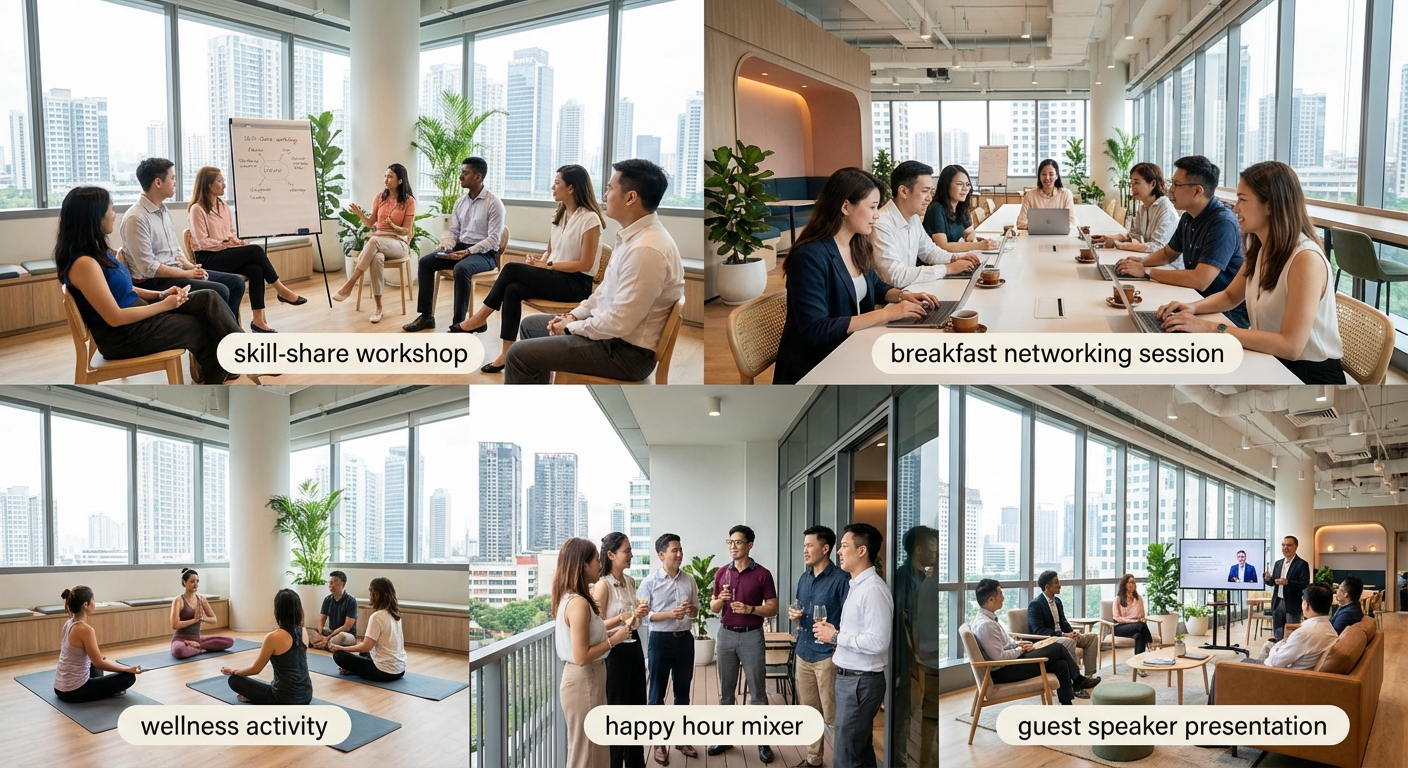
Running a coworking space means competing with home offices, coffee shops, and traditional workplaces every single day. Members need more than just a desk and WiFi to justify their monthly fee. They need reasons to show up, stay engaged, and renew their memberships. The right events transform your space from a transaction into a community worth investing in.
Successful coworking space event ideas focus on creating genuine value through skill-building workshops, structured networking sessions, wellness activities, collaborative projects, and social gatherings. The best events address specific member needs, happen consistently, and foster authentic connections that make your space irreplaceable. Strategic event planning directly impacts retention rates, referrals, and your ability to justify premium pricing in competitive markets.
Skill-Building Workshops That Members Actually Attend
Professional development events work when they solve real problems your members face right now.
Host monthly workshops on topics that directly impact freelancers and small business owners. Tax planning sessions in January. Social media strategy workshops when platforms change their algorithms. Contract negotiation skills for consultants landing new clients.
The timing matters as much as the topic. Schedule workshops during lunch hours or early evenings when members can easily attend without disrupting their workday. Record sessions for members who miss them live.
Partner with members who have expertise to teach. A graphic designer can lead a branding workshop. A lawyer member can explain business structure options. A marketing consultant can share client acquisition strategies.
This approach costs nothing beyond your space and creates opportunities for members to showcase their skills to potential clients sitting in the same room.
Making Workshops Valuable Beyond the Event
Provide takeaway resources that extend the value past the 60-minute session. Create simple templates, checklists, or resource lists participants can use immediately.
A workshop on email marketing should include a template library. A session on productivity should provide a customizable daily planning sheet. A talk about client onboarding should offer contract templates and process frameworks.
These materials keep your space top of mind long after the event ends. Members reference them, share them with colleagues, and remember where they learned the skill.
Networking Events That Actually Generate Business Connections
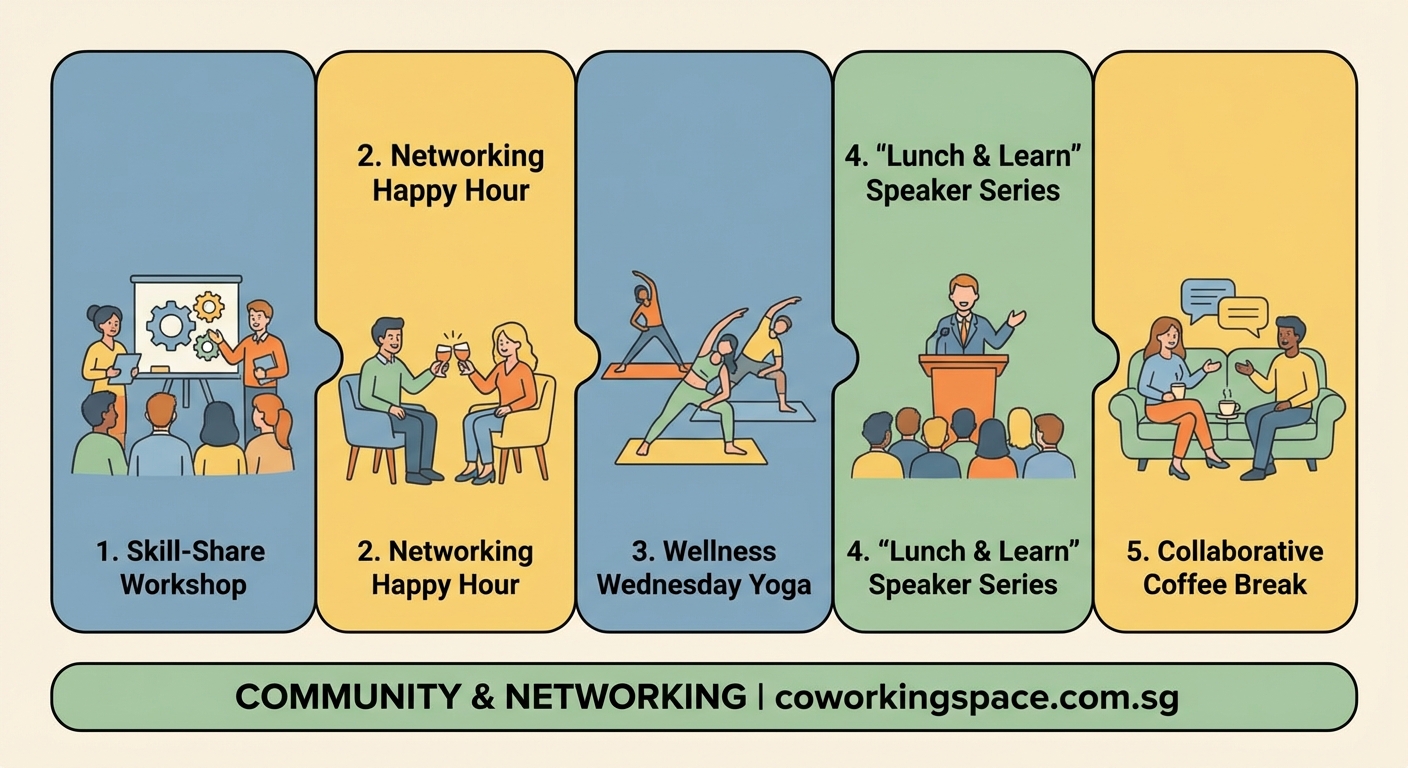
Generic “come mingle” events rarely produce meaningful connections. Structure your networking events around specific outcomes.
Try speed networking sessions where members rotate through five-minute conversations with clear prompts. “Share your biggest business challenge this month” or “Describe your ideal client referral” gives people something concrete to discuss beyond small talk.
Industry-specific networking nights work better than general mixers. Host separate events for creative professionals, tech workers, consultants, or e-commerce founders. Members connect faster when they share common challenges and speak the same professional language.
Collaboration matching events pair members working on complementary projects. A web developer needs copywriting help. A photographer wants to partner with event planners. A business coach seeks a graphic designer for course materials.
Create simple intake forms before these events so you can suggest strategic introductions instead of leaving connections to chance.
“The most successful coworking events I’ve run weren’t about networking at all. They were about solving specific problems together. When you give people a reason to collaborate, relationships form naturally.” – Community Manager, Singapore coworking operator
Wellness Activities That Combat Remote Work Burnout
Members choose coworking spaces partly to escape the isolation and sedentary nature of working from home. Wellness events address these pain points directly.
Morning yoga or stretching sessions before the workday starts help members begin productively. Lunchtime walking groups get people away from screens and moving. Afternoon meditation breaks provide mental resets during the 3pm energy slump.
Bring in professionals for monthly wellness workshops. Ergonomics specialists can evaluate workstation setups. Nutritionists can discuss energy management through food choices. Mental health professionals can teach stress management techniques.
These events show members you care about their wellbeing beyond their membership payments. That emotional connection drives retention more than any amenity upgrade.
Simple Wellness Events That Require Minimal Planning
Not every wellness event needs an outside expert or elaborate setup.
Start a weekly accountability group where members share their health goals and check in on progress. Create a steps challenge using a free app where members compete on daily movement. Organize healthy potluck lunches where everyone brings nutritious dishes to share.
Stock your kitchen with healthy snacks and make that a talking point in your community communications. Small gestures compound into a culture that values member wellness.
Understanding what makes a coworking space different from a traditional office helps you design events that emphasize these unique advantages.
Collaborative Projects That Build Community Investment
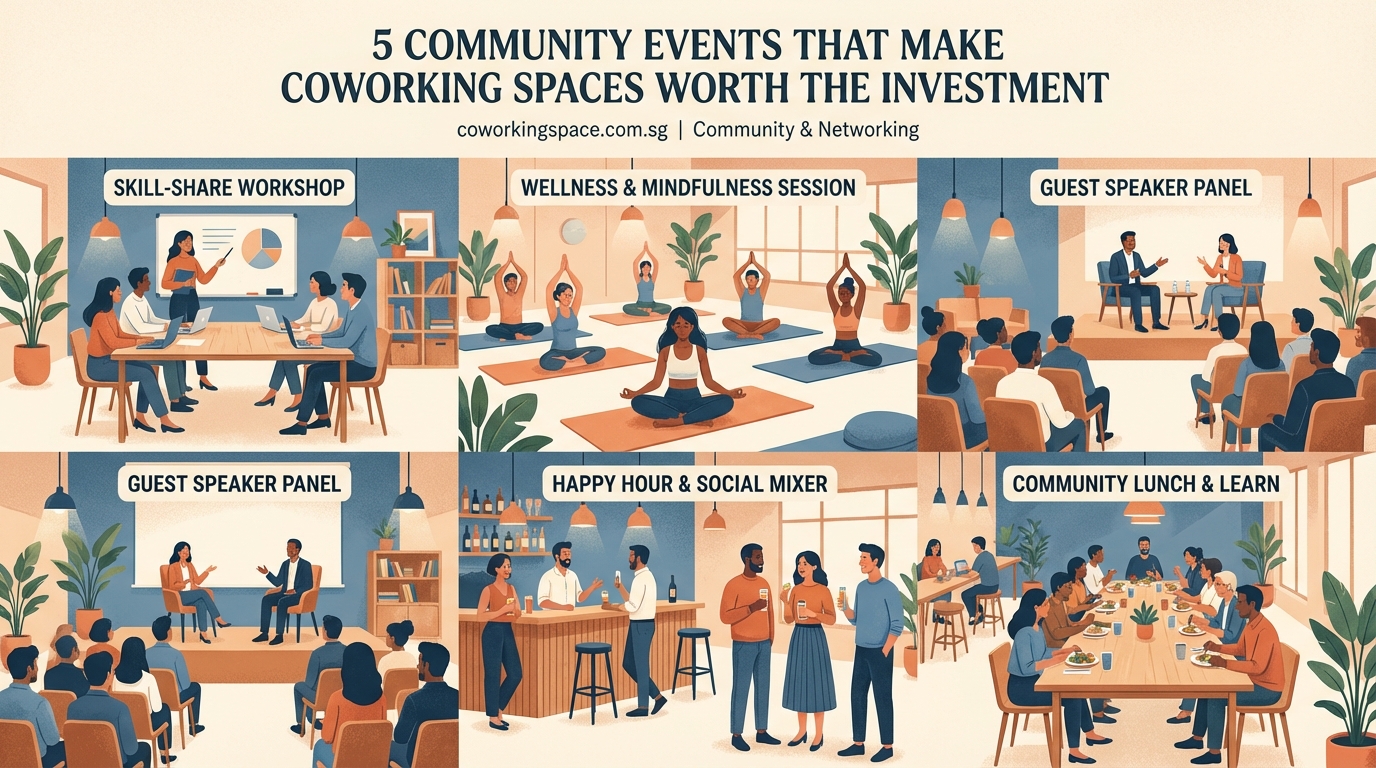
Events where members create something together generate stronger bonds than passive attendance ever could.
Launch a community art project where everyone contributes to a mural in your space. Start a member podcast featuring interviews with different community members each episode. Create a shared resource library where members contribute their favorite tools, templates, and recommendations.
Organize volunteer days where your community tackles a local service project together. Clean up a neighborhood park. Pack meals at a food bank. Mentor students at a nearby school.
These shared experiences create stories members tell when describing your space to potential new members. They transform your coworking space from a place they rent into a community they belong to.
Monthly Challenges That Encourage Participation
Create ongoing challenges that give members reasons to engage regularly.
Try a “ship it” challenge where members commit to launching something new each month and share their progress. Run a reading challenge where everyone reads the same business book and discusses it over coffee. Start a skill-swap program where members teach each other their expertise in structured exchanges.
Track participation publicly on a leaderboard or recognition board. Humans respond to friendly competition and public acknowledgment.
Social Events That Feel Natural, Not Forced
The best social events happen around activities that give people something to do besides awkward small talk.
Board game nights work because games provide natural conversation starters and icebreakers. Cooking classes give people a shared task to focus on while chatting. Trivia nights create team bonding through friendly competition.
Celebrate member milestones with simple recognition events. Someone lands their first major client. Another member hits their one-year anniversary in your space. A startup raises funding. These moments deserve acknowledgment.
Host seasonal celebrations that give members reasons to bring guests. A holiday party where members can invite family. A summer barbecue where they bring friends. These events expose potential new members to your community in low-pressure settings.
Food and Beverage Events That Actually Work
Food brings people together, but not every food event succeeds.
Coffee tasting sessions with a local roaster teach members something while sampling products. Wine and cheese nights feel sophisticated without requiring elaborate planning. Breakfast clubs before work hours catch members when they’re fresh and energized.
Partner with local restaurants for catered lunches at member-only pricing. This supports local businesses, provides value to members, and requires minimal effort from your team.
Members who regularly attend events are significantly more likely to renew their memberships. The connections they form make leaving your space feel like leaving a community, not just canceling a service.
Planning Your Event Calendar for Maximum Impact
Random, sporadic events create less value than a consistent, predictable schedule members can plan around.
Create a monthly event calendar with recurring anchor events. First Monday is always networking. Second Wednesday is always a skill workshop. Third Friday is always a social event. This consistency helps members build attendance into their routines.
Survey your community quarterly about what events they want. Ask about preferred times, topics, and formats. Let members vote on workshop topics or suggest speakers they’d like to hear from.
Balance event types across your calendar. Don’t schedule three networking events in one month and ignore skill development. Mix professional events with social ones. Alternate high-energy activities with calm, restorative ones.
| Event Type | Frequency | Best Timing | Primary Goal |
|---|---|---|---|
| Skill Workshops | 2-3 per month | Lunch or early evening | Professional development |
| Networking Sessions | 1-2 per month | After work hours | Business connections |
| Wellness Activities | Weekly | Morning or lunch | Member wellbeing |
| Social Gatherings | 1 per month | Evening or weekend | Community bonding |
| Collaborative Projects | Quarterly | Flexible | Deep engagement |
Measuring Event Success Beyond Attendance Numbers
Attendance tells you if people showed up. It doesn’t tell you if the event created value.
Track member retention rates among regular event attendees versus those who never participate. Monitor referrals from active community members. Survey attendees about specific outcomes like new client connections, skills learned, or relationships formed.
Pay attention to which events generate the most post-event conversation in your community channels. Members talking about an event days later signals genuine impact.
Use these metrics to refine your event strategy over time. Double down on what works. Eliminate events that consume resources without delivering member value.
Common Event Planning Mistakes to Avoid
Many coworking spaces waste time and money on events that don’t serve their community.
Mistake: Hosting events for the wrong audience. Your events should serve your actual members, not the members you wish you had. If your space is full of freelancers, don’t plan events for corporate teams.
Mistake: Inconsistent scheduling. Members can’t build event attendance into their routines if you schedule randomly. Pick a cadence and stick to it.
Mistake: No follow-up. The event itself is just the beginning. Send recap emails with key takeaways. Share photos in your community channels. Connect attendees who expressed interest in collaborating.
Mistake: Ignoring feedback. If members consistently skip certain event types, listen to that signal. Ask why and adjust accordingly.
Mistake: Making events feel mandatory. Some members join coworking spaces specifically to avoid forced socializing. Offer great events but never pressure participation.
The psychology behind coworking explains why community events matter so much for member satisfaction and retention.
Budget-Friendly Event Ideas That Deliver Big Value
You don’t need a massive events budget to create meaningful member experiences.
Host member showcase events where different members present their work each month. This costs nothing and gives members visibility while educating the community.
Create a speaker series featuring your own members as experts. Most professionals love opportunities to share their knowledge and build their personal brands.
Organize skill exchanges where members teach each other. A designer offers logo critiques in exchange for bookkeeping advice. A writer provides content reviews in exchange for web development help.
Start a book club using business books members already own. The only cost is coffee and conversation.
Partner with local businesses for sponsored events. A nearby restaurant provides lunch for a member appreciation event in exchange for exposure to your community. A fitness studio offers free trial classes to your members.
These partnerships cost you nothing while providing value to members and supporting local businesses.
When to Invest in Premium Events
Save your budget for quarterly signature events that create memorable experiences.
Bring in well-known speakers for annual conferences or workshops. Host elaborate holiday parties that members talk about for months. Organize off-site retreats or day trips that break the routine.
These premium events justify membership costs and create content for your marketing. Photos and testimonials from standout events attract new members who want to join a vibrant community.
Promoting Events So Members Actually Show Up
Great events fail if nobody knows about them or forgets to attend.
Announce events at least two weeks in advance. Send reminder emails one week before, one day before, and the morning of the event. Use multiple channels including email, community chat platforms, and physical signage in your space.
Create simple, visually appealing event graphics for social media and internal communications. Members should understand what the event is, when it happens, and why they should attend at a glance.
Make registration easy with simple online forms. Collect only essential information. The more friction you add, the fewer people will sign up.
For events with limited capacity, create waitlists. This builds perceived value and ensures full attendance even when some registrants don’t show up.
Getting Members to Invite Their Networks
Your members are your best marketing channel for events.
Create “bring a guest” events where members can introduce friends to your community. Offer incentives for members who bring first-time visitors. A free day pass or coffee credit encourages introductions.
Make it easy for members to share events on social media by providing ready-made posts they can copy. Include compelling descriptions and relevant hashtags.
Feature member testimonials from past events in your promotional materials. Real stories from real members carry more weight than any marketing copy you could write.
When members see their peers getting value from events, they’re more likely to attend themselves. Social proof drives participation.
Adapting Events for Different Space Sizes
Event strategies that work for a 200-person space won’t work for a 20-person space.
Small spaces should focus on intimate, high-value events. Host dinner parties instead of cocktail mixers. Organize small group discussions instead of large panels. Create mentorship circles instead of networking free-for-alls.
Large spaces can run multiple simultaneous events for different member segments. Host a coding workshop in one area while a yoga class happens in another. Offer both networking events and quiet productivity sessions.
Mid-sized spaces benefit from tiered events. Some months host intimate gatherings for core members. Other months organize larger events that welcome guests and potential members.
Match your event ambitions to your space capacity and staff resources. One excellent small event beats three mediocre large ones.
Building an Events Team from Your Community
You can’t run a robust event calendar alone.
Recruit member volunteers who want deeper involvement in your community. Some members love organizing events and will gladly help in exchange for recognition or membership discounts.
Create an events committee that meets monthly to plan upcoming activities. This distributes work and ensures events reflect diverse member interests.
Assign specific roles for each event. Someone handles registration. Another person manages setup. A third coordinates food and beverages. Clear responsibilities prevent last-minute scrambling.
Recognize and reward members who contribute to your events program. Feature them in newsletters. Offer membership perks. Write recommendations for their businesses.
The more members invest time in your events, the more invested they become in your community’s success.
Turning Events Into Marketing Assets
Every event you host is content you can repurpose.
Take photos and short videos at events (with member permission). Share these across your social media channels and website. Prospective members want to see your community in action, not just empty desks.
Write blog posts recapping key takeaways from workshops and speaker events. This extends the value to members who couldn’t attend while showcasing your thought leadership.
Collect testimonials from event attendees. Short quotes about what they learned or who they met become powerful marketing copy.
Create case studies showing how events led to member success. A workshop that helped someone land a client. A networking event that sparked a partnership. These stories prove your community’s value.
Events demonstrate that your space offers more than understanding coworking membership types and physical amenities.
Making Events Accessible and Inclusive
Great events welcome everyone in your community, not just the loudest or most social members.
Offer both in-person and virtual attendance options when possible. Some members travel frequently or work irregular hours but still want to participate.
Schedule events at varying times. Morning events catch early risers. Lunch events work for traditional schedules. Evening events accommodate night owls and parents with childcare responsibilities.
Consider dietary restrictions when planning food-based events. Always offer vegetarian, vegan, and allergy-friendly options. Label all food clearly.
Create quiet spaces at social events where introverts can recharge. Not everyone thrives in high-energy networking environments.
Use accessible venues and formats. Ensure wheelchair access. Provide closed captions for video content. Offer materials in multiple formats.
The more inclusive your events, the stronger your community becomes. Every member should see themselves reflected in your programming.
Seasonal Event Ideas That Capitalize on Natural Timing
Certain times of year create natural opportunities for specific event types.
January: Goal-setting workshops, financial planning sessions, productivity system design
February: Collaboration speed dating, partnership-building events
March: Tax preparation workshops, business structure planning
April: Spring cleaning for digital files and workflows, fresh start challenges
May: Outdoor networking events, walking meetings, picnics
June: Mid-year review workshops, progress check-ins
July: Summer social events, family-friendly gatherings
August: Skill-building intensives, back-to-business planning
September: New member welcome events, community rebuilding after summer
October: Halloween social events, creativity workshops
November: Gratitude practices, member appreciation events, holiday planning
December: Year-end reflection workshops, holiday parties, networking for the new year
This seasonal rhythm keeps your event calendar fresh while aligning with natural business and personal cycles members already experience.
Evaluating Whether Events Justify Your Investment
Not every event idea deserves implementation.
Before launching a new event type, ask yourself these questions:
- Does this serve a real need expressed by members?
- Can we execute this well with available resources?
- Will this event strengthen community bonds or just fill calendar space?
- How will we measure success beyond attendance?
- Does this align with our space’s values and positioning?
Test new event ideas on a small scale before committing to regular programming. Run a pilot event and gather detailed feedback. If it resonates, add it to your regular rotation. If it flops, try something different.
Track the cost per attendee for each event type. Some events might have low attendance but high impact. Others might draw crowds without creating lasting value. Both metrics matter.
The goal isn’t to host the most events. It’s to host the right events that make members feel like are coworking spaces worth the cost becomes an obvious yes.
Events That Build Long-Term Community, Not Just Attendance
The difference between a successful event and a transformative one comes down to what happens after people leave.
Create opportunities for connections made at events to deepen over time. Start a Slack channel for workshop attendees to continue discussions. Organize follow-up sessions for popular topics. Connect members who expressed interest in collaborating.
Build rituals around your events. A signature cocktail at networking events. A specific playlist for wellness sessions. Inside jokes that develop among regular attendees. These small touches create belonging.
Document your community’s history through events. Create a photo wall showing past gatherings. Share anniversary posts celebrating long-running programs. Help members see themselves as part of something that extends beyond individual workdays.
The strongest coworking communities don’t just host events. They create traditions that members look forward to and miss when they’re absent.
Why Your Event Strategy Matters More Than Your Amenities
Members can find fast WiFi and good coffee almost anywhere. They can’t easily replicate the community connections your events facilitate.
Your event calendar is your competitive advantage. It’s what transforms your space from a commodity into a community. It’s why members renew instead of switching to a cheaper option down the street.
Every event you host is an investment in retention, referrals, and reputation. The freelancer who learns a new skill at your workshop tells colleagues about your space. The startup founder who finds a co-founder at your networking event becomes your most vocal advocate.
Start small if you need to. One excellent monthly event beats a packed calendar of mediocre ones. Build consistency first, then expand as you learn what resonates with your specific community.
Your members chose coworking for reasons beyond a desk. Give them experiences that justify that choice every single month, and you’ll build a community that sustains itself through genuine connection and shared growth.