
You’ve heard the pitch: coworking spaces offer community, networking, and energy. But what if you recharge alone? What if small talk drains you more than a day of back-to-back meetings? The truth is, coworking spaces can work beautifully for introverts, but only when you understand how to navigate them on your terms.
Coworking spaces can suit introverts when you choose the right membership type, set clear boundaries, and use quiet zones strategically. Success depends on finding spaces that respect your need for focused work while offering optional community engagement. The key is control over your social exposure, not forced interaction.
Understanding What Introverts Actually Need at Work
Introversion isn’t about being shy or antisocial. It’s about how you process energy.
Introverts recharge through solitude and focused work. They often prefer deep conversations over surface-level chatter. They need control over when and how they engage socially.
Traditional offices can be exhausting. Open floor plans, mandatory team lunches, and constant interruptions drain your battery fast. Home offices solve some problems but create others: isolation, blurred boundaries, and cabin fever.
Coworking spaces sit somewhere in between. The question isn’t whether they work for introverts. It’s whether the specific space matches your energy management style.
The Real Social Pressure in Coworking Spaces
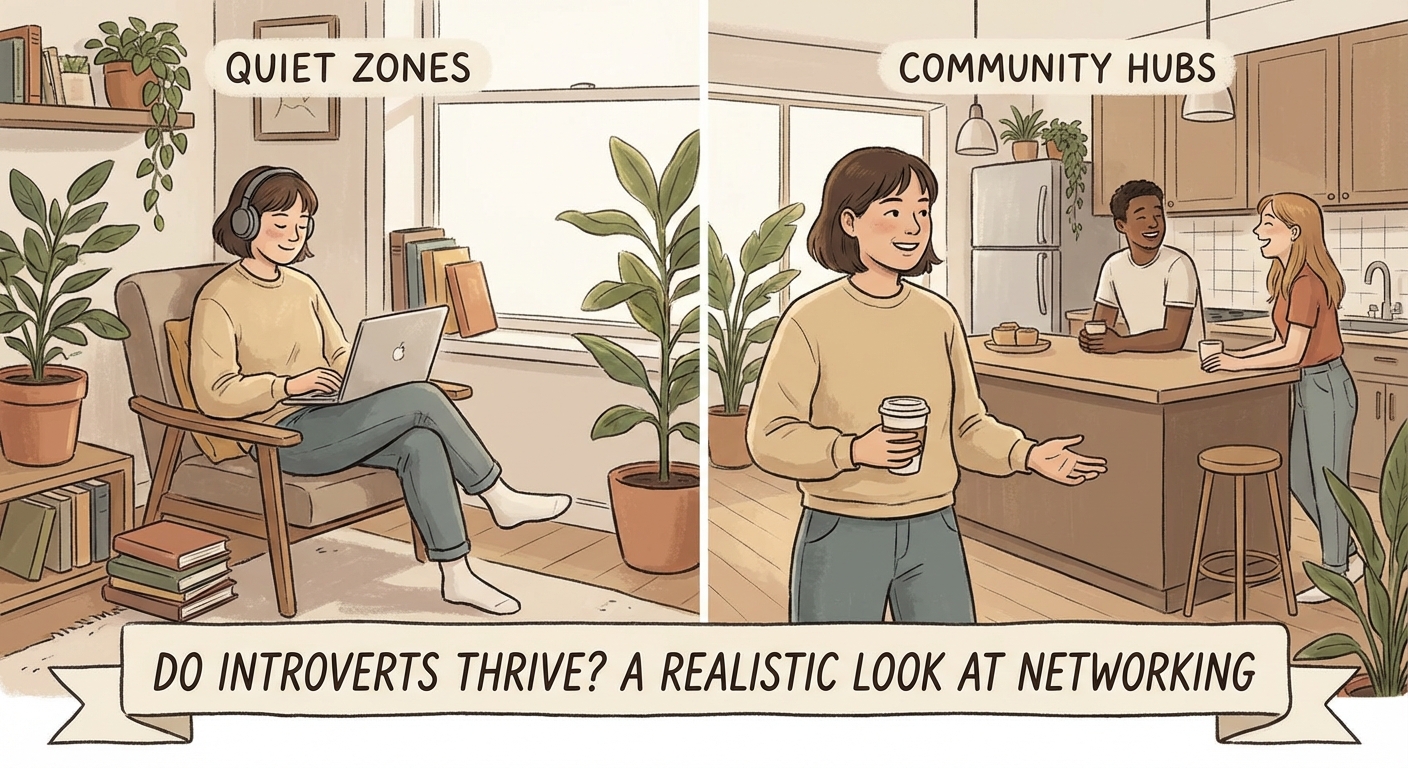
Let’s address the elephant in the room: networking expectations.
Many coworking spaces market themselves as “communities.” They host events, encourage collaboration, and create opportunities for spontaneous conversations. For extroverts, this is gold. For introverts, it can feel like a trap.
Here’s what you need to know about social dynamics:
- Most coworking spaces don’t force interaction. You can show up, work, and leave without attending a single event.
- Community managers usually respect boundaries. They might introduce themselves once, but they won’t hound you.
- Other members are often just as focused on their work as you are. The “networking culture” exists, but it’s not constant.
- Headphones are a universal signal for “I’m working.” People respect this.
The pressure you feel might be internal, not external. Nobody expects you to become best friends with every member.
The best coworking spaces offer community as an option, not an obligation. If you feel pressured to socialize constantly, you’re in the wrong space.
Choosing the Right Membership Type for Your Personality
Not all coworking setups are equal. Your membership type dramatically affects your experience.
Here’s how different options work for introverts:
| Membership Type | Introvert-Friendly Rating | Why It Works or Doesn’t |
|---|---|---|
| Hot Desk | Medium | Flexibility is great, but daily desk hunting can be socially draining |
| Dedicated Desk | High | Your own spot means less interaction, more routine comfort |
| Private Office | Very High | Maximum control, minimal forced interaction |
| Part-Time Pass | Medium to High | Limits exposure, lets you choose your days strategically |
Understanding coworking membership types helps you match your personality to the right setup.
If you’re trying a coworking space for the first time, start with a part-time pass. Test the environment before committing to full-time membership.
Finding Spaces That Respect Quiet Work
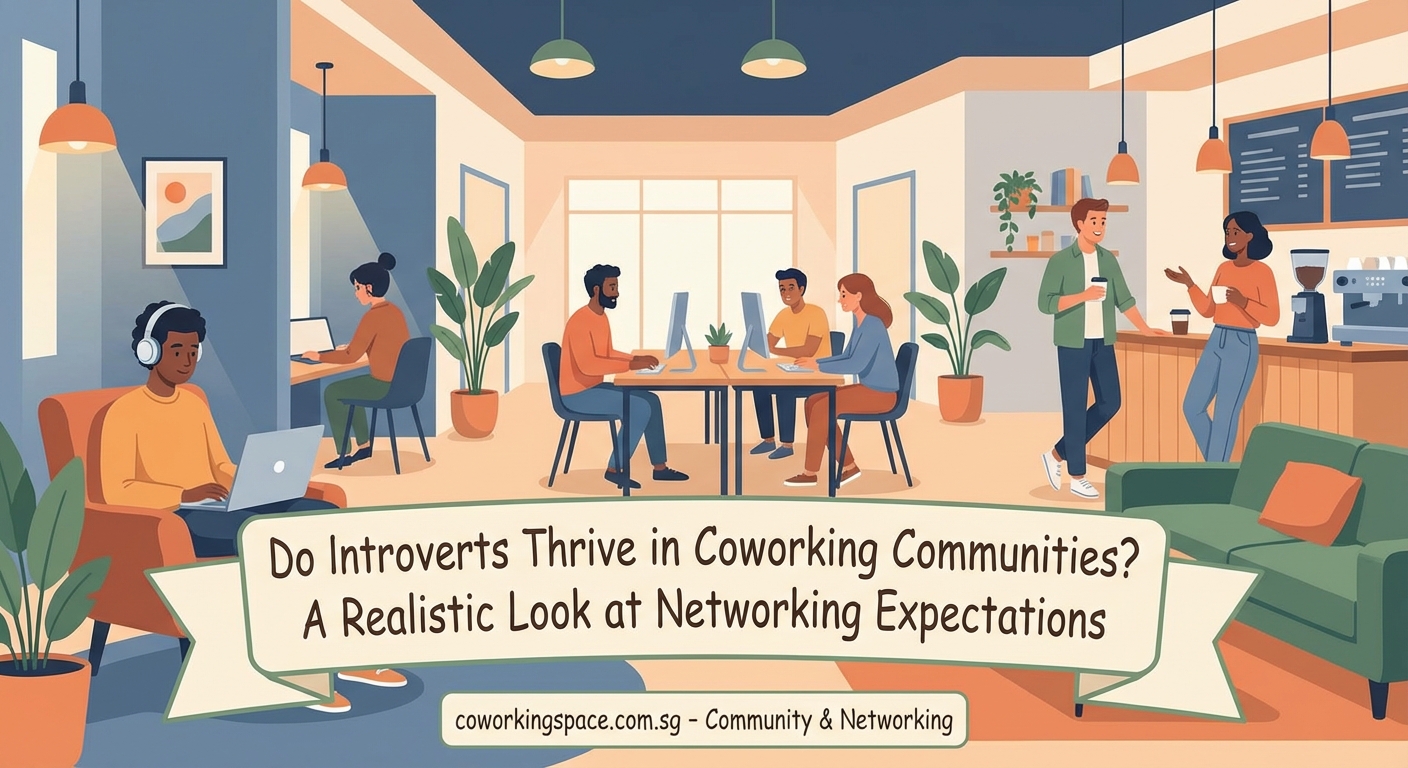
Not all coworking spaces are created equal. Some cater to startups with ping pong tables and constant buzz. Others prioritize quiet, focused work.
When evaluating a space, look for these features:
- Designated quiet zones or library-style areas
- Private phone booths for calls
- Clear noise policies that are actually enforced
- Multiple work areas so you can move if one gets loud
- Headphone culture that members respect
Visit during your typical work hours. Spend at least two hours there. Notice how people interact, how loud conversations get, and whether the space feels comfortable or chaotic.
How to choose your first coworking space in Singapore walks you through the evaluation process in detail.
Some spaces in Singapore specifically cater to focused workers. Look for spaces in business districts rather than trendy neighborhoods. They tend to attract professionals who value quiet productivity over social buzz.
Setting Boundaries Without Feeling Rude
You can be friendly without being constantly available.
Here’s how to set boundaries that protect your energy:
- Arrive with headphones already on. This signals you’re in work mode.
- Choose seats away from high-traffic areas like kitchens or entrances.
- Keep initial conversations brief but warm. A smile and “Nice to meet you, I’ve got a deadline today” works perfectly.
- Use meeting rooms when you need guaranteed silence for calls or deep work.
- Schedule your “social” time. If there’s a lunch event you want to attend, plan lighter work for that day.
Most people in coworking spaces understand that everyone has different work styles. You don’t need to explain or apologize for needing focus time.
If someone interrupts you repeatedly, a polite “I’m on a tight deadline this week, but let’s grab coffee next week” usually works. Most people will respect that.
The Benefits Introverts Actually Get from Coworking
Coworking spaces offer real advantages that introverts specifically appreciate.
Structured separation between work and home. You get the psychological benefit of “going to work” without the chaos of a traditional office. This helps with focus and work-life boundaries.
Optional social interaction. You can engage when you have the energy and retreat when you don’t. This flexibility lets you avoid the isolation of working from home without the constant demands of an office.
Ambient human presence without forced conversation. Being around other people working can be motivating. You get the energy of a shared space without the pressure to interact.
Professional environment for client meetings. When you do need to meet people, you have a proper space. This beats inviting clients to your home or meeting in noisy cafes.
The psychology behind coworking explains why shared spaces can actually boost focus for many introverts.
Common Mistakes Introverts Make in Coworking Spaces
Knowing what to avoid saves energy and frustration.
Mistake 1: Choosing the cheapest option without considering layout. A cheap hot desk in a noisy open area will drain you fast. Sometimes paying more for a dedicated desk or access to quiet zones is worth it.
Mistake 2: Forcing yourself to attend every event. You don’t need to prove you’re a “team player.” Skip events that don’t interest you. Attend the ones that do.
Mistake 3: Not using quiet zones or private spaces. Many introverts don’t realize these spaces exist or feel awkward using them. They’re there for you. Use them.
Mistake 4: Comparing yourself to extroverted members. Some people thrive on constant interaction. That’s fine for them. Your productivity doesn’t need to look like theirs.
Mistake 5: Not communicating your needs. If noise is a problem, talk to the community manager. Most spaces want members to be comfortable and will work with you.
Common coworking mistakes covers more pitfalls to avoid when you’re getting started.
How to Handle the Community Manager Relationship
Community managers can be your biggest ally or a source of stress, depending on how you manage the relationship.
Most community managers are extroverts. It’s part of the job. They might not naturally understand that their friendly check-ins feel intrusive to you.
Here’s how to make this relationship work:
- Be upfront early. “I’m pretty focused when I work, so if I seem quiet, that’s just my style.”
- Respond to their initial welcome warmly, but keep it brief.
- If they organize events, thank them but don’t feel obligated to attend.
- Use them as a resource. They can help you find the quietest spots, book meeting rooms, or handle issues with noise.
Good community managers will appreciate your honesty. They’d rather know your preferences than have you feel uncomfortable.
Strategic Networking for Introverts
You can build professional connections without exhausting yourself.
The key is quality over quantity. You don’t need to know everyone in the space. You need to know the right people.
Strategy 1: One-on-one coffee chats. Skip the group events. Invite interesting people for individual conversations. This feels more natural for introverts and builds deeper connections.
Strategy 2: Attend smaller, topic-specific events. A workshop on something relevant to your work is easier than a general “networking mixer.” You have a clear reason to be there and a natural conversation starter.
Strategy 3: Help others quietly. Answer questions in the member Slack channel. Share useful resources. This builds goodwill without requiring face-to-face interaction.
Strategy 4: Schedule networking time. Pick one day a week when you’re open to conversations. Other days, you’re in focus mode.
How coworking spaces help freelancers build professional networks offers specific tactics that work for different personality types.
When Coworking Spaces Don’t Work for Introverts
Be honest about whether coworking is right for you.
Some introverts genuinely prefer complete solitude. If you’ve tried coworking with proper boundaries and it still drains you, that’s valid. Home offices or private studios might be better fits.
Signs coworking might not work for you:
- You feel anxious every time you walk into the space
- You avoid going because the environment feels overwhelming
- You can’t focus even in quiet zones
- The commute and social energy cost outweigh the benefits
- You find yourself working from home most days anyway
Are coworking spaces worth the cost helps you evaluate whether the investment makes sense for your situation.
There’s no shame in deciding coworking isn’t for you. The goal is finding a work environment that supports your productivity and wellbeing, not forcing yourself into someone else’s ideal setup.
Practical Tips for Daily Comfort
Small adjustments make a big difference in your daily experience.
Morning routine matters. Arrive early before the space gets busy. You’ll get your preferred spot and start work in a calmer environment. Morning routines that boost productivity can help you establish a pattern that works.
Pack your comfort items. Noise-canceling headphones, a favorite water bottle, or a small plant for your desk can make the space feel more personal.
Take breaks outside. When you need to recharge, step outside rather than into common areas. A walk around the block gives you true alone time.
Use focus techniques. The Pomodoro technique works well in coworking spaces. It gives you permission to ignore everything during work blocks.
Create visual signals. A small “do not disturb” sign or simply facing away from walkways helps prevent interruptions.
The Reality Check on Productivity
Let’s talk about whether coworking actually helps you work better.
For some introverts, the answer is yes. The structure, separation from home distractions, and ambient energy of other people working creates ideal conditions for focus.
For others, the answer is no. The social energy required to exist in a shared space, even quietly, outweighs any benefits.
Most introverts fall somewhere in the middle. Certain tasks work better in coworking spaces. Deep, creative work might happen better at home. Routine tasks, calls, or administrative work might be perfect for the coworking environment.
Building a personal productivity system that works in any environment helps you maximize your output regardless of location.
Consider a hybrid approach. Use the coworking space three days a week for certain types of work. Work from home the other days. This gives you the benefits without the burnout.
Making Peace with Your Work Style
The coworking industry loves to celebrate community and collaboration. But productive work looks different for everyone.
You don’t need to become an extrovert to succeed in a coworking space. You need to find a space that respects your work style and use it on your terms.
The best coworking experience for introverts comes from choosing thoughtfully, setting clear boundaries, and remembering that you’re paying for a workspace, not a social obligation. Everything else is optional.
If you’re considering trying coworking, start small. Book a day pass. Test the environment. See how you feel after a few hours of work. Pay attention to your energy levels, not just your task completion.
Your productivity matters more than fitting someone else’s vision of what coworking should look like. Find the setup that lets you do your best work, whether that’s a quiet corner with headphones or a private office where you control every interaction.
The right coworking space won’t try to change you. It will simply give you the structure and flexibility to work the way you naturally do.