
Running a startup from your dining table works until you need to meet a potential investor. Or close a deal with a corporate client. Or interview your first hire.
Suddenly, your home office doesn’t cut it anymore.
Meeting room packages offer startups a practical middle ground. You get professional space when you need it, without signing a three-year lease or buying office furniture you can’t afford yet.
Meeting room packages for startups provide flexible access to professional spaces without permanent office commitments. These packages typically include hourly or credit-based bookings, essential equipment like projectors and whiteboards, and professional addresses for credibility. Most Singapore packages range from $30 to $80 per hour, with bulk credits offering better value. Startups benefit most when they need occasional client meetings, investor pitches, or team gatherings without the overhead of traditional office leases.
What Meeting Room Packages Actually Include
Most packages bundle hours or credits that you can use across multiple locations. Think of it like a gym membership, but for conference rooms.
A typical startup package includes:
- Bookable meeting rooms by the hour
- High-speed internet and power outlets
- Presentation equipment (projector, screen, HDMI cables)
- Whiteboards and markers
- Coffee and tea service
- Reception support for guest check-in
Some providers add extras like printing credits, virtual office addresses, or access to communal lounges. The specifics vary widely, so read the fine print before committing.
How Pricing Structures Work for Startups
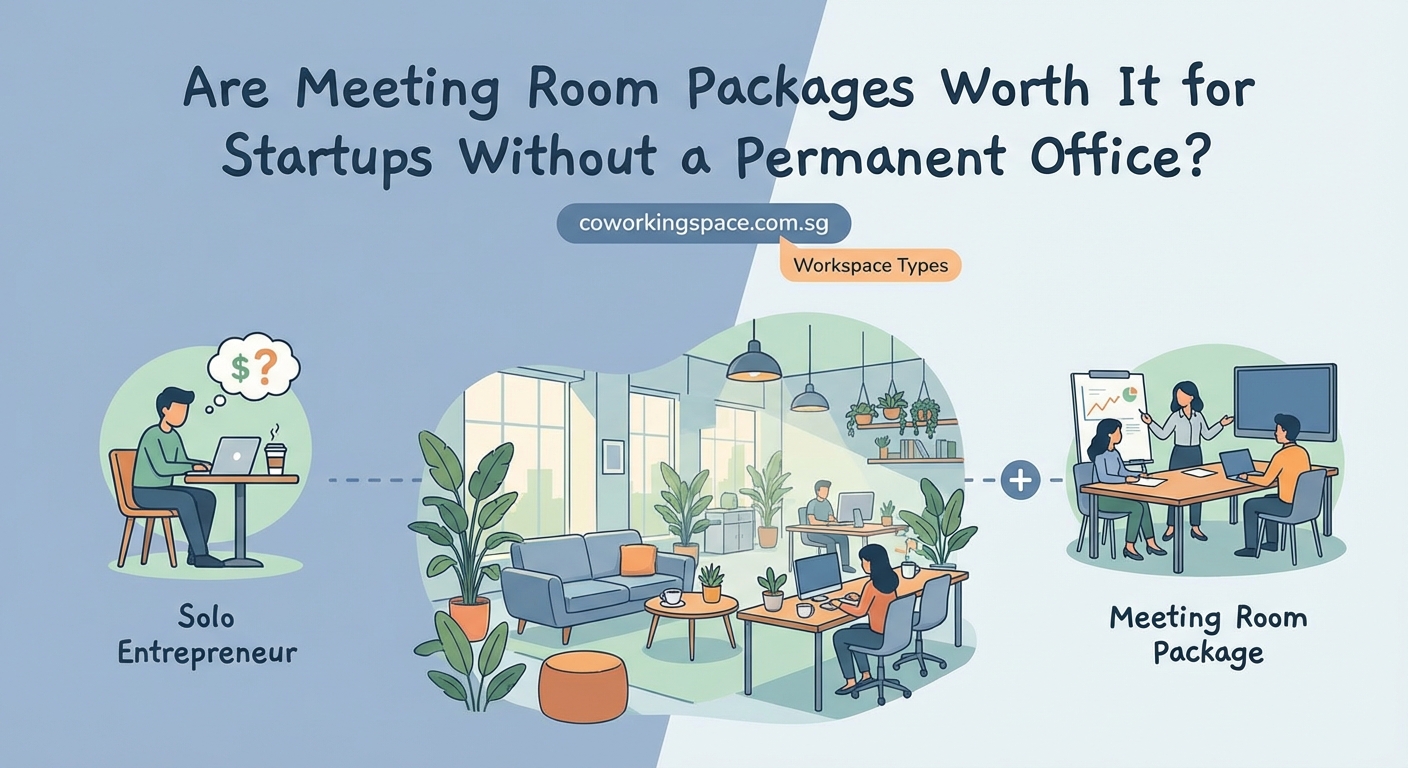
Singapore meeting room packages typically follow one of three models.
Pay-as-you-go charges you per hour, usually $40 to $80 depending on room size and location. No commitment, but you pay premium rates.
Credit bundles let you buy blocks of hours upfront at a discount. A 10-hour package might cost $350 instead of $500, saving you 30%. Credits usually expire after three to six months.
Monthly subscriptions give you a set number of hours each month, often with rollover options. A $200 monthly plan might include 8 hours, working out to $25 per hour.
Here’s a comparison of typical costs:
| Package Type | Typical Cost | Best For | Watch Out For |
|---|---|---|---|
| Single booking | $50-80/hour | One-off meetings | No discount, limited availability |
| 10-hour bundle | $350-500 | Quarterly needs | Expiration dates |
| Monthly plan | $200-400 | Regular meetings | Unused hours may not roll over |
| Annual contract | $150-300/month | Predictable schedule | Commitment penalties |
The math matters here. If you meet clients twice a month for two hours each, a monthly plan saves you roughly 40% compared to booking ad-hoc.
Choosing the Right Package Size for Your Stage
Early-stage startups often overestimate how much meeting space they need. You’re still figuring out product-market fit. Most conversations happen over video calls or coffee.
Start small. A 5-hour monthly package handles one investor meeting and one client pitch. You can always upgrade.
Growth-stage startups with regular client work need more predictable access. A 15 to 20-hour monthly package supports weekly team meetings, client presentations, and occasional workshops.
If you’re interviewing frequently or running regular training sessions, understanding coworking membership types might save more money than meeting room credits alone.
Start with the smallest package that covers your confirmed bookings, not your aspirational calendar. You can always book extra hours at the standard rate when needed.
Location Flexibility Versus Consistency
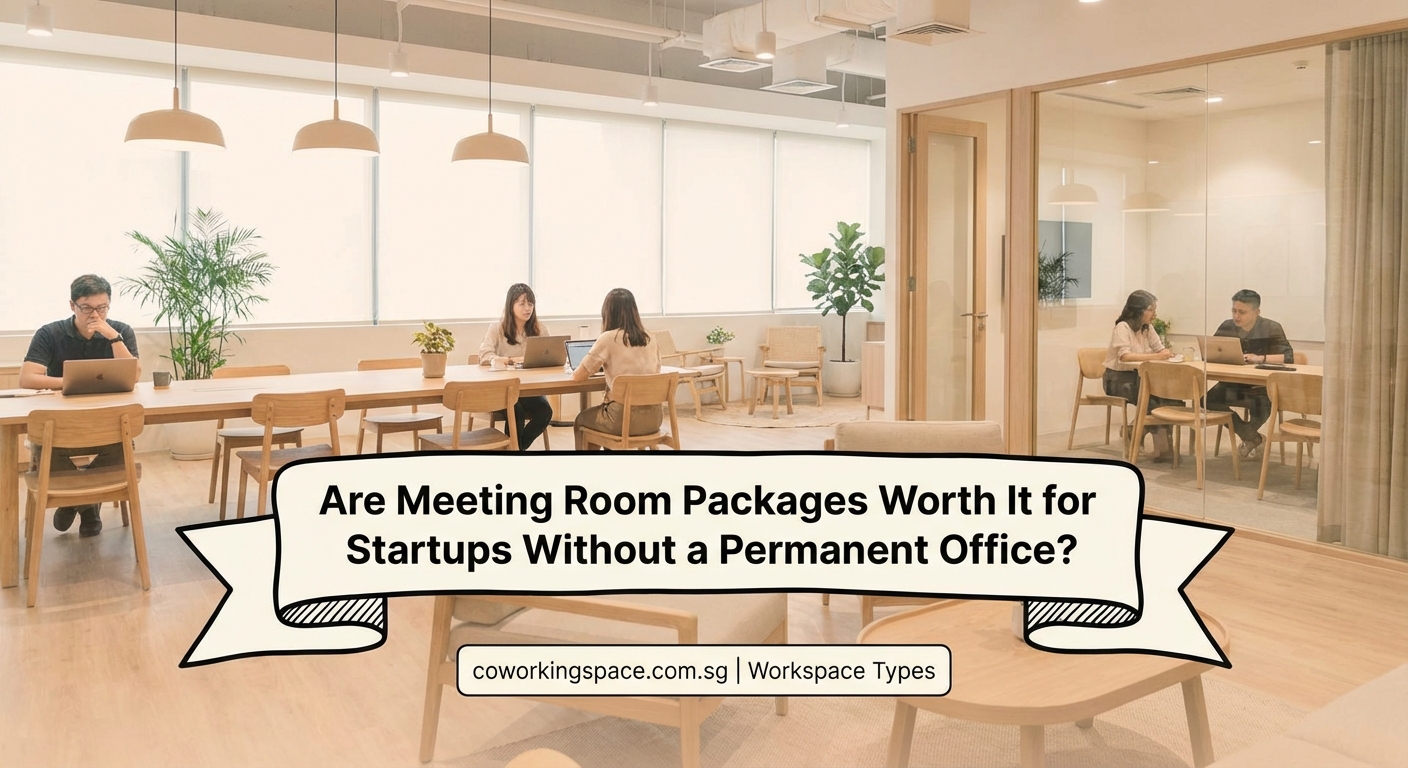
Some packages let you book rooms across multiple locations. Others tie you to a single space.
Multi-location access helps if your clients are spread across Singapore. You can meet a Raffles Place client downtown, then see a Paya Lebar startup founder near their office the same week.
Single-location packages cost less but limit your options. They work well if most of your meetings happen in one area, or if you want to build familiarity with one space.
Consider where your clients actually work. If 80% of your meetings happen in the CBD, paying extra for island-wide access wastes money.
Booking Systems and Lead Times
The best meeting room packages use simple online booking systems. You should be able to see availability, book a room, and get confirmation within two minutes.
Look for platforms that show:
- Real-time availability across all locations
- Room photos and capacity
- Equipment lists
- Cancellation policies
- Mobile booking options
Lead time requirements vary. Premium spaces in Raffles Place might need 48 hours notice during business hours. Suburban locations often accept same-day bookings.
Meeting room booking systems at established coworking spaces tend to be more reliable than standalone meeting room providers.
Hidden Costs That Catch Startups Off Guard
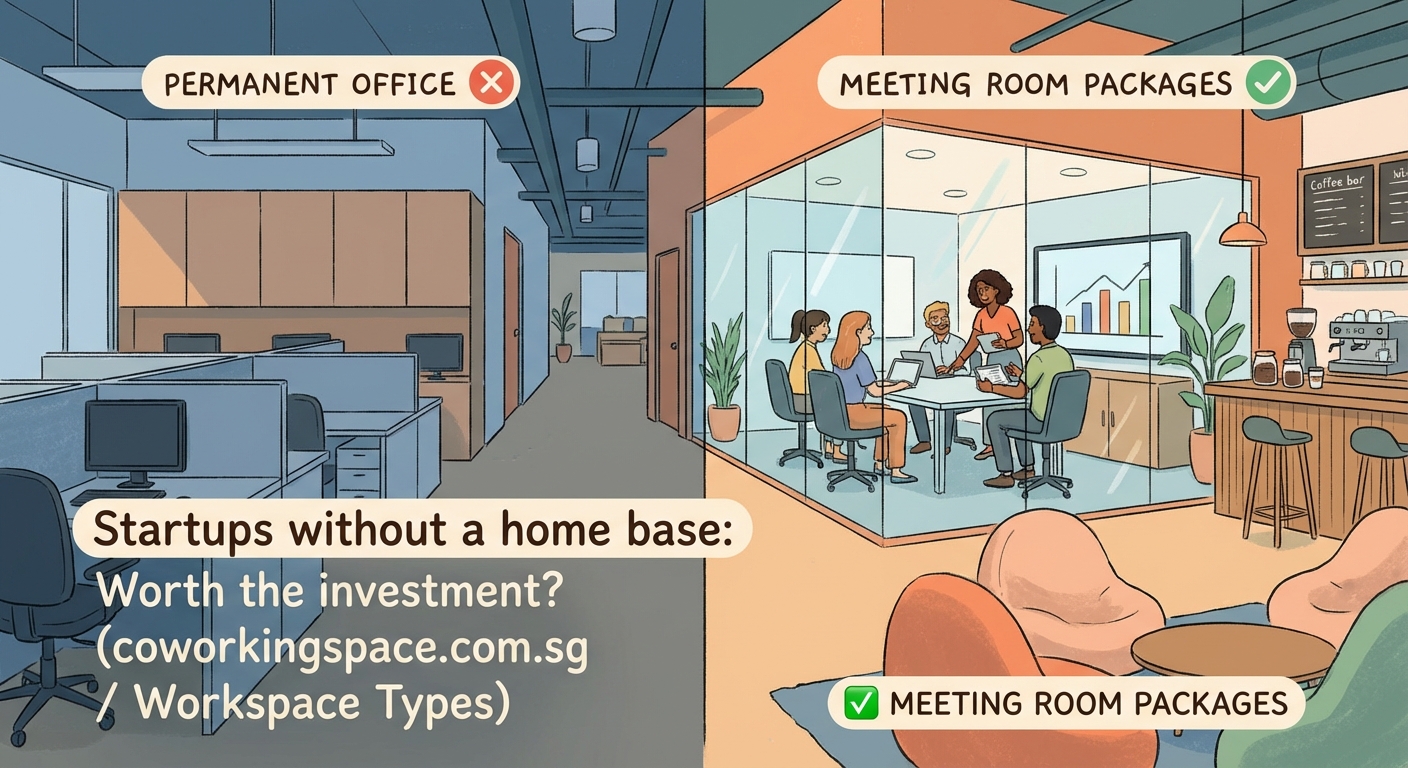
The advertised hourly rate rarely tells the whole story.
Watch for:
- Setup fees (some providers charge $50 to $100 initially)
- Deposit requirements (usually one month’s package cost)
- Cancellation penalties (often 50% if you cancel within 24 hours)
- Overtime charges (can be 150% of the regular rate)
- Equipment rental fees (some charge extra for projectors or video conferencing)
- Food and beverage minimums (especially for longer bookings)
A $300 monthly package can easily become $450 once you factor in the deposit, occasional overtime, and printing costs.
Ask about the total first-month cost, including all fees and deposits. Then calculate your actual per-hour rate based on realistic usage.
When Packages Make More Sense Than Traditional Offices
Meeting room packages shine in specific situations.
You’re bootstrapping and every dollar counts. A permanent office in Singapore costs $3,000 to $8,000 monthly. A meeting room package costs $200 to $500. The math is simple.
Your team works remotely but needs occasional face-time. Two team meetings per month plus one client presentation fits neatly into a small package.
You’re testing a new market. If Singapore is an experiment, committing to office space makes no sense. Meeting rooms let you maintain professional presence without the risk.
You meet clients at their offices most of the time. You just need backup space for the 20% of clients who want to meet on neutral ground.
What makes a coworking space different from a traditional office becomes relevant once you’re considering whether to upgrade from packages to permanent space.
Red Flags to Watch When Comparing Providers
Not all meeting room packages deliver equal value.
Avoid providers who:
- Require annual contracts for basic packages
- Don’t show room availability before you sign up
- Have consistently poor reviews about cleanliness or equipment
- Charge for basic amenities like WiFi or coffee
- Make it difficult to cancel or downgrade
- Don’t offer trial bookings or tours
Good providers let you tour the space, book a single session to test it out, and start with a monthly rolling contract. They’re confident you’ll stay because the service is solid.
If a provider pushes hard for annual commitment upfront, that’s usually a sign they struggle with retention.
Making Packages Work with Your Growth Timeline
Your meeting space needs will change faster than you expect.
In your first six months, you might book two meetings per month. By month twelve, you’re meeting clients weekly. By year two, you need dedicated desk space.
Choose providers that offer clear upgrade paths. The best ones let you:
- Start with a small meeting room package
- Add more hours as needed without penalty
- Transition to hot desking when you need daily workspace
- Eventually move to a dedicated desk or private office
This progression saves you the hassle of switching providers every six months. You build relationships with the community manager, learn the booking system, and maintain consistency for your clients.
How to choose your first coworking space in Singapore covers the factors that matter when you’re ready to make that transition from packages to regular membership.
Maximizing Value from Your Meeting Room Credits
Smart startups treat meeting room hours like a limited resource.
Here’s how to get more from every hour:
- Book longer sessions instead of multiple short ones (saves transition time)
- Schedule back-to-back meetings on the same day when possible
- Use the space for team planning sessions, not just client meetings
- Arrive early to test equipment and set up properly
- Take advantage of included amenities like printing and coffee
- Network with other members during breaks
Some spaces include access to communal areas even when you don’t have a room booked. Use the lounge to work between meetings instead of heading back home or to a cafe.
The goal is making your monthly package fee work harder for you.
Alternative Options Worth Considering
Meeting room packages aren’t the only solution for startups without offices.
Hotel meeting rooms cost more per hour but include catering and premium locations. They work well for board meetings or investor presentations where you need to impress.
Virtual offices provide a business address and mail handling for $80 to $200 monthly, with meeting room access available at additional cost. Good if you need a registered address but rarely meet clients in person.
Day passes at coworking spaces typically cost $30 to $50 and include workspace plus meeting room access at member rates. More flexible than packages if your needs are unpredictable.
Library meeting rooms in Singapore are surprisingly professional and cost just $15 to $30 per hour. Limited equipment and ambiance, but unbeatable value for internal team meetings.
Budget-friendly coworking spaces in Singapore under $300 per month explores other cost-effective workspace options for early-stage startups.
Common Mistakes Startups Make with Meeting Room Packages
I’ve watched dozens of startups waste money on meeting room packages. Here are the patterns that keep repeating.
Buying too many hours upfront. You think you’ll use 20 hours per month. You actually use six. Those credits expire unused.
Ignoring location convenience. You pick the cheapest package, but it’s in Jurong and all your clients are in the CBD. You waste time and money on transport.
Not reading cancellation policies. You book a room, then the meeting gets rescheduled. You lose the booking fee because you didn’t cancel 48 hours ahead.
Skipping the trial booking. You sign up for three months, then discover the WiFi is terrible or the rooms are always booked when you need them.
Forgetting about timezone differences. You book 2pm to 4pm for a call with US clients, forgetting they’re asleep. You waste the booking.
The fix for all of these? Start smaller than you think you need. Test before committing. Track actual usage for two months before upgrading.
Questions to Ask Before Signing Up
Walk through these questions with any provider you’re considering:
- What’s the total first-month cost including all fees and deposits?
- How far in advance do I need to book during peak times?
- What happens to unused hours at the end of the month?
- Can I upgrade or downgrade my package mid-contract?
- What’s your cancellation policy for both individual bookings and the package?
- Are there any blackout dates or times when members can’t book?
- What equipment is included versus what costs extra?
- Do you offer any trial bookings or tours before I commit?
Take notes. Compare answers across three providers. The differences will surprise you.
Building Professional Presence Without Permanent Space
Meeting room packages solve a specific problem for startups. You need to look professional occasionally without paying for professional space constantly.
They work best when your needs are predictable but limited. Two client meetings per month. One team gathering per week. Quarterly board meetings.
They stop making sense when you’re booking rooms daily or when your team needs regular workspace. At that point, are coworking spaces worth the cost becomes the more relevant question.
The right package depends entirely on your current stage, your meeting frequency, and your growth trajectory. Start small, track your usage carefully, and adjust as your needs evolve.
Most startups underuse their first package, then find the perfect size by month three. That’s normal. The key is choosing a provider flexible enough to grow with you, without penalizing you for starting cautiously.
Making Space Work for Your Startup Reality
Meeting room packages aren’t glamorous. They’re not going to make your startup successful by themselves.
But they solve a real problem. They let you meet clients professionally without the crushing overhead of office rent. They give your remote team a place to gather when needed. They provide a business address that doesn’t say “residential unit.”
The best package for your startup is the one you’ll actually use. Not the one with the most hours or the cheapest rate, but the one that matches your real meeting patterns, fits your budget comfortably, and comes from a provider you trust.
Start there. Adjust as you learn what you actually need. And remember that outgrowing a meeting room package is a good problem to have. It means your startup is growing.