
Starting a business in Singapore doesn’t mean you need to sign a five-year lease or shell out thousands for office furniture. A virtual office gives you a legitimate business address, mail handling, and professional services without the overhead of physical space. For remote entrepreneurs and startup founders, this model has become the foundation of how modern businesses operate in one of Asia’s most important commercial hubs.
Virtual office Singapore plans start from $50 monthly for basic mail handling, scaling to $500+ for premium addresses with meeting rooms and call answering. Most providers require annual commitments, though month-to-month options exist at higher rates. Key factors include address prestige, mail forwarding frequency, phone services, and access to physical meeting spaces. Registration with ACRA is straightforward, but compliance requirements differ by business structure.
What a virtual office actually includes
Virtual offices bundle services that previously required physical presence.
The core component is always a registered business address. This address appears on your company registration, business cards, and website. ACRA accepts virtual office addresses for most business types, with specific exceptions for financial services and certain regulated industries.
Mail handling comes next. Providers receive letters and packages on your behalf, then forward them based on your chosen frequency. Some scan mail and upload it to a portal. Others hold items for pickup or ship them internationally.
Phone answering separates basic plans from premium ones. Entry-level packages might only offer a local number that forwards to your mobile. Higher tiers include receptionists who answer calls using your company name, take messages, and transfer urgent matters to you directly.
Meeting room access rounds out most packages. You get a certain number of hours per month in professional conference spaces. This matters when clients expect face-to-face meetings or when you need to conduct interviews.
Breaking down virtual office pricing in Singapore
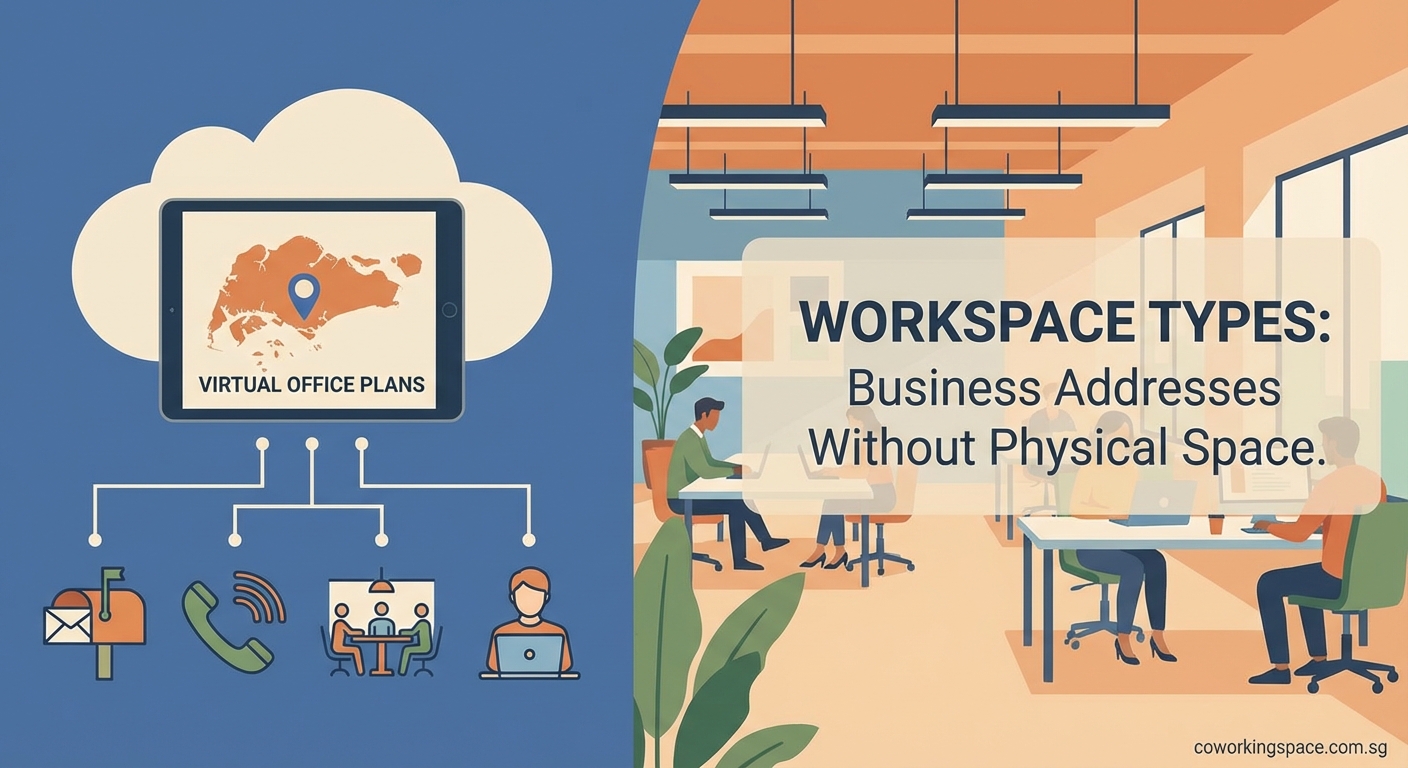
Costs vary dramatically based on location and services.
Basic packages in suburban areas start around $50 to $80 monthly. You get a business address and weekly mail forwarding. No phone services, no meeting rooms, no frills.
Mid-tier plans in business districts run $150 to $300 monthly. These include premium addresses in places like Raffles Place or Shenton Way, daily mail scanning, a local phone number with basic answering, and 4 to 8 hours of meeting room time per month.
Premium packages exceed $500 monthly. They offer prestigious addresses, dedicated phone lines with full receptionist services, unlimited mail scanning, priority meeting room booking, and sometimes access to hot desks when you need to work on-site.
Most providers push annual contracts with 10% to 20% discounts compared to month-to-month rates. A $200 monthly plan might drop to $170 if you commit to 12 months upfront.
Hidden costs include mail forwarding fees beyond your included quota, extra meeting room hours at $50 to $150 per hour, and administrative charges for company secretary services if you bundle those separately.
How to register your business with a virtual office address
The registration process is simpler than most founders expect.
- Choose your virtual office provider and sign the service agreement.
- Receive your official business address confirmation letter.
- Prepare your company name, business activities, and shareholder details.
- Submit your ACRA application through BizFile+ with the virtual office address.
- Receive your business registration certificate within 1 to 3 business days.
- Update the virtual office provider with your registered company name for mail handling.
ACRA doesn’t distinguish between virtual and physical offices in most cases. Your address just needs to be a real location where mail can be received during business hours.
Some business structures face restrictions. Certain financial advisory firms, money changers, and businesses requiring physical premises for regulatory reasons cannot use virtual offices as their sole address.
For entrepreneurs exploring how to choose your first coworking space in Singapore, virtual offices often serve as a stepping stone before committing to dedicated workspace.
Comparing virtual office providers in Singapore
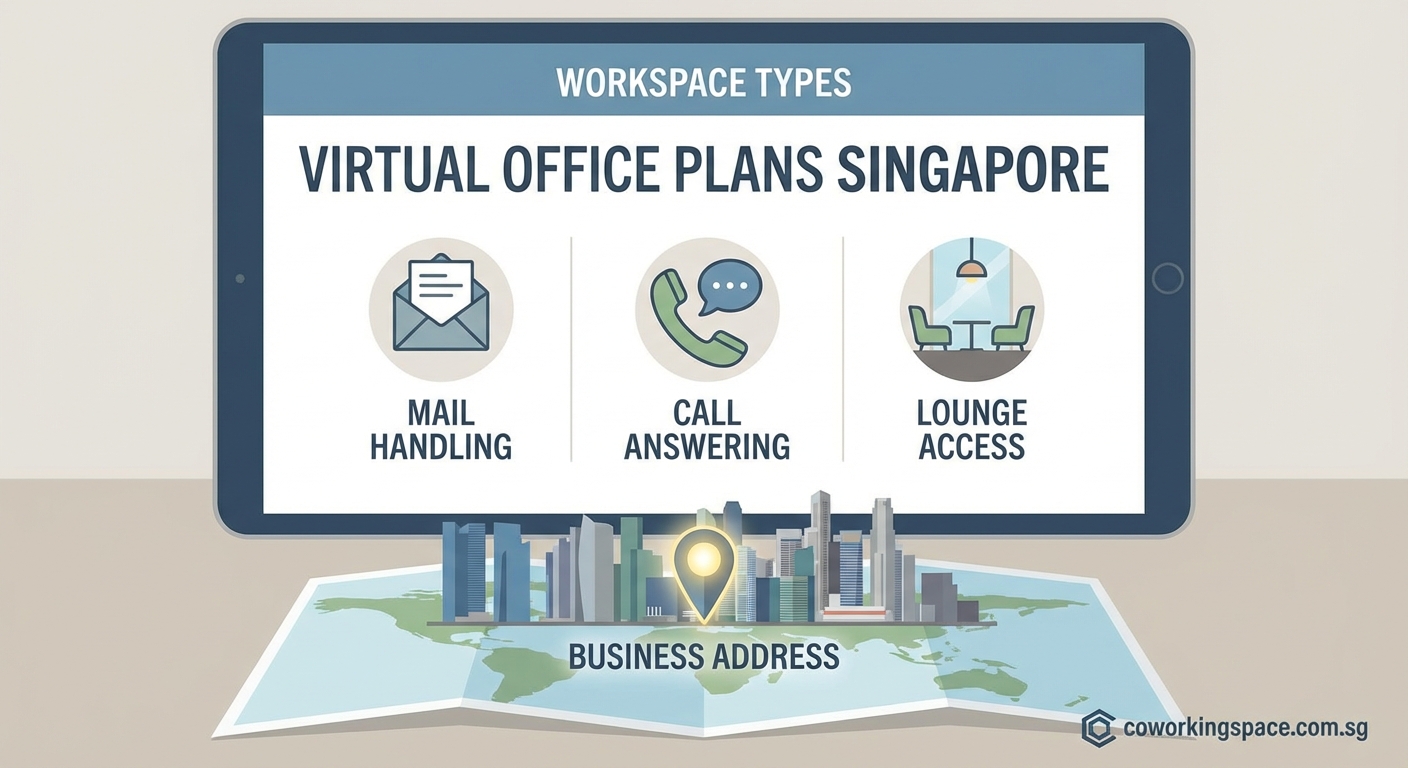
The market splits into three main categories.
Traditional providers operate multiple physical locations with reception staff. They’ve been around for decades and focus on corporate clients. Expect higher prices but more reliable service. Examples include Regus, Servcorp, and established local operators.
Coworking-based providers bundle virtual office services with their flexible workspace offerings. You pay less than traditional operators and gain access to hot desks or day passes. The trade-off is less formal reception services. Many members appreciate the understanding of coworking membership types when comparing options.
Digital-first platforms minimize physical presence and automate everything possible. Lowest prices, but you sacrifice face-to-face support. Mail scanning and forwarding happen through apps. Meeting rooms are booked through third-party networks.
| Provider Type | Monthly Cost Range | Best For | Watch Out For |
|---|---|---|---|
| Traditional | $250 to $600 | Established businesses needing prestige | Rigid contracts, hidden fees |
| Coworking-based | $100 to $350 | Startups wanting workspace flexibility | Limited phone services |
| Digital-first | $50 to $200 | Solo entrepreneurs on tight budgets | Minimal personal support |
Mail handling and forwarding logistics
How your mail gets to you matters more than most realize.
Weekly forwarding works for businesses receiving occasional correspondence. The provider batches your mail and ships it every Friday. Domestic delivery takes 1 to 2 days. International shipping to neighboring countries runs 3 to 5 days, longer for Europe or North America.
Daily scanning transforms paper mail into digital files. You log into a portal each morning and see scanned envelopes. Click to open and read full documents. This eliminates shipping delays but requires trust in digital security.
Package handling needs special attention. Not all virtual office providers accept courier deliveries. Those that do often charge per package. A $3 to $10 fee per item adds up if you regularly receive samples or supplies.
Mail storage limits exist in most contracts. Providers typically hold items for 30 days before charging storage fees or disposing of unclaimed mail. Set calendar reminders to check your account regularly.
Phone services and call handling options
Your phone setup shapes how professional your business sounds.
Basic forwarding gives you a Singapore number that rings through to your mobile. Clients hear your voice directly. Simple, but you answer every call yourself, including spam and sales pitches.
Receptionist services filter calls before they reach you. A real person answers with your company name, screens callers, and transfers important ones. Messages from others arrive by email or SMS. This costs more but saves hours of interruption.
Voicemail-to-email converts messages to audio files sent to your inbox. You listen when convenient rather than checking a separate voicemail box. Most modern providers include this feature even in basic plans.
Call recording and transcription appear in premium packages. Useful for sales calls or client consultations where you need written records. Legal requirements around recording vary, so check local regulations before relying on this feature.
Meeting room access and booking systems
Physical meeting space remains valuable even for virtual businesses.
Included hours in your package typically range from 2 to 10 per month. A 2-hour meeting room session accommodates one client presentation. Ten hours covers weekly team meetings for a small startup.
Booking systems vary wildly. Good providers use apps where you see real-time availability and reserve spaces instantly. Poor ones require emailing an administrator and waiting for confirmation. Test the booking process during your trial period.
Room sizes matter. A 4-person room works for intimate client meetings. An 8-person space handles team workshops. Conference rooms seating 12 or more suit board meetings or investor presentations. Check what sizes your included hours cover.
Amenities in meeting rooms should include video conferencing equipment, whiteboards, and reliable WiFi. Premium locations add catering services, but expect to pay extra for food and beverages. Those familiar with meeting room booking systems at Singapore coworking spaces know what features to demand.
Overflow charges apply when you exceed included hours. Rates of $50 to $150 per hour make it expensive to rely on last-minute bookings. Budget conservatively and upgrade your plan if you consistently run over.
Prestigious addresses and their actual impact
Location affects more than just your image.
Central Business District addresses in Raffles Place, Shenton Way, or Marina Bay carry weight with banks and investors. Financial institutions view these locations as indicators of seriousness. This matters when applying for business loans or opening corporate accounts.
Orchard Road addresses appeal to retail and consumer-facing brands. Clients recognize the area and associate it with established businesses. The premium for these addresses runs 20% to 40% higher than suburban options.
Emerging business districts like Paya Lebar Quarter or one-north offer middle-ground pricing. You get a modern, recognizable address without CBD premiums. Tech startups and creative agencies often prefer these locations for their contemporary feel. For more context, see why Paya Lebar Quarter is becoming Singapore’s hottest coworking hub.
Suburban addresses in Jurong, Tampines, or Woodlands cost least but may raise questions with certain clients. They work fine for online businesses, consultants, or companies primarily serving local markets rather than international clients.
Choose your address based on who you’re trying to impress. If your clients are local SMEs, a suburban address saves money without hurting credibility. If you’re pitching to multinational corporations or seeking venture capital, invest in a CBD address.
Legal and compliance considerations
Virtual offices create specific regulatory obligations.
ACRA requires your registered address to be a place where official correspondence can be received during business hours. Virtual office providers meet this requirement by staffing reception during standard hours. You cannot use a PO box or residential address for most business types.
Company secretaries must be notified of your registered address within 14 days of any change. Most virtual office providers offer company secretary services as an add-on, simplifying this compliance requirement.
Tax correspondence from IRAS goes to your registered address. Missing tax deadlines because you didn’t check your mail can result in penalties. Set up mail scanning or very frequent forwarding if you’re outside Singapore regularly.
Work pass applications sometimes require proof of genuine business operations. Immigration authorities may request evidence beyond just a virtual office address. Keep documentation of your business activities, client contracts, and financial records to support visa applications.
When virtual offices work best
Certain business models benefit more than others.
E-commerce businesses shipping from overseas warehouses rarely need physical office space. A virtual office provides the Singapore presence required for regional expansion without unnecessary overhead. Those considering broader workspace strategies might review whether coworking spaces are worth the cost compared to purely virtual setups.
Consultants and freelancers serving international clients need a professional address for invoices and contracts. Meeting clients happens in cafes or their offices, making dedicated workspace unnecessary.
Remote-first startups with distributed teams use virtual offices to establish legal presence while employees work from home or coworking spaces. The registered address anchors the company legally without constraining where people actually work.
Professional services like accounting, legal consulting, or business advisory benefit from prestigious addresses that build trust. Clients expect established firms to have CBD locations, even if consultants work remotely.
When you need more than a virtual office
Some situations demand physical workspace.
Growing teams need collaboration space. Once you hire three or more people, the cost of meeting in cafes or booking external meeting rooms exceeds the value of a virtual office. Consider transitioning to a dedicated desk or small private office.
Client-facing businesses requiring frequent in-person meetings burn through included meeting room hours fast. Calculate your actual usage. If you’re booking external rooms more than twice monthly, a physical office with your own meeting space becomes cost-effective.
Regulated industries with compliance requirements around physical premises cannot rely solely on virtual addresses. Check your specific industry regulations before committing to a virtual-only setup.
Businesses handling physical inventory or requiring secure document storage need actual space. Virtual offices don’t accommodate filing cabinets or product samples.
Switching providers without disrupting your business
Changing virtual office providers requires planning.
Give at least 30 days notice before switching. This allows time to update your business registration with ACRA, notify banks and vendors, and ensure mail forwarding continues uninterrupted.
File an ACRA change of address notification immediately after securing your new virtual office. The process takes minutes online but becomes legally effective only after processing, usually within 1 to 2 business days.
Arrange mail forwarding from your old provider to your new address for at least 60 days. This catches any correspondence sent to the old address during the transition. Some providers charge for this service, but it prevents lost mail.
Update your address on all business materials, including your website, email signatures, invoices, contracts, and marketing collateral. Create a checklist to ensure nothing gets missed.
Notify key contacts directly rather than relying on them to notice address changes. Send a brief email to major clients, suppliers, and partners announcing your new address.
Cost comparison with traditional office space
The math heavily favors virtual offices for small operations.
A basic physical office in Singapore’s CBD costs $3,000 to $6,000 monthly for 200 to 300 square feet. Add utilities, internet, furniture, and maintenance, and you’re looking at $4,000 to $7,000 monthly minimum.
A premium virtual office with all services runs $300 to $500 monthly. Even adding frequent meeting room bookings keeps total costs under $1,000 monthly.
The break-even point arrives when you need dedicated space more than 40 hours weekly or require permanent staff presence. At that stage, the cost per hour of workspace makes physical offices more economical.
For businesses weighing different options, understanding what makes a coworking space different from a traditional office helps clarify the middle ground between virtual and conventional setups.
Building credibility with a virtual address
Your address alone doesn’t make you credible, but it supports other trust signals.
Professional website design, active social media presence, client testimonials, and case studies matter more than your address. The virtual office simply ensures your address doesn’t undermine other credibility markers.
Google My Business listings work with virtual office addresses. You can claim your location and appear in local search results. Some providers restrict this in their terms, so verify before relying on it for local SEO.
Bank account opening becomes easier with established virtual office providers. Banks recognize reputable operators and process applications more smoothly than with unknown addresses.
Client perception varies by industry and geography. B2B service providers face fewer questions about virtual addresses than retail businesses. International clients care less about Singapore address specifics than local customers who recognize neighborhoods.
The future of virtual business presence
Virtual offices continue evolving beyond basic mail forwarding.
Hybrid memberships combining virtual addresses with coworking access are growing. You maintain a registered address while gaining flexibility to work on-site when needed. This model suits businesses in transition between fully remote and physical operations. For those exploring this approach, hybrid workspace memberships mixing home, coworking, and client sites offer practical frameworks.
Technology integration improves constantly. AI-powered mail sorting, automated meeting room booking, and virtual receptionist services using natural language processing make virtual offices more capable each year.
Regulatory acceptance increases as virtual operations become mainstream. Government agencies and financial institutions that once viewed virtual addresses skeptically now treat them as standard business practice.
Global virtual office networks let you establish presence in multiple cities through a single provider. This matters for businesses expanding regionally without committing to physical offices in each market.
Making your virtual office decision
Start by calculating your actual needs rather than aspirational ones.
List every service you’ll use monthly. How much mail do you receive? How many client meetings happen in person? Do you need phone answering or just forwarding?
Compare three to five providers in your preferred location. Request detailed pricing including all fees, not just the advertised monthly rate. Ask about contract terms, cancellation policies, and what happens if the provider closes or relocates.
Test the service before committing long-term. Many providers offer month-to-month trials or 3-month initial contracts. Use this period to verify mail handling reliability, phone service quality, and meeting room availability.
Read reviews from current users, not just testimonials on provider websites. Check Google reviews, Facebook groups for Singapore entrepreneurs, and business forums for honest feedback about service quality and hidden issues.
Consider future growth. If you expect to hire staff or increase meeting frequency within 12 months, factor in how easy it is to upgrade your plan or transition to physical workspace with the same provider.
Your business address as a strategic tool
A virtual office in Singapore gives you more than just an address on paper. It establishes legal presence in a major business hub, provides professional infrastructure without capital investment, and keeps your options open as your business evolves. The right plan balances cost against the services you’ll actually use, not the ones that sound impressive in marketing materials.
Choose based on your current reality, not future dreams. You can always upgrade. Starting lean with a basic package and adding services as you grow beats overpaying for features you never use. Your business address should work for you, not drain resources that could go toward actually building your company.