Singapore attracts remote workers with its world-class infrastructure, stable political environment, and strategic location in Southeast Asia. But building a sustainable digital nomad career Singapore requires more than booking a flight and finding a coworking space. You need to understand visa limitations, tax obligations, income diversification, and how to create a professional setup that supports long-term remote work.
Building a digital nomad career Singapore means understanding visa restrictions, diversifying income streams, establishing tax compliance, and creating sustainable work routines. Singapore offers excellent infrastructure and networking opportunities, but success requires careful planning around legal requirements, high living costs, and maintaining client relationships across time zones while leveraging coworking spaces for productivity and professional connections.
Understanding Singapore’s Legal Framework for Remote Work
Singapore does not offer a dedicated digital nomad visa. This reality shapes every decision you make about working remotely from the city-state.
Tourist visas allow 30 to 90 days of stay depending on your passport. Working for overseas clients while on a tourist visa exists in a gray area. Singapore’s immigration authorities focus on local employment, not remote work for foreign companies.
An Employment Pass requires a Singapore-based employer and minimum salary thresholds that change annually. The EntrePass serves entrepreneurs with innovative business plans and funding. Neither option suits most digital nomads who work for multiple international clients.
Some remote workers use the virtual office plans in Singapore to establish a business address without needing physical office space. This helps with client communication and banking requirements.
Long-term stays require creative solutions. Some professionals rotate between Singapore and neighboring countries every few months. Others secure proper work authorization through incorporation or employment arrangements.
“The biggest mistake digital nomads make in Singapore is assuming tourist status covers all remote work activities. Understanding your legal position protects you from immigration issues and ensures tax compliance.”
Establishing Multiple Income Streams

Sustainable remote careers rarely depend on a single client or income source. Diversification protects you from market changes, client loss, and currency fluctuations.
Here are proven income models that work well from Singapore:
-
Retainer consulting: Monthly agreements with 3 to 5 clients create predictable revenue. You provide ongoing strategic advice, review work, or maintain systems. Payment arrives consistently regardless of project volume.
-
Project-based services: Design, development, writing, or marketing projects with defined deliverables. Higher rates compensate for income gaps between projects. Build a pipeline with overlapping timelines.
-
Digital products: Create once, sell repeatedly. Online courses, templates, tools, or resources generate passive income. Initial creation requires significant effort, but ongoing maintenance stays minimal.
-
Affiliate partnerships: Recommend tools and services you genuinely use. Commissions add supplementary income without creating new deliverables. Focus on products relevant to your audience.
-
Teaching and workshops: Online or in-person sessions leverage your expertise. Singapore’s business community values specialized knowledge. One workshop can equal weeks of client work.
The networking strategies for digital nomads in Singapore’s coworking community helps you connect with potential clients and collaborators who can become income sources.
Managing Taxes Across Jurisdictions
Tax obligations follow citizenship, residency, and income source. Digital nomads often face complex situations involving multiple countries.
Singapore taxes residents on worldwide income. Tax residency typically requires 183 days of physical presence in a calendar year. Non-residents pay tax only on Singapore-sourced income.
Track your days carefully. Immigration stamps, flight bookings, and accommodation receipts document your presence. Many professionals use spreadsheets or apps to monitor time spent in each country.
Your home country may still claim tax rights. U.S. citizens pay federal tax on worldwide income regardless of residence. Other countries use different rules based on domicile, citizenship, or physical presence.
Common tax scenarios for remote workers:
| Situation | Tax Obligation | Documentation Needed |
|---|---|---|
| Under 183 days in Singapore | Home country only | Travel records, client invoices |
| Over 183 days in Singapore | Singapore resident rates | Tax residency certificate, income statements |
| Multiple country presence | Depends on treaties | Detailed travel log, professional advice |
| Singapore-incorporated business | Corporate and personal tax | Company accounts, director’s fees records |
Professional tax advice costs money but prevents expensive mistakes. Find advisors familiar with cross-border remote work, not just local employment situations.
The budget-friendly coworking spaces in Singapore under $300 per month can help reduce business expenses that affect your tax calculations.
Choosing the Right Workspace Setup
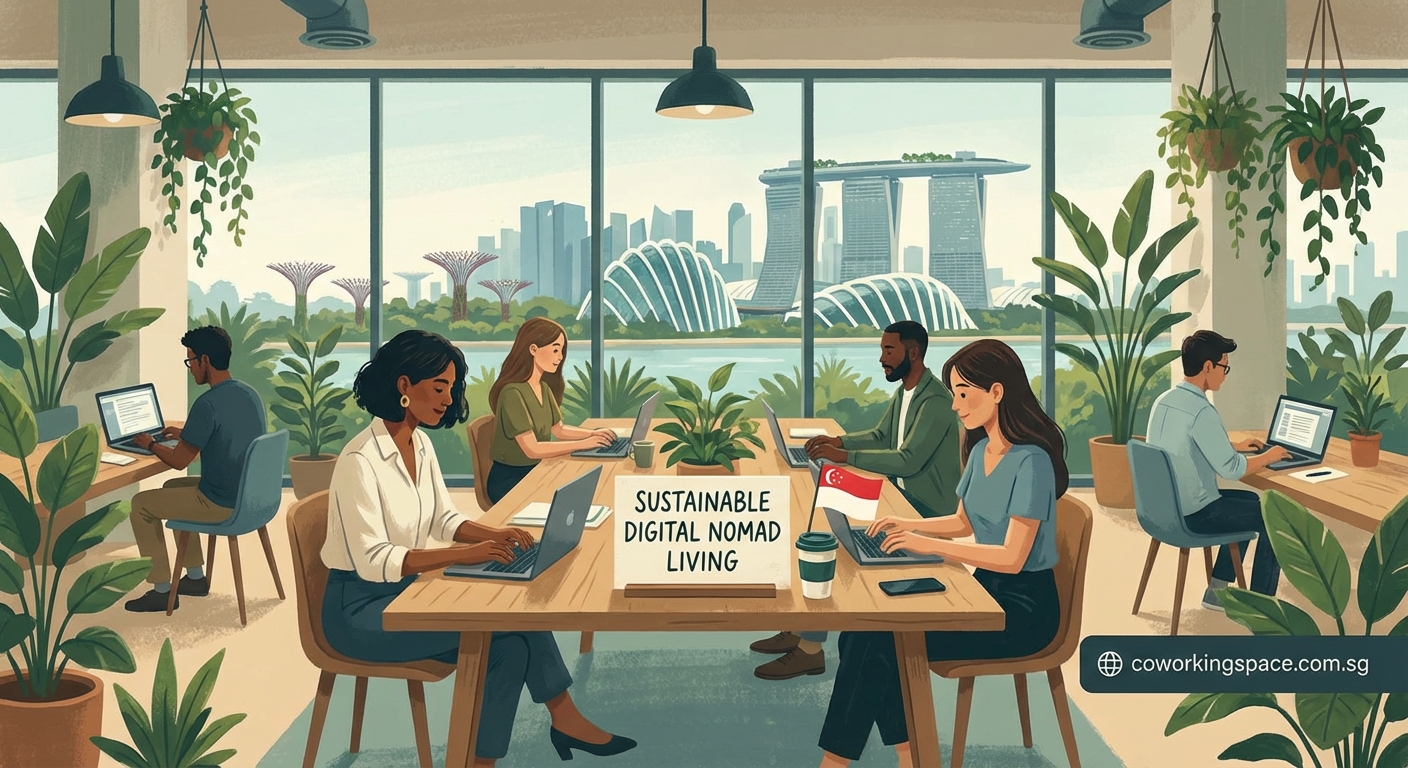
Your physical work environment directly impacts productivity, professional image, and networking opportunities.
Singapore offers various workspace options beyond home offices. Each serves different needs and budgets.
Coworking spaces provide professional environments with reliable internet, meeting rooms, and community events. Memberships range from day passes to dedicated desks. The best coworking spaces in Singapore for digital nomads on short-term stays cater specifically to remote workers with flexible terms.
Cafes and libraries work for occasional variety but lack privacy for calls. Singapore’s cafes often have time limits during busy periods. Libraries maintain quiet environments unsuitable for video meetings.
Serviced apartments with work areas suit longer stays. You get dedicated space without furniture shopping or lease commitments. Costs exceed standard rentals but include utilities and maintenance.
Hotel rooms serve short visits but isolate you from professional communities. The how to create a productive mobile office in any hotel room guide helps optimize temporary setups.
Consider these factors when selecting workspaces:
- Internet speed and reliability for video calls
- Noise levels during your working hours
- Access to meeting rooms for client presentations
- Proximity to your accommodation
- Community quality and networking opportunities
- Flexibility to change plans without penalties
Many successful digital nomads split time between home offices and coworking spaces. This hybrid workspace memberships approach balances cost, focus time, and social connection.
Building Professional Credibility from Afar
Clients and employers need confidence in your ability to deliver quality work remotely. Location independence requires extra effort to demonstrate reliability.
Start with communication systems. Use professional email addresses with your domain, not free services. Maintain consistent response times across time zones. Set clear availability windows and honor them.
Video presence matters. Invest in good lighting, a neutral background, and quality audio equipment. Your home setup should look as professional as any office. Test technology before important calls.
Portfolio and case studies prove capabilities better than resumes. Document results with specific metrics. Before and after comparisons, revenue increases, or efficiency gains show tangible value.
Client testimonials add social proof. Request feedback after successful projects. Video testimonials carry more weight than written quotes. LinkedIn recommendations help potential clients verify your work quality.
Time zone management prevents missed deadlines and communication gaps. Use world clocks, scheduling tools, and calendar blocking. The managing time zones and client calls while working across countries resource provides specific strategies.
Regular check-ins maintain relationships. Weekly updates, monthly reports, or quarterly reviews keep clients informed. Over-communication beats silence when working remotely.
Maintaining Productivity Across Time Zones

Singapore sits in GMT+8, convenient for Asia-Pacific clients but challenging for European or American schedules.
Structure your day around client needs and personal energy patterns. Some digital nomads work split schedules with morning and evening blocks separated by afternoon breaks.
The 7 morning routines that boost productivity for coworking space members helps establish consistent start times regardless of the previous day’s schedule.
Tools that support asynchronous work reduce real-time meeting requirements:
- Project management platforms with clear task assignments
- Video recordings for updates and presentations
- Shared documents with commenting features
- Automated status reports and dashboards
Block time for deep work when your energy peaks. Protect these hours from meetings and notifications. The how to eliminate distractions and stay focused in a shared workspace techniques apply whether you work from home or coworking spaces.
Batch similar tasks together. Handle all client communication in one block. Complete creative work during another period. Administrative tasks fit into low-energy times.
Managing Costs in an Expensive City
Singapore ranks among the world’s most expensive cities. Digital nomads need realistic budgets that cover more than coworking memberships.
Monthly expenses for a comfortable remote work lifestyle:
- Accommodation: $1,500 to $3,000 for studios or one-bedroom apartments in convenient locations
- Workspace: $200 to $600 for coworking memberships depending on understanding coworking membership types
- Food: $600 to $1,200 mixing hawker centers and restaurants
- Transportation: $100 to $200 for public transit and occasional rides
- Health insurance: $200 to $400 for international coverage
- Phone and internet: $50 to $100 for mobile and home connections
Total baseline costs range from $2,650 to $5,500 monthly before entertainment, travel, or savings.
The is Singapore worth it for digital nomads breaks down whether the infrastructure and opportunities justify the expense.
Cost-saving strategies include:
- Eating at hawker centers instead of restaurants saves $400+ monthly
- Living in neighborhoods like Geylang or Kallang reduces rent by 30%
- Using day passes instead of full memberships when traveling frequently
- Sharing accommodations with other remote workers
- Taking advantage of free coworking space events for meals and networking
Track expenses in your home currency and Singapore dollars. Exchange rate fluctuations affect your real costs. Budget conservatively to handle rate changes.
Creating Sustainable Client Relationships
Long-term remote careers depend on repeat clients and referrals, not constant prospecting.
Deliver more than promised. Small extras cost little but create memorable experiences. Finish projects early when possible. Include bonus recommendations or insights.
Transparent pricing prevents disputes. Outline exactly what clients receive for each fee level. Explain additional costs upfront. The are coworking spaces worth the cost thinking applies to your services too.
Regular value delivery maintains engagement between major projects. Share relevant articles, introduce useful contacts, or provide brief consultations. Stay present without being pushy.
Handle problems immediately. Acknowledge issues, propose solutions, and implement fixes. How you manage difficulties matters more than avoiding them entirely.
Payment terms protect your cash flow. Request deposits for new clients. Use milestone payments for larger projects. Maintain reserves to handle late payments without stress.
Raise rates gradually with existing clients. Annual increases of 5 to 10 percent reflect growing expertise and inflation. New clients pay current rates, creating natural progression.
Leveraging Singapore’s Professional Community
Singapore’s compact geography and active business scene create networking advantages despite high costs.
Industry events happen constantly. Meetups, conferences, workshops, and seminars cover every professional field. Many coworking spaces host regular gatherings included in membership fees.
The 5 community events that make coworking spaces worth the investment shows how workspace communities facilitate connections.
Professional associations welcome international members. Join groups aligned with your expertise or target clients. Attend meetings consistently to build recognition.
Online communities complement in-person networking. Singapore-focused Facebook groups, LinkedIn communities, and Slack channels connect remote workers. The how coworking spaces help freelancers build professional networks in Singapore extends to digital platforms.
Give before asking. Offer expertise, make introductions, or share resources. Helpful people attract opportunities naturally.
Follow up after initial meetings. Connect on LinkedIn, send relevant articles, or suggest coffee meetings. Relationships develop through repeated, low-pressure interactions.
Adapting to Singapore’s Work Culture
Understanding local business norms helps even when your clients sit overseas. Singapore’s multicultural environment blends various traditions.
Punctuality matters significantly. Arrive five minutes early for meetings. Respond to messages within 24 hours. Delays require explanations and apologies.
Hierarchy influences communication styles. Use titles and formal language initially. Wait for permission before using first names. This applies particularly with older professionals or senior executives.
Direct confrontation rarely happens in professional settings. Singaporeans often communicate disagreement indirectly. Listen for hesitation, qualifiers, or requests to “consider” alternatives.
Business cards exchange follows protocol. Present and receive with both hands. Review cards carefully before storing them. Treating cards casually shows disrespect.
The 5 common coworking mistakes that new members make includes cultural considerations for shared workspaces.
Planning for Long-Term Sustainability
Successful digital nomad careers require thinking beyond the next few months.
Build emergency funds covering six months of expenses. Remote work income fluctuates. Savings prevent desperate decisions during slow periods.
Invest in professional development. Skills become obsolete without updates. Allocate time and money for courses, certifications, or coaching. The 7 essential apps and tools every digital nomad needs in Singapore changes as technology evolves.
Maintain retirement contributions. Remote workers lack employer pension schemes. Set up individual retirement accounts and contribute regularly. Compound interest requires time to work.
Health insurance needs international coverage. Singapore’s healthcare costs exceed many countries. Comprehensive plans prevent financial disasters from medical emergencies.
Plan visa strategies years ahead. Research residency options in multiple countries. Some digital nomads pursue citizenship by investment or ancestry claims for long-term stability.
Document your business properly. Contracts, invoices, and work samples prove income for visa applications, loans, or tax filings. Organization saves stress during important processes.
Common Mistakes That Derail Remote Careers
Learning from others’ errors saves time and money.
Underpricing services to win initial clients creates unsustainable situations. Low rates attract difficult clients and prevent business growth. Start with market rates and demonstrate value.
Neglecting legal compliance leads to visa violations, tax penalties, or business registration issues. The can digital nomads work legally in Singapore clarifies actual requirements versus assumptions.
Isolating yourself damages mental health and limits opportunities. Remote work requires intentional social connection. The remote workers’ guide to avoiding isolation through strategic coworking membership addresses this challenge.
Ignoring time zone impacts frustrates clients and creates burnout. Working around the clock to accommodate all time zones fails long-term. Set boundaries and communicate availability clearly.
Skipping contracts invites payment disputes and scope creep. Written agreements protect both parties. Templates work fine for standard projects.
Chasing every opportunity spreads focus too thin. Specialization often generates more income than generalization. The finding your tribe approach applies to client selection too.
Making Singapore Work for Your Career Goals
Singapore offers unique advantages for building a digital nomad career despite its challenges. The infrastructure supports reliable remote work. The business environment creates networking opportunities. The location provides access to Asian markets and clients.
Success requires realistic planning around visa limitations, cost management, and professional credibility. Start with clear income targets that cover Singapore’s expenses plus savings. Establish proper legal and tax structures before problems arise. Build workspace routines that support productivity and community connection.
Your digital nomad career Singapore becomes sustainable when you treat it as a real business, not an extended vacation. Invest in the right tools, relationships, and systems. The how digital nomads can maximize productivity in Singapore’s coworking spaces provides additional strategies for optimizing your setup.
Singapore rewards professionals who combine flexibility with discipline, independence with community, and ambition with realistic planning.