Singapore looks perfect on paper. World-class infrastructure, English-speaking population, and a strategic location for exploring Asia. But when you see the price tags, you start wondering if this city-state actually makes sense for your remote work lifestyle.
The reality is more nuanced than the glossy travel blogs suggest. Some digital nomads thrive here. Others burn through their savings in three months and leave frustrated. Your experience depends entirely on understanding what you’re getting into before you book that flight.
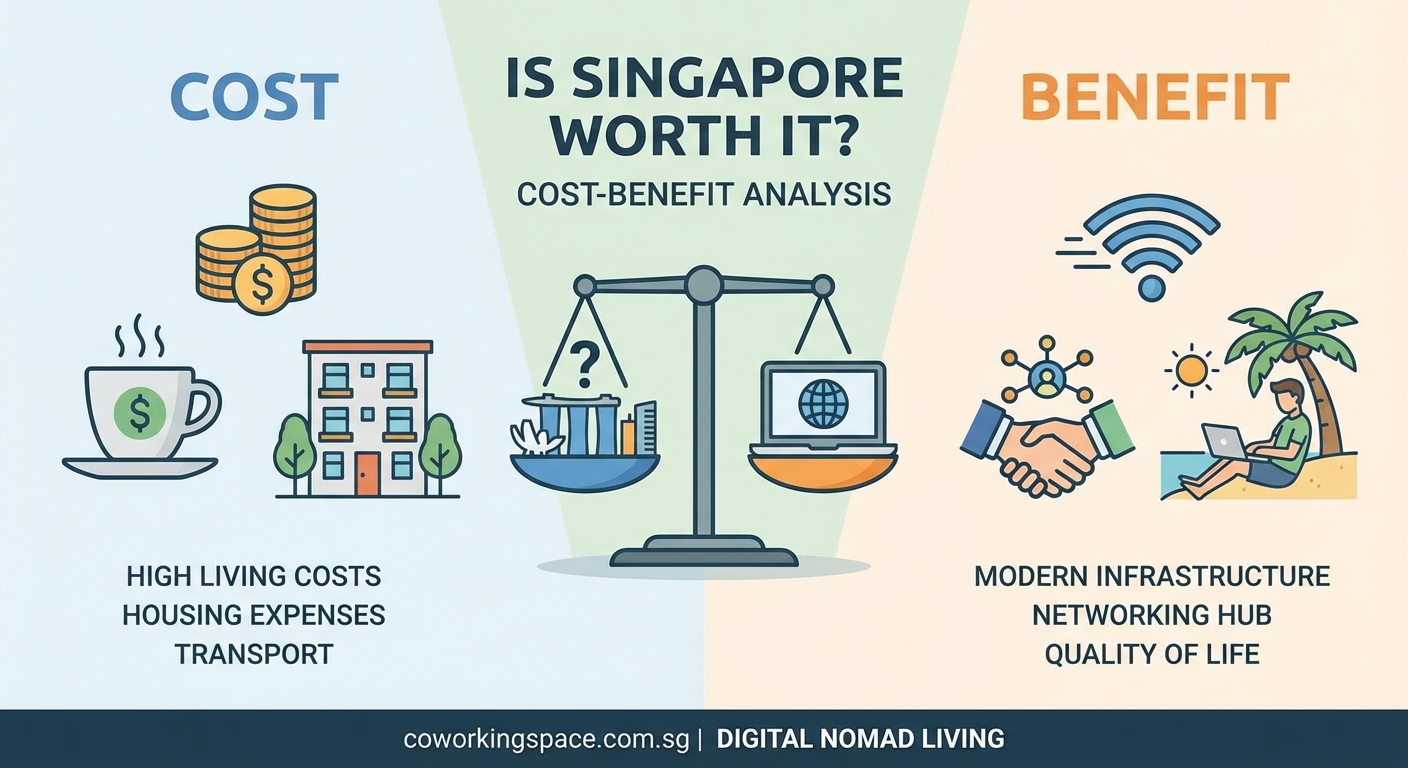
Singapore works best for established remote professionals earning $4,000+ monthly who value safety, efficiency, and business networking over budget travel. The high costs are offset by exceptional infrastructure, zero crime concerns, and access to Asia’s business hub. Short-term stays (1-3 months) often provide better value than long-term residence due to visa limitations and housing expenses.
What Singapore Actually Costs for Remote Workers
Let’s talk numbers without the sugar coating.
A basic existence in Singapore runs around $3,000 to $4,500 monthly. That includes a room in a shared apartment, meals at hawker centers, and public transport. You’re not living large, but you’re comfortable.
Here’s the realistic breakdown:
- Housing: $800-$1,500 for a room in a shared flat (HDB or condo)
- Coworking space membership: $250-$600 depending on location and setup
- Food: $400-$800 (hawker centers vs restaurants makes a huge difference)
- Transport: $80-$150 (MRT is efficient and affordable)
- Phone and internet: $30-$50
- Entertainment and miscellaneous: $300-$500
The temptation to upgrade hits hard. That $1,500 room becomes a $2,500 studio. Hawker center meals get replaced by brunch spots. Your $3,500 budget suddenly needs $6,000 to maintain the same lifestyle you thought you wanted.
Coffee culture alone can wreck your budget. A latte at a specialty cafe costs $6-$8. Do that daily and you’ve spent $200 on coffee alone.
The Visa Reality Check Nobody Talks About
Here’s where things get complicated.
Singapore doesn’t have a digital nomad visa. You can stay 90 days visa-free (for most Western passport holders), but you’re technically not allowed to work, even remotely for foreign clients.
The practical reality? Many digital nomads work on tourist visas anyway. Immigration rarely checks your laptop. But it’s a legal gray area that makes some people uncomfortable.
Your actual options:
- Tourist visa (90 days): Stay under the radar, work for foreign clients, don’t tell immigration
- Employment Pass: Requires a local employer and minimum salary threshold ($5,000+ monthly)
- EntrePass: For entrepreneurs with a Singapore-registered business and funding
- Long-term visit pass: Through family ties or other special circumstances
The visa and residency realities make Singapore better suited for shorter stays rather than establishing a permanent base. Most digital nomads treat it as a 1-3 month hub between other Southeast Asian destinations.
“I spent six months trying to figure out how to stay legally in Singapore. Eventually I realized the city works better as a quarterly base rather than a permanent home. Now I spend three months here, three months in Thailand, and it’s perfect.” – Remote developer who’s been doing this for four years
Infrastructure That Actually Justifies the Premium
The internet is stupid fast. We’re talking 500 Mbps to 1 Gbps fiber connections as standard. Video calls never drop. File uploads happen instantly. If your work depends on reliable connectivity, Singapore delivers.
Public transport runs like clockwork. The MRT gets you anywhere in 30-40 minutes. Buses arrive exactly on schedule. You can plan your day down to the minute without worrying about delays.
Safety is genuinely exceptional. You can walk anywhere at 3 AM without concern. Leave your laptop on a cafe table while you use the bathroom and it’ll still be there. This peace of mind has real value when you’re working with expensive equipment.
Healthcare quality ranks among the world’s best. If something goes wrong, you’re in the right place. Travel insurance becomes less critical when you’re in a city with world-class medical facilities.
The coworking infrastructure is extensive. Every neighborhood has multiple options. You can find everything from budget hot desks to premium private offices with meeting rooms.
Where Singapore Beats Other Digital Nomad Hubs
Business networking actually happens here. Unlike Bali or Chiang Mai, Singapore attracts serious entrepreneurs and corporate professionals. The connections you make have real business value.
English is the working language. No language barrier means you can handle banking, legal matters, and daily life without translation apps or frustration.
Regional travel hub. Changi Airport connects to everywhere in Asia with competitive prices. Weekend trips to Bangkok, Kuala Lumpur, or Jakarta are cheap and easy.
Zero tolerance for scams. Tourist traps and taxi scams are virtually nonexistent. Prices are transparent. Regulations are enforced. You’re not constantly on guard.
Professional environment. Working from cafes doesn’t get judged. Business meetings in coworking spaces feel legitimate. The whole city operates with professional standards.
The Hidden Costs That Surprise New Arrivals
Alcohol is brutally expensive. A beer at a bar costs $10-$15. A bottle of wine at a restaurant runs $60-$100. If you drink regularly, budget accordingly.
Air conditioning is mandatory, not optional. The tropical climate means running AC constantly. Electricity bills add $100-$200 monthly to your housing costs.
Gym memberships cost $100-$200 monthly for basic facilities. Outdoor exercise is possible but uncomfortable in the heat and humidity.
Socializing costs more than you expect. Dinner with friends easily hits $40-$60 per person. Entertainment, events, and activities all carry premium pricing.
Visa runs add up. If you’re doing the 90-day tourist visa strategy, you need to leave the country every three months. Budget $200-$500 for each visa run depending on destination.
Coworking Space Strategy for Singapore
Choosing the right workspace setup makes a huge difference in your monthly budget.
Hot desking works if you’re flexible and don’t need consistent workspace. Expect $250-$400 monthly for unlimited access to multiple locations.
Dedicated desks cost $500-$800 but give you a permanent spot and storage. Worth it if you have equipment or prefer routine.
Private offices start at $1,200 for a single person space. Only makes sense if you’re running a team or need complete privacy for calls.
Day passes ($25-$50) are better for occasional use. If you’re only working from a coworking space 2-3 days per week, skip the monthly membership.
Location matters more than amenities. A basic space in a convenient neighborhood beats a fancy facility that requires 45 minutes of commuting.
| Workspace Option | Monthly Cost | Best For | Avoid If |
|---|---|---|---|
| Hot desk | $250-$400 | Flexible schedule, minimal equipment | Need consistent setup |
| Dedicated desk | $500-$800 | Regular routine, some equipment | Budget-conscious |
| Private office | $1,200+ | Teams, frequent calls | Solo worker |
| Day passes | $25-$50 per day | Occasional use only | Working full-time |
The Food Economics Everyone Gets Wrong
Hawker centers are your financial lifeline. A full meal costs $4-$7. Eat here for breakfast, lunch, and dinner and you’ll spend $400-$500 monthly on food.
The problem is hawker center fatigue sets in. After two weeks, you crave variety. That’s when the budget starts bleeding.
Smart approach:
- Breakfast at home (toast, coffee, fruit): $2
- Lunch at hawker center: $5
- Dinner alternating between hawker centers and mid-range restaurants: $10-$20
- Weekend splurge meal: $40-$60
This mixed strategy keeps your monthly food costs around $600-$800 while maintaining variety and sanity.
Groceries cost more than eating at hawker centers. Cooking only makes financial sense if you’re feeding multiple people or have specific dietary requirements.
Coffee strategy matters. Skip the $7 lattes. Find local kopitiams (traditional coffee shops) where coffee costs $1.50. Your wallet will thank you.
Housing Strategies That Actually Work
Finding short-term housing in Singapore requires patience and flexibility.
Serviced apartments ($2,500-$4,000 monthly) work for first-timers. Everything’s included, no hassle, but you pay a premium for convenience.
HDB room rentals ($800-$1,200) offer the best value. You’re renting a room in a government-built apartment. Shared kitchen and bathroom. Local roommates. Real Singapore life.
Condo room rentals ($1,200-$1,800) split the difference. Better facilities, often expat roommates, more space, but higher costs.
Coliving spaces ($1,000-$1,500) have emerged as a middle ground. Private bedroom, shared common areas, built-in community of remote workers.
Avoid signing long leases initially. Start with a month-to-month arrangement. Test different neighborhoods. Commute times matter more than you think.
Popular areas for digital nomads:
- Tiong Bahru: Hipster cafes, central location, artistic vibe
- Bugis/Kampong Glam: Cultural area, good food, reasonable prices
- Geylang/Kallang: Budget-friendly, authentic, less polished
- Tanjong Pagar: Business district, professional atmosphere, pricier
When Singapore Makes Financial Sense
You’re earning $5,000+ monthly and value efficiency over cost savings. The infrastructure and safety justify the premium.
You need to be in a business hub. Your work involves networking, client meetings, or building professional connections in Asia.
You’re using Singapore as a base while traveling regionally. The strategic location makes weekend trips and visa runs easy.
You have specific health, safety, or infrastructure requirements. Chronic conditions, valuable equipment, or work that demands perfect internet make Singapore worth the cost.
You’re testing Asian markets for your business. Singapore provides the stability and resources to research and develop regional opportunities.
When You Should Skip Singapore
Your income is under $3,000 monthly. The math doesn’t work. You’ll stress about money constantly and miss the experience.
You prioritize budget travel and cultural immersion. Thailand, Vietnam, or Indonesia offer better value and more authentic experiences.
You want a relaxed, beach-focused lifestyle. Singapore is urban, intense, and work-focused. Not a chill destination.
You need long-term visa stability. The 90-day limitation and lack of digital nomad visa make extended stays complicated.
You’re looking for a party scene or bohemian atmosphere. Singapore is regulated, orderly, and focused on business. The creative chaos of other Southeast Asian cities doesn’t exist here.
Making the Numbers Work Without Sacrificing Quality
Start with a three-month test run. Commit to understanding the city before making long-term decisions.
Track every expense for the first month. Your assumptions about costs are probably wrong. Real data helps you adjust.
Build a productivity system that maximizes your earning potential. Singapore’s infrastructure supports focused, high-value work. Use it.
Network strategically. The business connections you make here can generate income that offsets the higher costs.
Consider the tax implications. Singapore has favorable tax rates, but your situation depends on citizenship, income sources, and residency status.
The Lifestyle Trade-offs Nobody Mentions
Singapore is sterile compared to other Southeast Asian cities. The charm and chaos of Bangkok or the beaches of Bali don’t exist here.
Regulations govern everything. Chewing gum is banned. Jaywalking gets fined. Smoking areas are designated. Some people love the order. Others feel suffocated.
The heat and humidity are relentless. You’re indoors with AC most of the time. Outdoor activities require planning around weather.
Social life requires effort. The transient expat population means constant turnover. Building deep friendships takes work.
Nature requires travel. Singapore has parks, but real nature means leaving the city. Weekend trips to Malaysia or Indonesia become necessary for mental health.
Comparing Singapore to Other Digital Nomad Destinations
| Factor | Singapore | Bangkok | Bali | Chiang Mai |
|---|---|---|---|---|
| Monthly cost | $3,500-$5,000 | $1,500-$2,500 | $1,200-$2,000 | $1,000-$1,800 |
| Internet quality | Excellent | Very good | Variable | Good |
| Safety | Exceptional | Good | Moderate | Very good |
| Visa situation | 90 days tourist | Various options | 60 days + extensions | Various options |
| Business networking | Excellent | Good | Limited | Limited |
| Healthcare | World-class | Very good | Basic to good | Good |
Three-Month Budget Blueprint
Month one: $4,500
- Housing: $1,200 (serviced apartment while searching)
- Coworking: $400 (testing different spaces)
- Food: $800 (learning the hawker system)
- Transport: $150
- Setup costs: $500 (phone plan, supplies, deposits)
- Entertainment: $400
- Buffer: $1,050
Month two: $3,800
- Housing: $1,000 (moved to HDB room)
- Coworking: $350 (found preferred space)
- Food: $600 (hawker center routine established)
- Transport: $100
- Entertainment: $300
- Visa run: $400
- Buffer: $1,050
Month three: $3,500
- Housing: $1,000
- Coworking: $350
- Food: $600
- Transport: $100
- Entertainment: $300
- Savings: $150
- Buffer: $1,000
Tools and Apps That Make Singapore Easier
Grab: Southeast Asian ride-hailing and food delivery. Essential for getting around and ordering meals.
SimplyGo: Tap your credit card for public transport. No need for separate transit cards.
Carousell: Local marketplace for buying and selling everything. Great for finding used furniture or equipment.
HungryGoWhere: Restaurant discovery and reviews. Helps you find good food without tourist trap pricing.
OneMap: Government mapping app with better local detail than Google Maps.
MeetUp: Find events and communities. Singapore has active groups for almost every interest.
Wise: International money transfers with better rates than banks. Essential for managing finances across countries.
The Honest Assessment After Living Here
Singapore works brilliantly for specific situations. If you’re an established remote professional who values efficiency, safety, and business networking, the high costs make sense.
The city punishes budget travelers and rewards high earners. There’s no middle ground. You either have the income to enjoy what Singapore offers, or you’re constantly stressed about money.
The strategic approach treats Singapore as a quarterly base rather than a permanent home. Spend three months here working intensely, building connections, and handling business matters. Then move to cheaper destinations for the rest of the year.
This pattern lets you access Singapore’s benefits without the long-term financial drain. You maintain a presence in Asia’s business hub while keeping your overall costs manageable.
Your Singapore Decision Framework
Answer these questions honestly:
- Is your monthly income above $4,000 after taxes?
- Does your work benefit from face-to-face networking and professional connections?
- Do you value safety, efficiency, and infrastructure over cultural immersion and budget travel?
- Can you handle intense urban environments without beach access or nature?
- Are you comfortable with legal gray areas around work visas?
Three or more “yes” answers mean Singapore probably works for you. Two or fewer suggests other destinations make more sense.
The city doesn’t pretend to be something it’s not. Singapore is expensive, regulated, and business-focused. Those qualities either align with your needs or they don’t.
Making Your Singapore Strategy Work
Start with a one-month test if you’re uncertain. Book a serviced apartment, try different neighborhoods, test the coworking spaces, and see how the lifestyle fits.
Build your daily productivity routines around Singapore’s strengths. The infrastructure supports focused, high-value work. Use that advantage to increase your income.
Track your actual spending against your budget. Adjust quickly when reality doesn’t match expectations.
Connect with other remote workers through coworking spaces and online communities. The shared experience helps you navigate challenges and find opportunities.
Treat Singapore as part of a broader Asia strategy rather than an isolated destination. The regional connectivity makes it perfect for exploring other countries while maintaining a stable base.
The question isn’t whether Singapore is worth it in absolute terms. The question is whether it’s worth it for your specific situation, income level, and professional goals. Only you can answer that honestly.