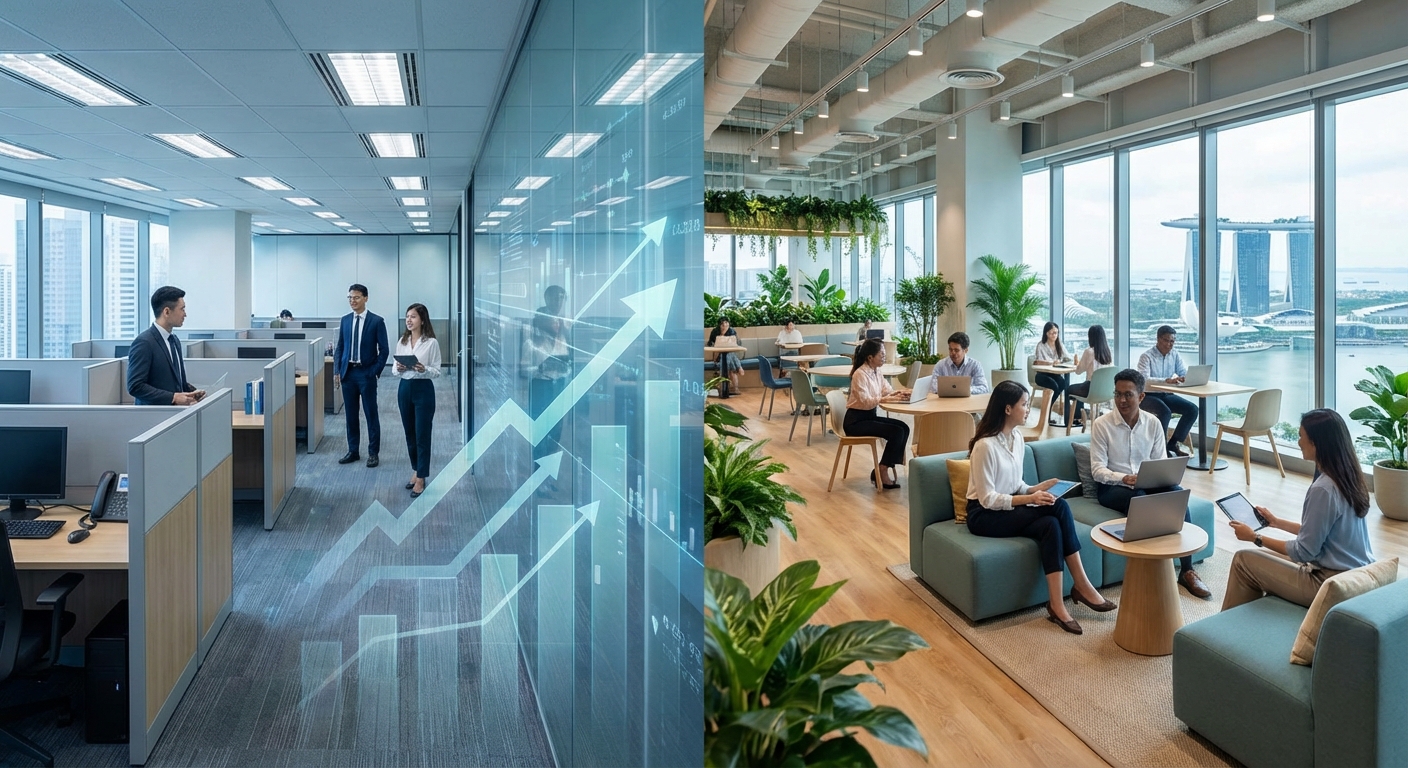
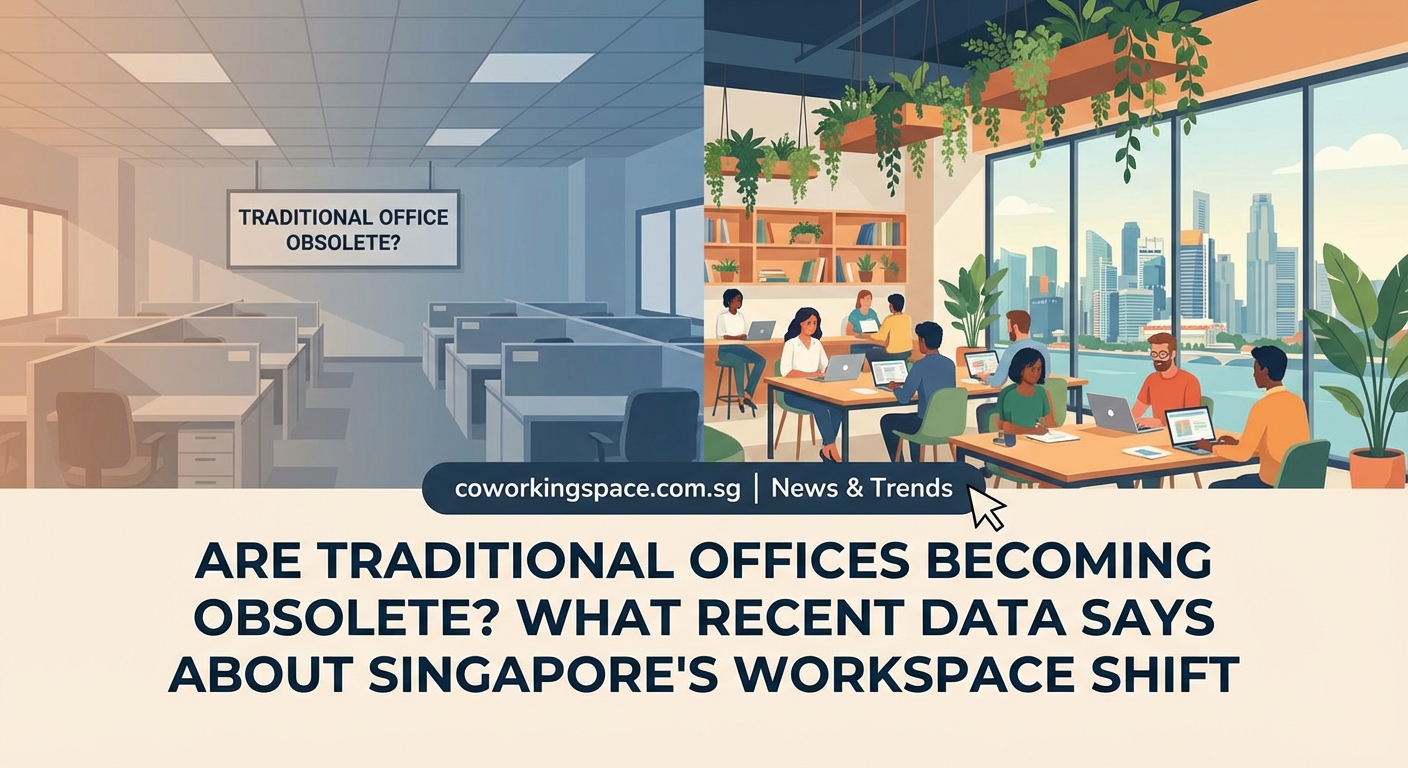
The traditional office lease is no longer the only path forward for Singapore businesses. Companies across the island are rethinking where their teams work, how much space they need, and whether long-term commitments still make sense in a world where flexibility has become the norm.
Singapore office workspace trends reveal a fundamental shift toward flexible arrangements. Recent data shows 68% of companies now operate hybrid models, while coworking space demand has grown 42% since 2023. Traditional offices aren’t disappearing, but they’re evolving into smaller, more strategic footprints paired with flexible workspace solutions. Business leaders must now balance cost efficiency, employee preferences, and operational needs when making workspace decisions.
The Numbers Behind Singapore’s Workspace Transformation
Singapore’s commercial real estate market tells a story that spreadsheets alone can’t capture. Traditional office leases in the Central Business District have dropped 23% in new signings since 2022, while flexible workspace memberships have climbed steadily.
The Urban Redevelopment Authority’s latest commercial space report shows something interesting. Grade A office vacancy rates hit 8.4% in Q4 2025, the highest in six years. But this doesn’t mean businesses are shrinking. They’re redistributing.
Companies are downsizing central offices while investing in satellite locations and coworking memberships. A financial services firm that once occupied three floors in Raffles Place now uses one floor plus memberships at five coworking spaces across the island.
This pattern repeats across industries. Tech startups, consulting firms, and even traditional corporations are adopting similar models. The shift isn’t about abandoning offices. It’s about reimagining what office space means.
How Hybrid Work Changed Everything
Hybrid work policies transformed from pandemic necessity to permanent strategy for most Singapore companies. The Ministry of Manpower’s 2025 workplace survey found that 68% of organizations now offer some form of hybrid arrangement, up from 34% in 2020.
Here’s what that looks like in practice:
- 42% allow employees to work remotely two days per week
- 26% offer three or more remote days weekly
- 18% operate on flexible schedules without fixed office days
- 14% remain fully office-based
These policies directly impact real estate decisions. Companies no longer need desks for every employee. Hot-desking ratios have shifted from 1:1 to 1.5:1 or even 2:1 in some organizations.
A mid-sized marketing agency reduced its office footprint by 40% after implementing a three-day office policy. They kept meeting rooms and collaboration spaces but eliminated most individual workstations. The annual savings? Over $180,000 in rent alone.
Understanding what makes a coworking space different from a traditional office helps explain why so many companies now blend both models.
The Coworking Boom That Nobody Saw Coming
Singapore’s coworking sector grew 42% between 2023 and 2025, according to commercial real estate firm JLL. New spaces opened in unexpected locations like Geylang, Kallang, and residential neighborhoods far from the CBD.
This growth pattern reveals something important about how work has changed. Employees want workspace options near home, not just near headquarters. A software developer living in Tampines doesn’t want to commute 90 minutes to Marina Bay three days a week.
The response? Companies now purchase coworking memberships that allow employees to work from multiple locations. One multinational corporation bought 200 floating memberships across 15 coworking spaces island-wide. Employees book desks near home, near clients, or near headquarters based on their daily needs.
| Workspace Type | Average Monthly Cost | Flexibility Level | Setup Time |
|---|---|---|---|
| Traditional Office Lease | $8,500 per employee | Low (3-5 year commitment) | 3-6 months |
| Coworking Dedicated Desk | $650-900 per employee | Medium (1-12 month terms) | Immediate |
| Coworking Hot Desk | $350-550 per employee | High (monthly or daily) | Immediate |
| Hybrid Model (Mix) | $400-700 per employee | Very High | 1-2 weeks |
The cost difference becomes obvious when you factor in setup costs, maintenance, and the ability to scale up or down without penalty.
Why Traditional Offices Still Matter (Just Differently)
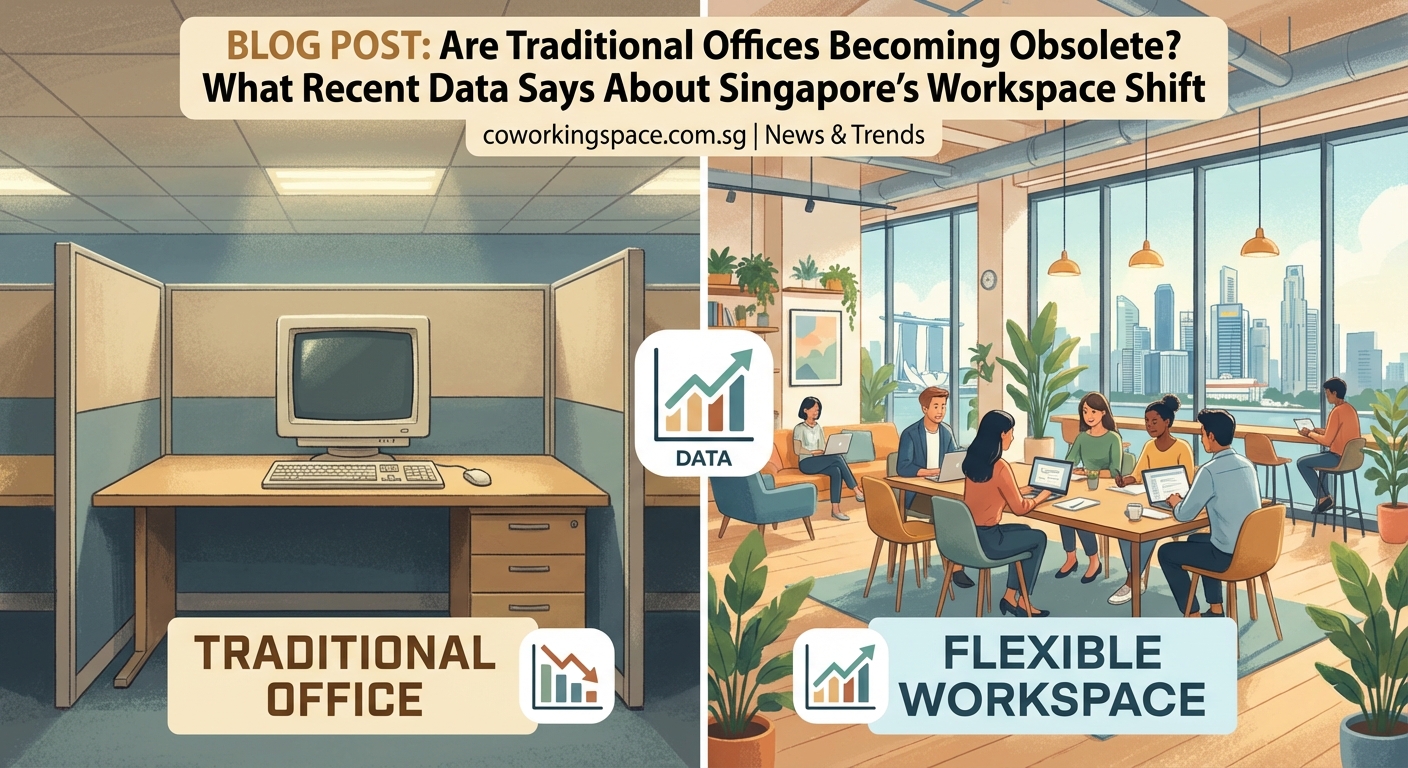
Despite the coworking surge, traditional offices aren’t obsolete. They’re evolving into strategic hubs rather than daily workstations.
Smart companies are redesigning their office spaces around collaboration rather than individual work. Conference rooms, team spaces, and social areas now dominate floor plans. Individual desks shrink to a fraction of total square footage.
A law firm in Shenton Way recently renovated its office to reflect this shift. They eliminated 60% of private offices and added:
- Six collaboration rooms with video conferencing technology
- Three quiet focus rooms for deep work requiring privacy
- A large communal area with flexible seating
- Two client-facing meeting suites with premium finishes
- A pantry and informal meeting space
The result? Higher utilization rates despite fewer desks. Employees actually use the office more intentionally now because it serves purposes their home setups can’t match.
Building a personal productivity system that works in any coworking environment becomes essential when your team splits time across multiple locations.
The Real Estate Cost Calculation That Changes Everything
Here’s where the numbers get interesting for business leaders and HR professionals making workspace decisions.
A typical Grade A office lease in Singapore’s CBD costs between $10 and $14 per square foot monthly. Add management fees, utilities, fit-out costs, and maintenance, and you’re looking at $8,000 to $12,000 per employee annually for a fully equipped workspace.
Compare that to a hybrid model:
- Small central office (30% capacity): $3,500 per employee annually
- Coworking memberships (flexible): $2,400 per employee annually
- Home office stipends: $600 per employee annually
- Total: $6,500 per employee annually
The savings compound when you factor in avoided costs like furniture replacement, IT infrastructure, and long-term lease commitments.
But cost isn’t the only consideration. Employee satisfaction surveys consistently show that workspace flexibility ranks among the top three factors in job satisfaction, alongside compensation and career development opportunities.
One Singapore tech company tracked productivity metrics before and after switching to a hybrid model with coworking options. They found no decrease in output but recorded a 34% improvement in employee satisfaction scores and a 28% reduction in voluntary turnover.
Industry-Specific Patterns Emerging
Different sectors approach workspace transformation differently, and the data reveals clear patterns.
Financial services firms remain the most conservative. About 72% still maintain traditional offices as their primary workspace, though many have added flexible options. Regulatory requirements and client expectations drive this preference.
Tech companies lead the flexibility charge. Nearly 89% operate on hybrid or fully remote models, with coworking spaces serving as their primary physical presence. Many maintain no traditional office at all.
Professional services fall somewhere between. Law firms, consulting groups, and accounting practices typically keep smaller central offices while encouraging remote work and providing coworking memberships for client meetings and collaboration days.
Manufacturing and logistics companies face unique constraints. Their operations require on-site presence, but administrative teams increasingly work on hybrid schedules. These companies often maintain traditional facilities for operations while offering flexibility to office-based staff.
“The question isn’t whether to abandon traditional offices, but how to right-size them for actual usage patterns. Most companies discover they need 40-60% less dedicated space than they thought once they track real utilization data.” – Commercial real estate consultant specializing in Singapore market optimization
What HR Leaders Need to Consider Right Now
HR professionals face the challenge of translating workspace trends into practical policies that work for their specific organizations.
Start by auditing current space utilization. Many companies assume they need more office space than they actually use. Track badge swipe data, meeting room bookings, and desk occupancy for 90 days. The results often surprise leadership teams.
A Singapore retailer discovered their office ran at 47% capacity on average, with Fridays dropping to 23%. Armed with this data, they renegotiated their lease and saved $340,000 annually.
Next, survey employee preferences. Don’t assume you know what your team wants. Some employees prefer full-time office environments. Others thrive remotely. Most want options.
Create workspace policies that match your findings:
- Define minimum office days if needed for collaboration
- Establish booking systems for shared desks and meeting rooms
- Set clear expectations for response times and availability
- Provide stipends for home office equipment
- Offer coworking memberships for employees who need workspace but live far from headquarters
The psychology behind coworking spaces and how they boost productivity matters when designing policies that actually support employee performance.
The Technology Making This Transition Possible
Workspace flexibility only works when supported by proper technology infrastructure. Singapore companies investing in hybrid models typically deploy:
Desk Booking Systems
Software that allows employees to reserve workstations, meeting rooms, and parking spots. These systems prevent the awkward situation of more people showing up than available desks.
Video Conferencing Infrastructure
Every meeting room needs quality cameras, microphones, and displays. Hybrid meetings fail when in-office participants huddle around a laptop while remote workers struggle to hear.
Cloud-Based Collaboration Tools
File sharing, project management, and communication platforms that work identically whether you’re in the office, at home, or in a coworking space.
Security Solutions
VPNs, multi-factor authentication, and endpoint protection become non-negotiable when employees work from multiple locations on various networks.
Space Analytics
Sensors and software that track actual space utilization, helping facilities teams make data-driven decisions about office configuration.
Companies that skimp on technology infrastructure typically see their hybrid models fail. Employees revert to office-first behavior because remote work becomes too frustrating.
Common Mistakes Organizations Make During Transition
After observing dozens of Singapore companies navigate workspace transformation, certain mistakes appear repeatedly.
Mistake 1: Reducing Space Too Aggressively
Some companies cut office space by 70% or more based on average occupancy data. Then they discover that certain days or weeks see much higher attendance, leaving employees fighting for desks. A better approach maintains 50-60% capacity and uses coworking spaces as overflow.
Mistake 2: Ignoring Team Dynamics
Not every team works well in a hybrid environment. Customer service teams often need consistent presence for training and support. Creative teams benefit from spontaneous collaboration. Sales teams might rarely need office space at all.
Mistake 3: Failing to Redesign Office Space
Simply removing desks from a traditional office creates an awkward, underutilized space. Successful transitions involve thoughtful redesign around how people will actually use the office.
Mistake 4: No Clear Policies
Vague guidance like “work from home when it makes sense” creates confusion and resentment. Successful hybrid models include specific policies about minimum office days, meeting expectations, and workspace booking procedures.
Mistake 5: Underestimating Change Management
Workspace transformation represents significant organizational change. Companies that treat it as a simple real estate decision rather than a cultural shift typically struggle with adoption.
For teams considering alternatives, understanding coworking membership types and their differences helps avoid committing to the wrong solution.
Regional Variations Across Singapore
Workspace trends play out differently across Singapore’s neighborhoods and business districts.
The CBD sees the most dramatic transformation. Traditional office buildings in Raffles Place and Shenton Way face higher vacancy rates while flexible workspace operators expand. Companies maintain smaller CBD footprints for client meetings and senior leadership while distributing teams across suburban locations.
Paya Lebar Quarter emerged as a major alternative business hub. Its proximity to residential areas and excellent public transport connections make it attractive for companies seeking space outside the CBD at lower costs. Coworking spaces there report 95% occupancy rates.
Suburban areas like Jurong, Tampines, and Woodlands see growing demand for satellite offices and coworking spaces. Employees appreciate working closer to home, and companies find rental rates 40-60% lower than CBD locations.
The East Coast and West Coast regions attract creative and tech companies seeking character-filled spaces in converted shophouses and industrial buildings. These areas offer unique environments that differentiate from standard corporate offices.
Understanding these regional patterns helps companies make smarter decisions about where to locate offices and which coworking networks to join.
What 2026 Data Tells Us About Future Directions
Current trends suggest several developments likely to accelerate over the next 18-24 months.
Continued CBD Vacancy Growth
Expect Grade A office vacancy rates to reach 10-12% by end of 2026 as more leases expire and companies downsize. This will pressure landlords to offer more flexible terms and potentially convert some office space to other uses.
Coworking Consolidation
The rapid growth of coworking spaces will likely lead to consolidation. Smaller operators may struggle while larger networks with better technology and amenities capture market share. This mirrors patterns seen in other mature coworking markets.
Industry-Specific Spaces
More coworking spaces will target specific industries. We’re already seeing spaces designed for life sciences, creative agencies, and fintech companies. This specialization creates networking opportunities and shared resources that generic spaces can’t match.
Suburban Office Revival
As companies seek lower costs and employees prefer shorter commutes, suburban office markets will strengthen. Expect new development and conversions in areas like Paya Lebar, Jurong, and Woodlands.
Technology Integration
Offices will incorporate more IoT sensors, AI-powered space management, and seamless booking systems. The goal is making office attendance as frictionless as working from home.
For organizations exploring these options, learning how to choose your first coworking space in Singapore provides a practical starting point.
Making the Right Decision for Your Organization
No single workspace model works for every company. The right approach depends on your industry, team structure, company culture, and financial situation.
Start with these questions:
- What percentage of your workforce actually needs to be in an office daily?
- What activities require in-person collaboration versus individual focus work?
- How important is spontaneous interaction to your business model?
- What does your current space utilization data show?
- How do your employees actually prefer to work?
Answer these honestly before making real estate decisions. Companies that jump into workspace transformation without understanding their specific needs often make expensive mistakes.
Consider a phased approach rather than dramatic changes. Test hybrid policies with one team before rolling out company-wide. Try coworking memberships for a quarter before committing to long-term contracts. Gather feedback and adjust.
The most successful workspace transformations happen gradually, with continuous refinement based on real usage data and employee feedback.
Practical Steps to Start Your Workspace Evaluation
If you’re ready to assess whether your current workspace model still makes sense, follow this process:
-
Collect 90 Days of Utilization Data
Track badge swipes, desk occupancy, meeting room bookings, and parking usage. Most companies discover their space runs at 40-60% capacity. -
Survey Your Team
Ask specific questions about workspace preferences, commute challenges, and productivity in different environments. Avoid leading questions that bias responses. -
Calculate Your True Workspace Costs
Include rent, utilities, maintenance, furniture, IT infrastructure, and employee commute time. Many companies underestimate total costs by 30-40%. -
Model Alternative Scenarios
Run numbers on different combinations of traditional office, coworking memberships, and remote work. Factor in both costs and potential impacts on productivity and retention. -
Test Before Committing
Pilot new approaches with willing teams before making irreversible real estate decisions. Three to six months provides enough data to evaluate effectiveness. -
Design Change Management
Plan how you’ll communicate changes, train managers, and support employees through the transition. Workspace transformation fails more often due to poor change management than bad real estate decisions.
This systematic approach reduces risk while gathering the data needed to make informed decisions.
Where Singapore Workspace Trends Go From Here
The transformation of Singapore’s office landscape represents more than a real estate trend. It reflects fundamental changes in how we think about work, productivity, and organizational culture.
Traditional offices won’t disappear, but they’ll continue evolving into strategic collaboration hubs rather than daily work destinations. Flexible workspace options will keep growing, though market consolidation will separate strong operators from weak ones. Technology will make hybrid work increasingly seamless.
The companies thriving in this environment share common traits. They make decisions based on data rather than assumptions. They listen to employee preferences while maintaining clear policies. They invest in technology infrastructure that makes flexibility actually work. And they treat workspace transformation as an ongoing process rather than a one-time project.
For business leaders, HR professionals, and real estate stakeholders, the question isn’t whether to adapt to these trends. The market has already decided. The question is how to adapt in ways that serve your specific organization’s needs while remaining flexible enough to evolve as conditions continue changing.
Start small. Test assumptions. Measure results. And remember that the best workspace strategy is the one that actually works for your people and your business, not the one that simply follows the latest trend.