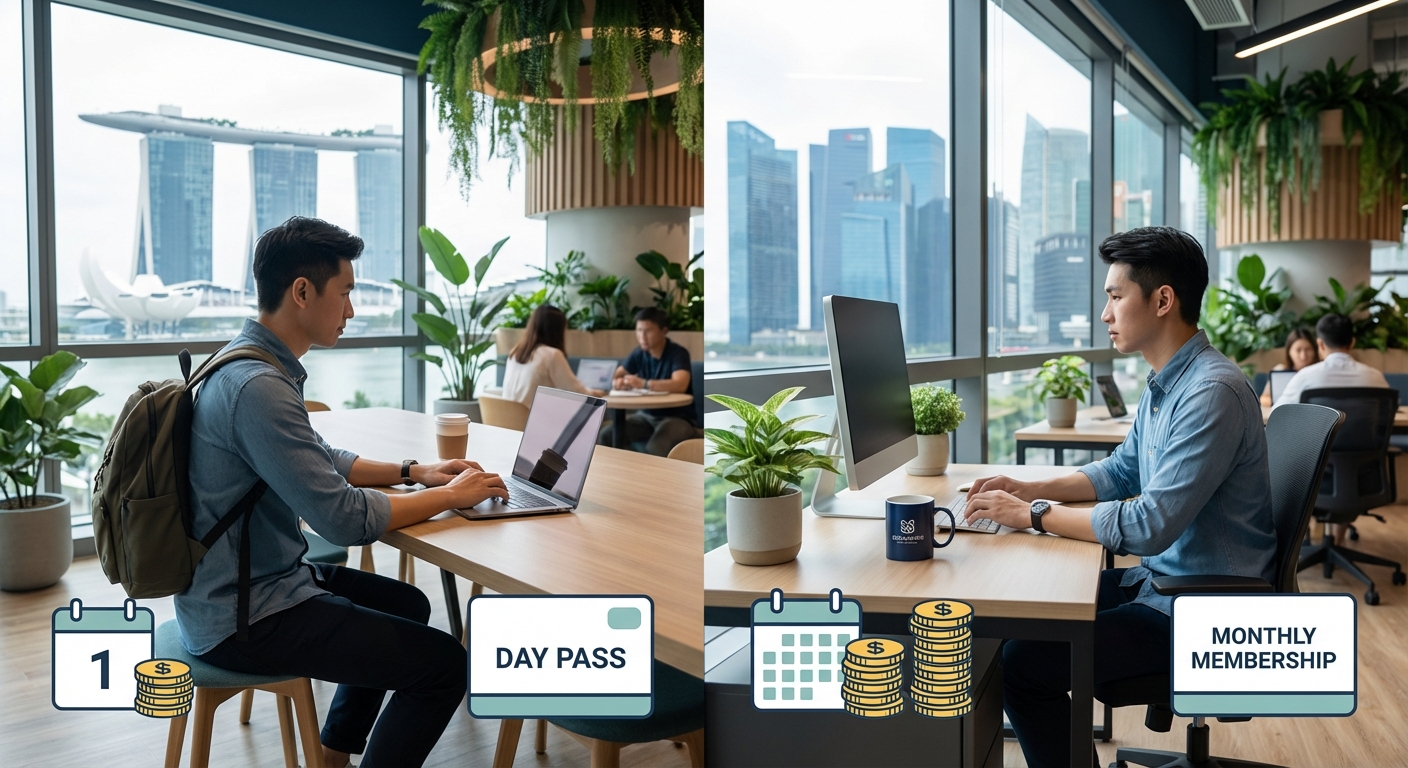
Choosing between a day pass and a monthly membership at a coworking space in Singapore can feel like a financial puzzle. You need workspace flexibility, but you also want to keep costs under control. The wrong choice could mean paying for unused days or scrambling for last-minute workspace access. Let’s break down the real costs, hidden fees, and usage patterns that determine which option actually saves you money.
Day passes work best if you need workspace fewer than eight days per month, while monthly memberships become cost-effective at ten or more days. Hidden costs like meeting room access, printing fees, and peak-hour surcharges can shift the break-even point. Your work pattern, not just the sticker price, determines which option saves you more money in Singapore’s competitive coworking market.
Understanding the real price difference between day passes and monthly memberships
Day passes in Singapore typically range from $25 to $65 per visit, depending on location and amenities. Monthly memberships start around $250 for basic hot desks and can reach $800 or more for premium spaces with dedicated seating.
The math seems simple at first. If a day pass costs $40 and a monthly membership costs $400, you break even at ten visits. But real-world usage rarely follows neat patterns.
Consider these factors that affect your actual costs:
- Peak vs off-peak pricing for day passes
- Minimum commitment periods for monthly plans
- Credit rollover policies for unused days
- Access to meeting rooms and private spaces
- Printing and scanning allowances
- Guest pass privileges
Many coworking spaces in Singapore offer tiered pricing. A basic day pass might get you a hot desk in the open area, while monthly members receive priority seating, faster WiFi tiers, and free coffee. These perks add hidden value that pure price comparison misses.
Some spaces charge surge pricing during busy periods. Monday through Wednesday often costs more than Thursday or Friday. If your schedule forces you into peak days, your effective day pass cost increases by 20-30%.
Calculating your monthly workspace usage patterns
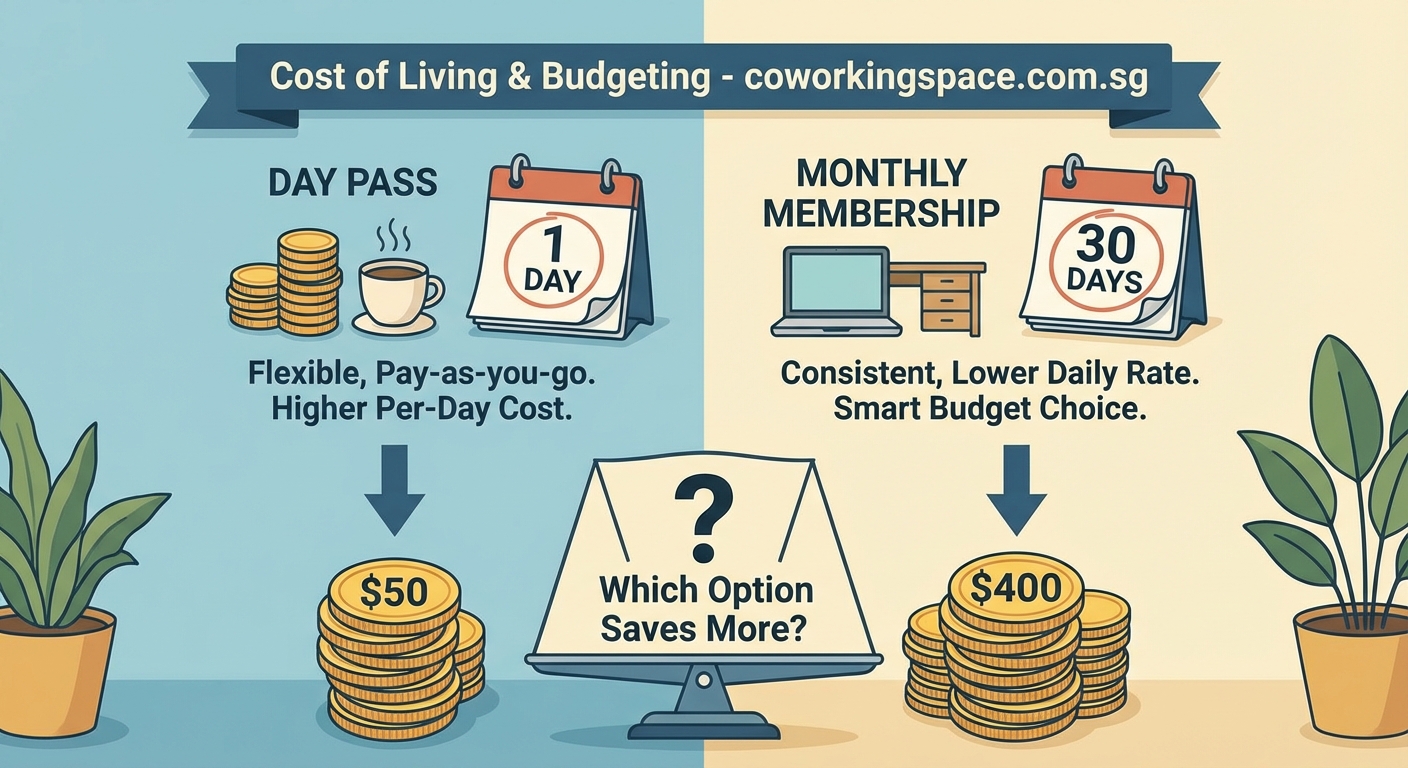
Before choosing between a day pass and monthly membership, track your actual workspace needs for four weeks. Most people overestimate how often they’ll use a coworking space.
Here’s a practical tracking method:
- Note every day you leave home specifically to work elsewhere
- Count days when poor home internet forces you out
- Add days when client meetings require professional space
- Include days when you need separation from home distractions
- Track seasonal variations like school holidays or project cycles
Your results might surprise you. Freelancers often assume they’ll use coworking space 15 days per month but actually average 8-10 days. Remote workers with flexible schedules tend to cluster usage around client deadlines rather than spreading visits evenly.
Seasonal patterns matter too. December sees lower coworking usage as people travel. January and February spike as New Year resolutions kick in. If you’re a freelance designer, tax season might mean more home office time while summer brings collaborative projects needing daily coworking access.
Understanding coworking membership types can help you identify which tier matches your actual usage rather than your aspirational schedule.
When day passes make financial sense
Day passes suit professionals with unpredictable schedules or infrequent workspace needs. If you work from home most days but occasionally need professional space, paying per visit keeps costs proportional to usage.
Specific situations where day passes win:
- You need workspace fewer than 8 days monthly
- Your work schedule varies dramatically week to week
- You’re testing different coworking locations before committing
- You split time between multiple cities or countries
- You only need workspace for client meetings, not daily work
- Your home office works fine except during renovations or disruptions
A content writer who works from home 20 days per month but meets clients 4 times monthly pays $160 in day passes versus $400 for a membership. The $240 monthly savings adds up to $2,880 annually.
Day passes also provide geographic flexibility. You can try spaces in Raffles Place one week and Tiong Bahru the next without commitment. This matters if you’re still choosing your first coworking space in Singapore and want to experience different communities before locking in.
The downside? You lose access to member perks. Most day pass users can’t book meeting rooms in advance, access spaces during extended hours, or receive mail at the business address. If these features matter to your work, the membership starts looking more attractive despite higher base costs.
When monthly memberships deliver better value
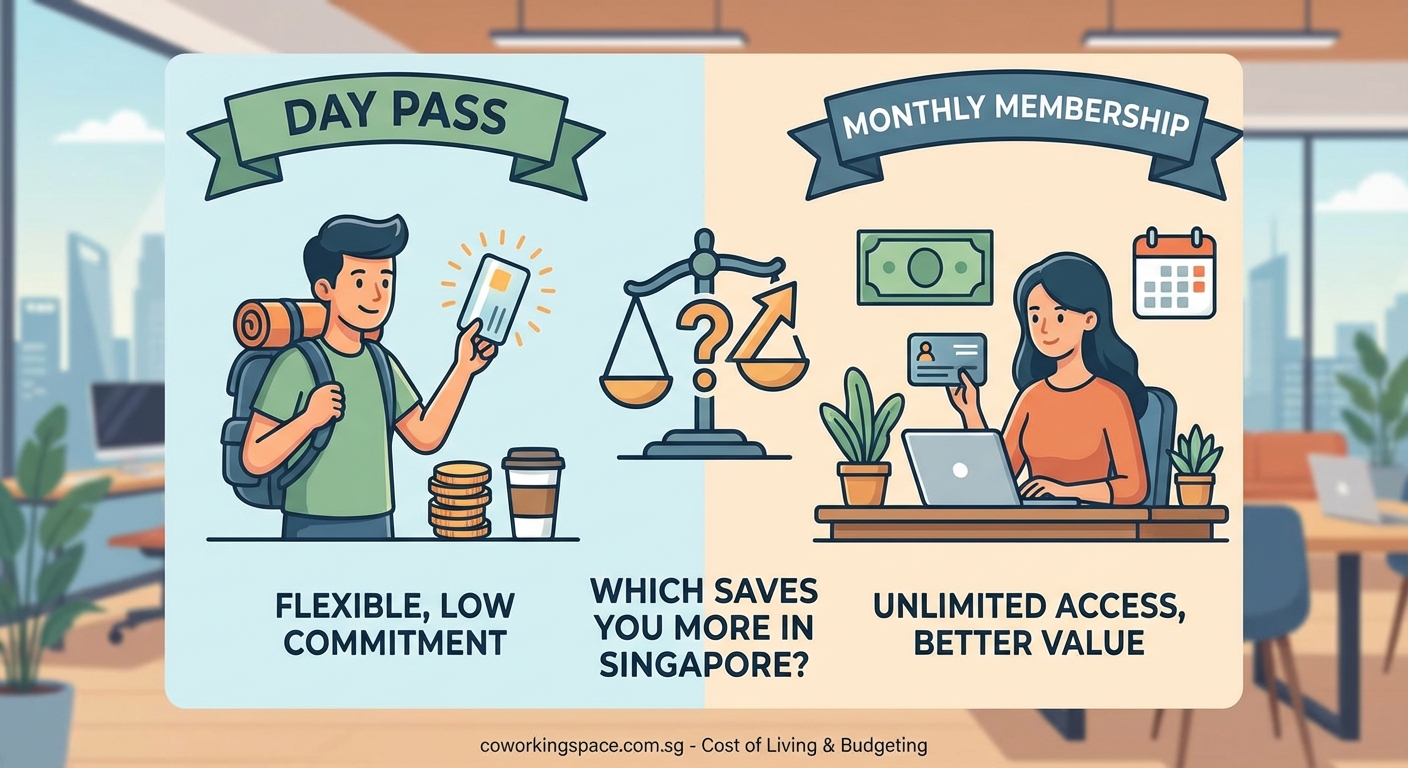
Monthly memberships become cost-effective once you need workspace 10 or more days per month. But the real value extends beyond simple math.
Memberships offer stability and predictability. You know your monthly workspace cost upfront, making budgeting easier. You also gain community access, which can lead to client referrals and collaboration opportunities that offset membership fees.
Consider these membership advantages:
- Reserved or dedicated desk space
- 24/7 access to facilities
- Free meeting room hours (typically 2-4 hours monthly)
- Business address and mail handling
- Priority booking for events and workshops
- Networking opportunities with other members
- Access during peak hours without surcharges
A software developer who needs focused workspace 15 days monthly pays $600 in day passes versus $450 for a membership. The membership saves $150 monthly while adding perks worth another $100-200 in meeting room access and business address services.
Memberships also reduce decision fatigue. You don’t need to decide each morning whether workspace cost justifies leaving home. You’ve already paid, so you’re more likely to use the space consistently, which often improves productivity and work-life boundaries.
Building an effective hybrid work schedule becomes easier when you have guaranteed access rather than hoping day pass slots remain available.
Hidden costs that shift the break-even point
Both options carry hidden expenses that affect your true cost comparison. Understanding these factors prevents budget surprises.
| Cost Factor | Day Pass Impact | Monthly Membership Impact |
|---|---|---|
| Meeting rooms | $30-60 per hour | 2-4 free hours included |
| Printing | $0.20-0.50 per page | 50-100 free pages monthly |
| Guest passes | Not available | 2-5 passes monthly |
| Locker storage | $5-10 per day | Included in most plans |
| After-hours access | Not available | Included in premium plans |
| Business address | Not available | Included or $50-100 add-on |
Meeting room access creates the biggest cost gap. If you meet clients twice monthly for two hours each, that’s $120-240 in rental fees on top of day pass costs. Monthly members typically receive included meeting room hours, making the membership effectively cheaper even if base prices seem higher.
Printing costs add up faster than expected. A freelancer printing contracts, proposals, and invoices might use 30-50 pages weekly. At $0.30 per page, that’s $36-60 monthly. Most memberships include printing allowances that cover typical usage.
Some spaces charge for locker access separately from day passes. If you need to store equipment between visits, daily locker fees of $5-10 can add $40-80 to your monthly day pass costs.
Hybrid approaches that maximize flexibility and savings
You don’t need to choose exclusively between day passes and memberships. Several coworking spaces in Singapore offer hybrid models that combine flexibility with cost savings.
Part-time memberships provide access 5-10 days monthly at rates between day passes and full memberships. A typical 10-day pass costs $250-350, offering 30-40% savings versus buying 10 individual day passes while keeping costs below full membership rates.
Credit-based systems let you purchase workspace credits that never expire. Buy 20 credits for $600 and use them over three months as your schedule demands. This works well for consultants with project-based work patterns.
Some spaces offer off-peak memberships at 40-50% discounts. You get full member benefits but can only access space during designated hours, typically 10am-5pm weekdays. If you don’t need early morning or evening access, this delivers membership perks at near day-pass pricing.
Team plans provide another option. Two freelancers sharing a dedicated desk membership split costs while each gaining full access. A $700 membership becomes $350 per person, often cheaper than individual day pass usage while providing dedicated space.
“The best coworking arrangement matches your actual work pattern, not your ideal vision of how you’ll work. Track real usage for a month before committing to any long-term membership. Most people overestimate their coworking needs by 30-40%.”
Location-based pricing variations across Singapore
Coworking costs in Singapore vary dramatically by neighborhood. Understanding these geographic price differences helps you optimize value.
Central Business District spaces in Raffles Place and Marina Bay charge premium rates. Day passes run $50-65, while monthly memberships start at $600. You’re paying for prestige addresses, proximity to corporate clients, and extensive amenities.
Suburban locations in Geylang, Kallang, or Jurong offer 30-50% lower rates. Day passes cost $25-35, and memberships start around $250-300. Facilities match CBD quality, but you sacrifice central location and immediate access to client offices.
Mid-tier neighborhoods like Tiong Bahru, Paya Lebar Quarter, and Tanjong Pagar split the difference. Expect day passes around $35-45 and memberships from $350-450. These areas balance affordability with reasonable accessibility.
Transportation costs affect your real workspace expense. A suburban space saving $300 monthly might cost $100 in additional transport if you need to travel to client meetings in the CBD. Calculate total cost including commute time and transport fees.
Some professionals maintain memberships at budget-friendly suburban spaces while buying occasional day passes at premium CBD locations for client meetings. This hybrid approach optimizes both cost and professional image.
Finding budget-friendly coworking spaces in Geylang and Kallang can cut your monthly workspace costs by 40% or more without sacrificing essential amenities.
Special considerations for different professional types
Your profession and work style significantly influence which coworking option saves more money.
Freelancers and consultants benefit most from flexible day pass arrangements if client work remains unpredictable. However, once you establish regular client meetings or need professional business addresses for invoicing, memberships deliver better value. The business address alone costs $100-150 monthly as a standalone service, making it essentially free with membership.
Remote employees with consistent schedules should default to monthly memberships. Your employer might reimburse workspace costs, making the membership’s full amenities package more valuable than day pass savings. Check if your company covers coworking expenses before optimizing for personal cost savings.
Startup founders need dedicated space for team coordination and investor meetings. Monthly memberships or private offices make more sense than day passes, even if individual usage seems low. The professional setting and meeting room access justify higher costs when fundraising or client acquisition depends on image.
Digital nomads and travelers should stick with day passes or short-term memberships. Most Singapore spaces offer weekly or monthly rates for temporary visitors. Paying for a full month when you’re only in town for two weeks wastes money. Coworking day passes vs monthly memberships for travelers provides specific guidance for mobile professionals.
Part-time freelancers juggling other commitments rarely use workspace enough to justify memberships. If you’re working your side business 5-8 days monthly while maintaining other employment, day passes keep costs aligned with actual usage.
Testing before committing to long-term arrangements
Never commit to a long-term membership without testing the space first. Most coworking operators understand this and offer trial periods or flexible first-month terms.
Start with these steps:
- Buy day passes at 3-5 different spaces over two weeks
- Visit during your typical working hours to assess noise levels and crowding
- Test the WiFi speed with your actual work applications
- Try booking meeting rooms to understand availability and process
- Talk to existing members about their experience and any hidden issues
- Calculate your total costs including transport and food options nearby
Many spaces offer first-month discounts of 20-50% for new members. Take advantage of these promotions to test membership benefits at reduced risk. If the space doesn’t work out, you’ve only committed one month at a discount rather than a full year at standard rates.
Some operators allow you to apply day pass fees toward membership if you join within 30 days. A space charging $40 day passes might credit your first two visits ($80) against your first month’s membership fee.
Common coworking mistakes that new members make often include committing too early before understanding actual usage patterns and space culture fit.
Negotiating better rates regardless of membership type
Coworking spaces in Singapore negotiate more than you might expect. Operators prefer predictable monthly revenue over empty desks, creating opportunities for savvy professionals to secure better deals.
For day passes, ask about:
- Bulk purchase discounts (buy 10 passes, get 2 free)
- Off-peak pricing for specific weekdays
- Referral credits for bringing other users
- Corporate rates if you’re a remote employee
For monthly memberships, negotiate:
- Waived setup or deposit fees
- Extended trial periods at reduced rates
- Annual payment discounts (typically 10-15% off)
- Upgraded amenities at standard pricing
- Flexible notice periods for cancellation
Timing matters. Spaces launching new locations or expanding existing ones often offer promotional rates to fill capacity. December and January see higher negotiation success as operators want to lock in revenue for the new year.
Professional associations and business groups sometimes arrange group rates with coworking operators. Check if your industry organization or networking group has existing partnerships that provide member discounts.
Making the final decision based on your actual numbers
Stop guessing and start calculating. Use this framework to determine your optimal choice:
Calculate your monthly workspace days for the past three months. Add them together and divide by three for your average. If you don’t have three months of data, estimate conservatively based on your current project pipeline.
Multiply your average monthly days by typical day pass costs in your preferred location. Compare this to monthly membership rates in the same area.
Add estimated costs for meeting rooms, printing, and other services you’ll need. Day pass users typically pay full price while members receive included allowances.
Factor in the value of business address services if you need professional mail handling or a registered office address. This service alone costs $100-150 monthly, making it essentially free with most memberships.
Consider seasonal variations. If your work is highly seasonal, calculate costs for your busy and slow periods separately. You might use day passes during slow months and upgrade to membership during busy seasons.
Review your numbers quarterly. Your optimal choice today might shift as your business grows or your work patterns change. Flexibility beats loyalty to a suboptimal arrangement.
Your workspace budget deserves the same attention as your business plan
The coworking day pass vs monthly membership decision in Singapore comes down to honest assessment of your work patterns and total costs. Day passes offer flexibility and lower commitment but cost more per visit and lack member perks. Monthly memberships provide stability, community access, and included amenities but require consistent usage to justify the expense.
Track your actual workspace needs for at least a month before committing to any long-term arrangement. Calculate total costs including hidden fees, transportation, and services you’ll actually use. Test multiple spaces with day passes before signing membership agreements. Remember that your optimal choice might change as your business evolves, so review your arrangement every few months to ensure you’re still getting the best value for your specific situation.