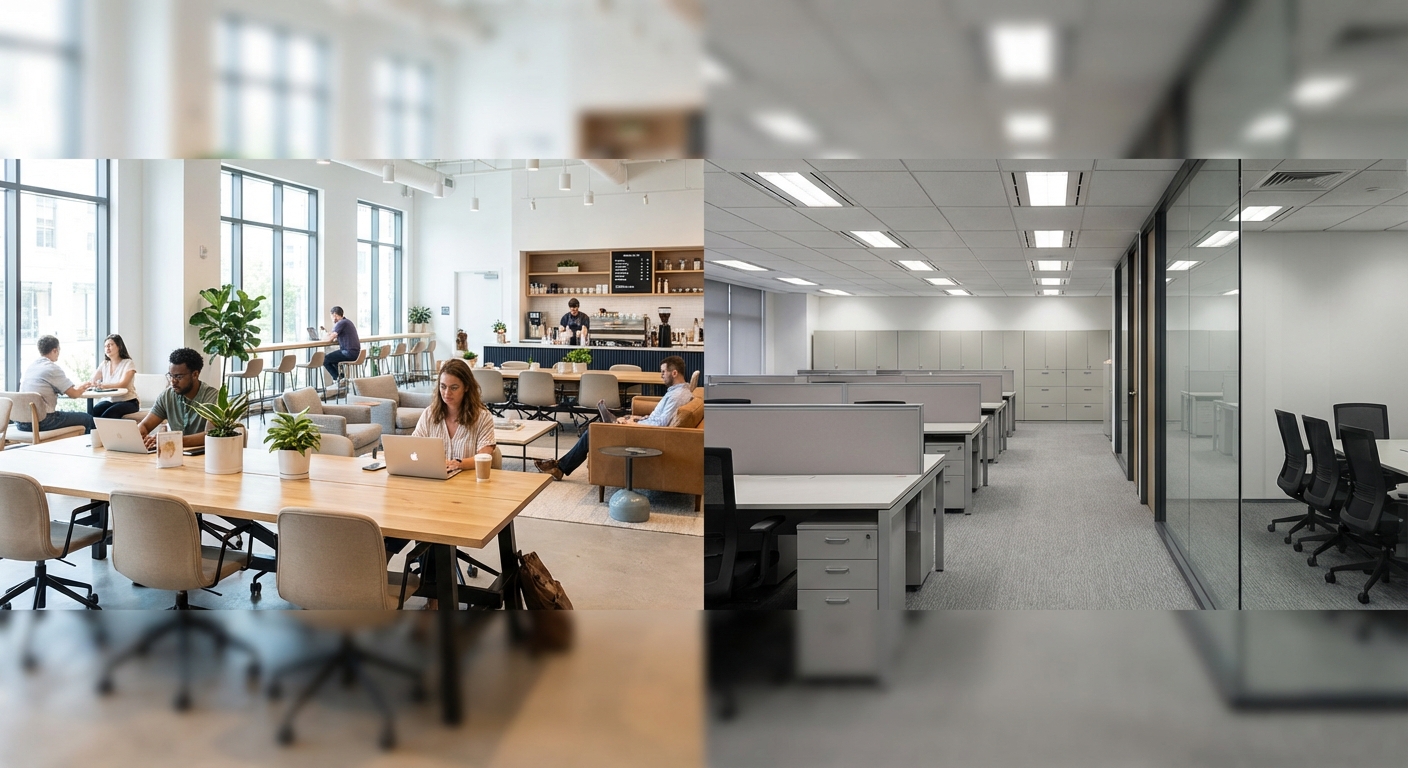
Choosing where to work affects your budget, your team’s morale, and your business growth. The debate between coworking space vs traditional office isn’t just about desks and chairs. It’s about how you want your business to operate, how you manage expenses, and what kind of environment helps your team thrive.
Both options have distinct advantages. Both come with trade-offs. Understanding the real differences helps you make a decision that supports your goals instead of creating new problems.
Coworking spaces offer flexibility, lower upfront costs, and built-in community, making them ideal for startups and remote teams. Traditional offices provide privacy, brand control, and stability, suited for established companies needing dedicated space. Your choice depends on budget, team size, growth plans, and work style preferences. Neither option is universally better.
What defines a coworking space
A coworking space is a shared work environment where individuals and companies from different organizations work alongside each other. You rent access to desks, meeting rooms, and amenities without the commitment of a long-term lease.
Most coworking spaces operate on flexible membership models. You can choose hot desks (first-come, first-served seating), dedicated desks (your own assigned spot), or private offices within the shared facility.
The environment encourages interaction. You’ll find freelancers, startup teams, remote employees, and small businesses all working in the same building. This creates networking opportunities that don’t exist in isolated offices.
Coworking spaces typically include amenities like high-speed internet, printing services, meeting rooms, phone booths, kitchens, and common areas. Some add extras like event spaces, fitness areas, or podcast studios.
What defines a traditional office
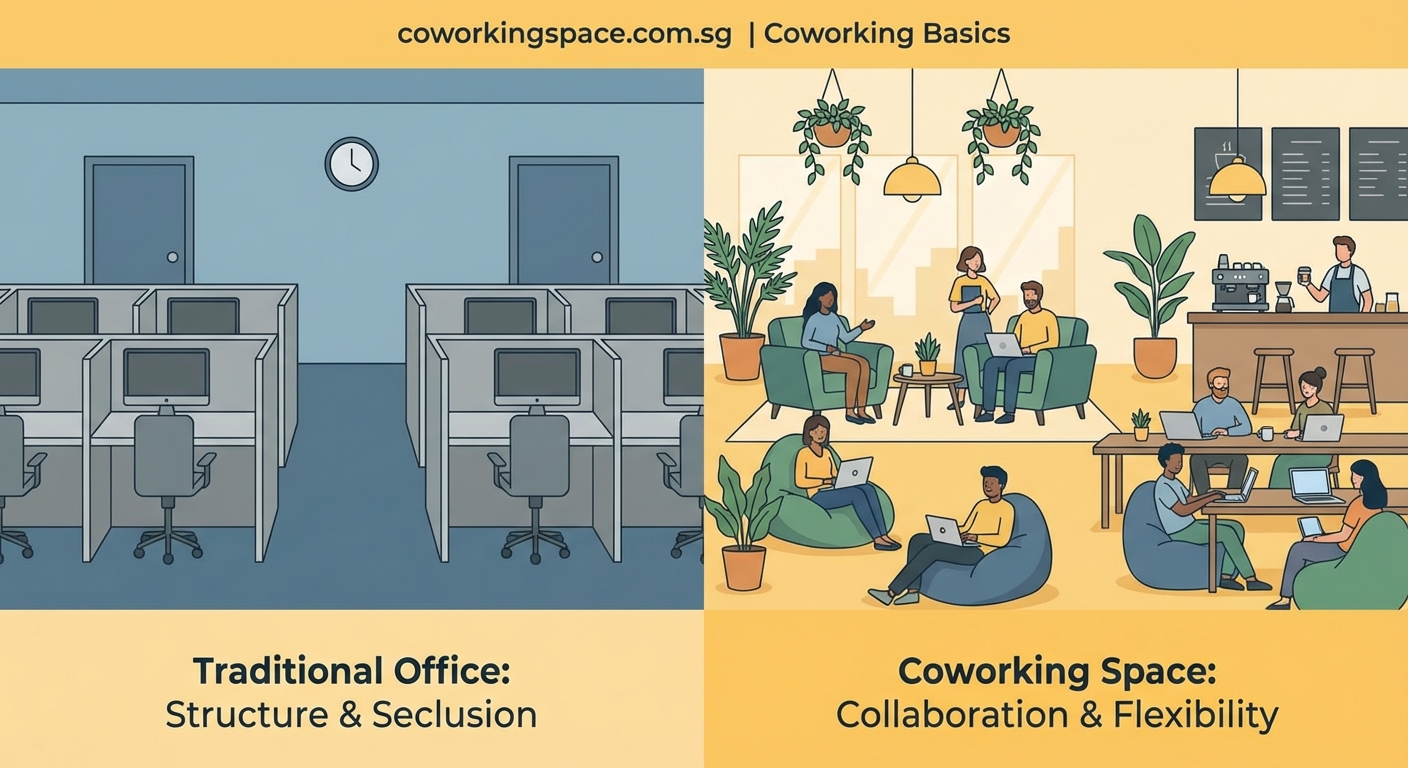
A traditional office is a dedicated workspace that your company leases or owns exclusively. No other businesses share the space. You control who enters, how the space looks, and what happens inside.
These offices require long-term commitments, usually starting at one to three years. You’re responsible for furnishing the space, maintaining equipment, and managing utilities.
Privacy is the defining feature. Your team works behind closed doors. Conversations stay internal. You can customize everything from wall colors to desk layouts.
Traditional offices create clear boundaries between work and outside life. When you arrive, you’re in company territory. When you leave, you’re done for the day.
Cost comparison that matters
Coworking spaces charge monthly membership fees. These typically range from $200 for a hot desk to $1,500+ for a private office in Singapore. Everything is included: internet, utilities, cleaning, furniture, and amenities.
Traditional offices require substantial upfront investment. You’ll pay for:
- Security deposits (usually three to six months’ rent)
- Furniture and equipment
- Internet installation and monthly fees
- Utilities and maintenance
- Cleaning services
- Reception or administrative staff
A small traditional office in Singapore can easily cost $3,000 to $8,000 monthly before adding furniture and services.
For a three-person startup, coworking might cost $1,200 monthly total. The same team in a traditional office could spend $5,000+ monthly including all expenses.
The math changes as you grow. A 20-person team might find traditional office costs more competitive per person, especially if you negotiate favorable lease terms.
Are coworking spaces worth the cost breaks down these numbers in detail, including hidden fees most people miss.
Flexibility differences you’ll actually notice
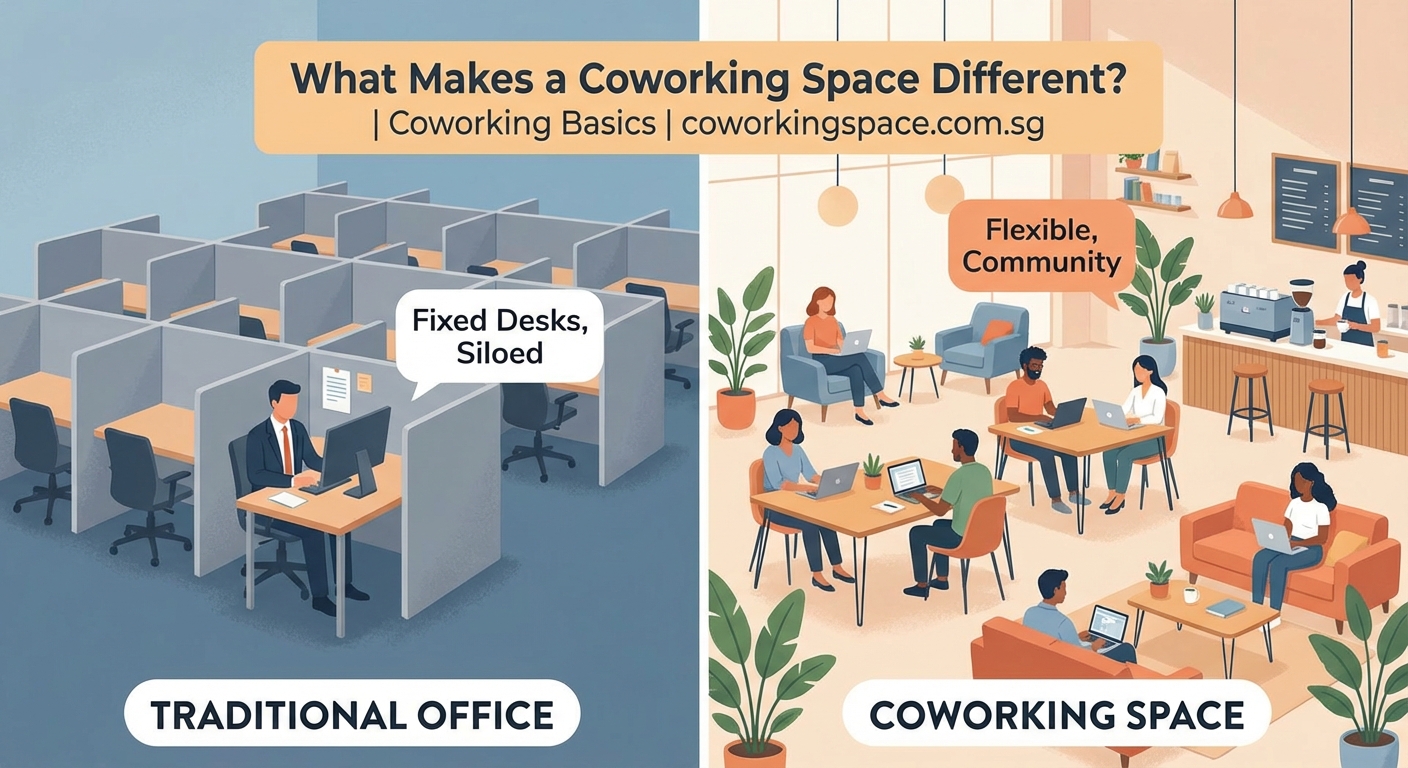
Coworking memberships usually require 30 days’ notice to cancel or change. You can scale up by adding more desks or scale down by reducing your membership level.
This flexibility matters during uncertain growth periods. If you hire three people next month, you can add three desks. If a project ends and contractors leave, you can reduce capacity immediately.
Traditional offices lock you in for years. Growing means negotiating lease expansions or moving to a bigger space entirely. Downsizing means you’re still paying for empty desks until the lease ends.
Location flexibility is another factor. Many coworking operators run multiple locations. Your membership might grant access to different spaces across the city or even different countries.
Traditional offices keep you in one spot. Moving means breaking a lease (expensive) or waiting until it expires (limiting).
Space and privacy considerations
Coworking spaces prioritize openness. Hot desking means you might sit next to different people daily. Dedicated desks give you a consistent spot, but you’re still in a shared environment.
Phone calls happen in designated phone booths. Confidential meetings require booking private rooms in advance. You can’t guarantee availability during peak hours.
Traditional offices give you complete control. Every conversation can happen at your desk. Meeting rooms are always available because they’re yours alone.
Privacy matters differently for different businesses. A design agency might thrive on the creative energy of a coworking space. A law firm handling sensitive client information needs the security of a private office.
Storage is another practical difference. Coworking spaces provide limited locker space. Traditional offices let you store equipment, inventory, or files without restrictions.
Amenities and infrastructure
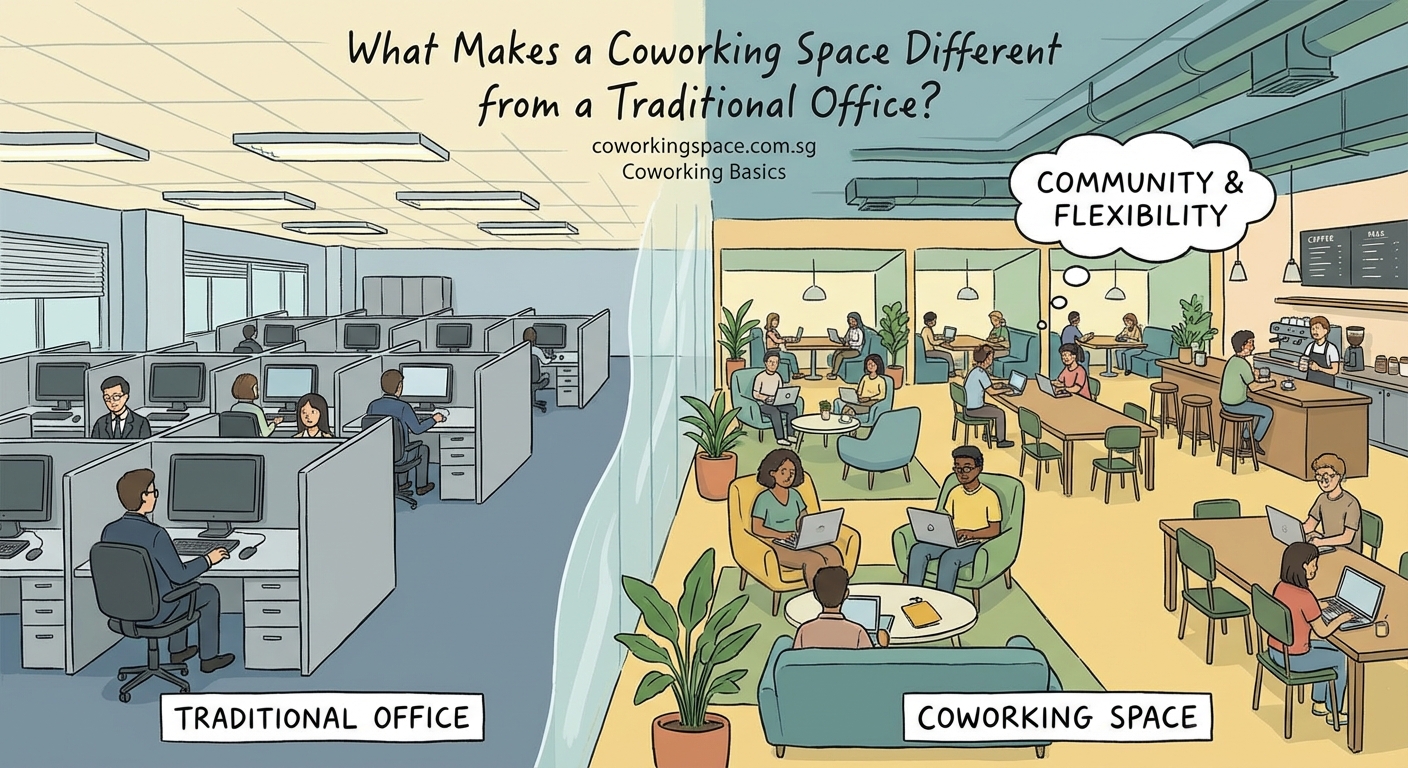
Coworking spaces compete on amenities. You’ll typically find:
- Professional-grade internet (often 1Gbps+)
- Modern meeting rooms with video conferencing equipment
- Printing and scanning stations
- Fully equipped kitchens
- Coffee and sometimes snacks
- Event spaces for workshops or presentations
- Wellness rooms or quiet zones
These amenities come standard. You don’t negotiate or pay extra for most of them.
Traditional offices start empty. You choose and pay for everything. Want a coffee machine? Buy it. Need a projector? Purchase one. Prefer standing desks? Order them yourself.
This control lets you customize exactly what your team needs. But it also means upfront costs and ongoing maintenance responsibilities.
Understanding coworking membership types explains what’s included at each membership level and what costs extra.
Community and networking opportunities
Coworking spaces intentionally build community. Regular events like networking mixers, skill-sharing workshops, and social gatherings help members connect.
You’ll meet people from different industries. A graphic designer might sit next to a software developer who needs design work. A marketing consultant might connect with a startup founder looking for help.
These connections happen organically. Conversations in the kitchen or common areas often lead to collaborations, referrals, or friendships.
Traditional offices isolate your team. Networking requires leaving the office and attending external events. You control your culture completely, but you miss spontaneous professional connections.
For some businesses, isolation is preferable. For others, especially freelancers and small teams, the community aspect of coworking provides real business value.
Professional image and branding
Traditional offices let you create a branded environment. Your logo on the wall. Your color scheme. Your furniture choices. Clients who visit see a space that reflects your company identity.
This matters for businesses where client meetings happen frequently. Law firms, consulting agencies, and financial advisors often prefer the professional image a dedicated office provides.
Coworking spaces offer a modern, flexible image. Meeting clients in a well-designed coworking space signals that you’re forward-thinking and adaptable. But the space doesn’t carry your brand.
Some coworking spaces offer virtual office services, giving you a business address without physical space. This helps if you need a professional mailing address but work remotely most of the time.
How to decide which option fits your situation
Start by evaluating your current needs and near-term plans:
- Count your team size and projected growth over the next 12 months.
- Calculate your monthly budget including all workspace-related expenses.
- List your non-negotiable requirements (privacy, specific location, storage needs).
- Assess how often clients visit your workspace.
- Consider how your team works best (collaborative vs independent).
- Evaluate whether networking opportunities add business value.
Compare these factors against both options:
| Factor | Coworking Space | Traditional Office |
|---|---|---|
| Upfront cost | Low (first month + deposit) | High (3-6 months + furniture) |
| Monthly flexibility | High (30-day notice) | Low (1-3 year lease) |
| Privacy level | Moderate (private offices available) | Complete control |
| Networking | Built-in community | Requires external effort |
| Amenities | Included and maintained | You purchase and maintain |
| Brand control | Limited to private spaces | Complete customization |
Small teams (1-10 people) usually benefit more from coworking, especially during growth phases. Established companies (20+ people) often find traditional offices more cost-effective and practical.
Businesses handling sensitive information or requiring frequent client meetings might prioritize traditional offices regardless of size.
How to choose your first coworking space in Singapore walks through the selection process if you’re leaning toward coworking.
Common mistakes when comparing options
People often make these errors when choosing between coworking space vs traditional office:
Focusing only on desk cost
The monthly desk fee is just one expense. Traditional offices require furniture, internet, cleaning, utilities, and maintenance. Coworking includes these. Compare total costs, not just rent.
Ignoring contract terms
A cheap traditional office with a five-year lease becomes expensive if you need to move in year two. Break clauses and flexibility matter more than monthly rent for growing businesses.
Overlooking location value
A coworking space in a prime business district might cost more but save commute time and improve client accessibility. A cheaper traditional office in a remote area might cost more in lost productivity and client inconvenience.
Underestimating setup time
Traditional offices take weeks or months to set up. You need furniture delivery, internet installation, and equipment setup. Coworking spaces let you start working the day you sign up.
Assuming one size fits all
Your needs change as your business evolves. Startups often begin in coworking spaces and move to traditional offices as they grow. Some companies do the opposite, embracing flexibility as they mature.
Real scenarios where each option wins
When coworking makes sense:
- You’re a solo freelancer building a client base and need professional meeting space occasionally.
- Your startup has three people now but might have eight next quarter.
- Your team works remotely but needs occasional in-person collaboration space.
- You’re testing a new market and want a local presence without long-term commitment.
- Networking and community connections directly benefit your business model.
- You value amenities but don’t want to manage facilities.
When traditional office makes sense:
- You have a stable team of 20+ people with predictable space needs.
- Client confidentiality requires private, controlled environments.
- Your brand identity depends on a customized workspace.
- You need significant storage for equipment, inventory, or files.
- Your team requires specialized equipment or setups not available in coworking spaces.
- Long-term cost projections favor ownership or long leases.
Hybrid approaches worth considering
You don’t have to choose exclusively. Many businesses use both:
Headquarters plus coworking
Maintain a small traditional office for core operations and sensitive work. Give team members coworking memberships for flexible work locations or client meetings in different areas.
Virtual office plus coworking access
Use a virtual office for your business address and mail handling. Purchase coworking day passes or meeting room access only when needed.
Rotating membership
Start with coworking while building your business. Move to a traditional office once your team size and budget justify it. Or do the reverse, moving from traditional office to coworking as you embrace remote work.
Why coworking spaces are perfect for hybrid teams in Singapore explains how companies blend both approaches successfully.
What the future looks like for workspaces
The distinction between coworking space vs traditional office continues blurring. Traditional office landlords now offer flexible terms and shared amenities. Coworking operators provide more private office options and longer-term commitments.
Technology enables both models to improve. Smart booking systems, app-based access control, and automated building management make workspaces more efficient regardless of type.
Remote work adoption means fewer businesses need full-time office space. This trend favors flexible options but doesn’t eliminate traditional offices entirely.
Companies increasingly prioritize workspace quality over quantity. A well-designed coworking space with excellent amenities often beats a larger but basic traditional office for team satisfaction and productivity.
Making your workspace decision with confidence
The coworking space vs traditional office debate doesn’t have a universal answer. Your business stage, team size, budget, and work style determine which option serves you better.
Start by honestly assessing your current situation and realistic growth projections. Calculate total costs for both options, not just headline rent numbers. Consider how each choice affects your team’s productivity, your client relationships, and your ability to adapt as circumstances change.
Test before committing. Many coworking spaces offer day passes or trial periods. Tour traditional office spaces to understand what’s available in your budget range. Talk to other business owners about their workspace experiences.
Your first choice doesn’t have to be your forever choice. Workspace needs evolve as your business grows. The flexibility to change course matters more than picking the perfect option immediately.
Choose the workspace that removes obstacles instead of creating them. The right environment supports your work without demanding constant attention or draining resources better spent on your actual business.