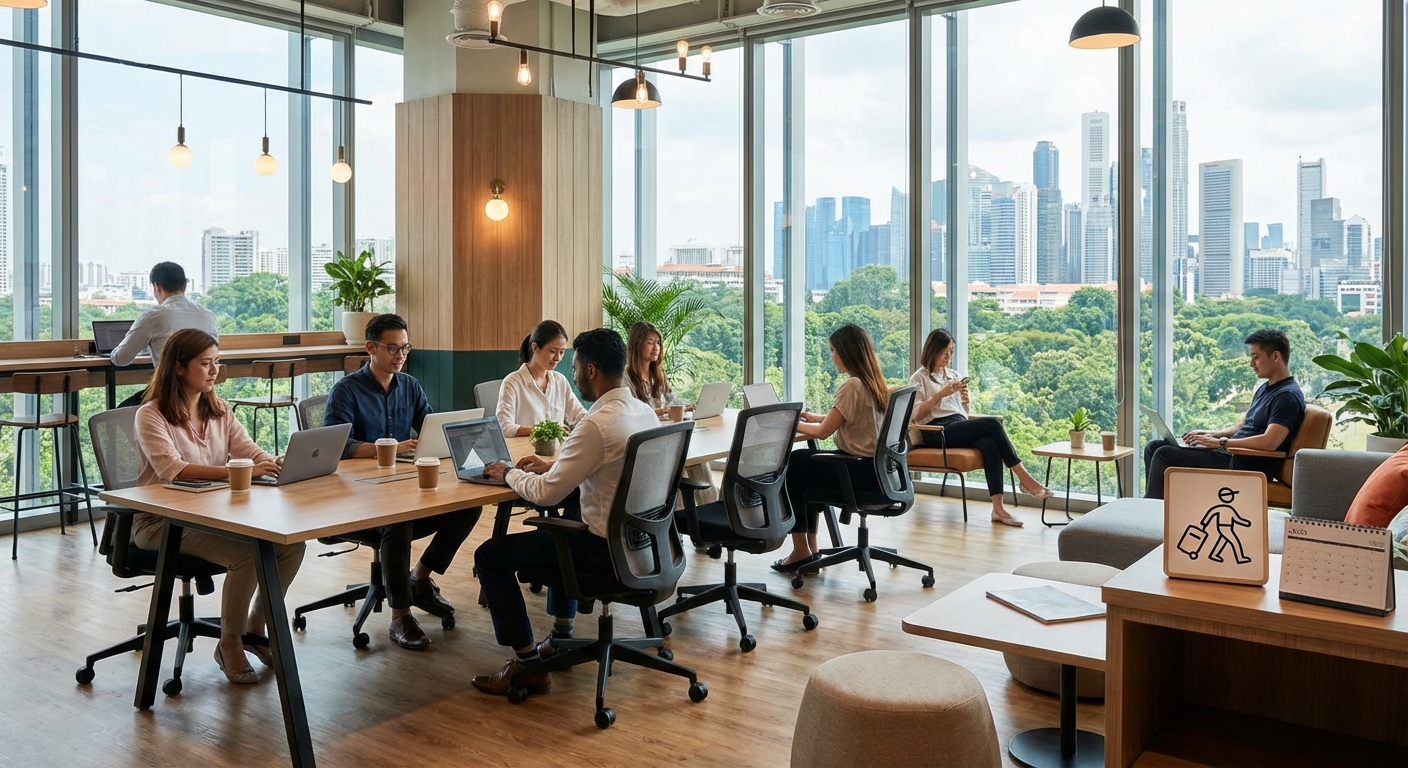
Singapore’s coworking scene has become a magnet for remote workers passing through Asia. You land at Changi, clear customs in 15 minutes, and suddenly you need a reliable workspace that doesn’t lock you into a year-long contract. The city’s reputation for fast internet, stable infrastructure, and a thriving startup community makes it an obvious choice for digital nomads planning one to three month stays. But finding the right space means balancing location, cost, flexibility, and the amenities that actually matter when you’re working across time zones.
Singapore offers digital nomads a range of flexible coworking options, from budget-friendly hot desks at $250 per month to premium spaces with global access networks. Most spaces provide day passes starting at $25, making it easy to test locations before committing. Central districts like Raffles Place and Paya Lebar offer the best connectivity, while neighborhoods like Tiong Bahru provide quieter, community-focused environments. High-speed internet, 24/7 access, and meeting room credits are standard at most established operators.
Why Singapore works for short-term remote work
The city-state’s infrastructure removes most friction points that slow down remote workers in other countries. You get fiber internet as standard, not as a luxury upgrade. Power outlets use UK-style plugs, which most travelers already carry adapters for. English is the primary business language, eliminating communication barriers at reception desks and community events.
Singapore’s geographic position puts you in a timezone that overlaps with both European mornings and US evenings. A 9am call with London happens at 5pm Singapore time. A 6pm check-in with San Francisco clients means starting your day at 7am. This makes the city particularly useful for consultants and agency workers managing international clients.
The public transport system connects every major coworking district within 30 minutes. You can live in a cheaper neighborhood and commute to a premium workspace without losing hours to traffic. Most MRT stations have multiple coworking options within a five-minute walk.
Types of flexible memberships that fit nomad schedules
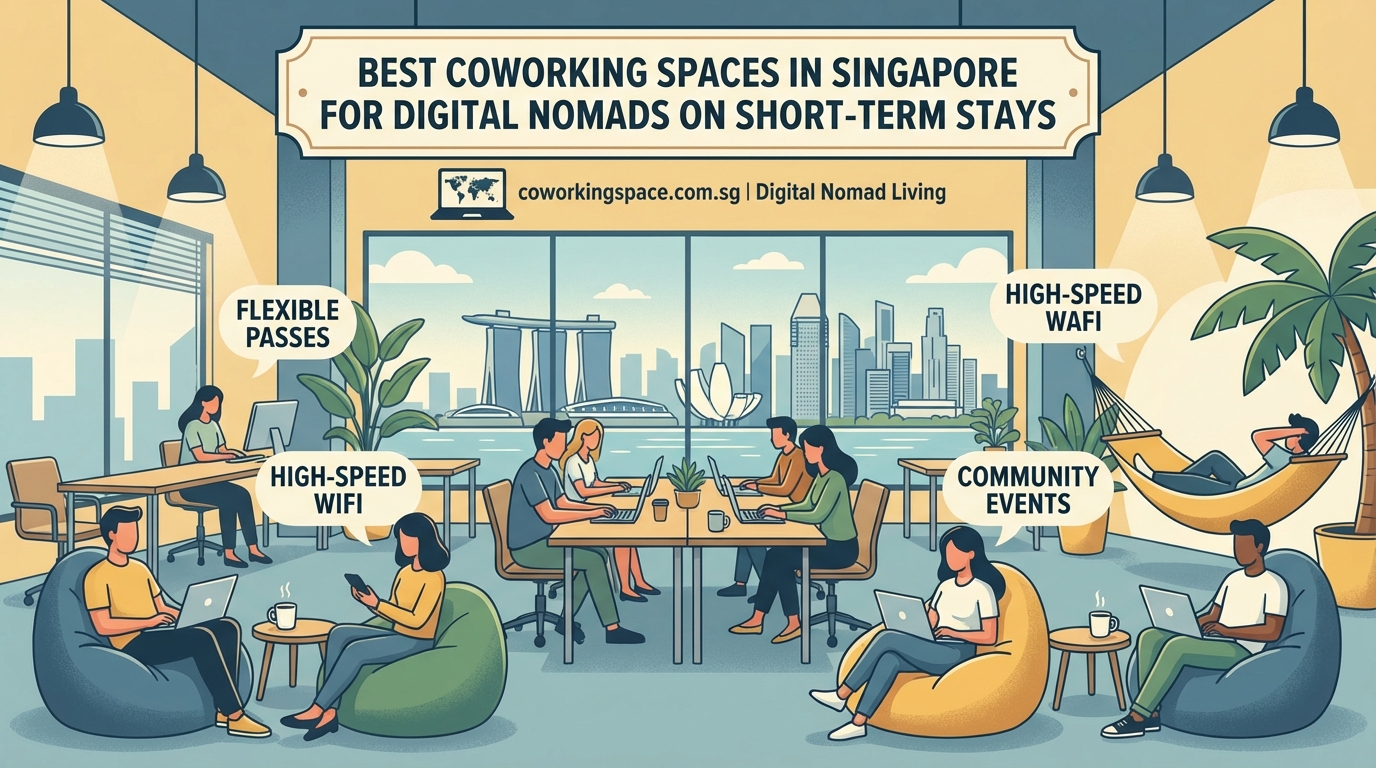
Day passes solve the immediate problem when you first arrive. You pay $25 to $40 for access to a hot desk, wifi, and basic amenities. No commitment, no registration hassles. This works well for your first week while you scout neighborhoods and test different spaces.
Monthly memberships start around $250 for basic hot desking. You get access during business hours, typically 9am to 6pm on weekdays. Some spaces throw in a few hours of meeting room credits and printing allowances. These plans usually require just one month’s notice to cancel, which aligns perfectly with the typical nomad stay length.
Part-time packages let you book specific days per week. A three-day-per-week plan might cost $180 per month. This works if you prefer mixing coworking days with cafe work or home office sessions. You maintain access to the community without paying for space you won’t use.
24/7 access plans cost more but remove scheduling friction. You can work at 2am if that’s when you’re most productive, or when you need to join calls with teams in distant time zones. These memberships typically start at $350 per month and include dedicated desk options.
“The biggest mistake nomads make is choosing a space based purely on price. A $50 monthly saving disappears fast if you’re losing two hours daily to commute time or fighting unreliable internet during client calls.” — Community manager at a Raffles Place coworking hub
Location strategy for different work styles
Central Business District spaces put you close to Singapore’s finance and corporate sectors. Raffles Place, Marina Bay, and Tanjong Pagar offer the most polished environments. You’ll find spaces with reception services, multiple meeting rooms, and members working in consulting, finance, and tech. The trade-off is higher pricing and a more formal atmosphere.
Best coworking spaces in Raffles Place cater primarily to professionals who need to maintain a corporate image for client meetings.
Eastern districts like Paya Lebar Quarter have emerged as alternatives to CBD pricing. You get modern facilities at 20-30% lower rates. The area connects well to both the airport and downtown, making it practical for frequent travelers. Why Paya Lebar Quarter is becoming Singapore’s hottest coworking hub explains the rapid development in this neighborhood.
Creative neighborhoods like Tiong Bahru attract designers, writers, and indie developers. Spaces here emphasize community over corporate polish. You’ll find more casual dress codes, regular social events, and members who actually want to chat during coffee breaks. 7 hidden gem coworking spaces in Tiong Bahru covers options most nomads miss.
Airport proximity matters if you’re making frequent regional trips. Spaces near Changi let you work a full morning, then catch an afternoon flight to Bangkok or Bali without crossing the entire city. Coworking near Changi Airport lists locations within 15 minutes of the terminals.
What you actually need in amenities
Internet speed should be your first filter. Anything below 100 Mbps download becomes a problem for video calls or large file transfers. Most established spaces now offer 500 Mbps or faster. Ask about backup connections. Redundant internet lines mean you stay online even if one provider has issues.
Power availability seems basic until you’re hunting for outlets during peak hours. Count the number of power points per desk in the open areas. Spaces designed by people who actually work remotely put outlets every meter, not just along walls. How high-speed internet in coworking spaces boosts your productivity breaks down the technical requirements for different work types.
Meeting rooms become essential if you take client calls. Check the booking system before joining. Some spaces let you reserve rooms through an app with 15-minute granularity. Others require emailing reception two days ahead. The difference matters when a client wants to schedule an urgent call. Meeting room booking systems explains what separates good systems from frustrating ones.
Printing and scanning access saves you from hunting down copy shops. Most spaces include a monthly allowance in membership fees. Ten pages per month covers basic needs. More than that, you pay per page, usually around $0.20 for black and white. The complete guide to printing, scanning, and office equipment access covers the details most spaces don’t advertise clearly.
Kitchen facilities range from a kettle and instant coffee to full espresso machines and stocked fridges. Spaces targeting premium members often include unlimited coffee, tea, and basic snacks. Budget spaces provide the equipment but expect you to bring your own supplies. This difference adds up to $50-100 monthly in coffee shop savings.
Pricing structures decoded
| Membership Type | Typical Monthly Cost | What’s Included | Best For |
|---|---|---|---|
| Day Pass | $25-40 per day | Hot desk, wifi, basic amenities | Testing spaces, irregular schedules |
| Part-time Hot Desk | $180-250 | 3 days/week, business hours | Mixed work locations |
| Full-time Hot Desk | $250-350 | Unlimited access, business hours | Budget-conscious nomads |
| 24/7 Hot Desk | $350-450 | Round-the-clock access | Night workers, timezone juggling |
| Dedicated Desk | $450-650 | Your own desk, 24/7 access | Long-term stays, equipment storage |
| Private Office | $800+ | Lockable room, 24/7 access | Teams, confidential work |
Hidden costs appear in several areas. Guest passes for bringing clients or collaborators might cost $20-30 per visitor. Mail handling services add $30-50 monthly if you need a business address. Locker rentals run $20-40 per month for secure equipment storage.
Some spaces charge registration fees of $50-100 on top of your first month’s rent. Others waive this for members committing to three months upfront. Security deposits equal one month’s membership fee at most locations. You get this back when you leave, assuming no damage or unpaid bills.
How much does it really cost to work from a coworking space in Singapore provides a complete breakdown including the expenses most nomads forget to budget for.
Booking and getting started
- Research spaces in your preferred neighborhoods using Google Maps and coworking directories.
- Book day passes at three to five different locations during your first week.
- Test internet speed using a tool like Speedtest.net at different times of day.
- Check the vibe during peak hours (10am-12pm and 2pm-4pm) when spaces are fullest.
- Ask current members about their experience, especially regarding internet reliability and community.
- Review the membership agreement for cancellation terms and notice periods.
- Sign up for a monthly membership at your top choice.
- Set a calendar reminder two weeks before your planned departure to give proper notice.
Most spaces let you sign up online, but visiting in person first prevents surprises. The photos on websites always show the space empty and perfectly lit. Reality during busy periods looks different.
How to choose your first coworking space in Singapore walks through the evaluation process in more detail.
Common mistakes that cost time and money
Choosing based on Instagram aesthetics rather than practical features wastes money fast. That beautiful space with the living wall and designer furniture might have terrible acoustics that make phone calls impossible. Or the Instagram-perfect natural lighting creates screen glare that gives you headaches by 2pm.
Committing to long contracts before testing the space ranks as the second biggest error. Some operators offer discounts for six or twelve month commitments. These savings evaporate if you realize two weeks in that the internet drops during video calls or the air conditioning freezes you out.
Ignoring the cancellation policy creates problems when your plans change. Most nomad-friendly spaces require just one month’s notice. Corporate-focused operators might lock you in for three months minimum. Read the fine print before signing. 5 common coworking mistakes that new members make covers these and other pitfalls.
Underestimating commute time seems minor until you’re doing it daily. That space that’s “only 30 minutes away” actually takes 45 minutes during morning rush hour. Add 10 minutes at each end for walking to and from stations. Suddenly you’re losing two hours daily to transit.
- Skip spaces that don’t offer day passes or trial periods
- Avoid locations requiring more than 30 minutes door-to-door travel time
- Pass on spaces without 24/7 access if you work across multiple time zones
- Ignore marketing hype about “community” if you mainly need focused work time
- Don’t pay for dedicated desks unless you’re staying three months minimum
Making the most of coworking communities
Networking happens naturally if you’re open to it, but forced networking events often feel awkward. The best connections come from regular presence rather than scheduled mixers. Show up consistently at the same times and you’ll start recognizing faces.
Some digital nomads prefer coworking specifically for the isolation from social pressure. Do introverts thrive in coworking communities addresses this tension honestly.
Community events vary wildly in quality. Friday drinks attract the social crowd. Lunch-and-learn sessions about specific skills or industries draw more focused professionals. Scan the events calendar before joining to see if the programming matches your interests.
Networking strategies for digital nomads in Singapore’s coworking community provides specific tactics that work without feeling pushy.
Productivity strategies for shared spaces
Open workspace layouts create focus challenges. Noise-canceling headphones become essential equipment, not optional accessories. The $300 investment in quality headphones pays for itself in maintained concentration.
How to eliminate distractions and stay focused in a shared workspace covers environmental management techniques.
Quiet zones exist at most established spaces but fill up during peak hours. Arrive before 9am to claim a quiet desk if you need it for focused work. Alternatively, schedule deep work for early mornings or late afternoons when spaces empty out.
The Pomodoro Technique works particularly well in coworking environments where you can use breaks to move around and change scenery.
Phone booths or call rooms handle video calls without bothering neighbors. Book these in advance for scheduled calls. Some spaces limit booth time to 30 minutes during busy periods, so plan accordingly.
Visa and legal considerations
Tourist visas give you 30 to 90 days depending on your nationality. This covers most short-term stays. Working remotely for foreign clients while on a tourist visa exists in a legal gray area. Singapore doesn’t explicitly prohibit it, but technically you’re not supposed to conduct business.
Can digital nomads work legally in Singapore explains the current situation and risks.
Employment Pass requirements kick in if you want to stay longer or work for Singapore companies. The minimum salary threshold and other requirements make this impractical for most nomads. Singapore Employment Pass requirements details the current rules.
EntrePass offers a path for entrepreneurs, but requires substantial documentation about your business plans and funding. How to apply for Singapore’s EntrePass visa walks through the process.
Budget-friendly options that don’t compromise essentials
Spaces under $300 monthly exist but require trade-offs. You might get business-hours-only access, or locations further from MRT stations, or fewer included amenities. The internet and basic facilities stay reliable at this price point.
Budget-friendly coworking spaces in Singapore under $300 per month lists specific options with honest reviews.
Neighborhood location affects pricing dramatically. The same operator charges 40% more for their CBD location versus their suburban spaces. If you don’t need the prestige address, suburban locations deliver identical internet speeds and desk quality.
How to find budget-friendly coworking spaces in Geylang and Kallang covers areas most nomads overlook.
Part-time memberships stretch budgets further if you can work from home or cafes a few days weekly. A three-day pass costs about 60% of full-time access but gives you 60% of the week. The math works better than paying daily rates.
Day pass vs monthly membership calculates the break-even points for different usage patterns.
Tools and apps that simplify the process
Coworking finder apps show real-time availability and let you book day passes instantly. Deskpass, Croissant, and local platforms like SpacemobAsia aggregate multiple operators. You can compare prices and locations without visiting individual websites.
7 apps every traveling professional needs to find coworking spaces worldwide reviews the best options.
Booking systems vary by operator. Larger chains use proprietary apps. Independent spaces might use simpler tools like Google Calendar for meeting room reservations. Check the system during your day pass trial to ensure it works for your needs.
Payment typically happens through credit cards or PayNow (Singapore’s instant payment system). Most spaces accept international cards without surcharges. Some offer discounts for paying multiple months upfront.
Housing and workspace combinations
Living near your coworking space saves commute time but costs more in rent. Living 20 minutes away by MRT cuts housing costs by 30-40%. Calculate the trade-off based on your daily schedule and work hours.
5 best short-term housing options for remote workers visiting Singapore helps you find accommodation that matches your workspace location.
Some nomads prefer working from home certain days and coworking others. This hybrid approach requires reliable home internet. Singapore’s residential internet is generally excellent, with fiber plans starting at $40 monthly. Hybrid workspace memberships explains how to structure this split.
When premium spaces justify higher costs
High-end spaces charging $500+ monthly provide tangible benefits for certain situations. If you’re meeting clients regularly, the professional environment and reception services justify the cost. If you’re billing $100+ per hour, the time saved by better amenities pays for itself.
Are coworking spaces worth the cost analyzes the return on investment for different professional situations.
Global access networks let you use the same membership in multiple cities. WeWork, Regus, and Spaces operate in dozens of countries. If you’re moving between Singapore, Bangkok, and Tokyo regularly, the premium membership becomes cost-effective compared to buying separate passes everywhere.
Orchard Road coworking spaces examines whether central locations deliver enough value to justify 50% higher costs.
Setting yourself up for success
Your first week determines whether Singapore works for your remote work style. Use day passes to test different neighborhoods and space types. Pay attention to your energy levels and productivity, not just the aesthetics of the space.
How digital nomads can maximize productivity in Singapore’s coworking spaces provides specific techniques for making the most of your membership.
Build a routine that accounts for Singapore’s climate. The afternoon heat makes outdoor activities uncomfortable, so schedule focused work for those hours. Use mornings and evenings for exploration and exercise.
7 morning routines that boost productivity for coworking space members suggests practical schedules that work in tropical conditions.
Finding your ideal workspace match
Singapore’s coworking density means you have real choices. Don’t settle for the first space you visit or the cheapest option you find online. The right workspace becomes your productivity foundation for the next few months. Take time during your first week to test options systematically. Compare internet speeds during your peak work hours. Sit in different areas to test noise levels and desk comfort. Talk to members about their experiences. The space that works for a designer might frustrate a developer who needs absolute quiet. Your work style, schedule, and budget combine to create unique requirements. Trust your instincts after testing several locations, and remember that most memberships let you switch if your first choice doesn’t work out.