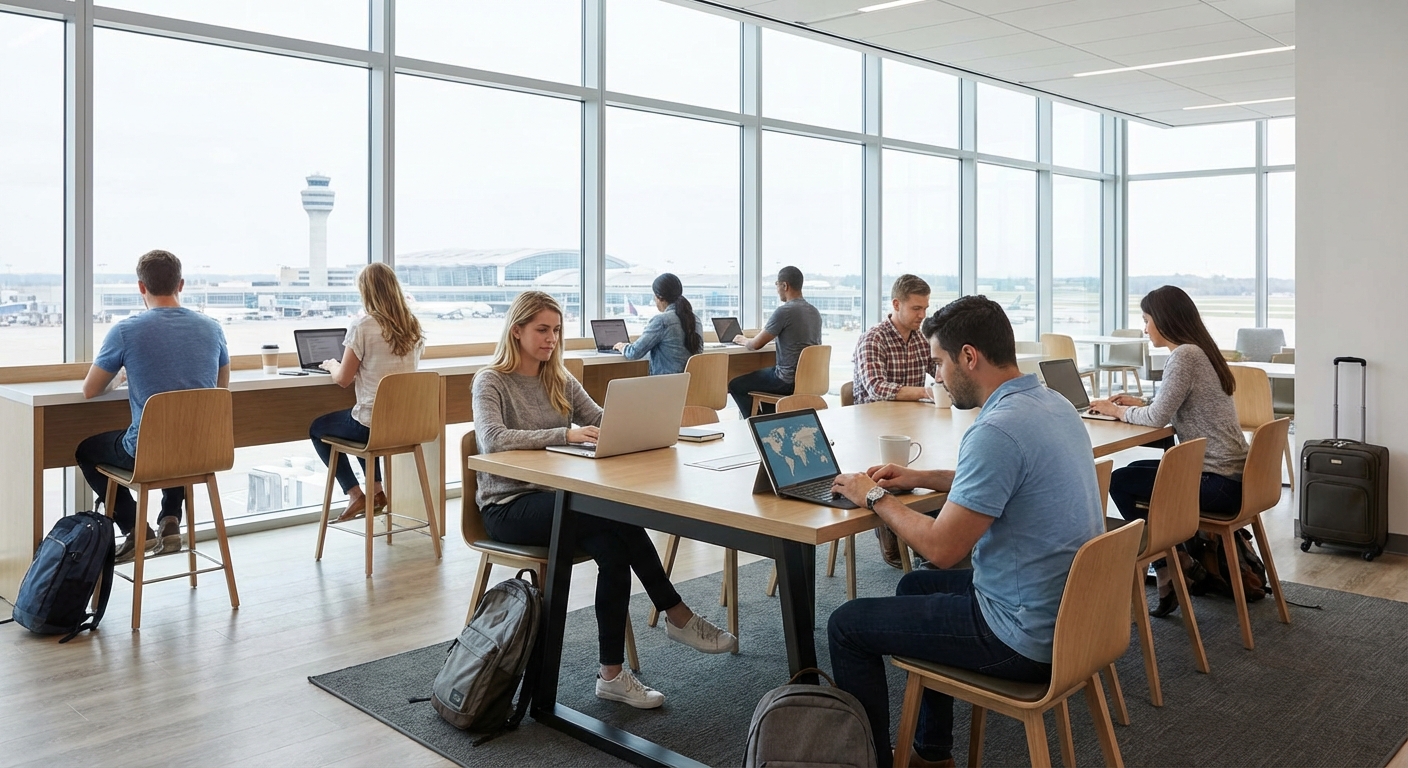
You just landed at Changi Airport after a 12-hour flight. Your next meeting starts in three hours, but your hotel room won’t be ready for another four. You need reliable WiFi, a proper desk, and maybe a strong coffee. This is where coworking spaces near Changi Airport become your best travel companion.
Coworking spaces near Changi Airport offer business travelers and digital nomads professional workspaces within 15 to 30 minutes of the terminals. These locations provide high-speed internet, meeting rooms, and flexible membership options including day passes. East Singapore neighborhoods like Changi Business Park, Paya Lebar, and Tampines host multiple coworking spaces designed specifically for travelers who need immediate workspace access without commuting to the city center.
Why location matters for traveling professionals
Most business travelers waste precious hours commuting between Changi Airport and downtown Singapore. The journey to Raffles Place takes 45 minutes on a good day. Add traffic, and you’re looking at over an hour each way.
Coworking spaces in East Singapore solve this problem. They sit within a 10 to 30-minute radius from the airport terminals. You can finish your layover work session and still catch your connecting flight without stress.
Digital nomads staying near the airport for workcations benefit even more. You get airport proximity plus lower accommodation costs compared to central Singapore. The trade-off used to be limited workspace options. Not anymore.
Top neighborhoods for coworking near Changi Airport
Changi Business Park
This corporate hub sits 10 minutes from Terminal 3 by car. Multiple coworking operators have set up shop here specifically targeting business travelers. The area offers modern facilities with enterprise-grade internet infrastructure.
Changi Business Park spaces typically open early, around 7 AM. Perfect for catching up with teams in different time zones before your flight. Many locations stay open until 10 PM or offer 24-hour access with certain memberships.
Paya Lebar Quarter
Why Paya Lebar Quarter is becoming Singapore’s hottest coworking hub explains the rapid growth of this area. It’s 15 minutes from Changi Airport via the East Coast Parkway.
The neighborhood combines excellent transport links with competitive pricing. You’ll find both premium operators and budget-friendly options within walking distance of each other.
Tampines Regional Centre
Tampines offers the most affordable coworking options near the airport. It’s 20 minutes away by MRT or taxi. The area has experienced significant workspace development over the past two years.
Spaces here cater to longer-term digital nomads rather than day-pass users. Monthly rates run 20 to 30 percent lower than central Singapore locations.
Bedok and Simei
These residential neighborhoods recently added coworking facilities. They’re 15 to 20 minutes from the airport terminals. The spaces tend to be smaller, community-focused operations.
Perfect if you prefer quieter environments over bustling corporate hubs. Several operators offer shower facilities, which travelers appreciate after long flights.
What to expect from airport-adjacent coworking spaces
Most locations near Changi Airport understand their audience. They’ve adapted their services for people who work on the move.
Day passes are readily available without advance booking. You can walk in, pay, and start working within minutes. Rates typically range from $25 to $50 for a full day, depending on the facility and included amenities.
High-speed internet is standard. Expect minimum speeds of 100 Mbps, with many locations offering 500 Mbps or fiber connections. How high-speed internet in coworking spaces boosts your productivity covers why this matters for remote work.
Meeting rooms book by the hour. Most spaces require only 30 minutes advance notice for small rooms. Larger conference spaces may need a day’s notice during peak periods.
Luggage storage solves a common traveler problem. Many airport-area coworking spaces offer secure storage for bags and suitcases. Some charge a small fee, while others include it with day passes.
Membership options that work for travelers
Day passes
The most flexible option for business travelers. You pay only for the days you use. No commitment, no monthly fees.
Day passes grant access to hot desks, WiFi, and common areas. Most include basic coffee and tea. Some locations add meeting room credits or printing allowances.
Prices vary based on location and amenities. Budget spaces charge $20 to $30. Premium locations with extra services run $40 to $60 per day.
Weekly passes
Better value if you’re staying in Singapore for several days. Weekly passes cost roughly the equivalent of three to four day passes.
You get the same amenities as day passes but with guaranteed desk availability during peak hours. Some operators throw in extra meeting room time or locker access.
Multi-location memberships
Several coworking chains operate both near the airport and in central Singapore. Their multi-location memberships let you work at any branch.
This flexibility helps when your schedule changes. Start your week near the airport, then shift to a downtown location for client meetings. Best coworking spaces in Singapore for digital nomads on short-term stays reviews operators with multiple branches.
Monthly memberships for extended stays
Digital nomads spending a month or more in Singapore save money with monthly memberships. Rates near the airport run lower than city center locations.
Understanding coworking membership types: hot desks vs dedicated desks vs private offices breaks down the different options available.
Essential amenities for business travelers
Not all coworking spaces offer the same features. Here’s what matters most when you’re working between flights.
Printing and scanning services
You need to print boarding passes, scan documents, or prepare presentation materials. Most airport-area spaces include basic printing. Color printing and binding usually cost extra.
The complete guide to printing, scanning, and office equipment access in coworking spaces covers what to expect and how charges work.
Private phone booths
Taking calls in open spaces disrupts others and compromises your privacy. Look for locations with dedicated phone booths or small call rooms.
These soundproof spaces let you handle confidential conversations without disturbing fellow coworkers. Most spaces offer them free on a first-come basis.
Shower facilities
After a red-eye flight, a shower makes a huge difference. Several coworking spaces near Changi Airport include shower facilities with towel service.
This amenity transforms a coworking space into a mini business lounge. You can freshen up before important meetings without checking into a hotel.
Lockers and storage
Secure storage for laptops, documents, and personal items gives you peace of mind. Daily lockers are common. Some spaces offer longer-term storage for regular members.
Kitchen and refreshments
Coffee and tea are standard. Better spaces include filtered water, snacks, and sometimes light meals. A few operators near the airport have partnered with nearby cafes for food delivery.
How to choose the right space for your needs
Follow this process to find the best coworking option for your situation.
-
Check the actual travel time from your terminal. Google Maps estimates can be optimistic during rush hours. Add 15 minutes buffer to any estimate.
-
Verify operating hours match your schedule. Some spaces close at 6 PM on weekends. Others offer 24-hour access but only to monthly members.
-
Read reviews from other travelers. Look for comments about WiFi reliability, noise levels, and staff responsiveness. Recent reviews matter more than old ones.
-
Confirm day pass availability. A few spaces prioritize monthly members and limit day pass access during busy periods.
-
Test the booking system. Some operators require advance online booking. Others accept walk-ins. Know which model works before you arrive.
-
Calculate total costs including extras. Base rates look attractive until you add printing, meeting room time, and locker fees. Get the full picture.
How to choose your first coworking space in Singapore: a beginner’s guide offers additional selection criteria.
Common mistakes travelers make with coworking spaces
-
Assuming all spaces offer day passes. Some locations operate on monthly memberships only. Always verify before making plans.
-
Not checking WiFi speeds. “High-speed internet” means different things to different operators. Ask about actual speeds if your work involves video calls or large file transfers.
-
Ignoring peak hours. Spaces near the airport fill up between 9 AM and 5 PM on weekdays. Arrive early or book ahead during these times.
-
Forgetting about meeting room costs. Your day pass covers desk space, but meeting rooms often cost extra. Budget accordingly if you need private space for calls.
-
Overlooking neighborhood amenities. A coworking space might be perfect, but if there’s nowhere nearby to grab lunch, you’ll waste time on food runs.
5 common coworking mistakes that new members make (and how to avoid them) covers additional pitfalls.
Comparing coworking spaces near Changi Airport
| Feature | Premium Spaces | Mid-Range Options | Budget Locations |
|---|---|---|---|
| Day pass cost | $45 to $60 | $30 to $45 | $20 to $30 |
| WiFi speed | 500+ Mbps | 100 to 300 Mbps | 50 to 100 Mbps |
| Meeting rooms | Multiple sizes, advanced booking | 1 to 2 rooms, same-day booking | Shared only, no private rooms |
| Shower facilities | Yes, with amenities | Sometimes | Rarely |
| Luggage storage | Complimentary | Small fee | Not available |
| Operating hours | 24/7 or extended | 8 AM to 8 PM | 9 AM to 6 PM |
Working productively during layovers
Layover work sessions require different strategies than regular office days. You’re managing limited time, potential jet lag, and travel stress.
Building a personal productivity system that works in any coworking environment helps you adapt your workflow to temporary spaces.
Focus on tasks that don’t require deep concentration. Emails, scheduling, expense reports, and light editing work well during layovers. Save complex problem-solving for when you’re less rushed.
The Pomodoro technique: why coworking spaces are perfect for time-blocking explains how to maximize short work windows.
Set clear time boundaries. If your flight leaves at 6 PM, plan to leave the coworking space by 4 PM. Airport security and check-in take time. Build in buffers.
Managing costs as a frequent traveler
Coworking expenses add up when you travel regularly. Here are strategies to control costs without sacrificing workspace quality.
-
Buy multi-day passes in advance. Many operators discount bundles of five or ten day passes. You save 15 to 25 percent compared to single-day rates.
-
Join loyalty programs. Several coworking chains offer points or credits for frequent users. Benefits include free meeting room time and priority booking.
-
Consider monthly memberships for regular routes. If you visit Singapore monthly, a local membership costs less than repeated day passes. Some operators let you pause memberships between visits.
-
Share costs with colleagues. Team day passes or meeting room splits reduce individual expenses when traveling with coworkers.
7 money-saving tips for freelancers using coworking spaces in Singapore offers additional cost-cutting strategies.
What digital nomads should know about East Singapore
East Singapore offers a different experience from the tourist-heavy central districts. It’s more residential, less expensive, and increasingly popular with remote workers.
Accommodation costs run 30 to 40 percent lower than downtown areas. You’ll find serviced apartments and Airbnb options near coworking spaces. The trade-off is fewer nightlife options and tourist attractions.
Is Singapore worth it for digital nomads? A complete cost-benefit analysis examines the financial realities of basing yourself in Singapore.
Food options lean toward local hawker centers and neighborhood restaurants. Western chains exist but are less common than in Orchard or Marina Bay. This works in your favor financially, as hawker food costs a fraction of restaurant prices.
Transport connections are excellent. The MRT reaches all major areas. Buses run frequently. Grab rides cost less than in central Singapore.
“I spent three months working from Tampines while exploring Southeast Asia. The coworking space cost me $280 monthly, my apartment was $1,200, and I could reach the airport in 25 minutes. It was perfect for my travel schedule and budget.” – Remote software developer
Dealing with time zone challenges
Working near Changi Airport often means coordinating across multiple time zones. Singapore sits eight hours ahead of London and 13 hours ahead of New York.
Early morning hours work best for connecting with European teams. Late evenings suit North American schedules. Coworking spaces with extended hours or 24-hour access become essential.
Managing time zones and client calls while working across countries provides practical scheduling strategies.
Book meeting rooms during odd hours when demand drops. You’ll find better availability at 7 AM or 8 PM than during standard business hours.
Security considerations for travelers
Working in shared spaces requires extra attention to security, especially when you’re carrying travel documents and valuable electronics.
-
Never leave devices unattended, even for bathroom breaks. Take your laptop with you or ask a staff member to watch your desk.
-
Use a privacy screen on your laptop if working with sensitive information. These filters prevent shoulder surfing in open environments.
-
Connect through a VPN when accessing company systems or handling confidential data. Public WiFi networks, even in coworking spaces, carry risks.
-
Store passports and valuables in lockers, not on your desk. Most spaces offer secure storage options.
-
Back up your work frequently to cloud services. Technical problems or lost devices shouldn’t mean lost progress.
Alternatives to traditional coworking spaces
Not every traveler needs a full coworking membership. Several alternatives exist near Changi Airport.
Hotel business centers offer basic workspace for guests. They’re convenient but often expensive for non-guests and lack the amenities of proper coworking spaces.
Airport lounges work for short sessions between flights. Priority Pass and airline lounges provide WiFi and seating. However, they’re not designed for extended work sessions.
Cafes with good WiFi are scattered throughout East Singapore. They cost less but lack meeting rooms, printing services, and professional environments. Fine for casual work, not for client calls.
Serviced apartments with workspace combine accommodation and office space. This option suits longer stays but requires booking in advance.
How to create a productive mobile office in any hotel room helps you set up workspace anywhere.
Networking opportunities for business travelers
Coworking spaces near Changi Airport attract an international crowd. You’ll meet fellow travelers, regional business people, and local entrepreneurs.
How coworking spaces help freelancers build professional networks in Singapore explores community building strategies.
Most spaces host occasional networking events, though less frequently than downtown locations. Check event calendars when planning your visit.
Don’t expect the same community vibe as traditional coworking spaces. Airport-area locations see more transient members. People focus on work rather than socializing. That’s not necessarily bad, just different.
Do introverts thrive in coworking communities? A realistic look at networking expectations addresses different working styles in shared spaces.
Booking and payment systems
Understanding how to book and pay for coworking space saves time when you arrive.
Most operators near the airport accept online bookings through their websites or apps. You can reserve day passes, meeting rooms, and additional services in advance.
Payment options typically include credit cards, PayPal, and local payment methods like PayNow. Some spaces accept cash, though it’s becoming less common.
Cancellation policies vary. Day passes often allow free cancellation up to 24 hours before your booking. Meeting rooms may have stricter policies, especially during peak periods.
Monthly memberships usually require one month’s notice for cancellation. Read the terms before committing to longer contracts.
Common questions about coworking near Changi Airport
Can I use coworking spaces during overnight layovers?
Yes, if you choose a location with 24-hour access. Not all spaces offer this, so verify operating hours before booking. Some operators charge premium rates for overnight access.
Do I need to book in advance?
For day passes during weekdays, advance booking helps guarantee space but isn’t always required. Weekends and evenings see less traffic, making walk-ins easier. Meeting rooms always need booking.
What if I need to leave suddenly for my flight?
Most day passes don’t offer refunds for early departure. However, staff usually accommodate emergency situations. Communicate clearly if your plans change.
Are these spaces suitable for video calls?
Yes. Look for locations with phone booths or meeting rooms. Open areas work for casual calls but aren’t ideal for important meetings.
Can I receive mail or packages at coworking spaces?
Some spaces offer mail handling services, typically for monthly members rather than day pass users. Ask about this service if you need it.
Making the most of your airport-area coworking experience
Treat your coworking session as seriously as any office day. Arrive prepared with everything you need: chargers, adapters, headphones, and work materials.
7 essential tools remote workers need when using coworking spaces lists equipment that enhances your workspace setup.
Respect the space and other members. Keep phone calls quiet or use designated areas. Clean up after yourself in shared spaces. Follow the community guidelines posted by operators.
Take advantage of amenities you’re paying for. If your membership includes coffee, meeting room credits, or printing allowances, use them. You’ve already paid for these services.
How to eliminate distractions and stay focused in a shared workspace provides concentration techniques for open environments.
The practical reality of working near Changi Airport
Coworking spaces near Changi Airport serve a specific purpose. They’re not trying to be trendy downtown locations with elaborate community programs. They exist to give traveling professionals a reliable place to work.
That focus creates a different atmosphere. People come to get things done, not to socialize over craft coffee. The spaces prioritize functionality over Instagram-worthy design.
This approach works perfectly for business travelers and digital nomads who need workspace, not a lifestyle brand. You get what matters: fast internet, comfortable seating, meeting rooms, and proximity to the airport.
The next time you land at Changi with work to finish, skip the hotel lobby or crowded cafe. A proper coworking space near the airport gives you the professional environment you need, exactly when you need it.