
You’re tired of working from noisy cafes and your cramped apartment. You know a coworking space could solve this, but the pricing pages you’ve found are confusing. Some show $200 per month, others hit $1,500, and you’re not sure what you actually get for your money.
Let’s break down the real numbers behind coworking space cost singapore so you can budget properly and choose the right option.
Coworking space costs in Singapore range from $150 for basic hot desks to $2,000+ for private offices monthly. Day passes average $30 to $50. Hidden costs include printing fees, meeting room bookings, and mail handling. Budget-conscious professionals can save 40% by choosing flexible memberships, off-peak hours, or spaces in non-central locations like Geylang and Kallang.
Understanding the basic membership tiers
Most Singapore coworking spaces offer three main membership types, each with distinct pricing.
Hot desks give you access to any available desk in a shared area. You show up, pick a spot, and work. Prices typically range from $150 to $400 per month depending on location and amenities. Central Business District locations cost more than suburban spaces.
Dedicated desks reserve a specific spot just for you. You can leave personal items overnight and customize your workspace slightly. Expect to pay $350 to $700 monthly. This option suits professionals who need consistency and want to establish a routine.
Private offices provide enclosed spaces for teams or individuals who need privacy for calls and meetings. Small offices (1-2 people) start around $800, while larger suites for 5-10 people can exceed $2,000 monthly.
If you’re just starting to understand coworking membership types, consider your work style first. Do you take frequent video calls? A private office might be essential. Work mostly alone with headphones? A hot desk could be perfect.
Day passes and flexible options
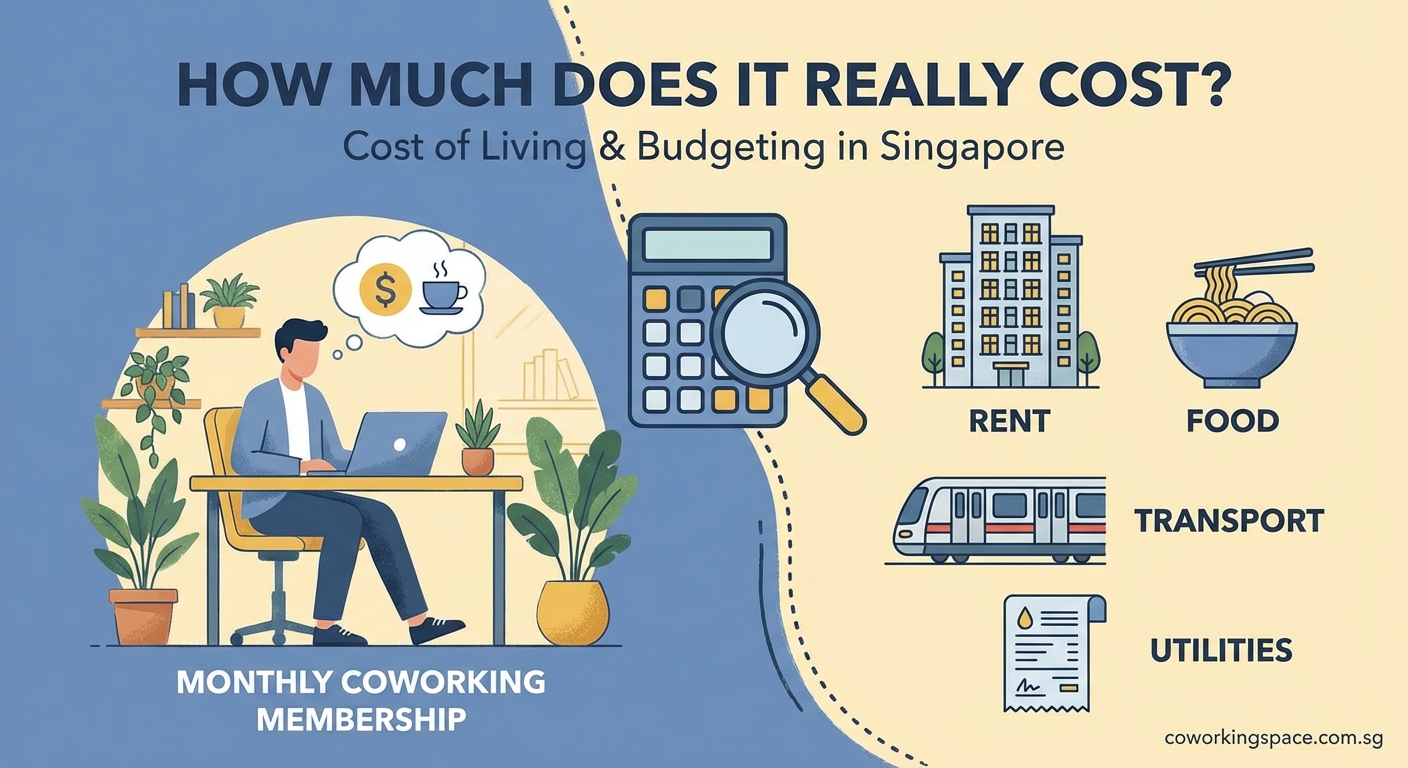
Not ready to commit to a monthly membership? Day passes offer flexibility.
Most Singapore coworking spaces charge between $30 and $50 for a single day. Some offer 5-day or 10-day passes that bring the per-day cost down to $25 to $35.
Here’s what typically comes with a day pass:
- Access to hot desking areas during business hours
- WiFi and power outlets
- Basic coffee and tea
- Use of common areas and lounges
- Sometimes limited printing credits (usually 5-10 pages)
Meeting room access usually costs extra, even with a day pass. Budget an additional $20 to $50 per hour if you need a private space for client calls.
The math matters here. If you plan to use a coworking space more than 8-10 days per month, a monthly hot desk membership becomes more economical than buying individual day passes.
Location dramatically affects pricing
Where your coworking space sits makes a huge difference to your monthly bill.
Raffles Place and Marina Bay spaces command premium prices. You’ll pay 30% to 50% more than spaces in other neighborhoods. A hot desk in the CBD averages $350 to $450, while the same membership in Geylang or Kallang costs $200 to $280.
| Location Type | Hot Desk Range | Dedicated Desk Range | Private Office (2 pax) |
|---|---|---|---|
| CBD (Raffles Place, Shenton Way) | $350-$450 | $550-$800 | $1,200-$2,000 |
| Prime (Orchard, Marina Bay) | $320-$420 | $500-$700 | $1,000-$1,800 |
| Mid-tier (Paya Lebar, Bugis) | $250-$350 | $400-$600 | $800-$1,400 |
| Budget (Geylang, Kallang, Woodlands) | $180-$280 | $300-$500 | $600-$1,000 |
Transportation costs matter too. A cheaper space that requires an hour-long commute might not save you money when you factor in time and MRT fares.
Consider your client meeting needs. If you regularly host clients, a prestigious CBD address might justify the premium. If you work remotely for overseas companies, location matters less.
Hidden costs you need to know about
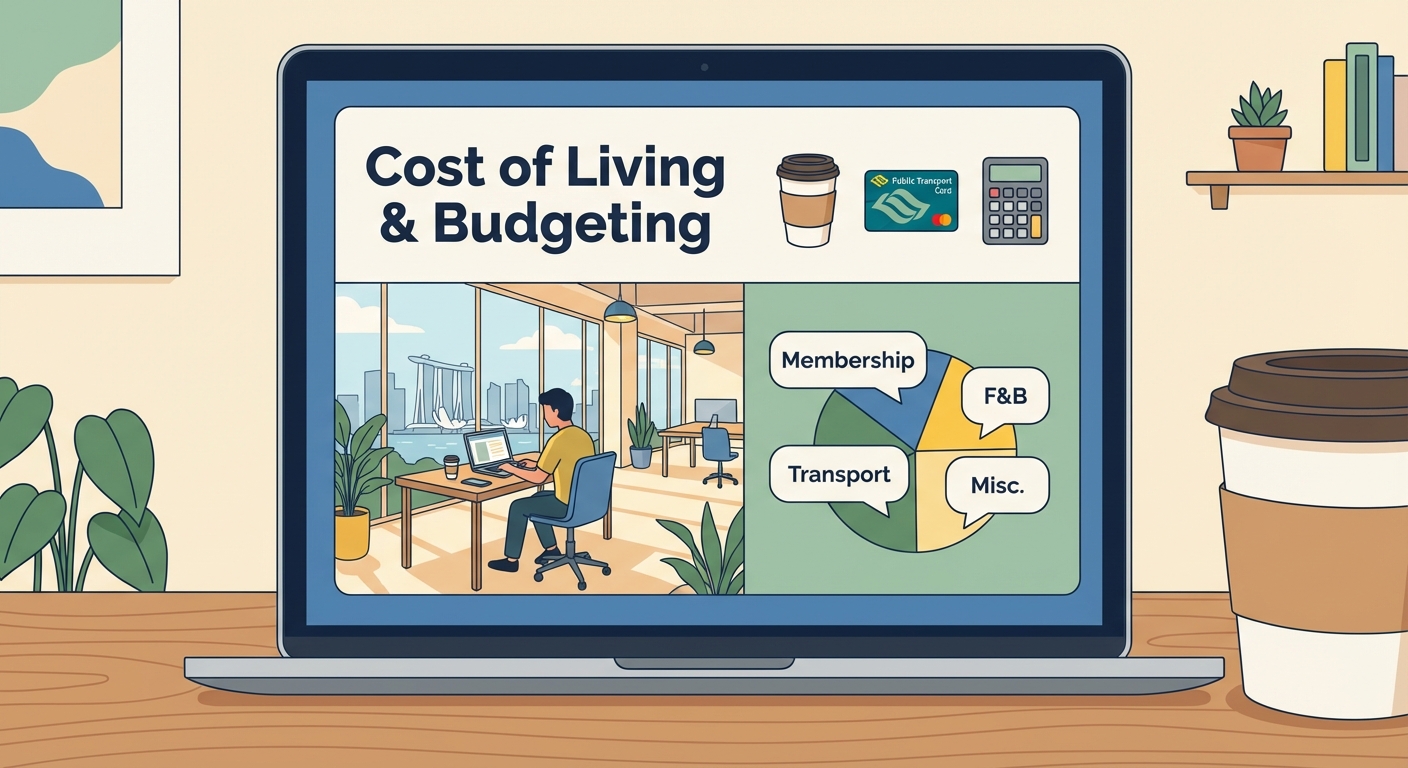
The advertised membership price rarely tells the whole story.
Printing and scanning often cost extra. Expect to pay $0.10 to $0.30 per black and white page, and $0.50 to $1.00 for color prints. Heavy printing needs can add $50 to $100 monthly.
Meeting room bookings typically aren’t included in basic memberships. Rates range from $20 to $80 per hour depending on room size and location. Some spaces offer a few free hours monthly with premium memberships.
Mail handling services cost $30 to $80 per month if you want a business address and mail forwarding. This matters if you need a professional address for business registration.
Locker rentals run $20 to $50 monthly. Not essential, but convenient if you cycle to work or keep client presentation materials on-site.
Guest passes sometimes come with fees. Bringing a colleague or client to work alongside you might cost $15 to $30 per person per day.
Deposit requirements vary. Some spaces require one month’s rent as a security deposit, refundable when you leave. Others charge a non-refundable registration fee of $50 to $150.
“I thought I was paying $280 for my hot desk, but between printing costs, occasional meeting room use, and the mail service, I was actually spending closer to $380 monthly. Budget for at least 20% above the base membership price.” – Marcus Chen, freelance consultant
Comparing value across price points
Price alone doesn’t determine value. You need to evaluate what you actually get.
Budget spaces ($150 to $250 monthly) typically offer:
- Basic desks and chairs
- Standard WiFi (50-100 Mbps)
- Coffee and tea
- Limited or no meeting rooms
- Fewer networking events
- Basic amenities only
Mid-range spaces ($250 to $450 monthly) usually include:
- Ergonomic furniture options
- Faster WiFi (200-500 Mbps)
- Better coffee and sometimes snacks
- Meeting room credits (2-5 hours monthly)
- Regular community events
- Phone booths for calls
- Better locations
Premium spaces ($450+ monthly) often provide:
- Designer furniture and interiors
- Enterprise-grade WiFi (500+ Mbps)
- Premium coffee, snacks, sometimes meals
- Generous meeting room credits (5-10 hours monthly)
- Daily events and workshops
- Concierge services
- Prime CBD locations
- Additional perks like gym access
The question isn’t which tier is “best” but which matches your actual needs. A graphic designer working alone might thrive in a budget space, while a consultant meeting clients weekly needs the premium tier.
When choosing your first coworking space in singapore, visit during your typical work hours. Test the WiFi speed, check noise levels, and see if the vibe matches your work style.
Smart ways to reduce your monthly costs
Several strategies can significantly lower your coworking expenses without sacrificing quality.
-
Negotiate longer commitments. Many spaces offer 10% to 20% discounts for 6-month or annual contracts. A $300 monthly membership becomes $270 with a year commitment, saving you $360 annually.
-
Use off-peak memberships. Some spaces offer cheaper rates for 9am-5pm access only, excluding evenings and weekends. If you maintain strict work hours, this saves 15% to 25%.
-
Share a private office. Split a 4-person office with friends or colleagues. A $1,200 office divided four ways costs $300 each, often cheaper than dedicated desks with more privacy.
-
Start with day passes. Test multiple spaces before committing. You’ll avoid signing a contract at a space that doesn’t fit your needs.
-
Look beyond the CBD. Spaces in Paya Lebar, Tiong Bahru, or Katong offer similar amenities at 30% lower prices. The extra commute time might be worth the savings.
-
Bring your own supplies. Pack lunch instead of buying from nearby cafes. Bring a reusable water bottle. Small daily savings add up to $100+ monthly.
-
Use free trial periods. Many spaces offer free day trials or discounted first months. Take advantage to test before paying full price.
For more strategies, check out these money-saving tips for freelancers using coworking spaces in singapore.
Additional membership benefits that affect value
Some coworking spaces include perks that offset the membership cost.
Access to multiple locations matters if you travel around Singapore for client meetings. Networks like JustCo and The Working Capitol let members use any of their spaces island-wide. This flexibility can replace coffee shop working entirely.
Event access provides networking and learning opportunities. Spaces hosting weekly workshops, speaker series, or social mixers deliver value beyond the desk itself. If you’d normally pay for similar professional development, this benefit has real monetary worth.
Community manager support helps with business introductions, vendor recommendations, and problem-solving. Good community managers act like concierges, saving you time finding services or making connections.
Wellness amenities like shower facilities benefit cyclists or gym-goers. If a coworking space lets you exercise before work without going home first, that time savings has value.
Partnership discounts with local businesses sometimes include restaurants, fitness centers, or business services. These can save $50 to $150 monthly if you use them regularly.
Calculating your true monthly workspace budget
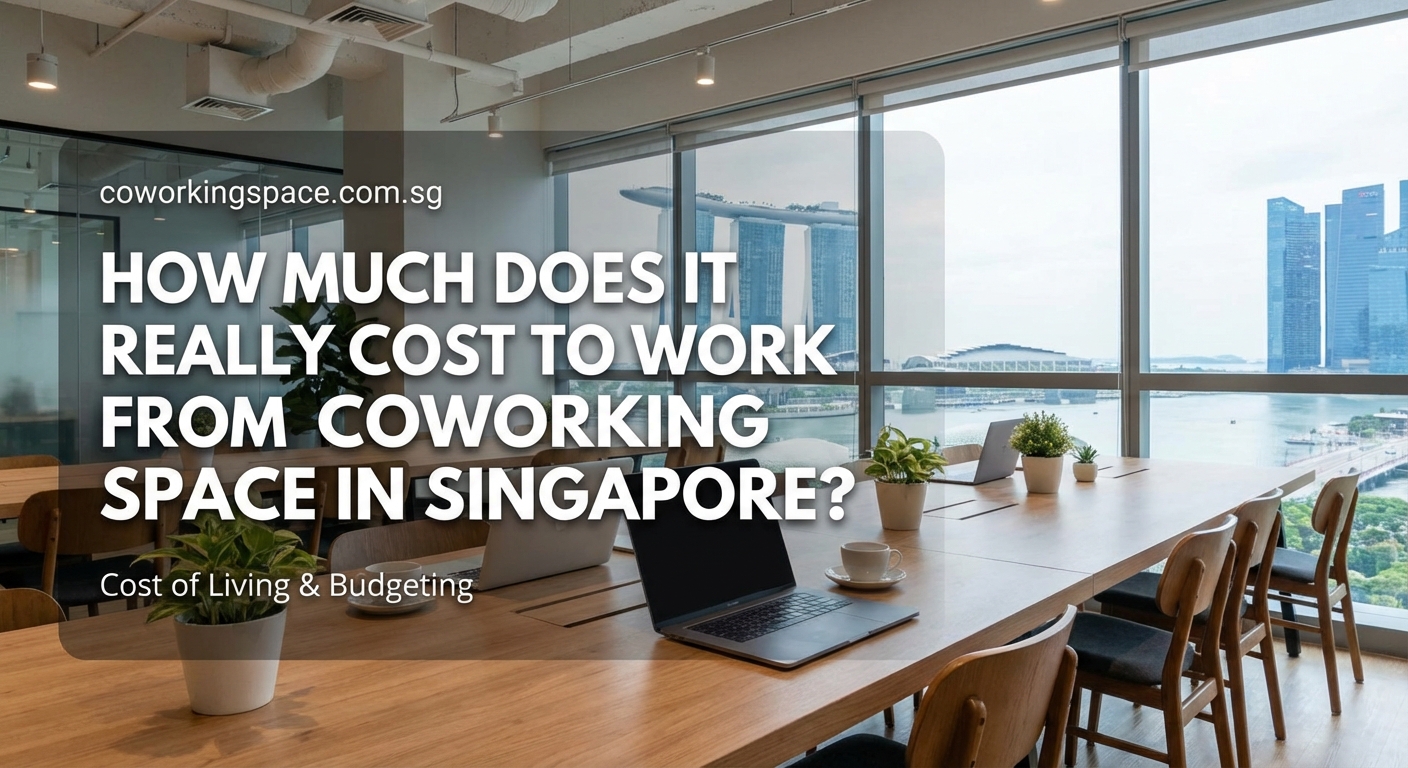
Build a realistic budget by adding all potential costs.
Start with your base membership tier. Add 20% for variable costs like printing, meeting rooms, and occasional guest passes. Factor in commute costs if the space isn’t walking distance from home or your regular locations.
Here’s a sample budget for a freelance consultant:
- Hot desk membership (mid-tier location): $320
- Meeting room use (4 hours monthly): $100
- Printing (50 pages monthly): $15
- Occasional guest passes (2 per month): $60
- MRT commute (20 days): $60
- Total monthly cost: $555
Compare this to your current setup. Working from home costs less but might hurt productivity. Coffee shop working seems free but usually involves $8 to $12 daily purchases, totaling $160 to $240 monthly with less professional amenities.
The true value of coworking spaces includes productivity gains, networking opportunities, and mental health benefits from separating work and home life.
Special considerations for different professional types
Your profession affects which coworking option delivers the best value.
Freelancers and solo consultants often benefit most from hot desks with meeting room access. You need flexibility more than a permanent spot. Budget $300 to $450 monthly including occasional meeting room use.
Remote employees working for overseas companies can choose based purely on personal preference and location convenience. If your employer provides a workspace allowance, maximize it by choosing spaces with the best amenities. Budget $250 to $400 monthly.
Small business owners with teams need private offices or multiple dedicated desks. Factor in team size growth. A 4-person office with room to expand costs less than upgrading spaces every six months. Budget $800 to $1,500 for small teams.
Digital nomads on short-term stays benefit from day passes or weekly packages. Many spaces offer tourist-friendly options. Budget $150 to $250 weekly for flexible access.
Creatives needing specialized equipment should seek industry-specific spaces with photo studios, recording booths, or maker labs. These cost more ($400 to $600) but eliminate separate equipment rental costs.
Understanding what makes a coworking space different from a traditional office helps you appreciate the flexibility and cost savings compared to long-term commercial leases.
Seasonal pricing and promotional opportunities
Coworking spaces run promotions that can significantly reduce your costs.
New space openings often feature inaugural discounts of 30% to 50% for the first three months. Sign up early and you lock in lower rates even after the promotion ends.
Year-end promotions (November to January) typically offer reduced rates as spaces try to fill capacity before the new year. This is the best time to negotiate annual contracts.
Referral programs reward existing members who bring friends. Both parties usually receive one month free or significant discounts. Ask friends already using coworking spaces about their referral benefits.
Corporate partnerships sometimes provide discounted rates if your employer has a relationship with a coworking network. Check with your HR department, especially if your company supports remote work.
Trial periods let you test spaces at reduced rates. A $50 week-long trial is cheaper than committing to a full month at a space that doesn’t suit you.
When cheaper isn’t better
Sometimes paying more delivers better value.
A $200 hot desk in a poorly maintained space with slow WiFi, uncomfortable chairs, and frequent noise disruptions will hurt your productivity. If you lose even two billable hours monthly due to poor conditions, you’ve lost more than the $150 difference to a better space.
Location matters for client perception. If you regularly host client meetings, a professional CBD address justifies premium pricing. The alternative is meeting at cafes or hotels, which costs money and appears less professional.
Networking opportunities at premium spaces can generate business that far exceeds the membership cost difference. If one good client connection from a coworking event brings in $5,000 of work, the extra $100 monthly for a better space pays for itself many times over.
Equipment quality affects your health. Cheap chairs cause back pain. Poor lighting strains eyes. These health costs compound over time. Ergonomic furniture and proper lighting at premium spaces protect your long-term wellbeing.
Making your final decision
Choose a coworking space based on your actual usage patterns and professional needs.
Calculate your expected monthly usage. If you’ll work there 20+ days monthly, a monthly membership makes sense. For 5-10 days, consider day passes or part-time options.
Visit multiple spaces during your typical work hours. Morning people should visit at 8am. Night owls should check evening atmospheres. Weekend workers need to confirm weekend access and staffing.
Test the essentials. Connect to WiFi and run a speed test. Sit at desks for 30 minutes to check comfort. Make a test call from phone booths to check sound isolation. Use the bathroom to assess cleanliness.
Talk to current members. Most coworking spaces have friendly communities. Ask people working there about their experience, any issues they’ve encountered, and whether they’d recommend the space.
Read the contract carefully. Note the notice period for cancellation, deposit terms, what’s included in your tier, and any automatic price increases. Some spaces lock rates for annual contracts, others adjust quarterly.
Start with a shorter commitment if possible. A three-month contract lets you test whether coworking suits your work style before committing to a year.
Remember that the cheapest option isn’t always the most economical. Factor in productivity, commute time, networking value, and your professional image when calculating true costs.
Finding the workspace that matches your budget and goals
Coworking space costs in Singapore vary widely, but transparency helps you make smart choices.
Budget $180 to $450 for hot desks depending on location and amenities. Add 20% for variable costs. Consider your commute, client meeting needs, and work style when choosing a tier and location.
The right space pays for itself through increased productivity, better work-life separation, and professional networking opportunities. Start by testing a few spaces with day passes, then commit to the one that feels right.
Your workspace affects your income, health, and professional growth. Choose based on value, not just price, and you’ll find a space that supports your success.