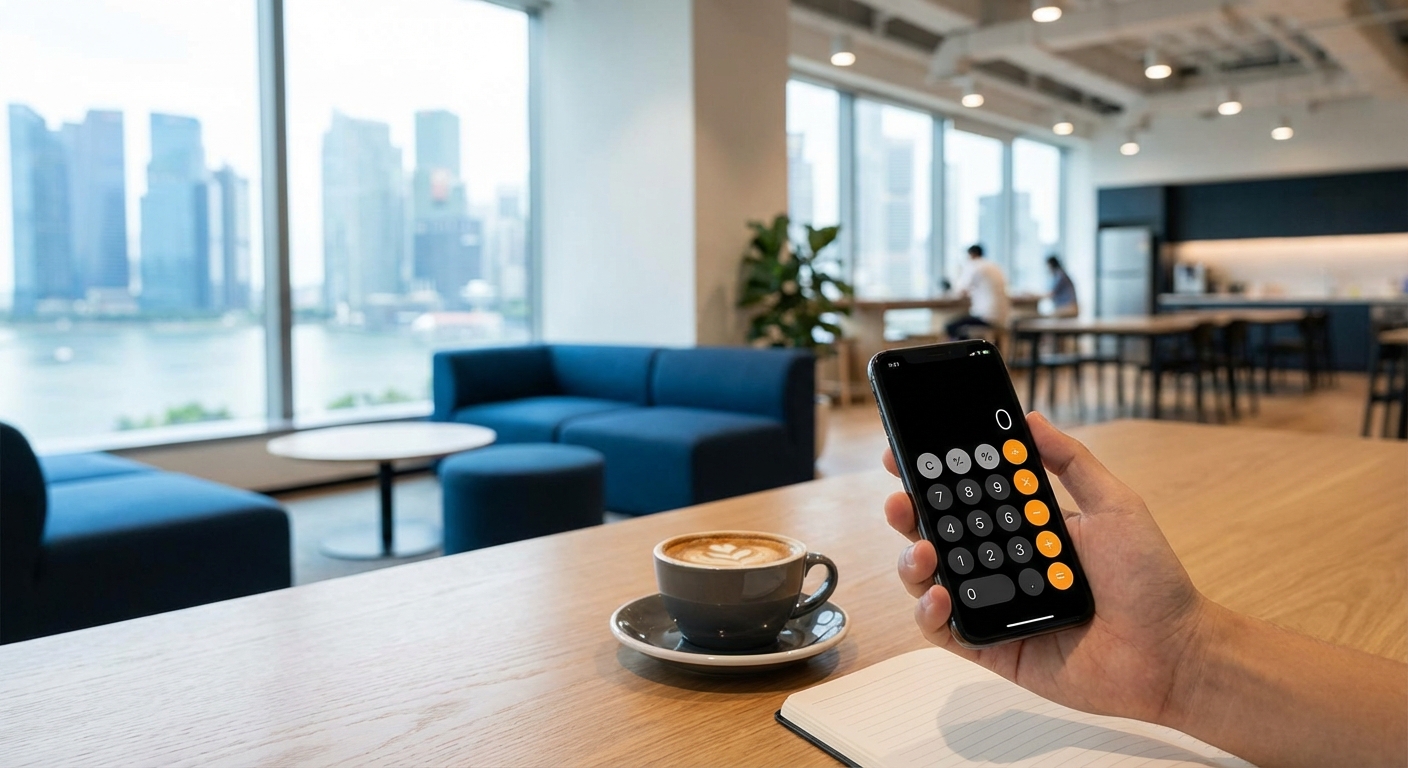
You’ve been working from home for months. The dining table has become your permanent desk. Your neighbor’s renovation starts at 8am sharp. The coffee shop kicked you out after three hours yesterday.
Sound familiar?
Many Singapore professionals face this exact situation. The question isn’t whether you need a better workspace. It’s whether paying for a coworking membership actually makes financial sense.
A coworking space in Singapore typically costs $250 to $600 monthly, but the real value depends on your work style and hidden costs of alternatives. Freelancers spending $150+ monthly at cafes, dealing with home distractions, or needing professional meeting spaces often break even within weeks while gaining productivity benefits that justify the investment beyond pure dollar comparisons.
Breaking down the real monthly costs of working in Singapore
Let’s start with numbers that actually matter.
Most Singapore coworking spaces charge between $250 and $600 per month for a hot desk. That’s the baseline. But what are you really paying for at home or cafes?
Your hidden home office costs:
- Electricity for AC running 8 hours daily: $60-80
- Faster internet plan for video calls: $50-70
- Coffee and snacks you buy to stay alert: $80-120
- Occasional cafe visits when you need to escape: $60-100
Add it up. You’re already spending $250 to $370 monthly without a dedicated workspace.
Now factor in the costs cafes don’t advertise. That $6 latte buys you maybe two hours before guilt sets in. Three cafe visits per week means $72 monthly, minimum. But you’re also dealing with unstable wifi, no private calls, and the constant pressure to order more.
Here’s what changes with a coworking membership.
| Workspace Type | Monthly Cost | Reliable Internet | Private Calls | Meeting Rooms | Professional Address |
|---|---|---|---|---|---|
| Home Office | $250-370 | Sometimes | Yes | No | No |
| Cafe Hopping | $200-400 | Rarely | No | No | No |
| Hot Desk | $250-400 | Always | Sometimes | Limited | Sometimes |
| Dedicated Desk | $400-600 | Always | Yes | Included | Yes |
The math starts making sense when you add up what you’re not spending elsewhere. No more buying overpriced cafe food. No guilt about occupying a table. No electricity spike at home.
But the real calculation goes deeper than monthly fees.
What you actually get for your membership fee
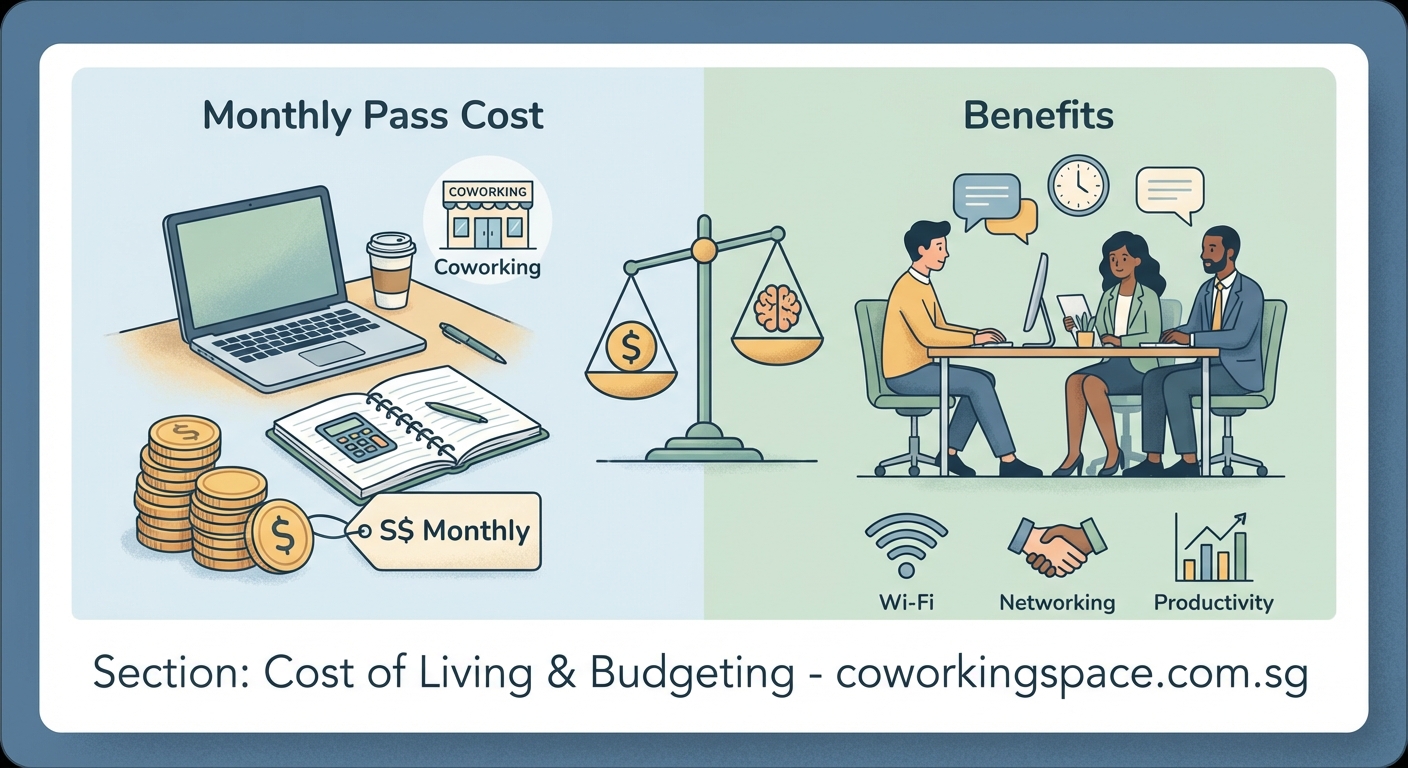
Most people focus on desk access. That’s just the start.
A typical Singapore coworking space includes amenities that would cost hundreds separately. High speed internet that actually works during video calls. Printing and scanning without buying equipment. Meeting rooms you can book when clients visit.
These aren’t extras. They’re necessities most freelancers pay for anyway.
Let’s talk about meeting rooms specifically. Renting a professional space for client meetings costs $50 to $150 per session in Singapore. If you meet clients twice monthly, that’s $100 to $300. Many understanding coworking membership types: hot desks vs dedicated desks vs private offices include several hours of meeting room access in the base price.
Then there’s the business address. Registering your company to your HDB flat? Possible, but not impressive on business cards. A CBD address through a coworking space adds credibility without renting a full office.
Standard inclusions worth calculating:
- Unlimited coffee and tea: $80-100 value
- High speed internet: $50-80 value
- Printing allowance: $30-50 value
- Meeting room credits: $100-200 value
- Mail handling: $30-50 value
That’s $290 to $480 in services you’d purchase separately. Suddenly that $400 membership doesn’t look expensive.
The amenities vary by space, though. Some offer gyms, showers, and nap rooms. Others stick to basics. How to choose your first coworking space in singapore: a beginner’s guide explains how to match amenities to your actual needs.
The productivity factor nobody talks about
Here’s where the cost analysis gets interesting.
Can you put a dollar value on focus? On finishing work by 5pm instead of 9pm?
Working from home sounds ideal until you factor in the invisible costs. The laundry that needs folding. The doorbell that interrupts your flow. The family member who doesn’t understand you’re actually working.
These interruptions aren’t just annoying. They’re expensive.
Research shows it takes 23 minutes to regain focus after an interruption. Five interruptions daily means losing nearly two hours of productive work. If you bill $50 per hour, that’s $100 lost daily, or $2,000 monthly.
A structured workspace creates psychological boundaries that home offices can’t match. Your brain learns that this location equals work mode, dramatically reducing the mental effort needed to start tasks.
The psychology behind coworking: why shared spaces boost productivity backs this up with data. Members report 30-40% productivity increases in their first month.
But productivity gains only matter if you can measure them.
Track these metrics for two weeks:
- Hours worked vs hours billed
- Number of deep work sessions completed
- Tasks finished by deadline without rushing
- Client calls interrupted by background noise
- Days you worked past 7pm to catch up
Compare your current setup to a trial week at a coworking space. Most Singapore locations offer day passes for $30 to $50. Test it before committing.
The productivity boost often pays for the membership within weeks. A freelancer billing $60 hourly only needs to gain 7 productive hours monthly to break even on a $400 membership.
When coworking makes financial sense for your situation
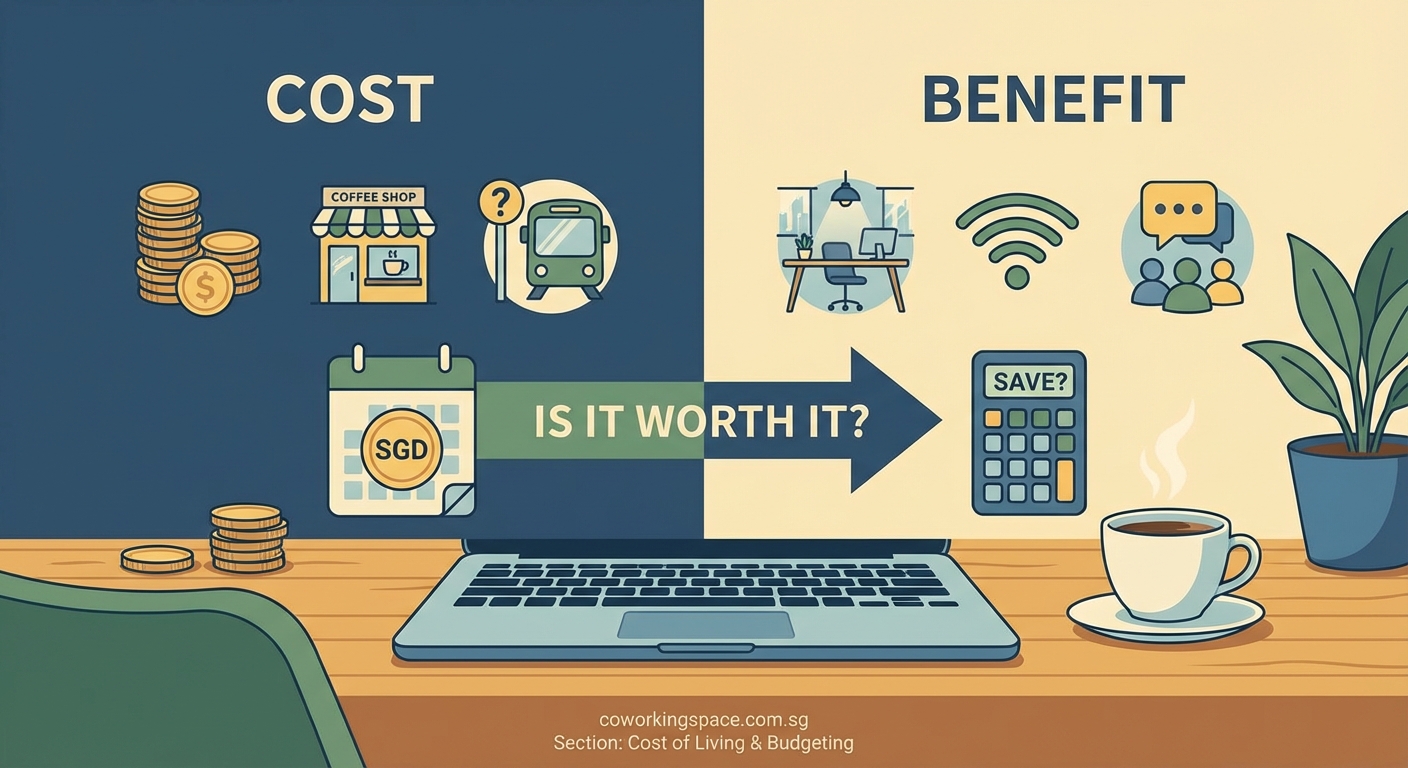
Not everyone benefits equally from coworking spaces.
The math works best for specific situations. Let’s break down when the investment pays off versus when it’s money wasted.
You’ll likely benefit if you:
- Bill clients hourly and lose income to distractions
- Meet clients regularly and need professional space
- Work from cafes more than twice weekly
- Struggle with work-life boundaries at home
- Need to separate business address from home
- Collaborate with team members occasionally
You probably won’t benefit if you:
- Work odd hours outside standard 9am-6pm
- Rarely need fast internet or video calls
- Prefer complete silence and isolation
- Travel frequently and won’t use the space
- Already have a productive home setup
- Work in industries requiring specialized equipment
The break-even calculation changes based on your work style. A graphic designer needing powerful computers and large monitors might find hot desking vs dedicated desks: which coworking option saves you more money in singapore? insufficient. A consultant doing mostly calls and emails thrives with basic hot desk access.
Location matters too. A space near your home saves commute time and transport costs. One near client offices reduces travel between meetings. Budget-friendly coworking spaces in singapore under $300 per month lists options in different neighborhoods.
Consider your monthly client meeting frequency. Zero meetings? Meeting room access holds less value. Weekly client presentations? That feature alone justifies the cost.
Hidden costs that change the equation
Every workspace option includes expenses people forget to calculate.
Coworking spaces have obvious costs: membership fees, security deposits, sometimes printing charges. But alternatives carry hidden expenses that add up faster than expected.
The real cost of cafe working:
- Food and drinks: $15-25 per visit
- Transport to different locations: $40-60 monthly
- Mobile data when wifi fails: $20-30 extra
- Lost items left behind: varies
- Time spent finding available seats: 2-3 hours monthly
Multiply those cafe visits across a month. Three sessions weekly means $180 to $300 in purchases alone, before counting the productivity lost to noise and interruptions.
Home offices hide costs too. Running AC all day in Singapore’s heat isn’t cheap. Neither is upgrading your internet for stable video calls. Ergonomic furniture prevents back pain but costs $500 to $2,000 upfront.
Then there’s the opportunity cost of isolation. Remote workers’ guide to avoiding isolation through strategic coworking membership explains how working alone impacts mental health and business growth.
Professional development matters here. Coworking spaces host workshops, networking events, and skill-sharing sessions. Attending similar events elsewhere costs $50 to $200 each. Members get them free or heavily discounted.
Compare total monthly costs:
| Expense Category | Home Office | Cafe Working | Coworking Space |
|---|---|---|---|
| Base Cost | $250-370 | $200-400 | $250-600 |
| Meeting Spaces | $100-300 | Not Available | Included |
| Professional Address | $50-100 | Not Available | Included |
| Networking Events | $100-200 | $100-200 | Included |
| Total | $500-970 | $300-600 | $250-600 |
The numbers shift dramatically when you factor in everything you’re actually paying for across different options.
Testing the waters before committing
Smart professionals don’t sign year-long contracts immediately.
Most Singapore coworking spaces offer flexible options for testing fit. Day passes cost $30 to $50. Weekly passes run $100 to $150. Try before you buy.
Your two-week trial process:
- Book day passes at three different spaces
- Track your productivity metrics daily
- Note which amenities you actually use
- Calculate your real costs including transport
- Compare focus levels to your home setup
- Evaluate the community and networking value
- Review your billable hours for the period
This testing phase reveals whether coworking suits your work style. Some people thrive in buzzing environments. Others need how to choose between open workspace and quiet zones for maximum productivity to function effectively.
Pay attention to subtle factors during trials. How’s the morning commute? Do you naturally chat with other members or prefer isolation? Does the space feel energizing or draining by 3pm?
Location testing matters as much as space testing. A beautiful coworking space an hour from home won’t get used. A basic space ten minutes away will.
Day pass vs monthly membership: which coworking option saves you more money in singapore? helps you decide between commitment levels based on your usage patterns.
Many spaces offer first-month discounts or waived deposits for new members. Use these promotions to test multiple locations without major financial risk.
Making the membership work harder for you
Getting your money’s worth requires strategy.
Too many people sign up, grab a desk, and ignore everything else their membership includes. That’s leaving money on the table.
Maximize your membership value:
- Use all included meeting room hours monthly
- Attend every networking event relevant to your field
- Take advantage of member discounts at partner businesses
- Book the premium spaces during slow periods
- Connect with members who complement your skills
- Use mail handling for all business correspondence
- Access any workshops or training included
5 community events that make coworking spaces worth the investment shows how networking alone can generate enough business to cover membership costs several times over.
The business address feature deserves special attention. Using it on your website, business cards, and invoices projects professionalism that home addresses can’t match. This credibility often translates to higher rates and better clients.
Some members generate extra value by:
- Hosting client meetings in the space instead of cafes
- Using the professional backdrop for video calls
- Collaborating with other members on projects
- Finding subcontractors through the community
- Learning new skills from experienced members
Track which features you use monthly. If you’re paying for a dedicated desk but only visiting twice weekly, downgrade to hot desking. If you never book meeting rooms, find a cheaper space without them.
The goal isn’t using every amenity. It’s ensuring the amenities you do use justify the cost.
Common mistakes that waste your coworking budget
People make predictable errors when evaluating coworking spaces.
The biggest mistake? Choosing based on price alone. The cheapest space might be far from your home, lack essential amenities, or have a community that doesn’t match your industry.
Budget-killing mistakes to avoid:
- Signing long contracts without testing the space first
- Choosing locations based on novelty instead of convenience
- Paying for dedicated desks when you travel frequently
- Ignoring additional fees for printing, lockers, or guests
- Selecting spaces with amenities you’ll never use
- Failing to negotiate rates for longer commitments
5 common coworking mistakes that new members make (and how to avoid them) covers these pitfalls in detail.
Another costly error is overcommitting too soon. Start with a month-to-month plan even if annual contracts offer discounts. Your needs might change. The space might not fit your work style. Flexibility costs more upfront but saves money if you need to switch.
Some people choose coworking spaces for the wrong reasons. Instagram-worthy interiors don’t improve productivity. Fancy coffee machines don’t matter if the wifi drops during client calls. 10 must-have amenities every modern coworking space should offer separates essential features from nice-to-haves.
Location mistakes cost time and money. That beautiful space across the island seems worth it until you’re spending two hours daily in transit. Calculate commute costs in both money and time. A nearby space at $50 more monthly often saves money compared to a distant cheaper option.
Alternatives worth considering before committing
Coworking spaces aren’t the only solution to workspace problems.
Several alternatives might better suit your situation and budget. Evaluate all options before signing a membership contract.
Other workspace solutions:
- Library study rooms: Free but limited hours
- Hotel lobbies: Free but uncomfortable long-term
- Community centers: $5-20 daily with basic amenities
- Part-time office sharing: Split costs with other freelancers
- Serviced offices: Higher cost but more privacy
- Home office upgrades: One-time investment
Some professionals create hybrid solutions. Work from home three days weekly, use coworking spaces twice weekly. This approach cuts membership costs while maintaining some structure and community benefits.
Hybrid workspace memberships: mixing home, coworking, and client sites in singapore explains how to build flexible work schedules across multiple locations.
Virtual office services offer another middle ground. Get a professional business address and mail handling for $50 to $150 monthly without paying for desk space. Add day passes when you need physical workspace.
The right choice depends on your specific needs. A writer needing quiet focus has different requirements than a consultant meeting clients weekly. Match the solution to your actual work patterns, not idealized versions of how you think you should work.
Your next steps for making this decision
You’ve seen the numbers. You understand the trade-offs. Now what?
Start by tracking your current workspace costs for two weeks. Write down every coffee shop purchase, every electricity bill increase, every hour lost to distractions. Get real numbers, not estimates.
Then calculate your productivity cost. How many billable hours do you lose weekly to interruptions? Multiply that by your hourly rate. This number often dwarfs membership fees.
Book day passes at three coworking spaces in your area. Test different neighborhoods, different vibes, different membership levels. How much does it really cost to work from a coworking space in singapore? provides detailed cost breakdowns for comparison.
During your trial days, track everything. Productivity levels. Distractions. Networking opportunities. Amenities used. Commute time. How you feel at the end of the workday.
Compare your trial results to your current situation. Did you finish work earlier? Bill more hours? Feel less isolated? These improvements have monetary value even if they’re hard to quantify exactly.
If the numbers work, start with a month-to-month membership. Avoid long contracts until you’re certain. Many spaces offer discounts after three to six months of consistent membership.
When the investment actually pays for itself
The real question isn’t whether coworking spaces cost money. Everything costs money. The question is whether the benefits exceed the costs for your specific situation.
For some professionals, that answer is clearly yes. The freelancer losing $500 monthly to cafe expenses and distractions. The consultant needing professional meeting spaces weekly. The remote worker struggling with isolation and motivation.
For others, the math doesn’t work yet. The part-time freelancer working 15 hours weekly. The developer who codes best at home in complete silence. The professional traveling half the month.
Your situation determines the value. Run the numbers honestly. Factor in hidden costs and productivity gains. Test spaces before committing. Choose based on your actual needs, not theoretical benefits.
A coworking space worth it in Singapore comes down to whether it solves problems you’re already paying to solve in less effective ways. Most professionals discover they’re spending the money anyway. The question is whether they’re spending it wisely.