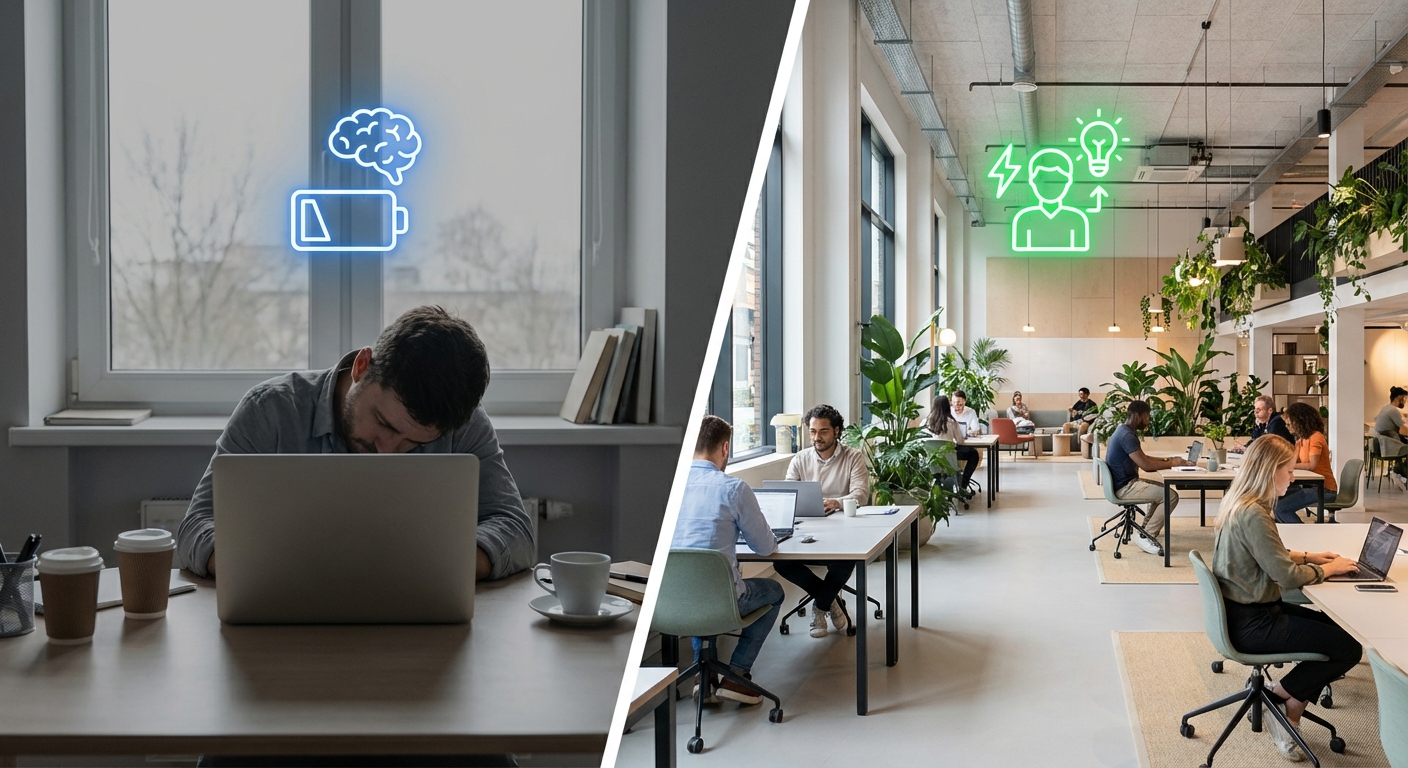
Working from home sounded like a dream at first. No commute. No dress code. Complete flexibility. But after months of staring at the same four walls, talking to yourself more than other humans, and struggling to separate work from life, that dream can turn into something darker. Remote work burnout is real, and it’s affecting thousands of freelancers and remote workers across Singapore and beyond.
Coworking spaces offer a structured environment that combats remote work burnout through physical separation from home, built-in social interaction, and professional amenities. These spaces provide mental health benefits by reducing isolation, creating clear work-life boundaries, and fostering community connections that help remote workers recover from exhaustion and rediscover their productivity.
Understanding remote work burnout and why it hits harder than you think
Burnout doesn’t announce itself with a dramatic entrance. It creeps in slowly.
You start sleeping later because work never really ends. You skip lunch because the kitchen is right there. You stop changing out of pajamas because nobody sees you anyway.
The World Health Organization officially recognized burnout as an occupational phenomenon in 2019. They define it through three dimensions: feelings of energy depletion or exhaustion, increased mental distance from one’s job, and reduced professional efficacy.
For remote workers, these symptoms intensify because home becomes both sanctuary and prison. There’s no physical boundary between your workspace and your living space. Your bedroom becomes your office. Your dining table turns into a conference room. Every corner of your home carries the weight of unfinished tasks.
The isolation compounds everything. Humans are social creatures. We need casual conversations, spontaneous coffee breaks, and the simple presence of other people. When you work alone day after day, that social deficit accumulates like interest on a debt you didn’t know you were taking out.
How coworking spaces create physical and mental separation
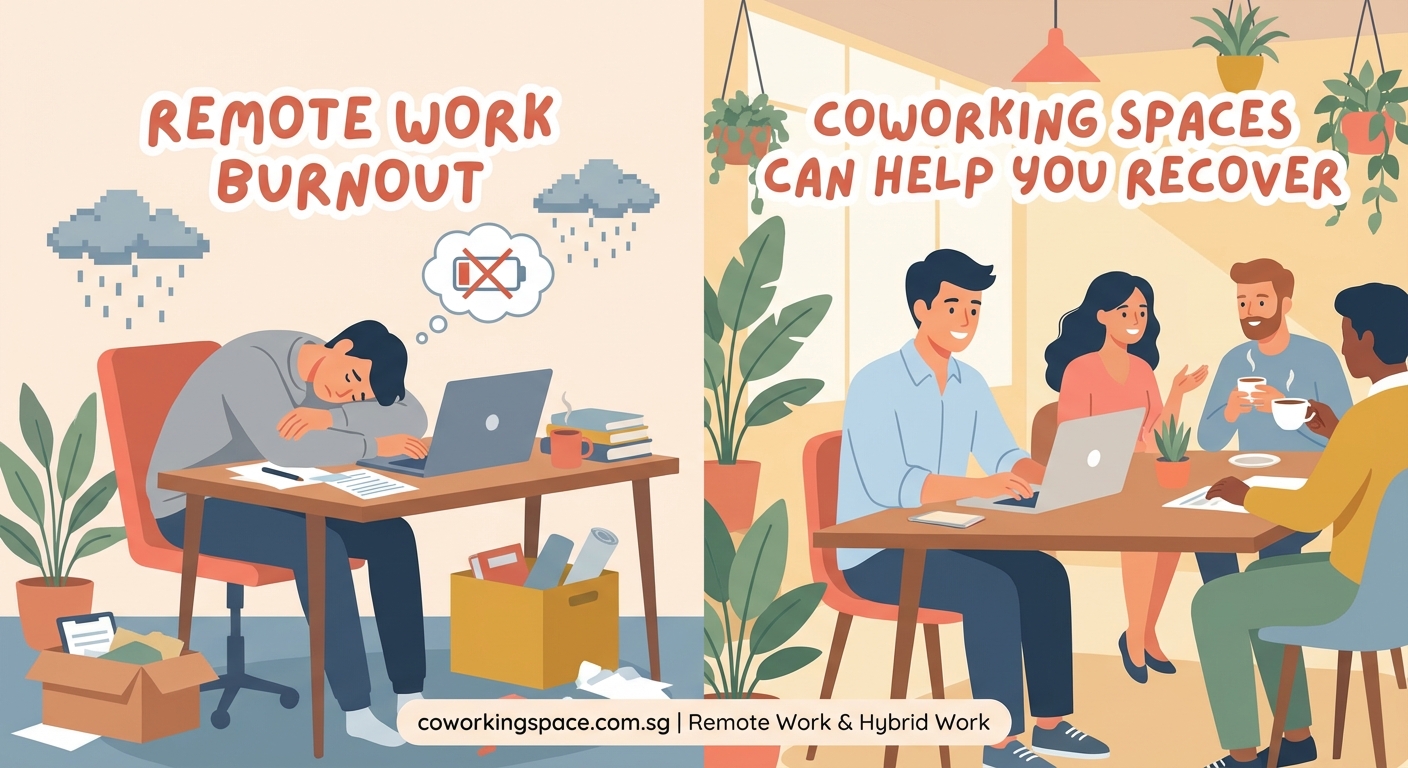
The simple act of leaving your home to go somewhere else changes your brain chemistry.
When you walk into a coworking space, your mind shifts gears. This place means work. Home means rest. That distinction sounds obvious, but it’s incredibly powerful for mental health.
Research from Stanford University found that people who maintain separate work and home environments report significantly lower stress levels and better sleep quality. The physical commute, even if it’s just 15 minutes, creates a psychological buffer zone where your brain can transition between modes.
Understanding coworking membership types helps you find the right balance between structure and flexibility. Some people need a dedicated desk that feels like “theirs.” Others prefer the freedom of hot desking, which introduces variety into their routine.
The environmental design of coworking spaces also matters. Natural light. Ergonomic furniture. Temperature control. These aren’t luxuries; they’re necessities for sustained mental performance. When your home office is a corner of your bedroom with poor lighting and a chair that hurts your back, your body associates work with physical discomfort.
The community factor in recovering from isolation
Loneliness isn’t just an emotional problem. It’s a health risk comparable to smoking 15 cigarettes per day, according to research from Brigham Young University.
Coworking spaces address this through ambient sociability. You’re not obligated to be best friends with everyone, but you’re surrounded by people engaged in similar work. That presence alone reduces feelings of isolation.
The connections happen naturally. Someone asks if you need the conference room. You chat while making coffee. A casual conversation about a project challenge leads to helpful advice. These micro-interactions accumulate into something meaningful without requiring the emotional labor of forced networking.
Many spaces organize community events that make connection even easier. Five community events that make coworking spaces worth the investment shows how structured activities create opportunities for relationship building without awkwardness.
For introverts worried about constant social pressure, do introverts thrive in coworking communities offers a realistic perspective on how to engage at your own comfort level.
Practical steps to use coworking spaces for burnout recovery
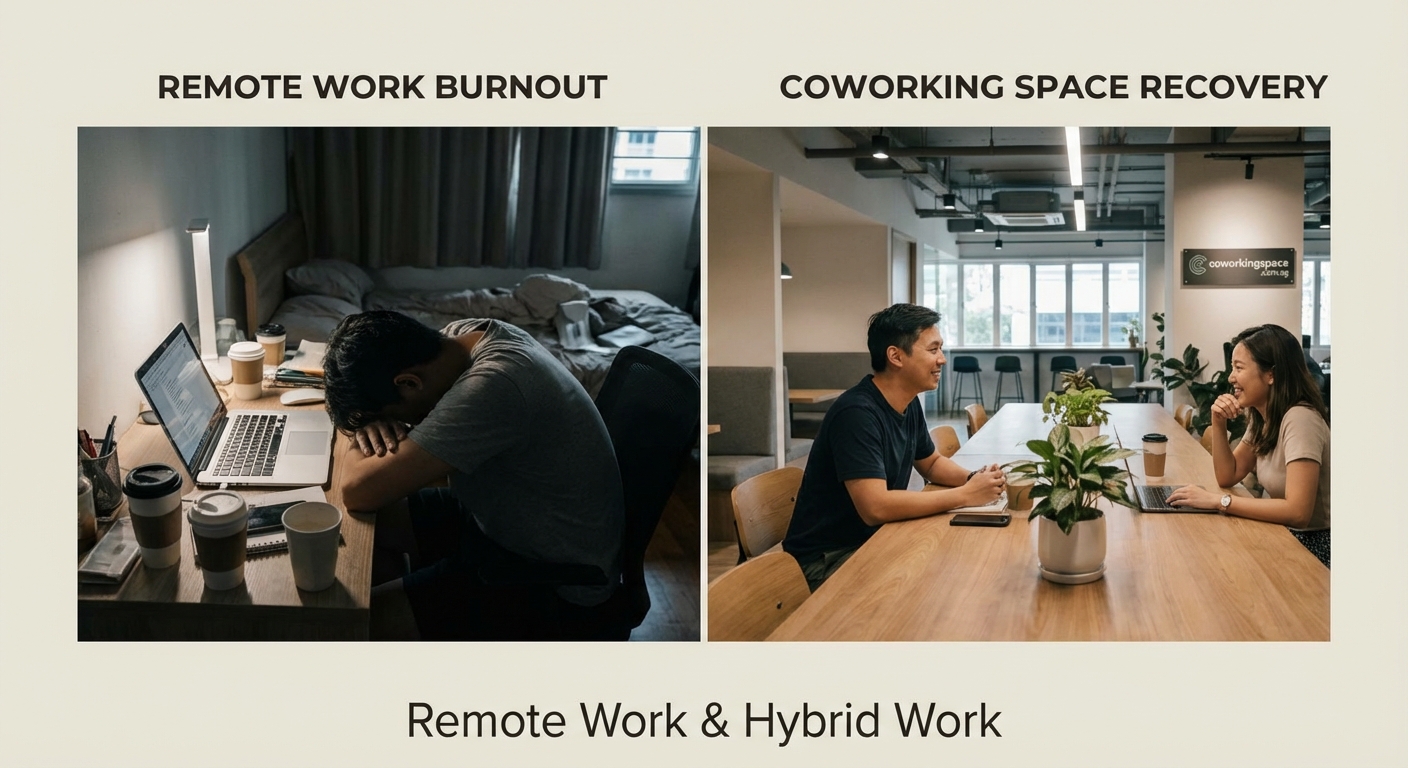
Recovery isn’t instant. It requires intentional changes to your routine and environment.
Here’s a structured approach:
-
Start with trial days at multiple spaces before committing to a membership. Your gut reaction to a space matters. If it feels right, your brain will associate it with positive work experiences.
-
Establish a consistent schedule. Arrive at the same time each day. This regularity trains your brain to enter work mode automatically.
-
Create shutdown rituals. Before you leave the coworking space, spend five minutes reviewing what you accomplished and planning tomorrow. This mental bookend prevents work from following you home.
-
Use the space’s amenities intentionally. Take actual lunch breaks in the cafe area. Use the phone booths for calls instead of your desk. Move around. Physical variety prevents the stagnation that breeds burnout.
-
Engage with at least one person daily, even if it’s just a greeting. These small interactions rebuild your social capacity without overwhelming you.
-
Protect your focus time. Just because you’re in a shared space doesn’t mean you need to be available constantly. How to eliminate distractions and stay focused in a shared workspace provides strategies for maintaining concentration.
-
Regularly assess your energy levels. If you’re still exhausted after two weeks, adjust your schedule or try a different space. Recovery requires experimentation.
Key differences between coworking spaces and working from home
| Aspect | Working from Home | Coworking Spaces |
|---|---|---|
| Physical boundaries | None; work bleeds into personal space | Clear separation; work stays at the space |
| Social interaction | Minimal or forced through video calls | Natural, ambient presence of others |
| Environmental control | Limited by home setup | Professional design optimized for productivity |
| Routine structure | Self-imposed and easily broken | External structure through commute and space hours |
| Mental association | Home becomes contaminated with work stress | Clean mental separation between work and rest |
| Accountability | Entirely self-directed | Subtle social pressure to maintain focus |
| Resource access | Whatever you personally own | Shared amenities, equipment, and facilities |
Warning signs that coworking spaces might help your burnout
Not everyone experiencing fatigue has clinical burnout, but certain patterns indicate you’d benefit from a workspace change.
You might need a coworking space if:
- You can’t remember the last time you left your home for something other than groceries
- Your sleep schedule has completely dissolved into chaos
- You feel guilty during every moment you’re not working, even on weekends
- Simple tasks that used to take 30 minutes now consume entire afternoons
- You’ve stopped caring about the quality of your work
- Physical symptoms like headaches, stomach problems, or muscle tension have become constant companions
- You avoid video calls because you don’t want colleagues to see your deteriorating appearance or environment
- The thought of opening your laptop triggers immediate anxiety
- You can’t recall the last meaningful conversation you had with another adult
These aren’t character flaws. They’re symptoms of an unsustainable work environment.
How different membership types support different recovery needs
Recovery isn’t one-size-fits-all. Your burnout symptoms and personality type should guide your membership choice.
Hot desking works well if your burnout stems from monotony. The variety of sitting in different spots, meeting different people, and experiencing subtle environmental changes keeps your brain engaged. Does hot desking actually improve your work performance examines the psychological benefits of this flexibility.
Dedicated desks suit people whose burnout comes from lack of control and stability. Having your own space, your own setup, and the ability to leave personal items creates a sense of ownership that home offices often lack without the contamination of mixing work and personal life.
Private offices benefit those whose burnout includes sensory overload or the need for intense focus work. You get the separation from home without the stimulation of an open workspace. Seven types of private office suites in Singapore coworking spaces you didn’t know existed shows options beyond basic enclosed rooms.
Part-time memberships let you ease into the transition. If full-time coworking feels overwhelming, start with two or three days per week. Day pass vs monthly membership breaks down the financial and psychological trade-offs.
The role of amenities in mental health recovery
The amenities at coworking spaces aren’t just perks. They’re tools for rebuilding healthy work habits.
Coffee and refreshments might seem trivial, but they create natural break points. Getting up to refill your cup interrupts extended sitting and gives your eyes a rest from screens. These micro-breaks prevent the accumulation of physical tension that contributes to burnout.
Meeting rooms serve a similar function. Even if you’re working solo, booking a room for focused work creates time boundaries. You’re less likely to let a task expand indefinitely when you’ve reserved a specific space for a specific duration.
Ergonomic furniture directly impacts your physical well-being. Are standing desks and ergonomic chairs worth it in coworking spaces explains how proper support reduces the physical strain that compounds mental exhaustion.
Recreational facilities provide guilt-free breaks. A game room, outdoor terrace, or quiet lounge gives you permission to step away from work without feeling like you’re slacking. Beyond desks: recreational facilities that make coworking spaces stand out highlights spaces designed for holistic well-being.
“The best coworking spaces understand that productivity isn’t about maximizing every minute at your desk. It’s about creating an environment where your brain can work sustainably. That means building in opportunities for rest, movement, and human connection as intentionally as you design work zones.” – Sarah Chen, Workplace Psychology Researcher
Building sustainable work habits in a coworking environment
Recovery from burnout requires more than changing your location. You need to rebuild your relationship with work itself.
Building a personal productivity system that works in any coworking environment provides frameworks for sustainable output without exploitation of your own energy.
Start by tracking your actual productive hours. Most people overestimate how much they work and underestimate how much time they spend in unproductive anxiety. When you work from a coworking space, you can more accurately measure focused work time because the environment naturally contains your work hours.
Implement the two-hour rule. After two hours of focused work, take a real break. Not a “check email while eating” break. A genuine mental reset. Walk around the building. Chat with someone. Sit in a different area and read something unrelated to work.
The pomodoro technique fits naturally into coworking environments because the ambient activity of other people provides natural rhythm cues. You’re not fighting complete silence or constant distraction.
Establish a maximum work duration. When the coworking space closes or when you hit your predetermined end time, stop working. Leave. Go home. The physical act of leaving reinforces the boundary between work and life.
Common mistakes people make when using coworking spaces for recovery
Even with the best intentions, people often sabotage their own recovery through predictable patterns.
Mistake 1: Recreating home office isolation. Some people get a coworking membership but immediately put in headphones, face a wall, and never interact with anyone. You’ve changed locations but not behaviors. The isolation continues.
Mistake 2: Over-networking and burning out differently. The opposite extreme is attending every event, saying yes to every coffee chat, and exhausting yourself through social overcommitment. Recovery requires balance, not replacement of one extreme with another.
Mistake 3: Choosing spaces based only on price. The cheapest option might save money but cost you recovery if the environment feels depressing, the commute is exhausting, or the community doesn’t fit your needs. Are coworking spaces worth the cost helps evaluate true value beyond monthly fees.
Mistake 4: Not giving it enough time. Recovery takes weeks, not days. If you try coworking for three days and decide it’s not working, you haven’t given your brain time to adjust to the new routine.
Mistake 5: Ignoring the commute factor. A space that requires 90 minutes of travel each way will drain your energy faster than it restores it. Location matters tremendously for sustainability.
Five common coworking mistakes that new members make covers additional pitfalls specific to coworking culture.
Financial considerations when using coworking spaces for health
Investing in your mental health through a coworking membership is legitimate, but it needs to be sustainable.
How much does it really cost to work from a coworking space in Singapore breaks down all the expenses beyond the membership fee, including commute costs, lunch expenses, and incidental spending.
For freelancers, coworking expenses are often tax-deductible business costs. Check with an accountant about your specific situation, but workspace costs generally qualify as legitimate business expenses.
Consider the cost of not addressing burnout. Lost productivity, missed opportunities, and potential health problems from sustained stress often exceed the cost of a coworking membership. This isn’t just about feeling better; it’s about maintaining your ability to earn income.
Budget-friendly coworking spaces in Singapore under $300 per month identifies options that won’t strain your finances while still providing the environmental change you need.
Some spaces offer mental health-focused memberships or wellness programs. These might include meditation rooms, fitness classes, or counseling resources as part of the membership package.
Location strategy for maximum burnout recovery benefit
Where your coworking space sits on the map matters almost as much as what’s inside it.
The ideal commute for burnout recovery is 15 to 30 minutes. Long enough to create mental separation, short enough to not become its own source of stress. This sweet spot gives you time to transition between modes without eating up your energy reserves.
How to choose your first coworking space in Singapore includes location assessment tools beyond just distance from home.
Consider proximity to nature or water. Spaces near parks, waterfronts, or green areas provide additional mental health benefits through access to natural environments during breaks. Singapore’s urban planning means many business districts include significant green space.
Evaluate the neighborhood’s energy. A space in a quiet residential area feels different from one in a bustling commercial district. Match the environment to what your nervous system needs. If you’re overstimulated and anxious, seek calm. If you’re depressed and lethargic, choose energy.
Think about your post-work routine. A space near a gym, grocery store, or social venue makes it easier to build healthy habits after work instead of rushing straight home.
Rebuilding your relationship with work through space psychology
The physical environment shapes how we think about and engage with work more than most people realize.
The psychology behind coworking examines how shared spaces influence motivation, focus, and satisfaction through environmental psychology principles.
Your brain creates associations between places and activities. When home becomes synonymous with work stress, even relaxing at home becomes difficult because the environment triggers work anxiety. Coworking spaces break this association by giving work its own dedicated place.
The presence of other people working creates a phenomenon called social facilitation. Seeing others engaged in focused work subtly encourages you to do the same. It’s not pressure; it’s modeling. Your brain naturally mirrors the behavior of those around you.
Variety within the space also matters. Spaces with multiple zones allow you to match your environment to your task. Need deep focus? Use the quiet zone. Feeling sluggish? Work in the energetic common area. This environmental flexibility prevents the stagnation that breeds burnout.
When coworking spaces alone aren’t enough
Coworking spaces are powerful tools for burnout recovery, but they’re not magic cures. Some situations require additional support.
If you’ve been using a coworking space consistently for six weeks and still experience severe symptoms, consider professional help. Therapists who specialize in occupational stress can provide strategies beyond environmental changes.
Burnout sometimes signals deeper issues with your work itself. If the problem is your actual job, clients, or career path rather than your environment, changing where you work won’t solve the underlying problem. You might need to have difficult conversations with clients, adjust your workload, or consider a career pivot.
Physical health problems can masquerade as or compound burnout. If you’re experiencing persistent fatigue, sleep problems, or physical pain, see a doctor. Sometimes what looks like burnout is actually a medical condition requiring treatment.
Financial stress creates a floor beneath which environmental changes can’t help. If you’re burning out because you can’t afford basic needs, the solution involves addressing the financial situation, not just changing workspaces.
Creating your personal recovery timeline
Recovery isn’t linear. Some days will feel better than others. Having realistic expectations prevents discouragement.
Week 1-2: Adjustment period. Your brain is learning new routines. You might feel awkward or wonder if you made a mistake. This is normal. The novelty itself can be temporarily draining.
Week 3-4: Stabilization. The commute becomes automatic. You develop preferences for certain desks or times. Small improvements in sleep or mood might emerge.
Week 5-8: Integration. The coworking space feels natural. You’ve probably had a few meaningful conversations. Work feels slightly less overwhelming. You might notice you’re not thinking about work constantly during personal time.
Week 9-12: Evaluation. You have enough experience to assess whether this approach is working. Are you sleeping better? Do you have more energy? Has your work quality improved? Can you remember the last time you felt genuine enthusiasm about a project?
Beyond three months, maintenance becomes the focus. Building a personal productivity system that works in any coworking environment helps sustain the gains you’ve made.
Making the decision that matches your specific situation
Not everyone’s burnout looks the same, so not everyone’s solution should either.
If your burnout stems primarily from isolation, prioritize spaces with active communities and regular events. How coworking spaces help freelancers build professional networks in Singapore shows how community-focused spaces operate.
If your burnout comes from lack of structure, choose spaces with more formal atmospheres and dedicated desk options. The external structure will help rebuild your internal discipline.
If your burnout includes sensory overload from constant video calls and digital communication, seek spaces with excellent phone booths and quiet zones where you can escape stimulation.
If your burnout involves identity confusion between your personal and professional self, the simple act of having a separate work location helps reconstruct that boundary.
What makes a coworking space different from a traditional office clarifies what you’re getting that you can’t replicate at home or in a corporate office.
Your workspace as a recovery tool, not a productivity hack
Here’s the truth that productivity culture doesn’t want you to hear: you don’t need to optimize every moment. You need to survive and gradually rebuild your capacity to do good work.
Coworking spaces work for burnout recovery not because they make you more productive, but because they make work more sustainable. They create conditions where your brain can function without constant stress, where your body can relax enough to focus, and where your social needs get met without requiring extra effort.
The goal isn’t to work more or work harder. It’s to work in a way that doesn’t destroy you.
Start small. Try a day pass at a space near you. Notice how you feel. Pay attention to whether the environment makes work feel slightly less overwhelming. If it does, that’s your signal to continue.
Recovery takes time, but it starts with a single decision to change something about how you’re working. A coworking space might be exactly the something you need.