
Working from home sounds perfect until you realize you haven’t had a real conversation in three days. Your couch has a permanent indent. Your cat is tired of hearing about your client calls. The silence that once felt peaceful now feels suffocating.
Remote work isolation isn’t just about feeling lonely. It affects your mental health, creativity, and professional growth. Studies show that prolonged isolation can lead to decreased productivity, higher anxiety levels, and even physical health issues. But here’s the good news: you can fix this without giving up the flexibility you love.
Remote work isolation happens when you lack daily social interaction and professional community. Combat it by joining coworking spaces, attending structured networking events, establishing regular collaboration rituals, and creating intentional social boundaries. The solution isn’t working more hours in coffee shops. It’s building a sustainable social infrastructure around your remote work lifestyle that supports both productivity and human connection.
Understanding why remote work feels isolating
Remote work isolation differs from regular loneliness. You might have friends and family around, but you still feel professionally disconnected. That’s because work provides more than just income. It offers daily human interaction, shared goals, and a sense of belonging to something bigger.
When you work from home, you lose the casual hallway conversations. No more lunch discussions about weekend plans. No spontaneous brainstorming sessions at the coffee machine. These small moments matter more than most people realize.
Your brain craves social connection. It’s wired for community. When you spend eight hours alone staring at a screen, your mental health takes a hit. You start second-guessing your decisions. You overthink client emails. You lose perspective because there’s nobody to bounce ideas off.
The problem compounds over time. The longer you stay isolated, the harder it becomes to reach out. You forget how to have casual work conversations. Social anxiety creeps in. You start declining invitations because interacting with people feels exhausting.
Building structure into your social work life
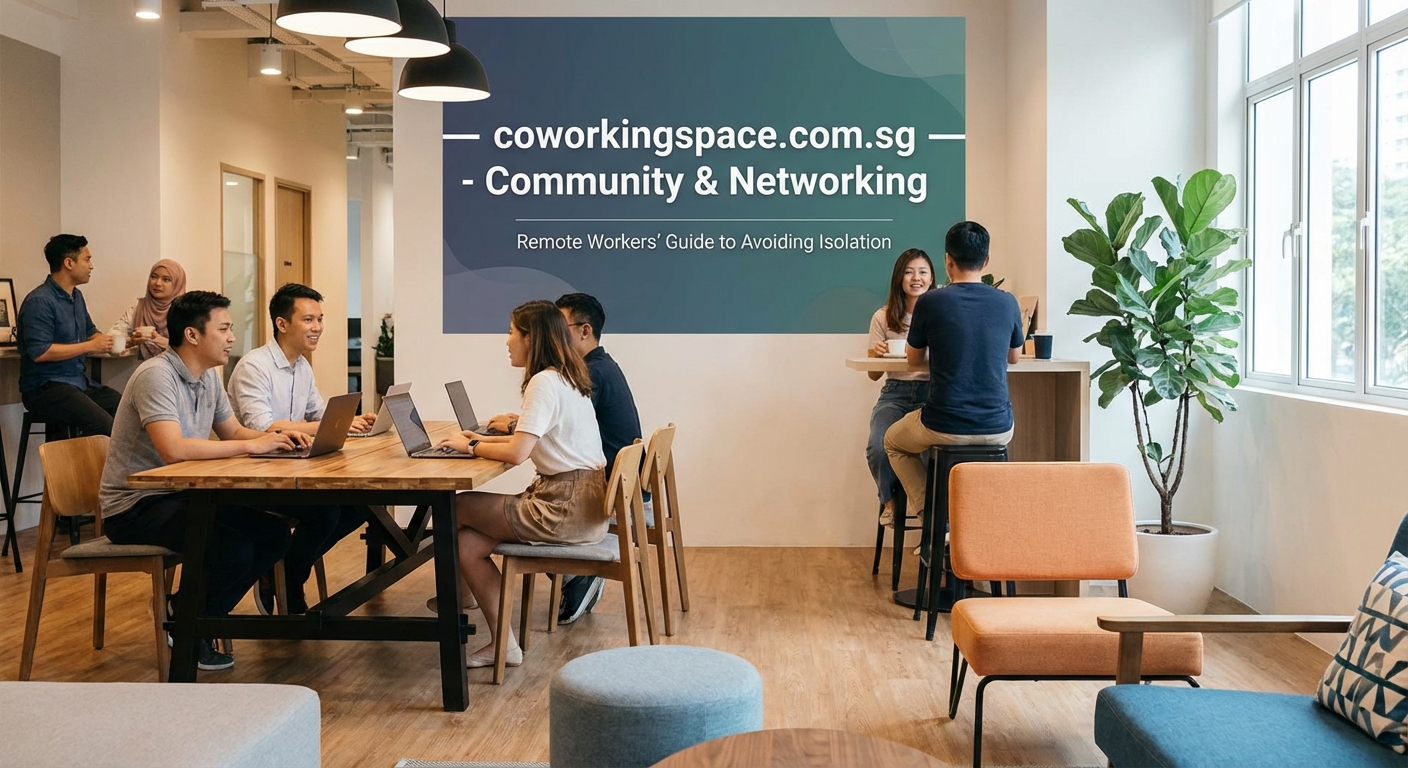
Random coffee shop visits won’t solve isolation. You need consistent, predictable social touchpoints. Here’s how to create them:
-
Choose a primary workspace outside your home. Pick one coworking space and commit to showing up three days per week. Same days, same times. Consistency helps you build relationships with other members.
-
Establish arrival and departure rituals. When you arrive, make eye contact. Say hello to the front desk staff. Grab coffee from the communal kitchen. These small actions signal your brain that you’re entering work mode while staying socially engaged.
-
Join scheduled community events. Most coworking spaces host weekly networking sessions, skill-sharing workshops, or casual Friday drinks. Put them in your calendar. Treat them like client meetings. Show up even when you don’t feel like it.
-
Create accountability partnerships. Find two or three other remote workers with similar schedules. Check in with each other at the start of each week. Share your goals. Celebrate wins together. This gives you the team dynamic that traditional offices provide naturally.
-
Set social boundaries with intention. Block off specific hours for collaborative work and specific hours for deep focus. Let your coworking community know when you’re available for conversation and when you need quiet time.
The goal isn’t to be social every minute. It’s to create predictable moments of connection so you never feel completely cut off.
Choosing the right coworking environment for connection
Not all coworking spaces combat isolation equally. Some feel like libraries where everyone works in silence. Others feel like networking events where you can’t get anything done. You need to find the middle ground.
Look for spaces that actively facilitate connections. Community events matter more than fancy furniture. A space with monthly skill shares, industry meetups, or member showcases gives you structured opportunities to meet people without forcing awkward small talk.
Consider the member demographics. If you’re a freelance designer, a space full of finance professionals might not provide the peer support you need. Finding your tribe means looking for spaces where other members work in adjacent industries or share similar challenges.
Physical layout affects connection too. Open workspace designs naturally encourage interaction. You overhear interesting conversations. Someone notices you’re stuck on a problem and offers help. But you also need access to quiet zones for focused work. The best spaces offer both.
“The most valuable thing about coworking isn’t the desk or the wifi. It’s having other humans around who understand what you’re going through. That shared experience creates bonds faster than any networking event ever could.”
Test a space before committing. Most offer day passes. Spend a full workday there. Notice how members interact. Do people chat in common areas? Do staff members facilitate introductions? Does the space feel alive or does it feel like a silent office with better coffee?
Practical strategies for daily social interaction
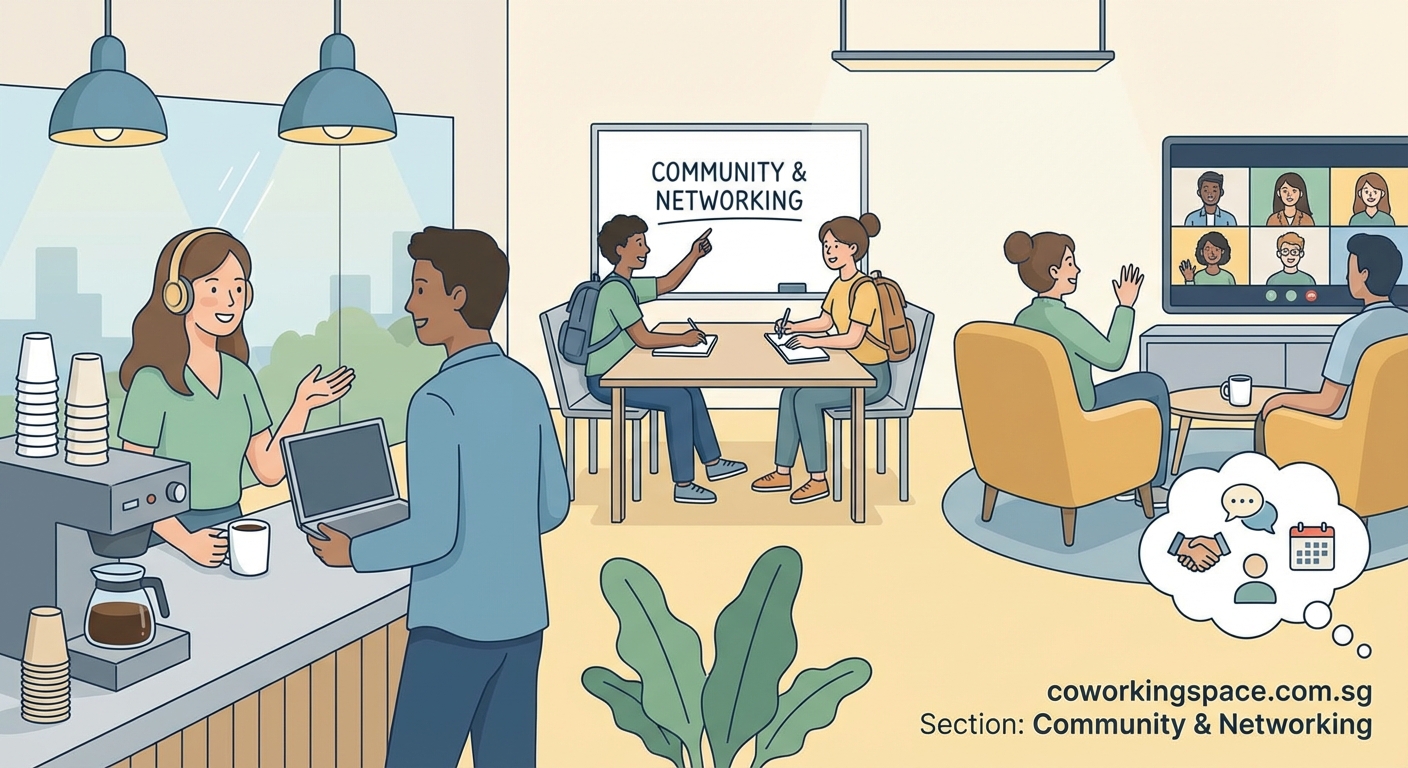
You don’t need grand networking plans. Small, consistent actions prevent isolation better than occasional big events.
Start your day with a brief conversation. Ask the person next to you what they’re working on. Share something about your project. Keep it under five minutes. These micro-interactions add up.
Take lunch breaks in communal spaces. Don’t eat at your desk. Sit in the shared kitchen or lounge area. You don’t have to force conversation, but being around people while you eat reminds your brain that you’re part of a community.
Offer help when you see someone struggling. Notice a member wrestling with a printer? Show them how it works. See someone looking confused about the meeting room booking system? Walk them through it. Small acts of service build relationships faster than formal networking.
Share your expertise freely. If you’re good at something, offer to host a lunch-and-learn session. Teach other members a skill they might find useful. This positions you as a valuable community member while giving you structured social time.
Create a coffee ritual. Pick a time each day to get coffee or tea from the communal area. Go at the same time. You’ll start recognizing other people who keep similar schedules. Regular, predictable presence builds familiarity, which builds connection.
Balancing focus time with social availability
The fear of seeming antisocial keeps some remote workers isolated. They worry that putting on headphones or declining lunch invitations makes them unfriendly. This anxiety prevents them from setting healthy boundaries.
Here’s the truth: clear boundaries make you more social, not less. When you protect your focus time, you can be fully present during social time. You’re not distracted or resentful. You’re genuinely engaged.
Use visible signals. Headphones mean “deep work mode.” No headphones mean “feel free to say hi.” Most coworking members understand and respect these signals. If someone interrupts during focus time, politely say “I’m on a deadline right now, but let’s chat at lunch.”
Block your calendar strategically. Schedule focus work for mornings when your energy is high. Save afternoons for meetings, calls, and social interaction. This creates natural breaks where connection happens without disrupting your productivity.
The psychology behind coworking shows that proximity to others actually improves focus for most people. You work harder when you see others working hard. But you need control over when and how you engage.
Leveraging coworking amenities for connection
Physical spaces shape social behavior. Smart coworking spaces design their amenities to encourage natural interaction without forcing it.
Shared kitchens create collision points. You’re making coffee, someone else is grabbing lunch from the fridge, and suddenly you’re talking about the best hawker centers in the neighborhood. These organic conversations feel easier than structured networking.
Game rooms and recreational facilities give you non-work reasons to interact. Taking a ping pong break with another member builds rapport differently than discussing business over coffee. Shared play creates shared memories.
Meeting rooms offer collaboration opportunities. If you’re working on a project that needs brainstorming, book a meeting room and invite other members with relevant expertise. Most people enjoy contributing ideas when there’s no sales pitch attached.
Printing stations, phone booths, and equipment areas function as social hubs. You wait your turn, make small talk, help someone figure out the scanner settings. These brief interactions prevent the complete isolation of working alone while respecting everyone’s time.
Common mistakes that deepen isolation
Even people who join coworking spaces can feel isolated if they make these errors:
| Mistake | Why it backfires | Better approach |
|---|---|---|
| Only showing up for focused work | You miss community-building moments | Schedule at least one social activity per week |
| Wearing headphones constantly | Signals you’re unapproachable | Remove them during breaks and transitions |
| Skipping community events | Prevents relationship building | Attend at least two events per month |
| Working from the same spot daily | Limits who you interact with | Rotate between different areas of the space |
| Never asking for help | Misses connection opportunities | Share one challenge per week with other members |
| Declining all lunch invitations | Sends message you’re not interested | Accept at least 30% of invitations |
The biggest mistake? Expecting connections to happen automatically. Coworking spaces provide the infrastructure, but you still need to show up and participate. Think of it like joining a gym. The equipment doesn’t make you fit. You have to use it consistently.
Common coworking mistakes often stem from bringing home-office habits into shared spaces. At home, you can ignore people. In a coworking space, that isolation becomes a choice rather than a default.
Creating your personalized anti-isolation system
Your solution won’t look like everyone else’s. Introverts and extroverts need different approaches. Someone who thrives on constant interaction might need daily lunch groups. Someone who recharges alone might prefer two structured social events per week with lots of quiet time between.
Start by assessing your baseline. How many meaningful conversations do you have per week right now? How often do you feel lonely? Track this for two weeks. Be honest about the data.
Set a realistic social goal. Maybe you want three substantial work conversations per week. Or one collaborative project per month. Or attendance at two community events. Pick something measurable that addresses your specific isolation pain points.
Build your environment to support that goal. If you need more interaction, choose a membership type that puts you in high-traffic areas. If you’re an introvert who needs controlled social time, get a dedicated desk in a quieter zone but commit to attending scheduled events.
Track what works. After each week, note which social interactions energized you and which felt draining. Double down on the energizing ones. Reduce or eliminate the draining ones. This isn’t about forcing yourself to be social in ways that don’t fit your personality.
Adjust based on seasons. You might need more social support during slow business periods when you have fewer client calls. You might need more alone time during busy seasons when you’re already maxed out on interaction. Your system should flex with your needs.
Signs your anti-isolation strategy is working
How do you know if your approach is actually helping? Look for these indicators:
- You have at least three people you recognize and greet by name at your coworking space
- You’ve had at least one spontaneous work conversation that led to a useful insight
- You feel energized rather than drained after spending a day at the coworking space
- You’ve made at least one professional connection that could lead to collaboration
- You no longer dread Monday mornings because you know you’ll see familiar faces
- You catch yourself smiling or laughing at least once during your workday
- You have someone to text when you need a second opinion on a work decision
These small wins matter more than big networking achievements. You’re not trying to collect contacts. You’re building a sustainable social infrastructure that makes remote work feel less isolating over time.
When coworking alone isn’t enough
Sometimes joining a coworking space helps but doesn’t completely solve isolation. You might need additional strategies.
Consider joining industry-specific groups outside your coworking space. Professional associations, meetup groups, or online communities give you specialized peer support that general coworking spaces can’t always provide.
Schedule regular video calls with other remote workers in different cities. Virtual coworking sessions where you work simultaneously on video can recreate some of that office presence. You’re alone but not alone.
Remote work burnout often accompanies isolation. If you’re experiencing persistent anxiety, depression, or loss of motivation, professional support might help. Many remote workers benefit from therapy or coaching specifically focused on work-life integration challenges.
Build relationships outside work too. Join a sports league, take a class, volunteer. Your coworking community addresses professional isolation, but you also need personal connections that have nothing to do with work.
Some people discover they’re not suited for full-time remote work. That’s okay. Hybrid arrangements where you split time between coworking spaces, client offices, and home might work better. Building an effective hybrid schedule gives you variety while maintaining flexibility.
Making connection a non-negotiable part of your work routine
Treating social interaction as optional guarantees isolation. You need to make it as essential as checking email or meeting deadlines.
Add social time to your calendar. Block 30 minutes three times per week for “community engagement.” Use that time to have coffee with a coworking member, attend an event, or simply work in a communal area instead of a private space.
Create accountability around connection. Tell a friend or fellow remote worker about your anti-isolation goals. Check in monthly about whether you’re following through. External accountability helps when motivation wanes.
Invest in your coworking membership like you invest in professional development. The true value of coworking spaces includes the community, not just the desk. Show up consistently. Participate actively. Contribute to the community. You get back what you put in.
Remember that building relationships takes time. You won’t feel instantly connected after one week. Give it three months of consistent presence before evaluating whether a space works for you. Real community develops through repeated, low-stakes interactions over time.
Practical tools that support connection
Technology can help or hinder your anti-isolation efforts. Use it strategically.
Most coworking spaces have member apps or Slack channels. Join them. Check them daily. Respond to posts. Share resources. These digital spaces extend the physical community and make it easier to coordinate meetups or ask for help.
Use essential remote work tools that facilitate collaboration rather than just solo productivity. Project management software with commenting features, shared documents, and video conferencing tools keep you connected to clients and collaborators even when you’re physically alone.
Set phone boundaries that protect social time. Don’t scroll social media during lunch in the communal kitchen. Be present with the people around you. Your phone will be there after lunch.
Use calendar blocking to protect both focus time and social time. Color-code them differently. Treat social blocks as seriously as client meetings. Don’t cancel them when you get busy.
Building resilience against future isolation
Your anti-isolation system needs maintenance. Life changes. Coworking spaces close. Communities evolve. Build flexibility into your approach.
Develop relationships with multiple coworking spaces. Having backup options prevents panic if your primary space changes ownership or closes. Many digital nomads maintain memberships at several locations for exactly this reason.
Keep your networking skills sharp. Even when you feel socially satisfied, attend occasional events or introduce yourself to new members. This prevents relationship atrophy and ensures you’re not overly dependent on a small group.
Regularly reassess your needs. What worked last year might not work now. Your business might grow. Your living situation might change. Your social needs might shift. Schedule quarterly reviews of your anti-isolation strategy.
Stay curious about new community-building approaches. Coworking spaces constantly experiment with different membership types, event formats, and amenities. Try new things. You might discover better solutions.
Your next steps for combating isolation
You don’t need to implement everything at once. Start small. Pick one action from this guide and commit to it for two weeks.
Maybe you’ll visit three coworking spaces this month and choose one for a trial membership. Maybe you’ll attend one community event at your current space. Maybe you’ll introduce yourself to three people you’ve seen but never spoken to.
Whatever you choose, make it specific and measurable. “Be more social” doesn’t work. “Have coffee with one coworking member each week” does.
Remote work doesn’t have to mean isolated work. The freedom and flexibility you love can coexist with meaningful professional community. It just requires intentional design rather than hoping connection happens by accident.
The humans around you want connection too. They’re probably feeling just as isolated. By reaching out, you’re not just helping yourself. You’re helping them. That shared vulnerability creates the foundation for genuine community.
Start tomorrow. Show up. Say hello. See what happens.