
You sit down at your desk in a coworking space, laptop open, coffee ready. But three hours later, you’ve answered emails, scrolled social media, chatted with a neighbor, and barely touched your actual work. Sound familiar? The pomodoro technique offers a structured way to reclaim your focus, and coworking spaces provide the perfect environment to make it work.
The pomodoro technique breaks work into 25-minute focused sessions with short breaks, helping remote workers maintain concentration in shared environments. Coworking spaces support this method through designated quiet zones, visual cues that signal focus time, and a community that respects productivity rhythms. This combination reduces decision fatigue and creates sustainable work patterns for freelancers and entrepreneurs.
What the pomodoro technique actually means for remote workers
The pomodoro technique is a time management method created by Francesco Cirillo in the late 1980s. The name comes from the tomato-shaped kitchen timer he used as a university student.
Here’s how it works:
- Choose a single task you want to complete.
- Set a timer for 25 minutes.
- Work on that task until the timer rings.
- Take a 5-minute break.
- After four pomodoros, take a longer 15 to 30-minute break.
The method forces you to commit to uninterrupted work blocks. No checking email. No scrolling. Just one task for 25 minutes.
Most people struggle with this at first. Your brain wants to multitask. But research shows that switching between tasks can reduce productivity by up to 40%. The pomodoro technique trains you to resist those urges.
For remote workers in coworking spaces, this structure becomes even more valuable. You’re surrounded by other people working on different projects. Distractions multiply. The timer becomes your anchor.
Why coworking environments support focused time blocks
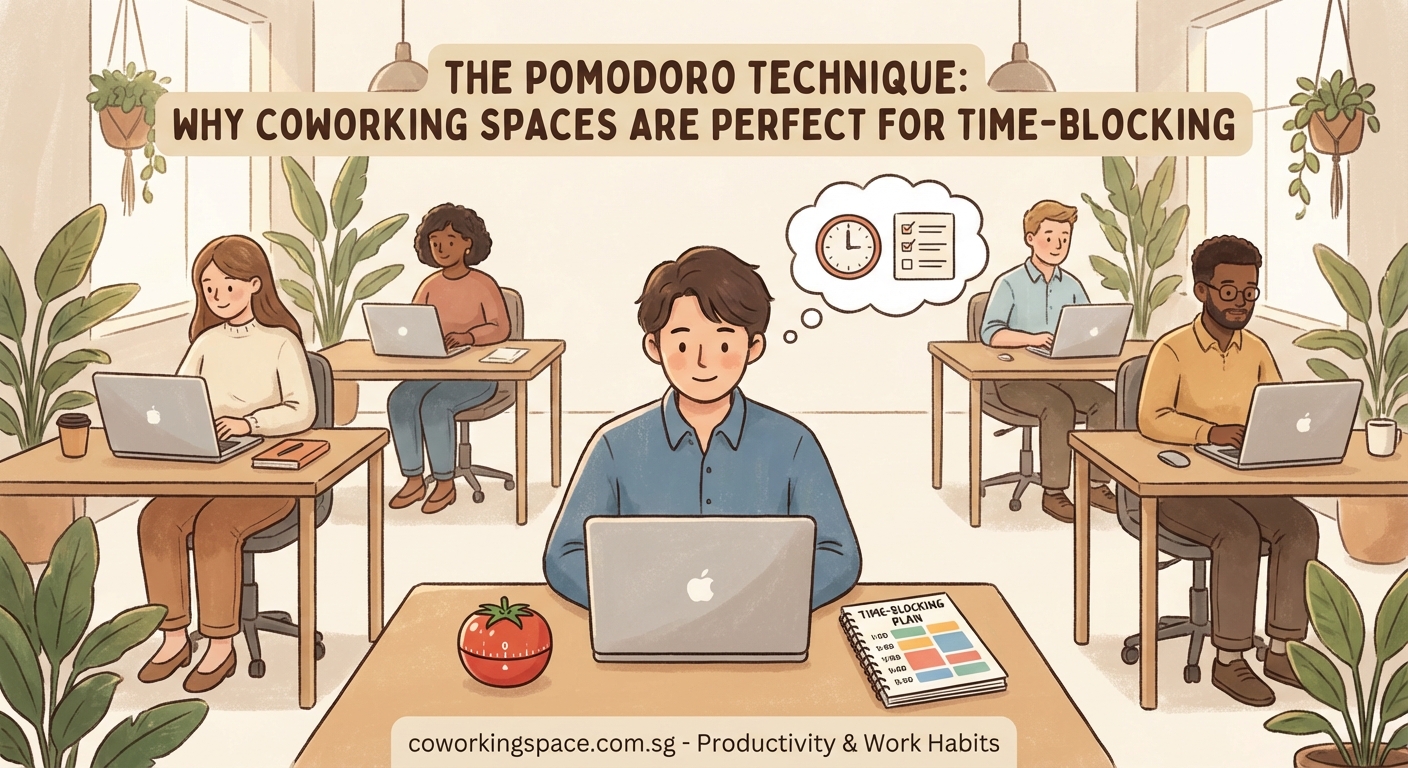
Traditional offices often work against deep focus. Colleagues interrupt. Meetings pop up. The environment demands constant availability.
Coworking spaces operate differently. Most members work independently. There’s an unspoken respect for someone wearing headphones or facing away from common areas.
This creates natural boundaries that support the pomodoro technique. When you start a 25-minute session, other members rarely interrupt. They’re managing their own focus blocks too.
The physical layout helps as well. Many coworking spaces offer multiple work zones. You can choose a quiet zone for maximum productivity when starting a pomodoro session, then move to a communal area during your break.
This flexibility matters. Your home office might have one workspace. A coffee shop offers no control over noise. Coworking spaces let you match your environment to your current task.
“The best productivity system is the one you’ll actually use. Coworking spaces remove the environmental barriers that make techniques like pomodoro feel impossible at home.”
Setting up your pomodoro practice in a shared workspace
Starting the pomodoro technique in a coworking space requires minimal setup. But a few adjustments make the difference between occasional success and consistent results.
Choose your signaling method
Other members need to know you’re in focus mode. Some options:
- Headphones (even if you’re not playing music)
- A small desk sign that says “focusing”
- Facing away from high-traffic areas
- Booking a private room for deep work sessions
Most coworking communities develop informal signals. Pay attention to how experienced members indicate they’re unavailable.
Select your timer tool
Your smartphone works, but notifications break focus. Better options include:
- Physical kitchen timer (yes, the original method still works)
- Desktop apps like Focus Booster or Tomato Timer
- Browser extensions that block distracting sites during work blocks
- Smartwatch timers that vibrate without audible alerts
Test different tools during your first week. The right timer feels invisible until the session ends.
Map your break zones
Before starting your first pomodoro, identify where you’ll take breaks. Staying at your desk defeats the purpose. Your brain needs a real shift.
Good break locations in coworking spaces:
- Kitchen or coffee area
- Outdoor terrace or balcony
- Phone booth for personal calls
- Lounge seating away from work zones
Physical movement during breaks matters more than most people realize. Walking to a different floor or stepping outside resets your mental state for the next session.
Common mistakes that reduce pomodoro effectiveness

Even people who understand the technique sabotage their own results. These patterns show up constantly in coworking environments.
Extending sessions past 25 minutes
You’re making progress on a task. The timer rings. You think “just five more minutes to finish this section.”
Don’t.
The break isn’t a reward for completing work. It’s part of the system that maintains your focus capacity. Skipping breaks leads to diminishing returns in later sessions. You might avoid common time-wasting habits by respecting the timer.
Checking messages during work blocks
A notification appears. You glance at it. “I won’t respond, just read it.”
That glance breaks your focus. Your brain shifts context. Regaining deep concentration takes 10 to 15 minutes. You’ve wasted half your pomodoro.
Put your phone face down. Close email tabs. Tell colleagues you’re starting a focus block. Protect the 25 minutes completely.
Choosing tasks that are too large
If you can’t make meaningful progress in 25 minutes, the task needs breaking down. Vague goals like “work on proposal” don’t fit the pomodoro structure.
Better alternatives:
- Write introduction section for proposal
- Research three competitor pricing models
- Create outline for client presentation
- Draft email sequence for campaign
Each pomodoro should move one specific element forward.
Skipping the planning step
The technique works best when you list your tasks before starting. Deciding what to work on during a break wastes mental energy.
Spend five minutes at the start of your coworking day listing specific tasks. Assign each one a pomodoro estimate. This planning session doesn’t count as a work block.
How coworking amenities enhance time blocking success
The infrastructure of coworking spaces supports structured productivity methods in ways most members don’t fully utilize.
Meeting rooms for extended focus sessions
After completing four pomodoros in the open workspace, book a meeting room for your next set. The change of environment refreshes your concentration. Many spaces offer flexible booking systems that make this easy.
Private rooms also eliminate the low-level awareness of other people that your brain maintains in shared spaces. This awareness consumes mental resources even when you’re not consciously noticing it.
Reliable internet that won’t interrupt flow
Nothing destroys a pomodoro session faster than connection drops. You’re focused, making progress, then your video call freezes or your document won’t save.
Quality coworking spaces provide high-speed internet with backup systems. This reliability means your 25-minute blocks actually contain 25 minutes of work.
Ergonomic furniture for sustained sessions
Poor posture creates physical discomfort that pulls your attention away from tasks. After two or three pomodoros in an uncomfortable chair, your focus capacity drops.
Coworking spaces typically offer ergonomic seating options that support multiple hours of work. Standing desks let you alternate positions between sessions.
Community accountability without micromanagement
Working alone at home removes external accountability. You can skip pomodoros without consequence.
Coworking spaces provide gentle social pressure. Other members see you working. You see them maintaining focus. This creates a productive atmosphere that makes sticking to your technique easier. The psychology behind coworking explains why this peer effect matters.
Adapting the technique for different work types
The standard 25-minute pomodoro fits many tasks, but not all work follows the same rhythm. Coworking spaces give you the flexibility to adjust while maintaining the core principles.
| Work Type | Suggested Interval | Break Length | Best Workspace Zone |
|---|---|---|---|
| Writing or coding | 25 minutes | 5 minutes | Quiet zone |
| Client calls | 50 minutes | 10 minutes | Phone booth or meeting room |
| Creative brainstorming | 15 minutes | 5 minutes | Lounge area |
| Administrative tasks | 25 minutes | 5 minutes | Open workspace |
| Research and reading | 30 minutes | 5 minutes | Comfortable seating zone |
| Video editing | 45 minutes | 10 minutes | Private office |
Experiment with these variations during your first month. Track which intervals produce your best work for each task type.
Some freelancers use shorter intervals for tasks they dislike. A 15-minute pomodoro for expense reports feels manageable. The same task stretching 25 minutes creates resistance.
Others extend intervals for deep creative work. Once you’re in flow state, stopping at 25 minutes can feel disruptive. A 45-minute block with a 10-minute break might work better.
The key is maintaining the break structure. Whatever interval you choose, take the break. Your brain needs recovery time.
Building a sustainable pomodoro routine in coworking spaces
Starting the technique is easy. Maintaining it for months requires strategy. These patterns help remote workers stick with the method long term.
Start with four pomodoros per day
Don’t attempt eight hours of perfect focus on day one. Your brain hasn’t built the concentration stamina yet.
Begin with four pomodoros. That’s two hours of focused work. Schedule them for your peak energy periods. For most people, that’s mid-morning and early afternoon.
Add one pomodoro per week as the technique becomes habitual. After two months, you’ll comfortably complete eight to ten focused sessions daily.
Track completion, not perfection
Some days you’ll break the rules. You’ll check email mid-session or skip a break. That’s normal.
Track how many pomodoros you complete each day. Don’t judge the quality or criticize interruptions. Simple completion tracking builds consistency.
Many coworking members use a paper checklist. Each completed pomodoro gets a checkmark. The visual progress creates motivation.
Adjust for collaboration needs
Remote work involves team communication. You can’t ignore colleagues for eight straight hours.
Designate specific pomodoros for communication. Maybe your first and last sessions of the day focus on email and messages. Middle sessions protect deep work time.
Let your team know your availability windows. “I check messages at 9am, 12pm, and 4pm” sets clear expectations. Most coworking spaces make building effective hybrid schedules easier with this approach.
Use breaks intentionally
Five-minute breaks aren’t scrolling time. They’re recovery time. Your brain needs genuine rest, not different stimulation.
Effective break activities:
- Walking around the space
- Stretching or basic movement
- Getting water or coffee
- Looking out a window at distant objects
- Brief conversation with other members
- Stepping outside for fresh air
Avoid activities that require decision-making or create new mental load. Checking social media or reading news articles defeats the purpose.
Combining pomodoro with other productivity methods
The pomodoro technique works well alone, but many remote workers combine it with complementary systems. Coworking spaces support these hybrid approaches.
Time blocking plus pomodoro
Time blocking assigns specific hours to task categories. Marketing from 9am to 11am. Client work from 1pm to 4pm.
Layer pomodoro intervals within those blocks. Your 9am to 11am marketing block contains four 25-minute pomodoros with breaks.
This combination provides both strategic planning and tactical execution. You know what you’re working on (time blocking) and how you’ll maintain focus (pomodoro).
Task batching within pomodoro sessions
Group similar tasks together. Answer all emails in one pomodoro. Make all phone calls in another. Process all invoices in a third.
This reduces context switching between different types of work. Your brain stays in “email mode” or “phone mode” for the full 25 minutes.
Coworking spaces support batching by offering specialized zones for different activities. Take calls in phone booths. Handle administrative work in the open area. Do creative tasks in the lounge.
Weekly reviews to adjust technique
Spend 15 minutes each Friday reviewing your pomodoro practice. Which tasks consistently took longer than expected? When did you feel most focused? What disrupted your sessions?
Use these insights to refine your approach. Maybe you need longer breaks. Perhaps certain tasks work better in the morning. Adjust your system based on real data.
This review process helps you build a personal productivity system that matches your actual work patterns.
Troubleshooting common pomodoro challenges in shared spaces
Even with ideal conditions, problems emerge. These solutions address issues specific to coworking environments.
Problem: Unexpected interruptions from other members
Someone approaches your desk mid-session. They don’t realize you’re in focus mode.
Solution: Use clearer signals. A small red/green card on your desk. Red means focusing, green means available. Most coworking communities quickly adopt these visual systems.
If interruptions continue, consider choosing a different workspace type that offers more privacy.
Problem: Ambient noise breaks concentration
Coworking spaces have baseline noise. Conversations, phone calls, coffee machines. Some days it’s manageable. Other days it destroys focus.
Solution: Noise-canceling headphones become essential equipment. Pair them with white noise or focus music. Many members keep backup earplugs for particularly loud days.
Alternatively, shift your pomodoro sessions to quieter hours. Early morning or late afternoon often have fewer members present.
Problem: Break areas feel too social
You take a break. Someone starts a conversation. Your five minutes becomes fifteen.
Solution: Choose break locations strategically. The kitchen invites interaction. Outdoor spaces offer solitude. Learn which areas other members use for socializing versus decompressing.
Politely excuse yourself when conversations extend too long. “I’m on a break between focus sessions, need to get back in a few minutes” sets boundaries without seeming rude.
Problem: Maintaining technique during busy periods
Project deadlines hit. Clients need immediate responses. Your structured pomodoro routine falls apart.
Solution: Reduce session count rather than abandoning the technique entirely. Two focused pomodoros during chaotic days beats zero. The habit stays intact even when volume decreases.
Some remote workers use a modified approach during crunch periods: 15-minute focus blocks with 3-minute breaks. Shorter intervals maintain the rhythm without requiring long uninterrupted periods.
Making the technique work for different membership types
Your coworking arrangement affects how you implement the pomodoro method. Each membership type offers unique advantages and constraints.
Hot desk members
You choose a different spot each day. This flexibility lets you select the ideal environment for each pomodoro session.
Morning deep work? Grab a quiet corner. Afternoon administrative tasks? Sit in the open area. Your workspace adapts to your task list.
The downside is setup time. Factor in five minutes at the start of your day to establish your temporary workspace. This doesn’t count as a pomodoro.
Dedicated desk members
You have the same spot daily. This consistency helps build strong pomodoro habits. Your brain associates that specific location with focused work.
Personalize your space with pomodoro-friendly tools. Keep a timer visible. Post your task list. Create an environment that triggers concentration mode.
The limitation is reduced flexibility. You can’t easily move to different zones. Compensate by booking meeting rooms for variety during longer work days.
Private office members
You control your environment completely. Eliminate all visual and auditory distractions. Design the space specifically for pomodoro practice.
The challenge is isolation. You miss the productive energy of other members working. Schedule some pomodoro sessions in common areas to maintain that community benefit.
Private offices work exceptionally well for extended deep work. Plan your most demanding tasks during office hours, using the protected environment fully.
Measuring your pomodoro progress over time
Tracking results helps maintain motivation and identify improvement opportunities. These metrics matter for remote workers using coworking spaces.
Completed sessions per day
Simple count. How many 25-minute pomodoros did you finish? Track this daily for one month.
Most people start around four per day. After consistent practice, eight to twelve becomes typical. Your personal baseline will emerge.
Don’t compare yourself to others. A freelancer with client calls completes fewer pomodoros than a developer writing code. Different work requires different rhythms.
Tasks completed per pomodoro
Some tasks need multiple sessions. Others finish in one. Track how accurately you estimate task duration.
If you consistently underestimate, you’re choosing tasks that are too large. Break them down further. If you overestimate, you’re being too cautious. Combine smaller tasks.
Accurate estimation develops over time. After three months, most remote workers predict task duration within one pomodoro.
Focus quality during sessions
Rate each pomodoro on a simple scale. Did you maintain full focus? Did your mind wander occasionally? Were you constantly distracted?
This subjective measure reveals patterns. Maybe morning sessions rate higher. Perhaps certain task types hold your attention better. Use these insights to schedule accordingly.
Break adherence
Did you take the full break? Did you skip it? Did you extend it?
This metric often surprises people. Many discover they regularly skip breaks, then wonder why later pomodoros feel harder. The data makes the problem visible.
When pomodoro technique isn’t the right fit
The method works for most remote workers, but not everyone or every situation. Recognizing poor fits prevents frustration.
Highly collaborative work
If your role requires constant team interaction, rigid 25-minute blocks create friction. You can’t tell a client “call me back in 20 minutes, I’m in a pomodoro.”
Some alternatives work better for collaboration-heavy roles. Try time blocking without strict intervals. Or use pomodoro only for individual work, switching to flexible time for team tasks.
Creative work requiring extended flow states
Writers, designers, and developers sometimes need two or three hours of uninterrupted flow. Breaking every 25 minutes disrupts their process.
Consider 90-minute work blocks instead. This aligns with your natural ultradian rhythms. Take 15-minute breaks between these longer sessions.
Coworking spaces support this approach. Book a meeting room for the morning. Work in 90-minute blocks. Use afternoon for shorter pomodoro sessions on administrative tasks.
Tasks with unpredictable duration
Some work doesn’t fit neat time boxes. Debugging code. Troubleshooting technical issues. Customer support.
These tasks finish when they finish. Forcing them into 25-minute segments creates stress without benefit.
Use pomodoro for predictable work. Handle unpredictable tasks in flexible time blocks. Many remote workers dedicate morning to pomodoro structure, afternoon to flexible response work.
Why structured time matters more than perfect technique
The pomodoro method isn’t magic. It’s a framework that creates consistency. Coworking spaces provide the environment where that consistency becomes sustainable.
You don’t need perfect execution. You need regular practice. Four imperfect pomodoros beat zero perfect ones.
The technique works because it removes decision fatigue. You’re not constantly asking “what should I work on now?” or “how long should I focus?” The structure answers those questions.
Coworking spaces amplify this benefit. The environment reinforces productive behavior. Other members model focused work. The space physically separates work from home life.
Start simple. Choose one task tomorrow. Set a timer for 25 minutes. Work until it rings. Take a five-minute break. That’s one pomodoro. Build from there.
The combination of structured time management and a supportive workspace creates momentum. After a few weeks, the technique feels natural. Your productivity improves not through willpower, but through system design.
Give yourself permission to adjust the method. Your version might use 30-minute blocks. Or 20-minute sessions. The specific duration matters less than consistent practice.
Most remote workers find that combining morning routines with structured techniques creates their most productive work patterns. The pomodoro technique provides the tactical execution. Your coworking space provides the strategic environment.
Try it for two weeks. Track your completed sessions. Notice how your focus capacity grows. Then decide if the method fits your work style. Most people discover they accomplish more with less stress, simply by working in structured intervals within a space designed to support that approach.