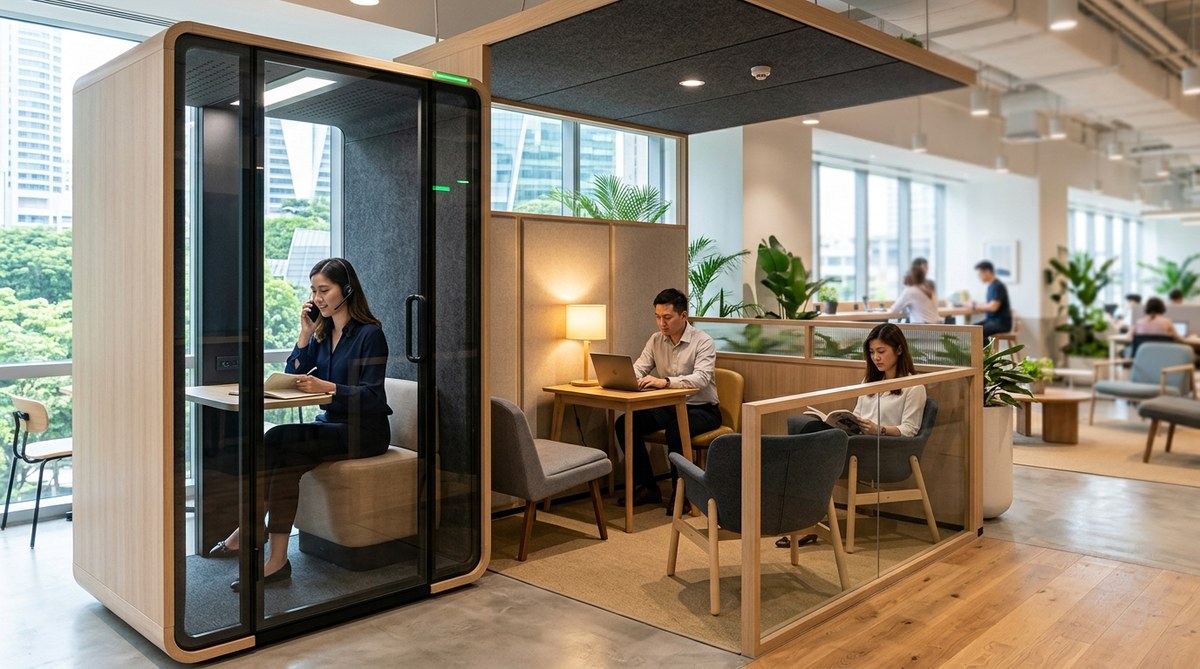
Creating a productive coworking environment means balancing openness with privacy. Shared spaces foster collaboration but can also bring noise and distractions. Facility managers, office designers, and business owners often ask how to ensure privacy without sacrificing the energetic vibe of open-plan layouts. The answer lies in implementing thoughtful privacy solutions that address noise control, confidentiality, and personal focus. This guide shares proven strategies to help you craft a workspace where privacy and openness coexist harmoniously.
Understanding the Privacy Challenges in Open-Plan Coworking Spaces
Open-plan layouts are popular because they maximize space efficiency and encourage interaction. However, they often lead to noise pollution, unintentional overhearing, and a lack of private zones. For employees, this can mean decreased focus and increased stress. For managers, it can result in confidential conversations being overheard or sensitive work being disrupted.
Common issues include:
– Excessive background noise
– Distractions from nearby conversations
– Lack of designated private areas for calls or focused work
– Unintentional sharing of confidential information
Addressing these challenges requires a combination of strategic design and the right privacy solutions.
Practical Steps to Enhance Privacy in Open-Plan Coworking Spaces
Implementing effective privacy solutions involves a clear process. Here are three steps to start transforming your workspace:
-
Assess your space and identify privacy needs
Conduct a thorough review of your coworking layout. Pinpoint areas where noise and distractions are most problematic. Determine which activities require privacy, such as confidential calls or focused work. -
Choose appropriate privacy tools and zones
Select solutions that match your needs, considering factors like soundproofing, flexibility, and aesthetics. Options include soundproof booths, quiet zones, and designated phone rooms. -
Implement and evaluate the effectiveness
Install chosen privacy features and gather feedback from users. Regularly review and adjust your setup to ensure it continues to meet evolving needs.
Popular Privacy Solutions for Open-Plan Coworking Spaces
Here are some of the most effective privacy techniques and their benefits:
- Acoustic booths and pods
Portable or fixed, these provide private spaces for calls, meetings, or focused work. They are designed with soundproof materials to minimize noise leakage. - Quiet zones and designated silent areas
Creating separate zones with signage or physical barriers encourages focused work and reduces noise spill-over. - Sound masking systems
These add ambient white noise to mask conversations, helping to preserve confidentiality and reduce distraction. - Partition walls and movable screens
Lightweight dividers can be repositioned easily to create temporary private areas. - Private meeting rooms
Bookable rooms equipped with soundproofing for team discussions or client calls.
“The key to effective privacy in open spaces is combining physical barriers with acoustic management. This creates a balanced environment where openness does not compromise confidentiality.” — Workplace design expert
Common Mistakes and How to Avoid Them
| Technique | Mistake | Solution |
|---|---|---|
| Soundproof booths | Underestimating the need for ventilation | Ensure booths have adequate airflow for comfort and safety. |
| Quiet zones | Overcrowding | Limit access or create multiple zones to prevent noise overload. |
| Sound masking | Relying solely on technology | Use with physical barriers for maximum effectiveness. |
| Movable screens | Using low-quality partitions | Invest in sturdy, sound-dampening materials. |
| Private rooms | Not properly soundproofed | Incorporate acoustic panels and sealing techniques. |
Practical Tips for Maximizing Privacy
- Use a layered approach combining physical barriers and sound management.
- Prioritize the placement of privacy zones away from high-traffic areas.
- Encourage employees to use designated quiet zones for calls.
- Incorporate decor elements like plants or soft furnishings to absorb sound.
- Regularly review privacy effectiveness through staff feedback.
Expert Advice on Privacy Management
“Designing open coworking spaces is about creating zones that serve different purposes. Privacy solutions should be flexible enough to adapt to changing needs and workflows.” — office environment strategist
Maintaining a Focused and Confidential Workspace
Ensuring privacy in open-plan coworking spaces requires ongoing effort. Regularly assess your privacy measures and seek input from users. Consider adding new features as your team grows or as needs shift.
- Train staff on best practices for maintaining confidentiality.
- Use signage to remind members to respect quiet zones.
- Invest in technology that enhances acoustic privacy.
- Plan for future growth by designing scalable privacy solutions.
Privacy Solutions as a Catalyst for Better Collaboration
Implementing smart privacy measures does not mean sacrificing the collaborative spirit of coworking. It allows members to switch seamlessly between open interaction and focused privacy. This dual approach can enhance overall productivity and satisfaction.
By thoughtfully integrating privacy zones, acoustic solutions, and flexible barriers, you create a workspace where everyone feels comfortable. It encourages more meaningful conversations, confidential discussions, and deep work sessions.
Final Thoughts on Creating a Privacy-Forward Workspace
Designing a coworking space that respects privacy while maintaining openness is a balancing act. The right solutions depend on your specific layout, team size, and work culture. Start by assessing your needs, then select tools that fit your budget and aesthetic. Regularly seek feedback and refine your setup. With these steps, you can craft a workspace that promotes focus, confidentiality, and collaborative energy all at once.
Investing in privacy solutions for open-plan coworking spaces ultimately leads to happier, more productive members. By creating designated quiet zones and soundproof areas, you’re enabling everyone to work at their best. Small changes can make a big difference in fostering a balanced environment where privacy and openness thrive together.