Finding the right workspace in Singapore can feel like a puzzle. You need a place that fits your budget, gives you the right level of privacy, and keeps you productive. The good news is that the city offers a wide range of coworking options, each designed for a different work style. Whether you are a freelancer who thrives on energy or a startup founder who needs a quiet room for client calls, there is a space that matches your needs.
Singapore’s coworking market in 2026 offers seven main space types: open desks, dedicated desks, private offices, team suites, executive suites, virtual offices, and creative studios. Each type varies in price, privacy, and amenities. Your choice depends on your daily work habits, team size, and how often you need to meet clients. Knowing these differences helps you avoid overpaying for space you do not need or underspending on privacy you require.
Open Desks: The Budget-Friendly Entry Point
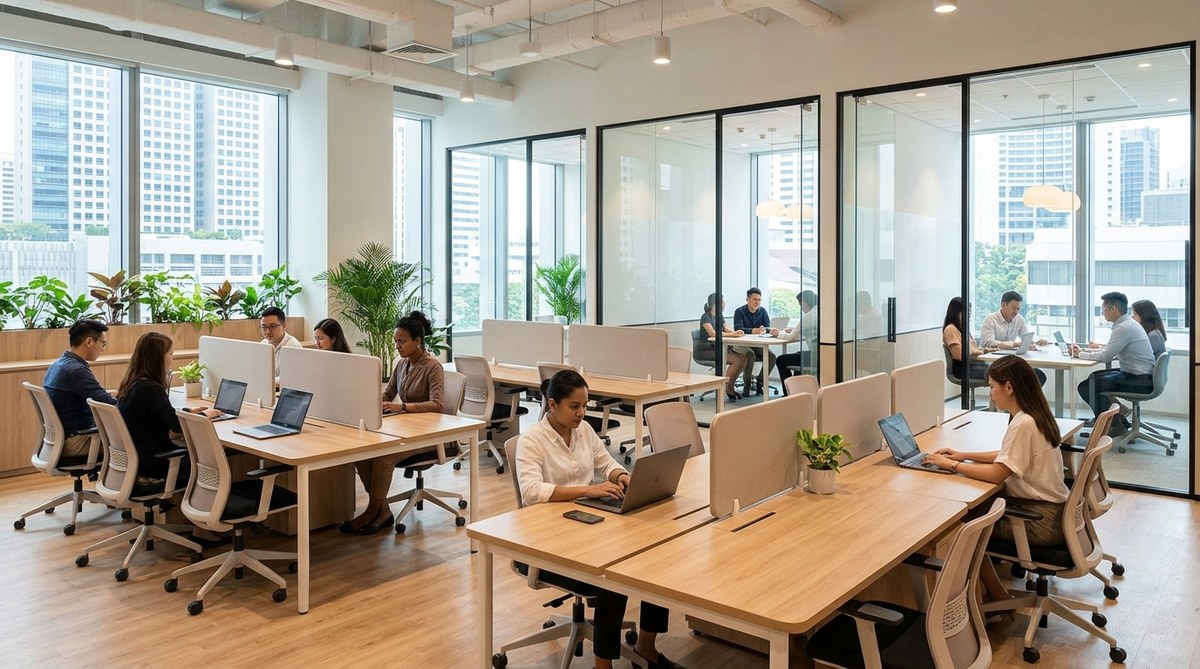
Open desks, often called hot desks, are the most affordable way to use a coworking space. You pay for a day pass or a monthly membership, but you do not get a permanent spot. Each morning, you choose an available desk in a shared area.
This option works best for people who value flexibility over consistency. If you are a freelancer who only needs a desk two or three days a week, an open desk plan saves you money. You also get access to common amenities like high-speed internet, coffee, and printing stations.
The trade-off is privacy. You will hear phone calls, typing, and conversations around you. For tasks that require deep focus, you might need noise-canceling headphones or a visit to a quiet zone. Many spaces now include phone booths for private calls, which helps bridge the gap.
A typical open desk membership in Singapore ranges from $150 to $400 per month, depending on the location and the operator. Spaces near Raffles Place or Marina Bay cost more, while spots in Geylang or Kallang offer lower rates.
Dedicated Desks: Your Personal Spot in a Shared Room
A dedicated desk gives you a permanent workstation in a communal area. You do not have to pack up your belongings each day. Your monitor, notebook, and family photo stay right where you left them.
This option is popular among remote workers who want the social energy of a coworking space but also need the reliability of a fixed desk. You know exactly where you will sit every day. That consistency helps build a routine and reduces the mental load of finding a new spot each morning.
Pricing for dedicated desks in Singapore typically falls between $300 and $700 per month. The price varies based on the desk’s location within the space. Desks near windows or in quieter corners often cost more.
One thing to check is whether the space offers lockable storage. Some dedicated desk plans include a small locker, while others charge extra. If you carry expensive gear, this feature matters.
Private Offices: Locked Doors and Total Focus
Private offices are enclosed rooms within a coworking facility. You get four walls, a door that closes, and full control over the environment. These are ideal for startup founders who need to discuss sensitive topics or for small teams that work best without distractions.
Most private offices come furnished with desks, chairs, and shelving. You can usually customize the layout to fit your team’s workflow. Some spaces even let you paint the walls or add your own branding.
The cost for a private office in Singapore starts around $800 per month for a single-person unit and goes up to $3,000 or more for larger rooms. The price depends on square footage, floor level, and included amenities like meeting room credits.
If you are considering a private office, think about your growth. Can the space accommodate an extra team member in six months? Many operators allow you to upgrade your room size without moving to a different building.
Team Suites: Built for Collaboration
Team suites are larger private offices designed for groups of four to ten people. They combine the privacy of a closed room with the collaborative energy of a team environment. These suites often include a small meeting table, whiteboards, and extra seating for visitors.
Startups and small businesses benefit most from team suites. You get a dedicated space for your crew, but you still have access to the building’s common areas like the pantry, lounge, and event spaces. This setup encourages your team to interact with other members during breaks, which can lead to unexpected partnerships.
Monthly pricing for team suites ranges from $2,000 to $6,000. The variation depends on the number of desks, the quality of furnishings, and the building’s prestige. A team suite in Orchard Road will cost significantly more than one in a suburban location.
Executive Suites: Premium Spaces for Client Impressions
Executive suites are the top tier of coworking private offices. They come with high-end furniture, premium finishes, and often a separate reception area. These spaces are designed to impress clients and partners.
If you run a consulting firm, a law practice, or a financial advisory business, an executive suite helps you project professionalism. Your clients walk into a polished environment that signals credibility. Many executive suites include a dedicated meeting room as part of the package, so you do not have to book one separately.
Expect to pay between $3,000 and $8,000 per month for an executive suite in Singapore. The premium price reflects the location, the quality of the build, and the level of service. Some operators also include a personal concierge who handles mail, greets guests, and manages scheduling.
Creative Studios: Designed for Makers and Artists
Not all coworking spaces are about desks and computers. Creative studios cater to designers, photographers, videographers, and artists who need more than a flat surface. These spaces feature open floor plans, high ceilings, natural light, and often include specialized equipment.
You might find a creative studio with a photo backdrop, a podcast recording booth, or a workshop area with tools. Some spaces even have wet areas for painting or sculpting. The layout encourages hands-on work and collaboration among creatives.
Pricing for creative studios varies widely. A basic membership with access to shared tools might cost $200 to $500 per month. A dedicated studio room with specialized equipment can run $1,000 to $2,500 per month.
If your work involves physical materials or requires space to spread out, a creative studio is worth considering. Check the space’s ventilation and storage options before committing.
Virtual Offices: A Professional Address Without the Desk
A virtual office gives you a prestigious business address and mail-handling services without requiring you to be physically present. You can use the address for your business registration, receive packages, and occasionally book meeting rooms by the hour.
This option works well for freelancers who work from home but need a professional mailing address for client contracts. It also suits entrepreneurs who travel frequently and do not want to pay for a desk they will rarely use.
Virtual office plans in Singapore start around $50 to $150 per month. Most plans include a set number of mail forwarding services and a few hours of meeting room access each month. You can usually add extra meeting room credits as needed.
Choosing the Right Option: A Quick Comparison
| Workspace Type | Monthly Cost Range | Privacy Level | Best For |
|---|---|---|---|
| Open Desk (Hot Desk) | $150 – $400 | Low | Freelancers, occasional users |
| Dedicated Desk | $300 – $700 | Medium | Regular remote workers |
| Private Office | $800 – $3,000 | High | Solopreneurs, small teams |
| Team Suite | $2,000 – $6,000 | High | Growing startups |
| Executive Suite | $3,000 – $8,000 | Very High | Client-facing businesses |
| Creative Studio | $200 – $2,500 | Medium to High | Designers, artists, makers |
| Virtual Office | $50 – $150 | N/A | Home-based businesses, travelers |
How to Match Your Work Style to the Right Space
Before you sign a membership, take a moment to assess your actual needs. Here is a simple process to follow:
- Track your week. For seven days, note how many hours you spend on focused work, calls, and collaboration. This tells you whether you need a quiet zone or a social environment.
- Estimate your budget. Include the membership fee, commuting costs, and any extra expenses like parking or coffee. Compare this to your current setup.
- List your must-haves. Do you need 24/7 access? A window desk? On-site printing? Make a non-negotiable list.
- Tour three spaces. Visit during your typical work hours. Check the noise level, internet speed, and overall vibe.
- Use a trial pass. Most spaces offer day passes or week-long trials. Test the space before committing to a monthly plan.
“The biggest mistake I see new members make is choosing a space based on price alone. They end up with a desk that is too noisy or too far from the MRT. Always prioritize your daily commute and your need for quiet focus.” — Sarah Lim, Community Manager at a Singapore coworking hub
Common Mistakes to Avoid When Choosing a Coworking Space
- Ignoring the commute. A cheap desk in a far location costs you time and energy. Factor in travel time.
- Overlooking noise levels. Some spaces market themselves as “buzzing” but that buzz might distract you. Visit during peak hours.
- Skipping the fine print. Check the cancellation policy. Some memberships lock you into a 12-month contract.
- Forgetting about visitors. If you meet clients often, make sure the space has a professional reception area and meeting rooms.
- Not asking about expansion. If your team grows, can you move to a larger room in the same building?
Making Your Final Decision
The best coworking space type for you depends on your work habits, team size, and budget. A freelancer who writes code all day needs a different setup than a startup founder who pitches investors weekly.
Start with a day pass at a few different spaces. Experience the atmosphere firsthand. Talk to other members. Ask them what they like and what frustrates them. This real-world feedback is worth more than any online review.
If you are still unsure, read our guide on how to match your work style to the right coworking space type in Singapore. It breaks down the decision step by step.
Your Next Step Toward the Perfect Workspace
You now have a clear picture of the different types of coworking spaces in Singapore. Open desks offer flexibility at a low cost. Dedicated desks give you consistency. Private offices and team suites provide privacy for growing businesses. Executive suites impress clients. Creative studios support hands-on work. Virtual offices handle your mail without a physical desk.
Take what you have learned here and apply it this week. Pick one or two spaces that match your criteria. Book a trial. Spend a full workday there. Notice how you feel at the end of the day. Did you get more done than at home? Did you enjoy the energy? That feeling will guide you to the right choice.
Your ideal workspace is out there. Now you know exactly what to look for.