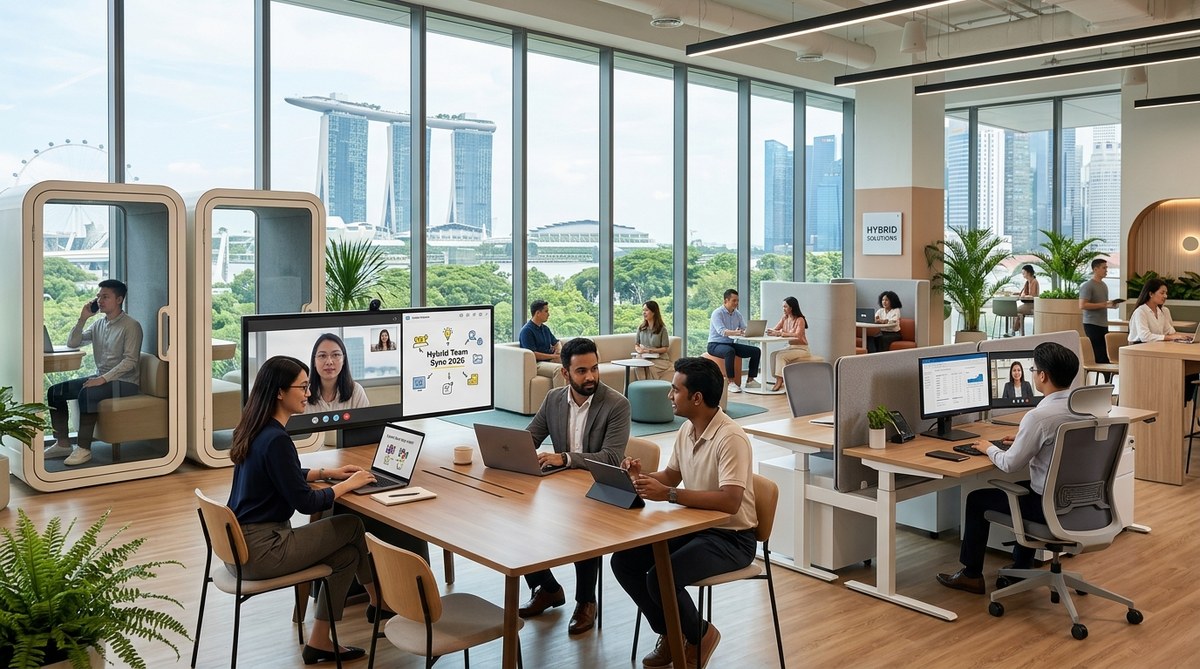
The way Singapore works is changing faster than most people realize. The old model of commuting to a fixed desk in a corporate tower five days a week feels like a relic. In its place, a more fluid, human-centric approach has taken hold. By 2026, the hybrid work revolution is not a future prediction; it is the current reality. For business owners, freelancers, and remote work managers, the question is no longer if you should adopt a flexible model, but how to build a workspace strategy that actually supports it. Coworking spaces across Singapore are stepping up to answer that question, transforming from simple desk rentals into sophisticated ecosystems designed for the way we actually work today.
Coworking spaces in Singapore are no longer just about providing a desk. In 2026, they function as agile hubs for hybrid teams, offering tech-enabled booking, wellness amenities, and community-driven networking. Whether you are a solo freelancer or managing a distributed team, these spaces are adapting to give you flexibility, productivity, and a sense of belonging without a long-term lease.
The Shift from Real Estate to Experience
For years, the value of an office was measured in square footage. You paid for space, and that was that. But the hybrid work revolution has flipped that equation. In 2026, the value of a workspace is measured by the experience it provides. Can you book a meeting room in seconds? Is the internet fast enough for a video call with clients in New York and London on the same day? Does the environment help you focus, or does it drain your energy?
Singapore’s coworking operators have listened. They are investing heavily in user experience, turning their locations into destinations rather than just facilities. This means better coffee, yes, but also more thoughtful design. You will find spaces with dedicated quiet zones for deep work, vibrant common areas for collaboration, and phone booths that actually block out noise. The goal is to give every member a reason to choose the coworking space over their kitchen table or a corner coffee shop.
How Technology Is Making Hybrid Work Seamless
One of the biggest pain points for hybrid teams is coordination. When half your team is at home and the other half is scattered across different locations, simple things like finding a desk or booking a room can become a headache. In 2026, coworking spaces in Singapore are solving this with smart technology.
Most modern spaces now offer a single app that handles everything. You can check real-time occupancy, reserve a specific desk for the day, book a meeting room for two hours, and even order a visitor pass for a client. This level of control removes the friction from hybrid work. It means you can plan your week without worrying about whether there will be a spot for you.
Here are three practical ways technology is changing the game:
- Real-time desk booking. You see a live map of the space and pick an available desk. No more walking in and hunting for a power outlet.
- Automated visitor management. Your client arrives and checks in on a tablet. You get a notification. No awkward waiting in the lobby.
- Integrated billing. Your team’s usage is tracked automatically. You get one invoice at the end of the month, broken down by who used what.
These features make coworking spaces feel less like a shared office and more like a personalized workspace that adapts to you.
Membership Models Built for 2026
The old membership model was simple: you paid for a full-time desk or a day pass. That no longer fits a hybrid world. People want options. They want to pay for exactly what they use, nothing more.
In response, Singapore coworking spaces are rolling out flexible plans that look very different from five years ago. You can now find memberships that give you a set number of days per month, allowing you to split your time between home and the workspace. Some operators offer “hub hopping,” where your membership lets you work from any of their locations across the island. This is a game changer for someone who lives in the east but has meetings in the CBD.
| Membership Type | Best For | Typical Commitment | Key Benefit |
|---|---|---|---|
| Hybrid Day Pass | Remote workers who come in 8-12 days a month | Month to month | Pay only for days used |
| Dedicated Desk | Freelancers needing a consistent spot | 3-6 months | Your own permanent setup |
| Team Suite | Small hybrid teams (3-5 people) | 6-12 months | Private space with shared amenities |
| Virtual Office | Businesses needing a mailing address | Month to month | Prestigious address without the cost |
| Enterprise Plan | Companies with 10+ rotating staff | Custom | Centralized billing and admin |
This table shows how the industry has matured. It is no longer a one-size-fits-all market. You can choose a plan that aligns with your cash flow and your team’s schedule.
The Human Side of Hybrid Work
Technology and pricing are important, but the real reason coworking spaces are thriving in 2026 is more human. People are lonely. Working from home full time can feel isolating. The lack of casual interaction with colleagues can drain your motivation and stifle creativity.
Coworking spaces have become the antidote to this isolation. They are designed to foster connection without forcing it. You can sit in the open area and catch up with a familiar face, or you can retreat to a quiet booth if you have a deadline. The best spaces have community managers whose job is to facilitate these connections. They host networking lunches, skill-sharing workshops, and even casual Friday evening drinks.
“The biggest value of our coworking membership is not the desk. It is the community. When I worked from home, I felt disconnected from the industry. Now, I have regular conversations with people in my field who challenge my thinking and open doors for collaboration.” – Mei Ling, a freelance UX designer based in Singapore.
This sense of belonging is a powerful driver. It turns a transactional relationship into a loyal one. When you feel like you are part of a community, you are far less likely to switch to a competitor over a small price difference.
Designing Spaces for Focus and Collaboration
A common mistake in early coworking spaces was treating them like open-plan offices. They were loud, distracting, and hard to work in. In 2026, the design philosophy has shifted completely. The best spaces now use “zoning” to give members control over their environment.
You will typically find three distinct zones in a modern Singapore coworking space:
- The Library. A silent zone for deep, focused work. No calls, no chatting, just quiet concentration.
- The Living Room. A relaxed area with sofas and armchairs for casual meetings or taking a break.
- The Studio. A collaborative zone with whiteboards and moveable furniture for team brainstorming sessions.
This zoning allows a single space to serve a wide range of needs. A startup founder can do their financial planning in the library at 9 AM, then lead a team stand-up in the studio at 11 AM, and grab a coffee in the living room at 3 PM. All without leaving the building. If you are new to this setup, it helps to read about how to choose between open workspace and quiet zones for maximum productivity to find your ideal rhythm.
Wellness and Sustainability as Standard
Another major shift is the integration of wellness into the workspace. In 2026, a coworking space that does not prioritize your health feels outdated. Operators are responding by adding features that support both physical and mental well-being.
You will find spaces with on-site fitness studios offering yoga or HIIT classes. Some have nap pods where you can recharge for 20 minutes. Others have biophilic design elements, like living walls and natural lighting, which studies show reduce stress and improve focus. Sustainability is also front and center. Many spaces in Singapore are now Green Mark certified, using energy-efficient systems and offering recycling programs. For many professionals, choosing a space that aligns with their values is a deciding factor.
Avoiding Common Pitfalls in a Hybrid Setup
Transitioning to a hybrid work model is not always smooth. Even with the best coworking space, there are mistakes that can undermine your productivity. Being aware of them can save you time and frustration.
Here are some common pitfalls to watch for:
- Not setting boundaries. If you work from a coworking space, treat it like an office. Have a start time and an end time. Otherwise, the line between work and personal life blurs.
- Sticking to one spot. Do not fall into the habit of always sitting in the same corner. Use the different zones based on your task. It keeps your brain fresh.
- Ignoring the community. The networking potential is huge. Do not just put on headphones all day. Introduce yourself to someone new each week.
- Overbooking your schedule. Hybrid work is supposed to give you flexibility. Do not fill every hour with meetings. Leave space for deep work.
- Forgetting ergonomics. Your home setup might be different from the space’s. Adjust your chair and screen height. Your back will thank you.
If you are just starting out, you might find it useful to read about 5 common coworking mistakes that new members make (and how to avoid them) so you can hit the ground running.
The Financial Case for Coworking in 2026
For many business owners, the decision to use a coworking space comes down to money. Renting a traditional office in Singapore is expensive. You are locked into a long lease, and you pay for space you might not fully use. Coworking flips that model.
You pay only for the space you use. If your team grows, you add a desk. If your team shrinks, you reduce your plan. This flexibility is incredibly valuable in an uncertain economy. It also frees up capital that you can invest in your core business instead of tying it up in rent and utilities.
Consider the cost of a private office in the CBD versus a team suite in a coworking space. The coworking option usually includes internet, cleaning, utilities, and access to meeting rooms in the monthly fee. With a traditional lease, those are all separate line items. For a small team, the savings can be significant. You can learn more about the financial trade-offs by reading are coworking spaces worth the cost? breaking down the true value.
Building Your Hybrid Work Schedule
A coworking space is a tool. Like any tool, its effectiveness depends on how you use it. The most successful hybrid workers treat their schedule with intention. They do not just show up randomly. They plan.
Here is a simple framework for building a hybrid schedule that works:
- Monday and Tuesday. These are your high-focus days. Go to the coworking space early. Use the library zone. Tackle your hardest tasks.
- Wednesday. This is your collaboration day. Book a meeting room. Schedule team check-ins. Use the studio zone for brainstorming.
- Thursday and Friday. These can be lighter days. Work from home in the morning. Use the coworking space in the afternoon for catching up on emails and admin.
This structure gives you the best of both worlds. You get the focus and separation of an office, combined with the comfort and flexibility of home. Adjust the rhythm to fit your team’s needs. The key is consistency. Your brain and your colleagues will appreciate knowing where you are and when.
For more detailed advice on making this work, check out how to build an effective hybrid work schedule in a coworking space.
Your Next Step in the Hybrid Revolution
The coworking spaces in Singapore have adapted. They are no longer just a backup plan for startups or a temporary solution for travelers. They are a central pillar of the modern work ecosystem. They offer the flexibility that hybrid teams need, the community that remote workers crave, and the professional environment that clients expect.
If you have been on the fence about making a change, now is the time to act. Visit a few spaces. Try a day pass. Talk to the community manager. See how it feels to work in an environment that is designed for 2026, not 2016. The hybrid work revolution is already here. The only question left is whether you will design your workspace to thrive in it or let the world pass you by.