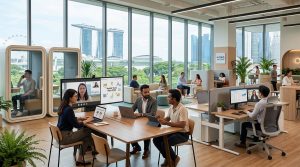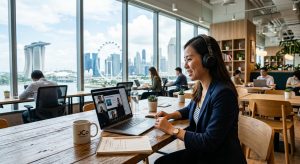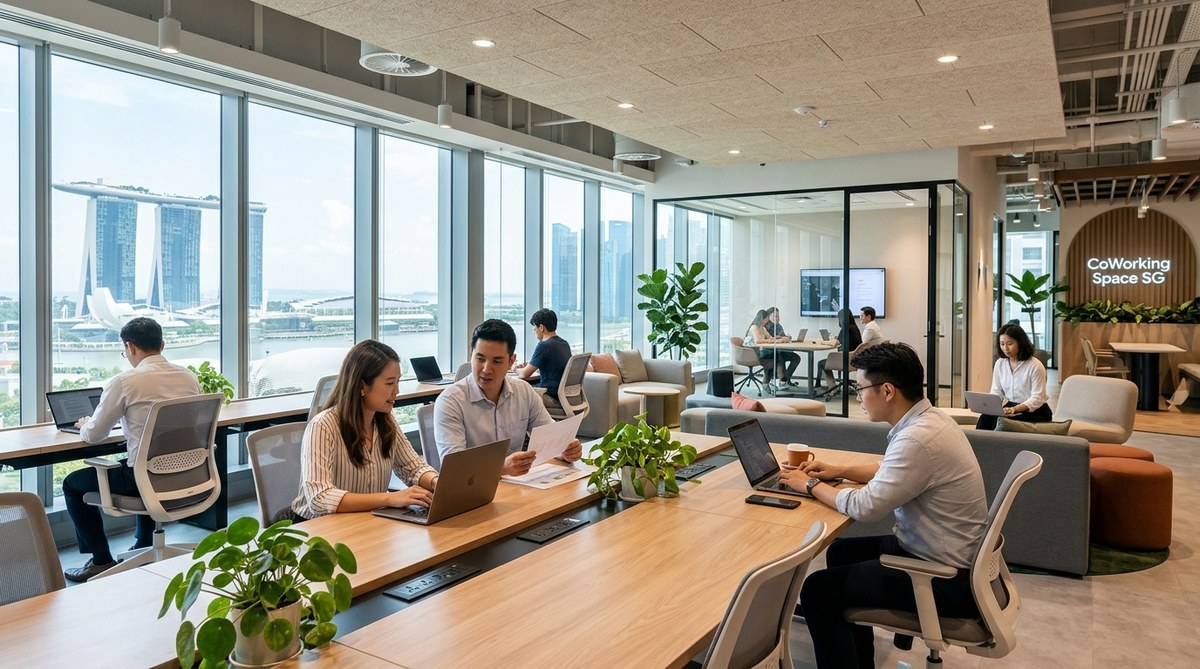
I spent the last year working from a dozen different coworking spaces across Singapore. Some were sleek towers in Raffles Place with views of the Marina Bay skyline. Others were hidden gems in Tiong Bahru with exposed brick walls and indie music playing softly in the background. I started as a skeptic who thought coworking was just a fancy term for “renting a desk.” I ended as someone who believes these spaces are a living laboratory for the future of work.
Singapore coworking spaces are not just about desks and WiFi. They reveal five major shifts shaping the future of work: radical flexibility, community-driven productivity, intentional design for focus, hybrid team infrastructure, and access to premium locations without long-term leases. These lessons apply whether you are a solo freelancer or scaling a team.
Flexibility Is No Longer a Perk. It Is the Standard.
The first lesson hit me during my second week. I had booked a hot desk at a space near Tanjong Pagar MRT. A client meeting came up unexpectedly, and I needed a private room for two hours. I opened the space’s app, booked a meeting pod, and walked in five minutes later. No phone calls to a receptionist. No awkward explanations. No extra fees beyond what my membership already covered.
This kind of flexibility is now the baseline expectation for how professionals want to work. The old model of signing a three-year lease and hoping your team size stays stable feels outdated. In Singapore coworking spaces, you can scale up when a project lands and scale down when things get quiet. You are not stuck with empty desks you pay for but never use.
Here is a practical process I developed for testing if a coworking space offers the flexibility you actually need:
- Check the booking system first. Does the space have an app or web portal? Can you book a room at 9 pm for a 9 am meeting tomorrow? If the answer is no, move on.
- Ask about downgrade terms. If you sign up for a dedicated desk, can you switch to a hot desk after one month without penalty? The best spaces allow this with 14 days notice.
- Test the guest policy. Bring a colleague or client for a half-day visit. Does the space charge a fee? Is the process smooth or awkward? A good space makes guests feel welcome.
- Look for multi-location access. Many operators in Singapore have spaces across the island. A membership that works in both Raffles Place and Paya Lebar gives you true flexibility.
Community Is the Hidden Productivity Engine
I used to think productivity was purely about willpower and noise-canceling headphones. Then I sat next to the same group of people for three weeks at a space in Bugis. We never exchanged business cards. We just said good morning, asked about each other’s projects, and occasionally shared tips on tools.
That loose social fabric changed how I worked. Knowing that the person next to me was grinding on a pitch deck made me less likely to open Instagram. The gentle pressure of being in a space where others are focused creates a ripple effect. You can feel it.
Singapore coworking spaces excel at building this community without forcing it. They host Friday evening drinks, lunch-and-learn sessions, and even yoga classes. But they never require you to participate. You can stay in your bubble if that is what you need. The community exists as an option, not an obligation.
“The best coworking spaces feel like a library and a coffee shop had a baby. You get the quiet focus of a library with the gentle hum of people doing meaningful work.” — A regular member at a space in Clarke Quay
This matters because the future of work is lonely for many remote workers. A 2025 study by a Singapore-based HR firm found that 62% of remote employees reported feeling isolated at least once a week. Coworking spaces solve this not through forced networking but through ambient presence. You are alone together, and that makes a difference.
Design That Respects Your Attention
Here is something I noticed across every space I visited. The best ones do not look like offices. They look like hotels or boutique cafes. Soft lighting. Plants everywhere. Furniture that is comfortable but not lazy. Zones that are clearly separated for different types of work.
This is not just aesthetics. It is intentional design for deep focus. The future of work demands environments that help us concentrate, because our attention is the most valuable resource we have.
Below is a table that compares how different design elements affect your work style, based on my experience across Singapore coworking spaces.
| Design Element | What It Does Best | Best For |
|---|---|---|
| Open plan with high ceilings | Creates energy and movement | Brainstorming, calls, social work |
| Soundproof phone booths | Blocks all outside noise | Private calls, video meetings |
| Quiet zones with desk lamps | Signals “do not disturb” | Deep writing, coding, analysis |
| Standing desks near windows | Reduces fatigue, boosts mood | Afternoon slumps, creative work |
| Lounge areas with sofas | Encourages informal chat | Networking, breaks, thinking |
I learned to match my task to the zone. If I needed to write a long article, I headed straight to the quiet zone. If I had back-to-back client calls, I camped near the phone booths. If I felt stuck on a problem, I moved to the lounge area with a coffee and let my mind wander.
The spaces that get this right make the choice easy. You do not have to guess where to sit. The design guides you.
Hybrid Teams Need a Third Place
Many companies in Singapore have adopted hybrid work policies. Teams come into the office two or three days a week and work remotely the rest of the time. But here is the problem that coworking spaces solve: not everyone lives near the company’s main office.
I met a team of five from a fintech startup during my time at a space in Paya Lebar. Their company headquarters was in One North. Three of them lived in the east. Commuting to One North three times a week was eating two hours of their day. They convinced their CEO to let them work from a coworking space closer to home. The company paid for their memberships. Productivity went up. Turnover went down.
This is the future of work for hybrid teams. Companies do not need one giant office. They need a network of smaller, flexible spaces where team members can gather based on where they live. Singapore coworking spaces are perfectly positioned for this. You can find a space near almost every MRT station.
For business professionals considering this model, here is a bulleted list of what to look for when choosing a coworking space for a hybrid team:
- Reliable video conferencing setup in every meeting room
- Enough power outlets for laptops, monitors, and phones
- A kitchen or pantry area where the team can eat lunch together
- Lockers for storing equipment between visits
- A quiet corner for heads-down work when you need it
Location Access Without the Lease
One of the most surprising lessons came from a conversation with a founder who ran a three-person agency. They had a membership at a premium coworking space in Raffles Place. I asked why they did not just rent a cheap office in a suburban area.
His answer was simple. “Clients judge us by our address.” When they meet at the Raffles Place space, they walk past a fancy lobby and ride a high-speed elevator to a floor with a harbor view. The perception of success matters for closing deals. A coworking membership gives them that address for a fraction of the cost of a traditional lease.
This is a trend that is only growing. In 2026, more professionals are using virtual office plans and coworking memberships to establish a presence in prime business districts without the financial weight of a long-term lease. You can have a Raffles Place address for your business registration and work from a budget-friendly space in Geylang most days. The best of both worlds.
If you are evaluating whether this approach fits your situation, consider these common mistakes that new members make:
- Choosing a location based on prestige alone, without checking commute time
- Signing a long-term membership before testing the space with a day pass
- Ignoring the noise level during peak hours (visit at 11 am on a Tuesday)
- Forgetting to ask about mail handling and package delivery
What the Data Tells Us About the Shift
The numbers back up what I observed anecdotally. Singapore’s coworking market grew by 18% in 2025, and projections for 2026 show continued expansion. Major operators are opening new locations in suburban areas like Tampines and Jurong East, responding to demand from workers who want to reduce their commute.
More telling is the type of companies using these spaces. It is not just freelancers and startups anymore. Enterprise teams from banks, tech firms, and consultancies now make up a significant portion of members. They use coworking spaces for satellite offices, project teams, and overflow space during hiring surges.
This tells me that the future of work is not about choosing between an office and working from home. It is about having options. A traditional office for culture and collaboration. Home for focused solo work. Coworking spaces for everything in between.
Building Your Own Future of Work Strategy
After a year of testing and observing, I have landed on a personal system that I recommend to other professionals. Start with a day pass at three different spaces. Spend one full workday at each. Take notes on how you feel at 10 am, 2 pm, and 4 pm. Which space made you feel most productive? Which one made you feel most connected?
Then commit to a one-month membership at the winner. Use it at least three times per week. At the end of the month, ask yourself one question: “Did this space make my work better or just different?” If the answer is better, renew. If it is just different, try another space.
The beauty of Singapore coworking spaces is that you can run this experiment without huge risk. Memberships are month-to-month. Day passes are affordable. You are not locked in.
What I Wish I Knew on Day One
I made plenty of mistakes during my year of coworking. I signed up for a space with terrible coffee (this matters more than you think). I chose a location that added 40 minutes to my commute. I ignored the community events because I thought they were a waste of time, only to realize later that I missed out on valuable connections.
Here is what I wish someone had told me:
- The best coworking space is the one you actually want to go to. Location trumps everything.
- Community managers are your secret weapon. Introduce yourself on day one. They know everyone.
- Bring your own monitor if you need one. Most spaces provide basic screens, but they are rarely great.
- Noise levels vary by hour. Mornings are quiet. Afternoons get busy. Plan accordingly.
If you are new to coworking, I recommend reading our guide on how to choose your first coworking space in Singapore for a step-by-step walkthrough.
The Future Is Already Here
Singapore coworking spaces taught me that the future of work is not a distant concept. It is happening right now in spaces across the island. It is a future where you choose where to work based on what you need that day. It is a future where community exists without pressure. It is a future where design supports your focus instead of fighting against it.
The professionals who adapt to this future will not be the ones with the fanciest home offices or the longest tenure at a traditional company. They will be the ones who learn to match their environment to their work, who build networks across different spaces, and who treat flexibility as a strategic advantage.
Your next step is simple. Pick one coworking space near you. Buy a day pass. Show up tomorrow morning with your laptop and an open mind. See what happens. The future of work is waiting for you there.