
Moving your startup to Singapore sounds exciting until you hit the visa paperwork. The EntrePass exists specifically for entrepreneurs like you, but the application process can feel like navigating a maze blindfolded.
This guide walks you through every step of the Singapore EntrePass application, from checking if you qualify to collecting your approved pass. No confusing jargon. Just practical instructions that help you submit a strong application the first time.
The Singapore EntrePass application requires proof of funding, a viable business plan, and meeting specific criteria based on your startup’s stage. The process takes 8 weeks on average. You’ll need S$50,000 in paid-up capital, innovation credentials, or backing from recognized investors. Most applications succeed when founders demonstrate clear business viability and proper documentation from day one.
Understanding the EntrePass and Who Qualifies
The EntrePass is Singapore’s work visa designed for foreign entrepreneurs who want to start and operate a business here. Unlike employment passes that tie you to a specific company, this visa lets you run your own venture.
You need to meet at least one of three main criteria. First option: secure funding from a government-recognized venture capital firm or business angel. Second: develop a proprietary product or technology with intellectual property protection. Third: establish significant partnerships with government-backed incubators or accelerators.
Your business must be registered as a private limited company in Singapore. Sole proprietorships and partnerships don’t qualify. The company needs to be less than six months old at the time of application, though exceptions exist for certain government-supported ventures.
Your startup should focus on innovation and growth potential. Singapore prioritizes technology, research, and scalable business models. Traditional service businesses like food and beverage, retail shops, or consulting firms typically face rejection unless they demonstrate exceptional innovation.
Preparing Your Business Before You Apply
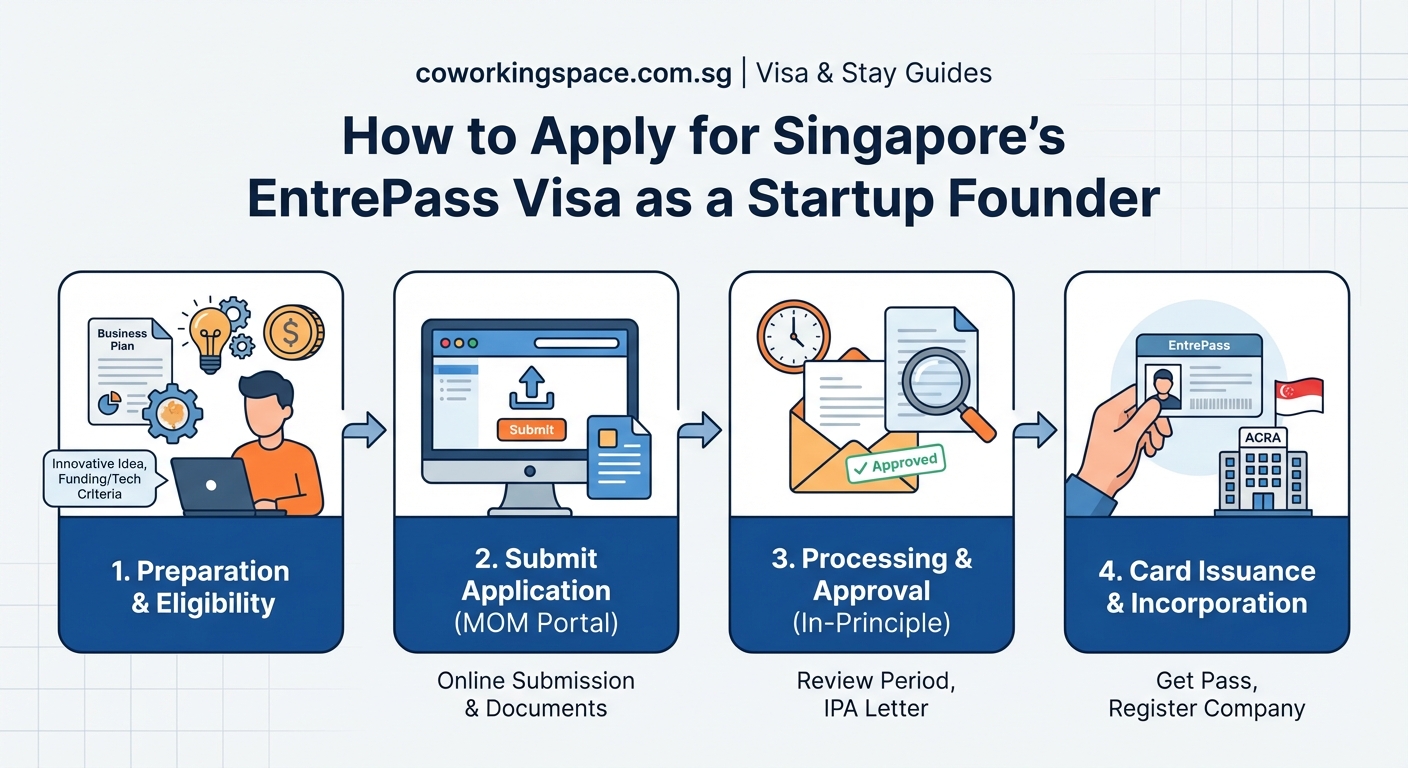
Register your company through the Accounting and Corporate Regulatory Authority (ACRA) before starting your EntrePass application. You cannot apply without a valid Unique Entity Number (UEN).
Set up a local business bank account and deposit your initial capital. The minimum paid-up capital requirement is S$50,000. This money must be in the company’s account, not your personal funds. Bank statements proving this capital will be required during application.
Draft a comprehensive business plan that covers your first three years. Include market analysis, revenue projections, hiring plans, and competitive advantages. Immigration officers assess whether your business can contribute to Singapore’s economy, so demonstrate clear growth potential and job creation plans.
Gather evidence of your entrepreneurial track record. Past successful ventures, industry awards, patents, or media coverage strengthen your application significantly. If you lack extensive experience, strong funding or partnerships can compensate.
Many founders setting up operations benefit from understanding coworking membership types as they establish their Singapore presence without committing to long-term office leases.
Required Documents for Your EntrePass Application
The document checklist is extensive. Missing even one item can delay your application by weeks.
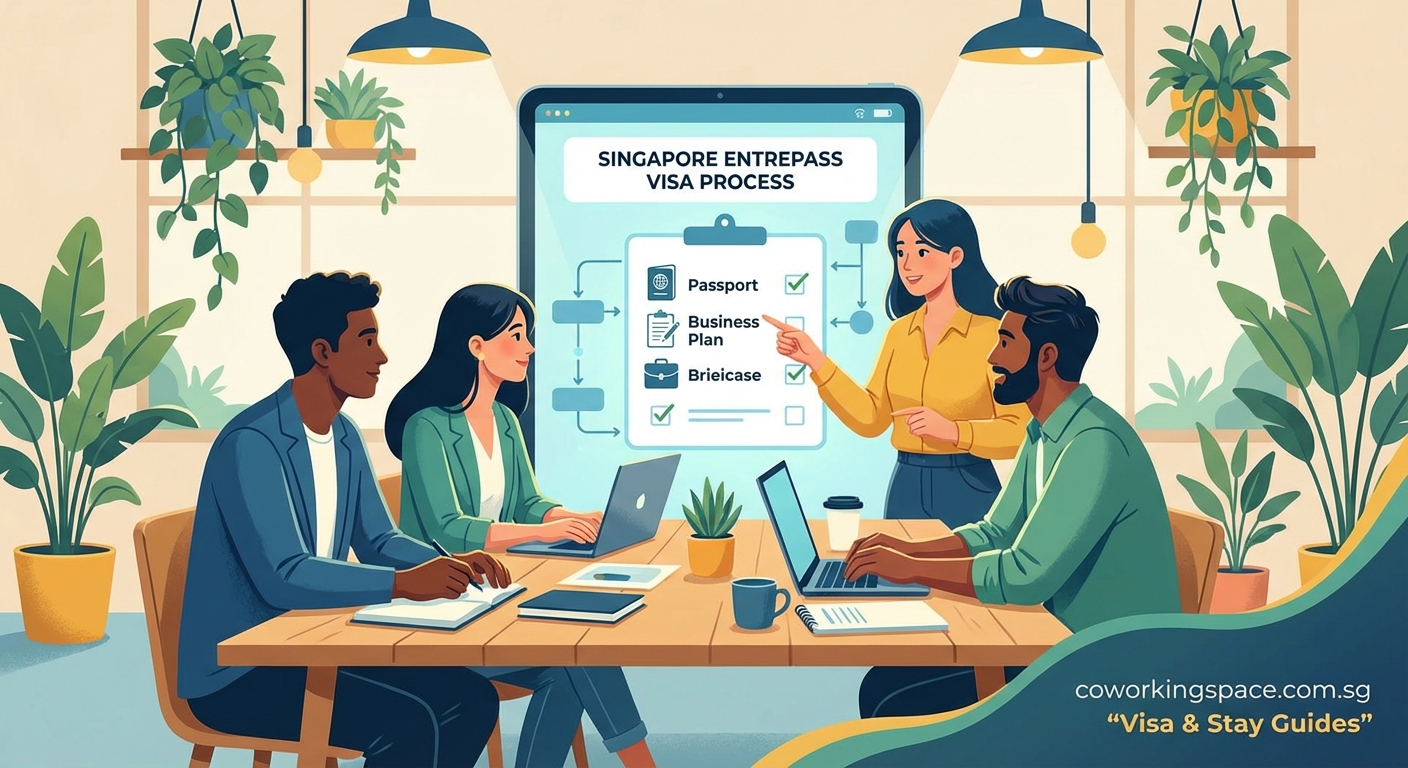
Start with your passport. It must be valid for at least six months beyond your intended entry date. Include biographical pages and any pages with previous Singapore visas or immigration stamps.
Your company documents include the ACRA business profile, certificate of incorporation, memorandum and articles of association, and shareholder register. All must be current and show you hold at least 30% equity in the company.
Financial documents prove your business viability. Submit bank statements showing paid-up capital, proof of funding from investors, and financial projections for three years. If you have existing revenue, include audited accounts or management reports.
Educational certificates and professional qualifications demonstrate your capability. Degree certificates, diplomas, and professional certifications all help. Get them officially translated to English if they’re in other languages.
Your business plan should be 15 to 20 pages. Cover your value proposition, target market, competitive analysis, marketing strategy, operational plan, and financial forecasts. Be specific about how you’ll create jobs for Singaporeans.
“The strongest EntrePass applications show clear evidence of innovation and a credible path to profitability. Generic business plans that could apply to any market rarely succeed. Specificity about the Singapore market matters enormously.” – Immigration consultant with 12 years of experience processing EntrePass applications
Step-by-Step Application Process
1. Create Your MyICA Account
Visit the Ministry of Manpower’s website and set up an account. You’ll need a valid email address and mobile number for verification. This portal handles your entire application.
2. Complete the Online Form
The EP Online system guides you through each section. Fill in personal details, company information, business activities, and shareholding structure. Save your progress regularly because sessions time out after 20 minutes of inactivity.
3. Upload Supporting Documents
Scan all documents in PDF format. Keep file sizes under 2MB each. Name files clearly so immigration officers can identify them easily. The system accepts up to 20 document uploads per application.
4. Pay the Application Fee
The non-refundable fee is S$105. Payment options include credit cards and direct bank transfers. Keep your payment receipt because you’ll need the transaction reference number.
5. Submit and Track Your Application
After submission, you receive an acknowledgment email with your application reference number. Check your application status through the MyICA portal. Response times vary, but most applications receive an outcome within 8 weeks.
6. Respond to Additional Requests
Immigration officers often request clarifications or additional documents. Respond within the deadline stated in their email, typically 7 days. Late responses can result in automatic rejection.
7. Collect Your EntrePass
Approved applicants receive an In-Principle Approval (IPA) letter. Print this letter and bring it when you enter Singapore. You have six months from the IPA date to complete your entry and collect your physical pass from the Ministry of Manpower.
Common Approval Criteria and What Officers Look For
Immigration officers evaluate three main factors: your business viability, your personal credentials, and your potential economic contribution to Singapore.
Business viability assessment includes market demand, competitive advantages, scalability, and financial sustainability. Officers want to see that your business solves a real problem and has customers willing to pay.
Your credentials matter significantly. Relevant industry experience, educational background, entrepreneurial track record, and technical expertise all count. First-time founders with limited experience face higher scrutiny.
Economic contribution focuses on job creation, innovation, and knowledge transfer. Applications that commit to hiring Singaporeans within 12 months score better. Plans to collaborate with local universities or research institutions also help.
| Approval Factor | What Strengthens Your Case | What Weakens Your Case |
|---|---|---|
| Funding | VC backing, angel investment, government grants | Self-funded with minimal capital |
| Innovation | Patents, proprietary technology, R&D focus | Generic business model, local competition |
| Experience | Previous successful exits, industry awards | First venture, unrelated background |
| Market | Clear target customers, validated demand | Vague market definition, no research |
| Jobs | Committed hiring plan, training programs | No employment plans, solo operation |
Handling Rejection and Reapplication
Rejection happens to about 30% of first-time applicants. Common reasons include insufficient funding, weak business plans, lack of innovation, or unclear market positioning.
If rejected, the rejection letter explains the reasons. Read it carefully. Address every point raised before reapplying.
Wait at least six months before submitting a new application. Use this time to strengthen your weak areas. Secure additional funding, refine your business model, or gain relevant experience.
Consider alternative visa routes while improving your EntrePass application. The Employment Pass requirements might suit your situation if you can work for your own company in a different capacity initially.
Some founders successfully pivot their business focus to align better with Singapore’s strategic industries. Technology, biomedical sciences, clean energy, and fintech receive more favorable consideration than traditional service businesses.
EntrePass Conditions and Renewal Requirements
Your first EntrePass is valid for one year. After that, you can renew for two years, then three years if you meet performance benchmarks.
You must actively operate your business in Singapore. Immigration conducts random audits checking your company’s operations, office location, and business activities. Running your business remotely from another country violates your pass conditions.
Your company must maintain minimum paid-up capital of S$50,000 throughout your pass validity. Reducing this amount can trigger pass cancellation.
Employment requirements kick in at renewal. For your first renewal, you should have hired at least one local employee. By your second renewal, aim for three to five local staff depending on your business size.
Business performance matters at renewal. Show revenue growth, customer acquisition, and operational milestones. Startups that remain at idea stage without tangible progress face renewal rejection.
You can bring dependents once your pass is approved. Your spouse and children under 21 qualify for Dependant’s Passes. Parents may qualify for Long-Term Visit Passes under certain conditions.
Setting Up Your Operations After Approval
Once approved, you have six months to relocate to Singapore and activate your pass. Book your travel and plan your entry carefully.
Register for mandatory Central Provident Fund (CPF) contributions for any local employees you hire. Set up your payroll system to handle these deductions correctly.
Many new founders initially work from coworking spaces in Singapore rather than committing to traditional office leases. This approach reduces overhead while you establish your business.
Open a corporate bank account if you haven’t already. Bring your EntrePass, company documents, and business plan. Most banks require an in-person meeting with account managers for new corporate accounts.
Register for Goods and Services Tax (GST) if your annual revenue exceeds S$1 million. Engage an accounting firm familiar with startup compliance to avoid penalties.
Consider your long-term immigration pathway. The EntrePass can lead to permanent residency after several years of successful business operations. Maintain good compliance records and demonstrate consistent business growth.
Budget Considerations Beyond the Visa Fee
The S$105 application fee is just the beginning. Factor in substantial additional costs when planning your move.
Company incorporation costs range from S$300 to S$1,000 depending on whether you use a corporate secretary service. You’re legally required to have a local company secretary, which costs S$500 to S$1,500 annually.
Your minimum paid-up capital of S$50,000 must remain in your business account. This ties up significant funds that you cannot use for personal expenses.
Professional services add up. Many founders spend S$2,000 to S$5,000 on immigration consultants to improve application success rates. Legal fees for contract reviews and compliance advice cost another S$3,000 to S$10,000 annually.
Office space varies widely. Traditional offices in prime locations cost S$5 to S$15 per square foot monthly. Budget-friendly coworking spaces offer more flexibility for early-stage startups.
Living expenses in Singapore are high. Budget S$3,000 to S$5,000 monthly for housing, food, and transportation as a single founder. Families need S$6,000 to S$10,000 monthly depending on housing choices and school fees.
Tips for Strengthening Your Application
Start building your case months before applying. Document everything that demonstrates business viability and your entrepreneurial capability.
Secure letters of intent from potential customers. Even non-binding agreements show market validation. Three to five strong letters significantly strengthen your application.
Join recognized accelerator programs. Acceptance into government-backed programs like SPRING Singapore or SGInnovate provides strong endorsement of your business potential.
Build an advisory board with credible Singapore-based professionals. Their involvement signals local market understanding and access to networks.
Prepare for the possibility of an interview. Some applications trigger requests for in-person meetings with immigration officers. Practice explaining your business clearly and confidently.
Time your application strategically. Avoid peak periods like December and January when processing times extend due to holiday backlogs and year-end application rushes.
Consider engaging a professional coworking space with meeting rooms as your registered office address. This provides a legitimate business address without the cost of a traditional lease.
Alternative Pathways If EntrePass Isn’t Right
The EntrePass suits innovative, scalable startups. If your business doesn’t fit this profile, consider other options.
The Employment Pass works if you can structure yourself as an employee of your Singapore company. You need a qualifying salary of at least S$5,000 monthly and meet educational requirements.
The Personalised Employment Pass offers more flexibility for high-earning professionals. You need a fixed monthly salary of at least S$18,000 or last drawn salary of S$12,000 monthly.
The Tech.Pass targets established tech professionals and entrepreneurs with significant track records. Requirements include a minimum salary of S$20,000 monthly or substantial funding raised.
Some founders initially enter on other passes while building their business case for an EntrePass. Working for a Singapore company while developing your startup on the side can provide the local experience and network that strengthens a future application.
Making Your Move to Singapore Work
The Singapore EntrePass application demands thorough preparation and genuine business substance. Immigration officers have seen thousands of applications and quickly identify weak proposals.
Your success depends on demonstrating clear innovation, viable business fundamentals, and commitment to contributing to Singapore’s economy. Generic business plans and vague market strategies rarely succeed.
Start preparing at least three months before you want to submit. Gather documents, refine your business plan, and secure funding or partnerships that meet the criteria. The investment in proper preparation pays off with higher approval rates and smoother processing.
Singapore offers tremendous opportunities for entrepreneurs who bring real innovation and growth potential. The EntrePass provides a pathway to build your business in one of Asia’s most dynamic markets. Take the application seriously, address every requirement thoroughly, and you’ll significantly improve your chances of approval.