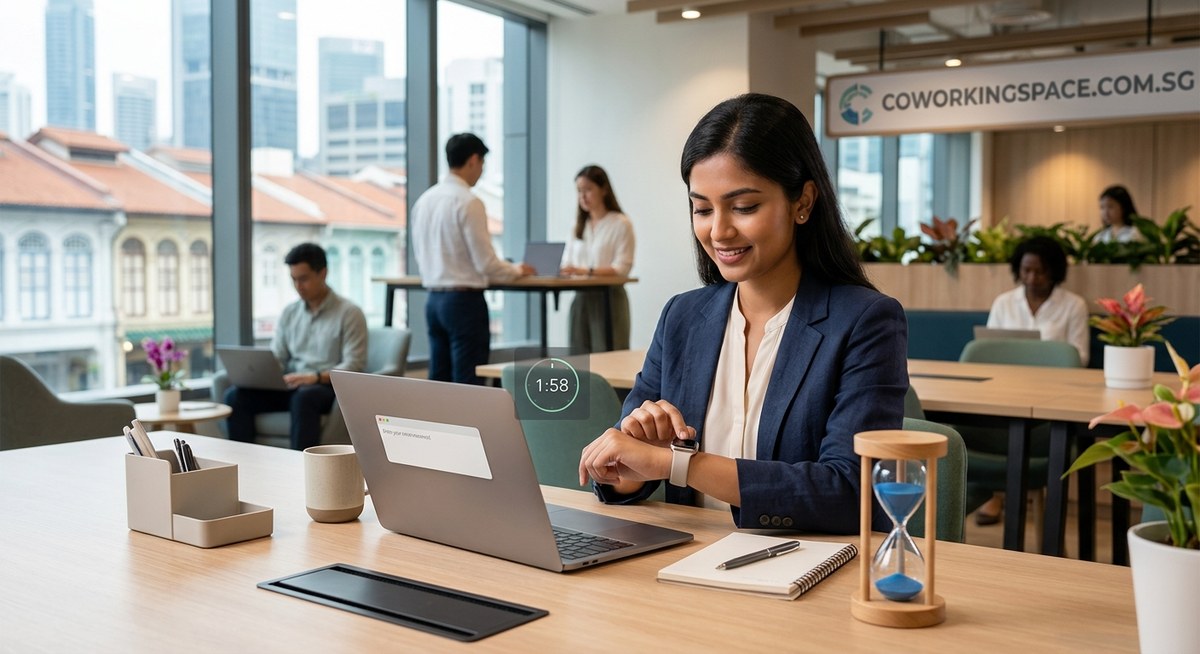
You pull into your coworking space, grab your favorite coffee, and sit down. The morning is full of promise. But then you check your phone. You rearrange your notebooks. You peek at what others are working on. Suddenly, it’s 11 a.m. and you’ve done nothing meaningful. Procrastination is a sneaky beast, and coworking spaces can be its perfect playground. The good news? One simple technique can turn that around. The 2-minute rule is a tiny commitment that rewires your brain to stop delaying. Here is how to stop procrastinating in coworking spaces using this method.
Procrastination in coworking spaces often stems from feeling overwhelmed by a task’s size. The 2-minute rule states: if a task takes less than two minutes, do it immediately. By starting with small, low-friction actions, you build momentum that carries you into deeper work. Use scheduled “2-minute starts” to break big projects into tiny first steps. Pair this with your coworking environment’s structure to beat distractions and reclaim your focus every day.
Why Coworking Spaces Trigger the Procrastination Loop
Coworking spaces are designed to energize you. But that energy can backfire. You notice someone taking a call, you overhear a conversation about a new startup, or you spot a free snack at the kitchen counter. Each distraction interrupts your flow. Psychologists call this the “attention residue” problem: every small interruption leaves a mental trace that makes it harder to refocus.
For remote workers and digital nomads, the stakes feel higher. You are paying for a desk, so you want to be productive. That pressure can actually make procrastination worse. You sit down thinking, “I must finish this report today,” and the size of that expectation freezes you. Instead of writing the first sentence, you scroll Instagram.
The 2-minute rule cuts through that loop. It asks only for a tiny commitment: do something for 120 seconds or less. That small win creates a positive feedback loop. Within those two minutes, you often decide to continue. The coworking space becomes a launchpad rather than a distraction hub.
How the 2-Minute Rule Works in a Shared Workspace
The rule was popularized by productivity expert David Allen in Getting Things Done. It’s simple: if an action will take less than two minutes, do it right now. But you can also use it in reverse. When you face a big task (like “build a client proposal”), commit to working on it for just two minutes. That’s all. After those two minutes, you are free to stop.
In a coworking environment, this approach is especially powerful because the space itself provides structure. Here are the key benefits:
- Low resistance start: You don’t need to overcome a mental wall. You just open the document and write one sentence.
- Uses the “Zeigarnik effect”: Your brain remembers unfinished tasks. After two minutes, you will likely want to continue because leaving it incomplete feels uncomfortable.
- Matches the coworking rhythm: Many spaces have natural break points (coffee refills, phone calls). You can align your 2-minute starts with those rhythms.
A 3-Step Process to Stop Procrastinating in Coworking Spaces
Use this numbered process every time you feel procrastination creeping in.
-
Identify the smallest next action. Don’t think about the entire project. Ask yourself: “What is one thing I can do in under two minutes?” Examples: type the email subject line, open the spreadsheet, draw a rough outline, send a Slack message to confirm a meeting time. Write it down.
-
Set a visible timer. Use the timer on your phone or a dedicated app. Place it where you can see it. Announce to yourself (silently or out loud) that you will work on this one action for exactly two minutes. When the timer starts, begin immediately. Ignore everything else. The coworking space’s background noise will fade.
-
Assess after two minutes. When the timer goes off, you have a choice. If you feel momentum, keep going. If not, take a short break (stand up, stretch, grab water) and then repeat the process with another tiny task. Over time, these two-minute bursts stack into real progress.
Common Mistakes vs. Smart Moves: A Comparison Table
| Mistake | Why It Fails | Smart Move |
|---|---|---|
| Trying to finish a whole task in one sitting | The task feels overwhelming, so you avoid starting | Use a 2-minute commitment to begin; stop when time is up |
| Ignoring the coworking space environment | You get distracted by noise or movement | Choose a seat away from high-traffic areas; tell yourself “two minutes then I can move” |
| Using the 2-minute rule for everything | You rush through small tasks without true focus | Reserve the rule for tasks that genuinely need starting; use longer blocks for deep work |
| Forgetting to reset after a break | You don’t re-engage, so procrastination returns | After a break, do another 2-minute start to re-enter work mode |
| Not tracking progress | You lose sight of how many small wins you’ve built | Keep a simple log: each completed 2-minute block = a check mark; review at day’s end |
Practical Tips to Combine the 2-Minute Rule with Your Coworking Habits
A coworking space offers unique advantages that can boost the 2-minute rule. Use these strategies:
- Leverage the “arrival ritual.” When you walk in, spend your first two minutes setting up your workspace. Plug in your laptop, arrange your notes, silence your phone. That small act signals to your brain that it’s time to work.
- Pair with a buddy. If you have a coworking friend, agree to check in with each other. Share what your next 2-minute task is. Verbalizing it increases accountability. You can find tips on building professional connections through this method.
- Use the “two-minute rule” for breaks too. When you feel the urge to check social media, ask: “Can I do this in two minutes or less?” If yes, do it and then return to work. If no, postpone it. This prevents the productivity-killing black hole of endless scrolling.
- Create a “start now” zone. Some coworking areas are more distracting than others. For your first two-minute burst, choose a quiet area. Once you have momentum, you can move to a more social zone if needed.
“Procrastination is not a time management problem; it is an emotion management problem. When we feel stuck, the smallest possible action breaks the spell. In a coworking space, where everyone around you is working, two minutes of action is often all it takes to sync your energy with the room.”
– Dr. Maryanne Fisher, workplace psychologist and author of Flow and Focus in Shared Environments
Building a Daily Habit That Sustains Focus
The 2-minute rule is a start, but consistency matters. Here is a bulleted list of micro-habits that will help you stop procrastinating in coworking spaces for good:
- Plan your 2-minute tasks the night before. Spend five minutes reviewing your to-do list. Circle three tasks that feel intimidating. For each, write the exact first step that takes under two minutes.
- Use a physical timer. Your phone can be a distraction. Buy a simple kitchen timer or use a visual timer app that shows a red shrinking disk. Seeing time run out creates urgency without pressure.
- Do a “power start” at the top of every hour. When the coworking space’s ambiance shifts (e.g., after a meeting ends or a coffee refill), reset with a two-minute action. This aligns with the natural pulse of shared workspaces.
- Reward yourself after five 2-minute blocks. Treat yourself to a walk around the block, a chat with a neighbor, or a snack. The coworking space becomes a positive reinforcement loop.
For more on structuring your entire workday around these principles, read our guide on mastering time management in coworking spaces.
How the 2-Minute Rule Complements Other Productivity Techniques
The 2-minute rule is not a standalone silver bullet. It works best when combined with other methods. For example:
- Pomodoro Technique: Use a 2-minute start to kick off each 25-minute block. Then focus until the timer rings.
- Time-Blocking: Before a deep work session, do a 2-minute warm-up (e.g., review your notes from last time).
- Eat the Frog: If you dread a task, commit to just two minutes of it. Often the frog shrinks.
Many remote workers find that the Pomodoro Technique and the 2-minute rule are a perfect pair for coworking environments.
When the 2-Minute Rule Isn’t Enough
Let’s be honest. Some days your brain refuses to cooperate. Maybe you’re tired, stressed, or the coworking space is unusually chaotic. In those moments, the 2-minute rule can still help, but you may need extra support.
- Change your location. Move to a different floor, a phone booth, or even a nearby coworking space near Changi Airport if you’re a traveler. A fresh environment can reset your mindset.
- Lower your standards. Your 2-minute task can be absurdly simple. Open a blank document. Write the date. That’s it. Still counts.
- Ask for help. If you are stuck, find a coworking member and say, “I’m procrastinating on something. Can I tell you my next 2-minute step?” The act of saying it aloud often unsticks you.
For a deeper look at common pitfalls and how to avoid them, check out 5 common time-wasting habits in coworking spaces.
Your Coworking Space as a Momentum Engine
Stop seeing your coworking space as a source of distraction. See it as an engine for small wins. The 2-minute rule transforms any shared desk into a starting line. Every time you feel the pull of procrastination, you now have a tool that takes less time than scrolling one video.
Start today. The next time you sit down at your desk, pick a tiny action. Do it for two minutes. You will be amazed how often those two minutes turn into two hours. And if they don’t? That’s okay. You still moved forward. That is the real win.