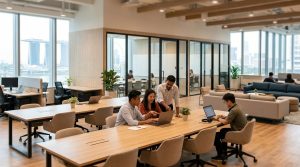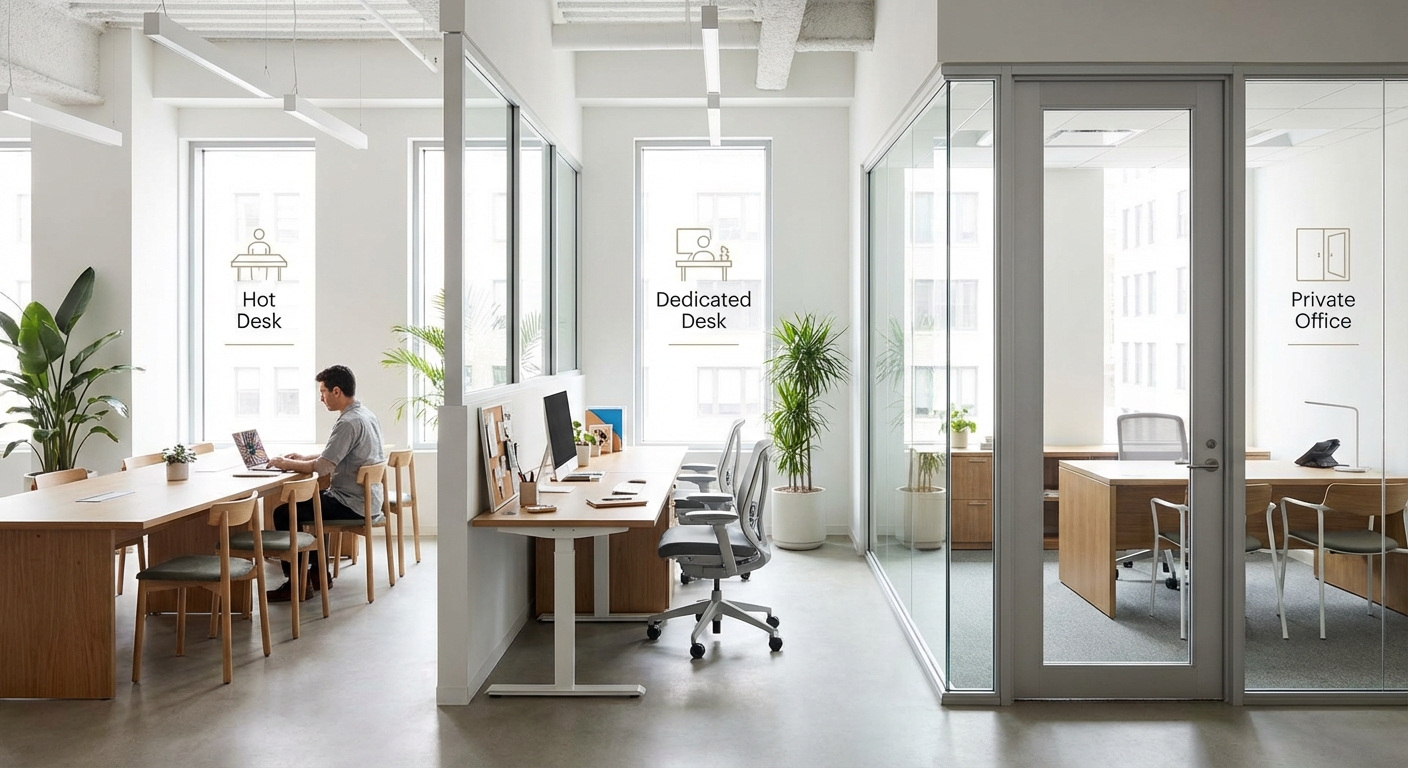
Choosing the right coworking membership can feel overwhelming when you’re staring at three different options with wildly different price tags. You need a workspace that matches how you actually work, not just what sounds good on paper. The difference between a hot desk, dedicated desk, and private office goes far beyond square footage and monthly fees.
Hot desks offer maximum flexibility for occasional users, dedicated desks provide consistent workspace for regular members, and private offices deliver security and professionalism for growing teams. Your choice depends on your work frequency, need for privacy, storage requirements, and budget. Most Singapore professionals start with hot desks and upgrade as their business grows and their workspace needs become more specific.
Understanding the three main coworking membership types
The coworking industry has standardized around three core membership options. Each serves different working styles and business stages.
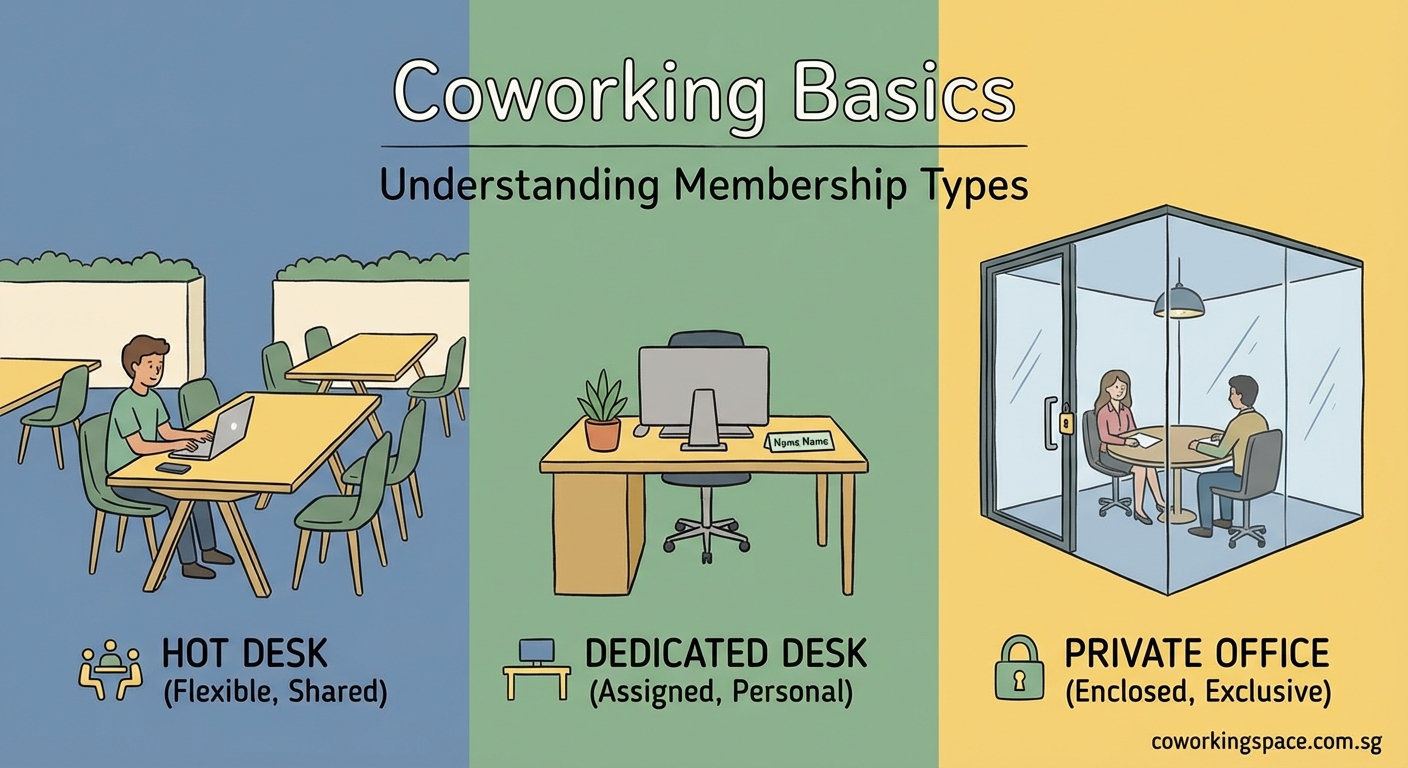
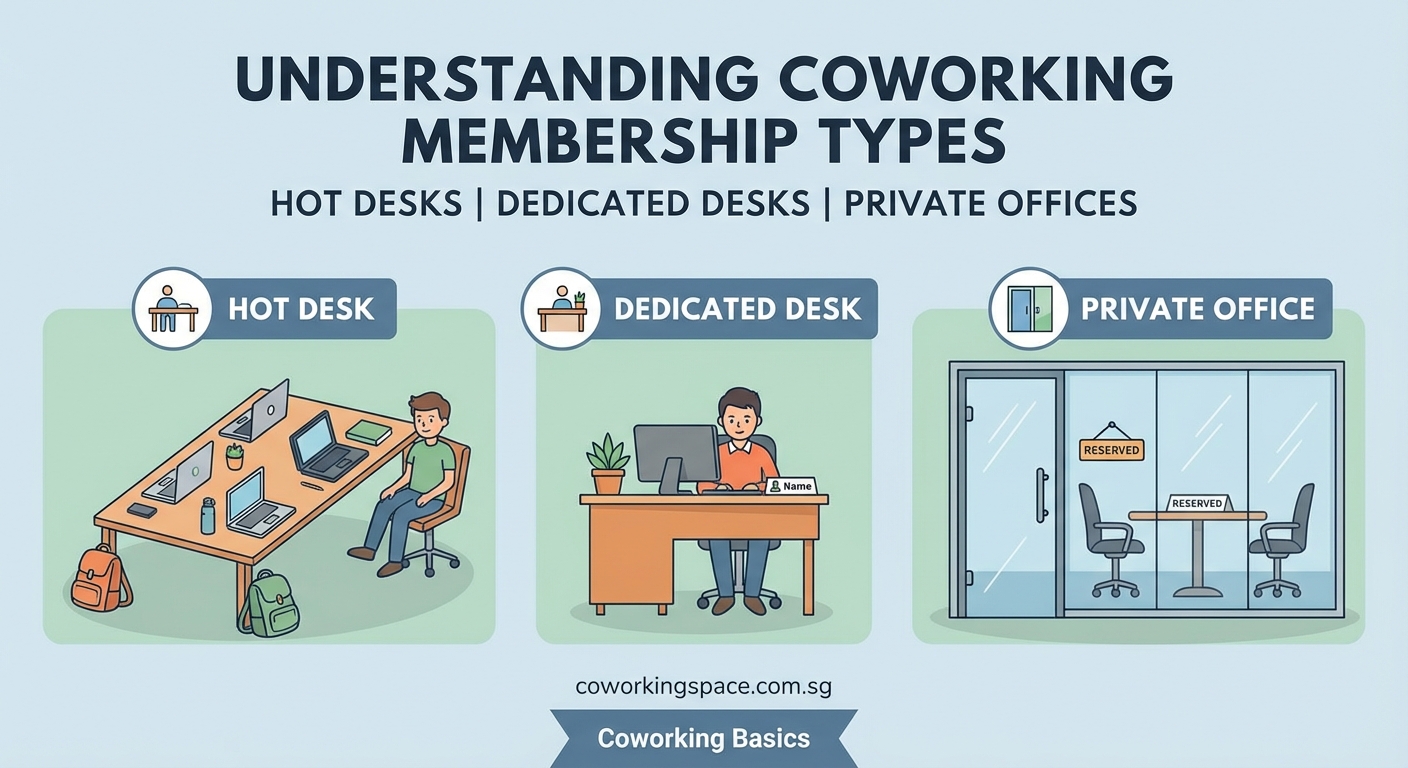
Hot desks give you access to shared seating on a first-come, first-served basis. You walk in, find an available spot, and work for the day. No assigned seat. No permanent setup. Just grab and go flexibility.
Dedicated desks reserve a specific workspace just for you. Same spot every time you visit. You can leave personal items, set up dual monitors, and customize your corner. The desk belongs to you during your membership period.
Private offices provide enclosed spaces with walls and doors. You get a lockable room that can accommodate one person or an entire team. Full privacy for calls, meetings, and focused work.
The differences between coworking spaces and traditional offices become especially clear when you compare these membership tiers.
Hot desk memberships explained
Hot desking works best for people who value flexibility over consistency. You pay for access to the space rather than ownership of a specific spot.
Most hot desk memberships include these features:
- Access during business hours (typically 9am to 6pm)
- Shared seating in open workspace areas
- Basic amenities like WiFi and coffee
- Access to common areas and lounges
- Meeting room credits (varies by provider)
The pricing structure usually offers daily passes, weekly packages, or monthly memberships. Daily rates in Singapore range from $25 to $50. Monthly unlimited access typically costs $200 to $400.
Hot desks suit freelancers who work from client sites several days per week. Remote workers who split time between home and coworking spaces benefit from the flexibility. Digital nomads passing through Singapore for a few weeks find hot desks perfect for their temporary needs.
The downsides matter too. You might arrive to find all desks occupied during peak hours. You cannot leave equipment overnight. Your workspace changes daily, which disrupts routines for some people.
Hot desking can improve work performance for certain personality types, but others struggle with the constant change.
Dedicated desk memberships in detail
A dedicated desk gives you the same workspace every single time. Think of it as renting a permanent spot in a shared office environment.
Standard dedicated desk features include:
- Reserved workspace with your name on it
- 24/7 access in most locations
- Lockable storage drawer or cabinet
- Ability to leave equipment and personal items
- Priority meeting room booking
- Dedicated desk lamp and ergonomic chair
Monthly costs in Singapore run between $450 and $800 depending on location and amenities. CBD locations command premium prices. Suburban spaces offer better value.
This membership type works perfectly for full-time remote workers who need consistency. Consultants who meet clients regularly appreciate having a professional base. Small business owners who work solo but need a business address find dedicated desks ideal.
You get the benefits of a permanent workspace without the overhead of a private office. Your setup stays intact. Your workflow remains consistent. Your productivity improves because you’re not hunting for seats.
The main limitation is that you’re still in an open environment. Phone calls require booking a phone booth. Confidential work needs extra planning. Background noise exists even in quiet zones.
Understanding how to choose between open workspace and quiet zones helps dedicated desk users maximize their experience.
Private office memberships unpacked
Private offices provide complete separation from the shared workspace. You get four walls, a door, and control over your environment.
Private office packages typically include:
- Fully furnished enclosed space
- Lockable door with key or access card
- Customizable layout and decor
- 24/7 building access
- Dedicated phone line option
- Company signage on the door
- Meeting room hours included
- Mail handling services
Pricing varies dramatically based on size. Single-person offices start around $800 per month. Four-person offices run $1,500 to $2,500. Larger team spaces can exceed $5,000 monthly.
Growing startups that need team collaboration benefit most from private offices. Companies handling sensitive client information require the privacy. Businesses that host frequent client meetings present better in private spaces.
The advantages extend beyond privacy. You control the noise level. You can take calls anytime. You can leave confidential documents on your desk. Your team can brainstorm without disturbing others.
Cost represents the biggest barrier. You’re paying significantly more per person compared to hot or dedicated desks. Smaller companies might find the investment hard to justify until they reach a certain team size.
Seven types of private office suites exist in Singapore’s coworking landscape, each designed for different business needs.
Comparing costs across membership types
The financial difference between these options impacts your decision significantly. Here’s how the numbers break down in Singapore’s coworking market:
| Membership Type | Monthly Cost Range | Cost Per Day (22 workdays) | Best Value For |
|---|---|---|---|
| Hot Desk | $200 – $400 | $9 – $18 | Occasional users (2-3 days/week) |
| Dedicated Desk | $450 – $800 | $20 – $36 | Full-time remote workers |
| Private Office (1 person) | $800 – $1,200 | $36 – $55 | Business owners needing privacy |
| Private Office (4 person) | $1,500 – $2,500 | $17 – $28 per person | Small teams working together |
These numbers show that private offices become cost-effective on a per-person basis when you have a team. A four-person office at $2,000 monthly costs $500 per person. That’s comparable to a dedicated desk but with significantly more benefits.
Hot desks offer the best value if you only need workspace two or three days per week. Beyond that frequency, dedicated desks become more economical.
The calculation changes when you factor in what’s included. Some spaces bundle meeting room hours, printing credits, and event access into higher-tier memberships. Others charge separately for these services.
Breaking down the true value of coworking spaces requires looking beyond the base membership fee.
Making your decision based on work patterns
Your actual working habits should drive your membership choice more than any other factor.
Ask yourself these questions:
- How many days per week will you use the space?
- Do you need to store equipment or documents onsite?
- How often do you take phone calls or video meetings?
- Does your work involve confidential information?
- Will you meet clients at the coworking space?
- Do you work better with consistent routines or variety?
If you answered fewer than three days for question one, start with a hot desk. You’re not using the space enough to justify a dedicated option.
Storage needs point toward dedicated desks or private offices. Lugging a laptop and charger is manageable. Transporting monitors, keyboards, and project materials daily becomes exhausting.
Frequent calls and meetings favor private offices. Taking three video calls daily from a hot desk disrupts others and compromises your professionalism. Even dedicated desk users struggle with call privacy in open spaces.
Confidential work requires private offices. Period. You cannot risk sensitive client information, financial data, or proprietary business plans in shared environments.
Client meetings strongly suggest private offices. Meeting clients in a shared lounge works occasionally. Regular client visits demand the professionalism of a private space.
Routine-oriented people thrive with dedicated desks or private offices. If you need the same coffee mug in the same spot every morning, hot desking will frustrate you.
How to test different options before committing
Most coworking spaces let you trial memberships before signing long-term contracts. Use this opportunity strategically.
Start with a week of hot desk passes. Experience the flexibility and the limitations. Notice how you feel arriving without a guaranteed seat. Track how much time you spend finding suitable workspaces.
If hot desking feels right, try a monthly membership. One week doesn’t reveal patterns that emerge over four weeks. You need time to understand peak hours, desk availability, and community dynamics.
When hot desking feels limiting, upgrade to a dedicated desk for one month. Compare your productivity and stress levels. Notice whether the consistency improves your work quality.
For those considering private offices, some spaces offer short-term rentals. A three-month trial helps you understand whether the privacy justifies the cost.
The common mistakes new coworking members make often stem from choosing the wrong membership type initially.
The biggest mistake I see is people choosing based on price alone rather than how they actually work. A cheaper hot desk that stresses you out daily costs more than a dedicated desk that makes you productive and happy.
Storage and personalization considerations
What you can keep at your workspace dramatically affects daily convenience.
Hot desk members typically get:
– Day lockers for personal items
– No overnight storage
– No desk personalization
– Must pack up completely each day
Dedicated desk members receive:
– Lockable drawer or small cabinet
– Ability to leave monitors and equipment
– Personal items can stay on desk
– Limited decoration options
Private office members enjoy:
– Multiple storage cabinets
– Equipment can remain set up
– Full decoration control
– Secure document storage
– Team equipment storage
If you use specialized equipment, storage becomes critical. Photographers need space for camera gear. Designers require dual monitor setups. Consultants accumulate client files and reference materials.
The daily pack-and-unpack routine of hot desking adds 15-20 minutes to each workday. That’s nearly two hours weekly. Over a year, you lose almost 100 hours to setup and teardown.
Dedicated desks eliminate this time tax. You arrive, sit down, and start working immediately. Your tools are exactly where you left them.
Access hours and availability differences
When you can use your workspace matters as much as what type you choose.
Hot desk memberships usually restrict access to business hours. You can work 9am to 6pm Monday through Friday. Some spaces extend to 8pm. Weekend access varies widely.
This limitation affects freelancers juggling multiple clients across time zones. It restricts parents who work split schedules around childcare. It frustrates night owls who do their best work after 10pm.
Dedicated desks typically include 24/7 access. You can work at 3am if inspiration strikes. You can catch up on weekends without requesting special permission. You control your schedule completely.
Private offices always include round-the-clock access. Your team can work whatever hours suit your business model.
Building access differs from space access. Some coworking spaces operate in buildings with security restrictions. The building might close at 10pm even though your membership includes 24/7 access.
Verify both building hours and space access hours before committing. The distinction matters for anyone working non-traditional schedules.
Meeting room access and professional amenities
All three membership types include some meeting room access, but the details vary significantly.
Hot desk packages usually include:
– 2-4 hours monthly meeting room time
– Booking available 48 hours in advance
– Additional hours at member rates
– Access to phone booths for calls
Dedicated desk packages often provide:
– 5-10 hours monthly meeting room time
– Priority booking over hot desk members
– Discounted additional hours
– Reserved phone booth access
Private office packages typically feature:
– 20+ hours monthly meeting room time
– First priority on all bookings
– Lowest per-hour rates for extra time
– Client reception services
The difference matters when you host client meetings regularly. Booking meeting rooms as a hot desk member during peak times can be challenging. Dedicated desk members get better access. Private office members rarely struggle with availability.
Meeting room booking systems vary by provider, but tier-based priority remains standard across Singapore.
Team growth and scalability factors
Your membership choice should account for where your business is heading, not just where it stands today.
Hot desks work for solo operations with no growth plans. They suit freelancers who want to stay independent. They fit consultants who prefer working alone.
Dedicated desks accommodate solo workers who might hire an assistant eventually. You can often add a second dedicated desk nearby when you hire someone. The transition is straightforward.
Private offices scale best for growing teams. You start with a two-person office. When you hire your third team member, you upgrade to a four-person space. Many providers let you move between offices as your team expands.
Planning for growth saves money. Switching membership types mid-contract often incurs fees. Some spaces require 30-60 days notice. You might lose your preferred location when you upgrade.
Consider your six-month and twelve-month projections. If you plan to hire within six months, start with a membership type that accommodates that growth.
Location and commute implications
Where you work affects which membership type makes sense.
Hot desks offer the most location flexibility. Many coworking chains let hot desk members use any location in their network. You can work near your home Monday, near a client site Tuesday, and in the CBD Wednesday.
This flexibility benefits people who move around Singapore regularly. It helps those who want to avoid peak-hour commutes. It assists anyone who likes changing scenery.
Dedicated desks tie you to one location. Your desk exists in a specific space. You cannot switch between branches. Choose your location carefully because you’re committing for your entire membership period.
Private offices obviously lock you into one location. Your team needs to commute to the same place daily. The location decision becomes even more critical.
When choosing your first coworking space in Singapore, consider whether location flexibility or consistency serves you better.
Common upgrade paths and transitions
Most coworking members don’t stick with their initial membership type forever. Understanding typical progression helps you plan.
The standard path looks like this:
- Start with hot desk to test coworking
- Upgrade to dedicated desk when you commit to regular use
- Move to private office when you hire team members
- Expand to larger private offices as team grows
Some people reverse this path. Business owners downsize from private offices to dedicated desks when team members go remote. Freelancers drop from dedicated to hot desks when project volume decreases.
Seasonal workers might alternate between membership types. Tax accountants need dedicated desks January through April, then switch to hot desks for summer months.
The flexibility to change membership types without penalty varies by provider. Some spaces encourage upgrades with prorated pricing. Others treat each change as a new contract with setup fees.
Ask about transition policies before signing your initial agreement. Knowing you can adjust your membership as needs change reduces commitment anxiety.
Real member experiences across membership types
Talking to current members reveals insights that marketing materials miss.
Hot desk members appreciate the financial flexibility. They love paying only for what they use. They enjoy meeting different people daily. They value the ability to stop membership without guilt during slow business periods.
Hot desk frustrations center on inconsistency. Finding good desks during peak hours stresses people out. The daily setup routine wears thin after a few months. Lack of storage forces minimalist working styles.
Dedicated desk members rave about the routine and consistency. They love having their workspace ready every morning. They appreciate the community that develops when you sit near the same people daily. They value the professional appearance of a permanent workspace.
Dedicated desk complaints focus on cost versus benefit. Some feel they’re paying too much for essentially a desk in an open room. Others wish for more privacy during calls. A few struggle with noisy neighbors they cannot escape.
Private office members emphasize the professionalism and control. They love the privacy for sensitive conversations. They appreciate the ability to customize their space. They value the team collaboration that happens naturally in shared offices.
Private office drawbacks relate to cost and isolation. Small teams sometimes feel disconnected from the larger coworking community. The higher price point creates pressure to maximize usage. Some miss the energy of open workspace environments.
Matching personality types to membership options
Your working personality influences which membership type will make you happiest.
Extroverts often thrive with hot desks. The daily variation energizes them. Meeting new people feels exciting rather than draining. The buzz of activity boosts their mood.
Introverts typically prefer dedicated desks or private offices. They need consistent environments to feel comfortable. They value control over their immediate surroundings. The psychology behind coworking spaces affects introverts and extroverts differently.
Routine-oriented people need dedicated desks minimum. They struggle with the uncertainty of hot desking. They work best when their environment remains predictable. Their productivity suffers when daily logistics become complicated.
Spontaneous personalities enjoy hot desk flexibility. They like choosing different spots based on mood. They appreciate the freedom to skip days without guilt. They rarely feel stressed by uncertainty.
Detail-oriented workers often need private offices. They require control over their environment to maintain focus. They work with materials that need secure storage. They prefer eliminating variables that could disrupt concentration.
Big-picture thinkers can adapt to any membership type. They focus on their work rather than their surroundings. They care more about outcomes than environment. They rarely feel bothered by workspace limitations.
Financial planning for membership costs
Budgeting for coworking requires more than just the monthly membership fee.
Additional costs to consider:
- Meeting room hours beyond your package
- Printing and scanning charges
- Guest passes for clients or collaborators
- Parking fees if applicable
- Food and beverage purchases
- Event tickets and workshops
- Premium amenities like lockers
Hot desk members typically spend an extra $50-100 monthly on these items. Dedicated desk members average $100-150 in additional costs. Private office members can exceed $200 monthly in extras.
The money-saving tips for freelancers include strategies for controlling these supplementary expenses.
Tax implications matter too. Coworking memberships qualify as business expenses for self-employed individuals. Keep receipts and documentation. Consult with an accountant about deduction eligibility.
Some companies reimburse employees for coworking memberships as part of remote work policies. Check your employment agreement. Submit expense reports promptly.
Making the final choice for your situation
After considering all factors, your decision should feel clear.
Choose a hot desk if you:
– Work remotely fewer than three days weekly
– Value flexibility over consistency
– Have minimal storage needs
– Work primarily from a laptop
– Want the lowest financial commitment
Select a dedicated desk if you:
– Work full-time from coworking spaces
– Need consistent routines to stay productive
– Have equipment you want to leave onsite
– Value community connections
– Can afford mid-tier pricing
Opt for a private office if you:
– Lead a team that works together
– Handle confidential information regularly
– Host client meetings frequently
– Need complete control over your environment
– Have budget for premium workspace
Remember that your choice isn’t permanent. Start with the option that makes sense today. Adjust as your business evolves and your needs change.
The worth of coworking spaces compared to their cost becomes clear only after you experience them firsthand.
Finding the workspace that fits your workflow
The right membership type aligns with how you actually work, not how you think you should work. Pay attention to your natural patterns. Notice when you feel most productive. Track what environments help you focus.
Visit several spaces before deciding. Try different membership types through day passes and trial periods. Talk to current members about their experiences. Trust your instincts about what feels right.
Your workspace should support your success, not create additional stress. The perfect membership type makes work easier, not harder. Choose the option that removes obstacles rather than adding them. Your productivity and happiness will confirm whether you made the right call.