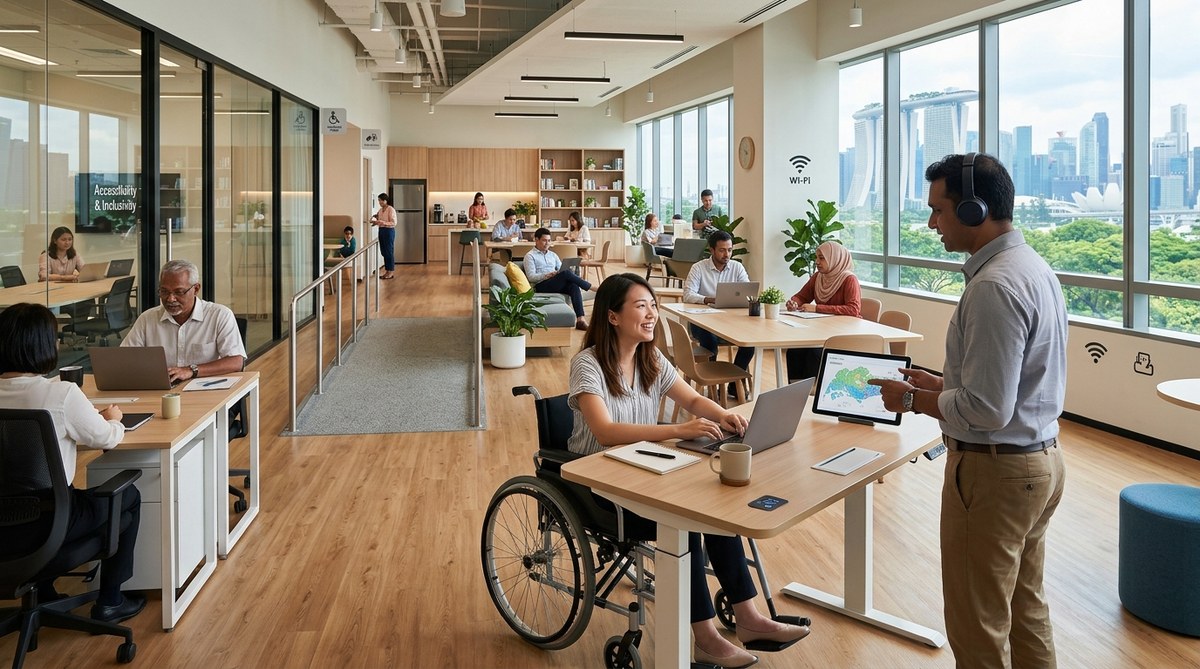
Creating an inclusive workspace is more than just a trend. It’s a necessity in today’s diverse work environment. In Singapore, coworking spaces are stepping up to meet the needs of all users. Whether you have mobility challenges, sensory sensitivities, or other accessibility requirements, finding a space that welcomes everyone makes a real difference. This guide will walk you through what to look for, how to evaluate options, and why accessibility is essential for a fair and productive work environment.
Choosing an accessible coworking space in Singapore ensures all team members can work comfortably and productively. It promotes inclusivity, supports diverse needs, and helps build a fair work culture. Prioritizing features like barrier-free design, assistive technologies, and supportive amenities makes a significant difference for everyone. When selecting a space, consider practical steps such as evaluating accessibility features, visiting in person, and consulting current members. Accessibility benefits all, fostering a more equitable work environment.
Why Accessibility Matters in Coworking Spaces
In a city as vibrant and diverse as Singapore, coworking spaces should reflect the community they serve. Accessibility is fundamental to creating an environment where everyone feels welcome. When a coworking space is designed with inclusivity in mind, it allows people with different abilities to work independently and confidently. This not only broadens the talent pool but also fosters a culture of respect and understanding.
Furthermore, accessibility features can boost productivity. For instance, adjustable desks or visual aids can help team members focus better, while accessible restrooms and entrances remove physical barriers. Ultimately, inclusive spaces benefit everyone—whether they have a disability or not.
Features to Look for in an Inclusive Coworking Space
When searching for coworking options that prioritize accessibility in Singapore, keep an eye out for these key features:
- Barrier-free entrances and hallways: Wide doorways and ramps make movement easier for wheelchair users.
- Accessible restrooms: Facilities with grab bars, sufficient space, and appropriate height fixtures.
- Elevators with tactile and auditory signals: Important for those with visual or hearing impairments.
- Assistive technologies: Screen readers, hearing loops, and adjustable lighting.
- Ergonomic furniture: Chairs and desks that accommodate various body types and needs.
- Clear signage: Well-lit, high-contrast signs with tactile or Braille options.
- Quiet zones and sensory-friendly spaces: For members sensitive to noise or requiring a calmer environment.
- On-site support staff: Trained personnel who can assist with accessibility needs.
How to Assess Coworking Spaces for Accessibility
Evaluating coworking spaces in Singapore involves a mix of research and personal experience. Here are practical steps to ensure the space aligns with your needs:
- Research online: Check the coworking space’s website for mentions of accessibility features. Look for dedicated pages or FAQs about accommodations.
- Visit in person: Schedule a tour to observe the physical environment. Take note of ramp placements, door widths, restroom facilities, and signage.
- Ask questions: Speak with staff about specific needs. Inquire about assistive technologies, training, and support services available.
- Seek feedback: Connect with current members who have accessibility needs. Their insights can reveal how well the space functions in real life.
- Test the environment: If possible, try navigating the space with a mobility aid or simulate your needs to see how accessible it truly is.
Practical Process for Finding an Accessible Coworking Space in Singapore
Here’s a simple, step-by-step guide to help you get started:
- List your specific needs: Identify what features are essential for your work, such as accessible entrances, visual aids, or quiet zones.
- Research options: Use online directories like coworkingspace.com.sg and filter for spaces that emphasize accessibility.
- Visit shortlisted spaces: Schedule visits to see how features are implemented firsthand.
- Consult current members or reviews: Gather insights about daily accessibility and support.
- Make an informed decision: Choose a space that not only meets your needs but also fosters a welcoming environment.
Common Mistakes When Choosing a Coworking Space for Accessibility
| Mistake | Why It Matters | How to Avoid |
|---|---|---|
| Not verifying physical features in person | Photos can be misleading or outdated | Always visit or inspect the space personally before signing up |
| Overlooking support services | Assistance can be crucial during emergencies | Ask about on-site staff and support options |
| Ignoring community feedback | Member experiences reveal real-world accessibility | Connect with current members online or in person |
| Focusing solely on location | Location is important but accessibility features matter more | Balance location convenience with accessible design |
“A truly accessible coworking space considers the whole environment. It’s about more than ramps and wide doors; it’s about creating a culture where everyone feels supported and valued.” — Accessibility expert Jane Lim
How Coworking Spaces in Singapore Are Advancing Accessibility
In recent years, many Singaporean coworking providers have committed to making their spaces more inclusive. They invest in ergonomic furniture, install tactile signage, and ensure pathways are obstacle-free. Some spaces even offer specialized services like sign language interpretation or assistive tech support.
For example, spaces like JustCo have introduced accessible features across their locations, making them a popular choice for diverse teams. Others, like The Hive, have dedicated sensory-friendly zones for members with sensitivities.
The Role of Technology in Creating Inclusive Work Environments
Smart tech plays a significant part in accessibility. Biometric access systems can replace traditional keys, making entrances easier for those with mobility challenges. Voice-activated controls and adjustable lighting support members with sensory needs.
Technologies like screen readers and closed captioning on presentation screens also boost inclusivity. When coworking spaces embrace these innovations, they foster a truly equitable environment.
Why Building an Inclusive Culture Matters
Physical features are vital, but cultivating an inclusive culture is equally important. Spaces that encourage peer support, offer diversity training, and actively listen to member feedback create a thriving community. This approach ensures that accessibility is woven into the fabric of the workspace, not just a checklist of features.
Final Tips for a Smooth Experience
- Communicate your needs clearly: Don’t hesitate to share your requirements with staff.
- Bring a support buddy or assistant: Especially for the first visit.
- Participate in community events: Many spaces host inclusive activities that foster connection.
- Stay informed: Follow your chosen coworking space’s updates on accessibility improvements.
Making Your Workspace Work for Everyone
Creating a workspace that accommodates everyone is a continuous journey. It requires planning, feedback, and a willingness to adapt. When you choose a coworking space in Singapore that prioritizes accessibility, you contribute to a more equitable work environment. This empowers diverse talents and fosters innovation.
Remember, the goal is to find a space where your team members can thrive without barriers. Practical steps like visiting in person, asking questions, and prioritizing community feedback make this possible. Accessibility isn’t just good practice; it’s good business.
Final Thoughts on Accessibility in coworking spaces
Designing spaces that support all members begins with understanding needs. When Singapore coworking providers focus on inclusive features and cultivate welcoming cultures, they set the foundation for success. As a member or employer, your role is to advocate for these features and ensure your workspace reflects your values of fairness and respect.
Applying these principles guarantees a work environment where everyone feels comfortable and empowered. Take the time to evaluate your options carefully, and don’t be afraid to ask for what you need. Building an inclusive workspace benefits all and helps foster a thriving, innovative community.