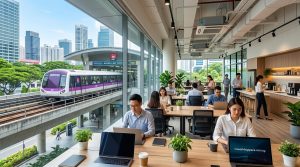
Looking for a coworking space in Singapore and wondering if Distrii is the right fit? You’re not alone. With so many options flooding the market, choosing where to set up your workspace can feel overwhelming. Distrii has carved out a notable presence in Singapore’s flexible workspace scene, but is it actually worth your money? Let’s break down what Distrii offers, how much it costs, and how it stacks up against the competition.
Distrii offers premium coworking spaces across Singapore with strong design aesthetics and flexible membership options. Hot desks start around $350 monthly, while dedicated desks range from $550 to $750. Alternatives like JustCo, WeWork, and The Hive provide different value propositions. Your best choice depends on location priorities, budget constraints, and community preferences. This guide compares pricing, amenities, and culture across Singapore’s top coworking operators.
What is Distrii and where did it come from?
Distrii launched in Shanghai in 2015 and expanded to Singapore in 2017. The brand positions itself as a design-forward workspace provider targeting creative professionals, startups, and growing companies.
Unlike some operators that focus purely on desk space, Distrii emphasizes aesthetics and community building. Their spaces feature high ceilings, natural light, and curated artwork. The company operates multiple locations across Singapore’s central business district and emerging commercial hubs.
The name “Distrii” combines “district” and “tree,” reflecting their philosophy of creating neighborhood workspaces that grow organically. They’ve attracted members from tech, media, consulting, and professional services sectors.
Distrii locations in Singapore you should know about
Distrii operates several strategic locations across Singapore. Each space has its own character and serves different professional communities.
Their Beach Road location sits in the Bugis area, close to the arts district. This space attracts creative agencies and media companies. The design features exposed brick, vintage furniture, and plenty of collaborative zones.
The Cecil Street location serves the financial district crowd. You’ll find more corporate professionals here. The space offers premium meeting rooms and phone booths for private calls.
Their newest location at Paya Lebar Quarter targets the growing east side market. This modern development appeals to tech companies and startups wanting newer facilities outside the traditional CBD.
Each location offers different membership tiers and pricing structures. Availability varies by location, so check directly with Distrii for current options.
Breaking down Distrii’s pricing and membership options
Understanding what you’ll actually pay at Distrii requires looking beyond the headline rates. Here’s what the pricing structure looks like in 2026.
Hot desk memberships start around $350 per month. This gives you access during business hours to any available desk across Distrii’s network. You can’t reserve a specific spot, and availability fluctuates based on occupancy.
Dedicated desks range from $550 to $750 monthly depending on location. You get your own assigned desk that stays yours. This works well if you need to leave personal items or prefer consistency.
Private offices start around $1,200 for a single person office and scale up based on team size. Larger teams of 5 to 10 people might pay $4,000 to $6,000 monthly.
All memberships include basic amenities like WiFi, printing credits, coffee, and meeting room hours. Premium add-ons like extra meeting room time, locker rentals, and mail handling cost extra.
Day passes run about $45 to $60 depending on location. This option suits people testing the space or needing occasional workspace outside their home.
“The biggest mistake people make is choosing a coworking space based purely on price. The real value comes from location convenience, community fit, and amenities that actually match your work style. A slightly higher monthly fee that saves you an hour of commute time daily is worth every dollar.”
What makes Distrii different from other coworking spaces?
Distrii’s design philosophy sets it apart from more utilitarian competitors. They invest heavily in interior aesthetics, creating Instagram-worthy spaces that appeal to creative professionals.
Their community programming focuses on creative industries. Regular events include design workshops, photography exhibitions, and creative networking sessions. This attracts a specific demographic rather than generic business professionals.
The spaces feel more boutique than corporate. You won’t find the standardized global brand aesthetic common at larger chains. Each location has unique character and local flavor.
Distrii offers more flexibility in contract terms compared to traditional office leases. Month-to-month options exist, though longer commitments get better rates. This helps startups scale up or down without major penalties.
Their member services team takes a hands-on approach. They know members by name and actively facilitate introductions. This personal touch matters if you value community over pure workspace functionality.
Comparing Distrii to WeWork in Singapore
WeWork remains the 800-pound gorilla in Singapore’s coworking market. How does Distrii measure up?
WeWork operates more locations across Singapore, giving members more flexibility to work from different areas. Their network includes premium CBD towers and suburban locations. Distrii has fewer locations but focuses on design quality over quantity.
Pricing at WeWork runs slightly higher for comparable offerings. Hot desks start around $400 monthly, with dedicated desks from $650 to $850. Private offices follow similar premium pricing. WeWork’s brand recognition and global network justify the premium for some users.
WeWork’s spaces feel more standardized. You know exactly what to expect walking into any location. Distrii offers more variety in design and atmosphere between locations.
The community vibe differs significantly. WeWork attracts a broader professional mix, from finance to tech to consulting. Distrii skews more creative and startup-focused. Your industry and networking goals should guide this choice.
WeWork’s app and technology integration exceeds Distrii’s offerings. Room booking, access control, and member networking all happen through WeWork’s polished platform. Distrii’s technology works but feels less sophisticated.
For someone prioritizing understanding coworking membership types, both offer similar tier structures with different execution and pricing.
How JustCo stacks up against Distrii
JustCo started in Singapore and has grown into one of Asia’s largest coworking operators. Their local knowledge gives them certain advantages over international brands.
JustCo operates more Singapore locations than Distrii, with over 20 spaces across the island. This extensive network provides more location flexibility for members who move between neighborhoods.
Pricing at JustCo sits in the middle range. Hot desks start around $380 monthly, with dedicated desks from $600 to $800. Private offices range from $1,500 to $7,000 depending on size and location. The pricing closely matches Distrii’s structure.
JustCo’s design aesthetic leans modern and professional rather than boutique creative. Their spaces work well for corporate teams and professional service firms. Distrii appeals more to creative agencies and media companies.
Community programming at JustCo focuses on professional development and business networking. Think panel discussions, industry meetups, and skills workshops. Distrii emphasizes creative events and cultural programming.
JustCo’s technology platform rivals WeWork’s sophistication. Their app handles room bookings, access control, and member networking smoothly. Distrii’s systems work but lack the polish of larger competitors.
Both operators offer strong customer service, but JustCo’s local roots mean they understand Singapore’s business culture deeply. This matters for networking and community building.
The Great Room brings luxury to coworking
The Great Room positions itself at the premium end of Singapore’s coworking market. Their spaces feel more like five-star hotel lounges than traditional offices.
Locations focus on prime real estate. You’ll find The Great Room in Ngee Ann City on Orchard Road and other prestigious addresses. Distrii operates in good locations but not quite at this luxury tier.
Pricing reflects the premium positioning. Hot desks start around $500 monthly, with dedicated desks from $800 to $1,000. Private offices begin at $2,000 for single occupancy. This puts The Great Room 30 to 40 percent above Distrii’s rates.
The design aesthetic emphasizes luxury materials, high-end furniture, and sophisticated ambiance. Think marble counters, leather seating, and curated art collections. Distrii looks good but can’t match this level of luxury.
The Great Room attracts established professionals, senior executives, and mature companies. The member base skews older and more corporate than Distrii’s creative startup crowd. Networking opportunities reflect this demographic difference.
Amenities include premium coffee from specialty roasters, craft beer on tap, and high-end meeting room equipment. The attention to detail exceeds what you’ll find at Distrii or most competitors.
For professionals who value prestige and are willing to pay for it, The Great Room delivers. Budget-conscious freelancers and early-stage startups will find better value elsewhere.
The Working Capitol offers heritage charm
The Working Capitol operates from beautifully restored heritage buildings in Keong Saik and Tanjong Pagar. Their unique positioning appeals to a specific audience.
The Keong Saik location occupies a row of renovated shophouses. High ceilings, original architectural details, and thoughtful restoration create character you won’t find in modern towers. Distrii’s spaces look good but lack this historical charm.
Pricing sits slightly below Distrii’s rates. Hot desks start around $320 monthly, with dedicated desks from $500 to $700. Private offices range from $1,200 to $5,000. The lower rates reflect the heritage building limitations like older infrastructure.
The community skews creative and entrepreneurial. You’ll meet designers, photographers, content creators, and lifestyle brands. This overlaps significantly with Distrii’s target demographic, creating direct competition for the same members.
Amenities match what Distrii offers with some unique touches. The Keong Saik location includes a ground-floor cafe and bar that doubles as evening networking space. This integration of work and social space works well for community building.
The heritage setting comes with tradeoffs. Older buildings mean less consistent air conditioning, occasional maintenance issues, and tighter spaces. Modern towers like some Distrii locations offer more reliable infrastructure.
For someone drawn to character and history over modern efficiency, The Working Capitol delivers unique value. Those prioritizing consistent amenities and modern facilities might prefer Distrii or newer competitors.
Spaces by IWG brings global consistency
Spaces operates as part of the IWG network, which also includes Regus. Their approach emphasizes professional workspace with creative touches.
Spaces operates multiple Singapore locations in premium office towers. Their network size exceeds Distrii’s footprint, providing more location options for members who value flexibility.
Pricing runs competitive with Distrii. Hot desks start around $350 monthly, with dedicated desks from $550 to $750. Private offices range from $1,300 to $6,000. The similar pricing makes the decision about other factors like location and community.
The design philosophy blends professional workspace with creative elements. Spaces incorporates bold colors, modern furniture, and artistic touches. The result sits between Distrii’s boutique aesthetic and Regus’s corporate functionality.
Community programming focuses on business networking and professional development. Events include industry meetups, skills workshops, and member socials. Distrii’s creative programming attracts a different crowd.
The global IWG network provides reciprocal access to thousands of locations worldwide. This matters for frequent travelers who want workspace consistency across cities. Distrii’s smaller network limits this benefit.
Technology integration works smoothly with professional booking systems and access control. The experience feels polished and reliable, matching larger operators like WeWork.
Regus offers traditional professionalism
Regus pioneered the serviced office concept decades before coworking became trendy. Their approach prioritizes professional workspace over community and design.
Regus operates the most Singapore locations of any provider, with centers across every business district and suburban area. This extensive network beats all competitors for geographic coverage.
Pricing varies widely by location and product type. Hot desks start around $300 monthly in suburban locations, rising to $450 in prime CBD towers. Dedicated desks range from $500 to $800. Private offices start at $1,000 and scale up significantly.
The spaces feel corporate and functional rather than designed for aesthetics. You get professional workspace without the Instagram-worthy design elements Distrii emphasizes. This appeals to traditional businesses and corporate professionals.
Community programming is minimal compared to Distrii or other coworking brands. Regus focuses on providing workspace, not building creative communities. Networking happens organically but isn’t actively facilitated.
The member base skews corporate and professional. You’ll find accountants, lawyers, consultants, and established businesses. The creative startup crowd that Distrii attracts rarely chooses Regus.
For someone prioritizing professional image, global network access, and reliable workspace over community and design, Regus delivers value. Creative professionals and startups seeking inspiration and networking should look elsewhere.
The Hive brings affordability and accessibility
The Hive positions itself as an accessible coworking option with good value for budget-conscious professionals. Their pricing undercuts most premium competitors.
The Hive operates several Singapore locations in both CBD and suburban areas. Their network size sits between Distrii’s boutique approach and larger operators’ extensive coverage.
Pricing represents real value in Singapore’s expensive coworking market. Hot desks start around $250 monthly, with dedicated desks from $450 to $600. Private offices begin at $1,000 for single occupancy. These rates run 20 to 30 percent below Distrii’s pricing.
The spaces prioritize functionality over luxury design. You get clean, modern workspace without the premium finishes and artistic touches Distrii emphasizes. This keeps costs down while maintaining professional standards.
Community programming focuses on practical business topics and networking. Events include workshops on digital marketing, funding strategies, and business development. The approach feels more educational than Distrii’s creative cultural programming.
The member base includes freelancers, small businesses, and early-stage startups watching their budgets. You’ll find fewer established companies compared to premium operators like The Great Room or Distrii.
Amenities cover the basics well. WiFi works reliably, coffee flows freely, and meeting rooms serve their purpose. You won’t find craft beer on tap or specialty coffee roasters, but the essentials all function properly.
For budget-conscious professionals who need reliable workspace without premium pricing, The Hive delivers solid value. Those seeking design inspiration, luxury amenities, or prestigious addresses should consider higher-priced alternatives.
Choosing the right coworking space for your needs
Selecting between Distrii and its alternatives requires honest assessment of your priorities and constraints. Here’s a practical framework for making this decision.
Step 1: Define your budget reality
Start by calculating what you can actually afford monthly. Remember to factor in commute costs, coffee shop expenses you’ll save, and productivity gains from professional workspace.
Hot desk budgets under $300 monthly point toward The Hive or suburban Regus locations. Budgets of $300 to $500 open up Distrii, Spaces, and The Working Capitol. Above $500 monthly, premium options like The Great Room become viable.
Don’t stretch your budget for workspace that drains resources from business development. A cheaper space that meets your needs beats a prestigious address that stresses your finances.
Step 2: Map your location priorities
List the three areas where you spend most of your time outside work. Choosing coworking near your home, clients, or frequent meetings saves commute time and increases workspace utilization.
Singapore’s excellent public transport makes most locations accessible, but daily commutes add up. A space 15 minutes from home gets used more than one requiring 45 minutes each way.
Consider whether you need one consistent location or value network access across multiple areas. Single-location workers can optimize for that specific space. People who move around benefit from operators with multiple locations.
Step 3: Assess your community expectations
Be honest about how much you’ll actually engage with coworking community features. Introverts who work with headphones all day get less value from active communities than extroverts who thrive on interaction.
Creative professionals benefit from Distrii’s design-focused community and cultural programming. Corporate professionals might prefer JustCo’s business networking or Regus’s quiet professionalism.
Research what events and programming each space actually runs. Some operators promise community but deliver minimal programming. Others host multiple events weekly that create real networking value.
Step 4: Evaluate workspace type needs
Different work styles require different workspace configurations. Consider what you actually need versus what sounds nice in theory.
Freelancers working solo often thrive with hot desks that provide flexibility and lower costs. Teams need dedicated desks or private offices for consistency and collaboration space.
People taking frequent video calls need reliable phone booths or private spaces. Those doing heads-down work benefit from quiet zones. Sales professionals might prioritize meeting room access over desk quality.
For detailed guidance on these options, check out this resource on choosing your first coworking space in Singapore.
Step 5: Test before committing
Most operators offer day passes or trial periods. Use these to experience the space during your typical work hours before signing monthly contracts.
Visit at different times to assess noise levels, crowding, and atmosphere. A space that feels perfect at 10am Tuesday might be chaotic at 2pm Thursday.
Talk to existing members if possible. They’ll share honest insights about what works and what doesn’t that sales teams won’t mention.
Common mistakes when choosing between Distrii and alternatives
Avoid these pitfalls that trap many first-time coworking members in Singapore.
Choosing based purely on Instagram aesthetics. Beautiful spaces photograph well but might not function well for your actual work needs. Prioritize functionality over appearances.
Ignoring contract flexibility. Some operators lock you into long commitments with painful exit penalties. Others offer month-to-month flexibility. Read the fine print before signing.
Underestimating commute impact. That gorgeous space across town loses appeal after a month of long commutes. Location convenience matters more than you think initially.
Overlooking hidden costs. Base membership prices don’t tell the full story. Factor in printing costs, extra meeting room fees, locker rentals, and other add-ons that inflate monthly expenses.
Joining for networking without participating. Community value requires active engagement. Passive members who never attend events waste the premium they pay for community features.
Choosing the cheapest option without considering productivity. A $100 monthly savings means nothing if the space is so distracting or uncomfortable that your productivity drops 20 percent.
For more guidance on avoiding common pitfalls, this article on common coworking mistakes provides additional insights.
Comparing key features across Singapore coworking operators
This table summarizes how Distrii stacks up against major alternatives across critical decision factors.
| Operator | Hot Desk Price | Dedicated Desk Price | Design Quality | Community Focus | Location Count | Best For |
|---|---|---|---|---|---|---|
| Distrii | $350+ | $550-750 | Premium boutique | Creative networking | 3-4 locations | Creative professionals, design-focused startups |
| WeWork | $400+ | $650-850 | Standardized modern | Broad professional | 10+ locations | Global networkers, corporate teams |
| JustCo | $380+ | $600-800 | Modern professional | Business development | 20+ locations | Local businesses, professional services |
| The Great Room | $500+ | $800-1000 | Luxury premium | Executive networking | 3-4 locations | Established professionals, premium clients |
| The Working Capitol | $320+ | $500-700 | Heritage charm | Creative community | 2 locations | Design lovers, heritage enthusiasts |
| Spaces | $350+ | $550-750 | Creative professional | Business networking | 5-8 locations | Professional creatives, growing companies |
| Regus | $300+ | $500-800 | Corporate functional | Minimal community | 30+ locations | Traditional businesses, corporate professionals |
| The Hive | $250+ | $450-600 | Functional modern | Practical networking | 5-8 locations | Budget-conscious freelancers, early startups |
What amenities actually matter in daily use
Marketing materials list dozens of amenities, but only some actually impact your daily experience. Here’s what matters most.
Reliable high-speed internet tops the list. Everything else becomes irrelevant if WiFi drops during video calls or slows during peak hours. Test internet speed during your trial visit.
Comfortable seating determines whether you can work full days without physical discomfort. Cheap chairs cause back pain that kills productivity. Premium operators invest in ergonomic seating that justifies higher prices.
Adequate meeting room availability matters if you take client calls or team meetings. Some spaces look great but have too few meeting rooms for member count, creating booking frustration.
Quality coffee and kitchen facilities seem minor but impact daily satisfaction. Bad coffee becomes annoying when you’re paying premium workspace rates. Well-stocked kitchens save money on outside food purchases.
Effective air conditioning and ventilation matter in Singapore’s climate. Stuffy spaces or inconsistent temperature control create discomfort that distracts from work.
Sufficient power outlets and USB ports at every desk prevent the daily scramble for charging space. This basic amenity gets overlooked until you’re fighting for outlets.
Professional printing and scanning access serves needs that haven’t disappeared despite digitalization. Reasonable printing credits and quality equipment matter for client-facing work.
Learn more about essential workspace features in this guide to must-have amenities.
Understanding what you’re really paying for at Distrii
Breaking down Distrii’s value proposition helps determine if the pricing makes sense for your situation.
You’re paying for design quality and aesthetics that inspire creative work. The curated spaces, artwork, and thoughtful details create an environment that feels different from generic office space.
The boutique approach means smaller member counts and more personalized service. You’re not just another desk number in a massive operation. Staff know members and facilitate meaningful connections.
Location quality in central areas provides professional addresses and convenient access. The prestige of certain locations matters for client meetings and business credibility.
Community programming focused on creative industries creates networking opportunities with like-minded professionals. The events and workshops add value beyond pure workspace.
Flexible contract terms allow scaling up or down as your business evolves. This flexibility has real financial value compared to traditional office leases.
The question becomes whether these benefits justify the premium over cheaper alternatives. For creative professionals who value design and community, the answer is often yes. For others prioritizing pure functionality and cost efficiency, cheaper options deliver better value.
Consider reading about whether coworking spaces are worth the cost for a deeper cost-benefit analysis.
Making the final decision between Distrii and alternatives
After reviewing options, pricing, and features, here’s how to make your final choice with confidence.
Create a shortlist of three spaces that meet your basic requirements for location, budget, and workspace type. Trying to compare every option creates decision paralysis.
Book day passes or trial periods at each shortlisted space. Experience them during your normal work hours doing actual work, not just touring during sales presentations.
Track specific metrics during trials. Note WiFi reliability, noise levels at different times, meeting room availability, and how comfortable you feel working there for extended periods.
Talk to current members at each space. Ask what they wish they knew before joining and what surprised them positively or negatively. Most members share honest feedback when asked directly.
Calculate total monthly costs including membership, commute expenses, and likely add-on fees. The cheapest base price often isn’t the lowest total cost after factoring everything in.
Trust your gut feeling about which space feels right. You’ll spend significant time there, so comfort and fit matter beyond rational analysis.
Make a decision and commit for at least three months. Workspace needs time to prove value. Constantly switching spaces prevents building community connections and establishing productive routines.
Finding your perfect workspace match in Singapore
Choosing between Distrii and Singapore’s many coworking alternatives doesn’t have one right answer. Your perfect space depends on your work style, budget, location needs, and community preferences.
Distrii delivers real value for creative professionals who appreciate design quality and want community focused on creative industries. The pricing sits in the mid-premium range, justified by aesthetics and personalized service. Alternative operators serve different needs equally well at various price points.
The best approach involves honest self-assessment of your priorities, testing shortlisted spaces in person, and committing once you find the right fit. Singapore’s competitive coworking market means quality options exist at every price point and for every professional style.
Start with day passes at your top three choices. Experience the spaces doing real work. Trust the data you gather and your instincts about where you’ll thrive. Your perfect workspace is out there waiting.