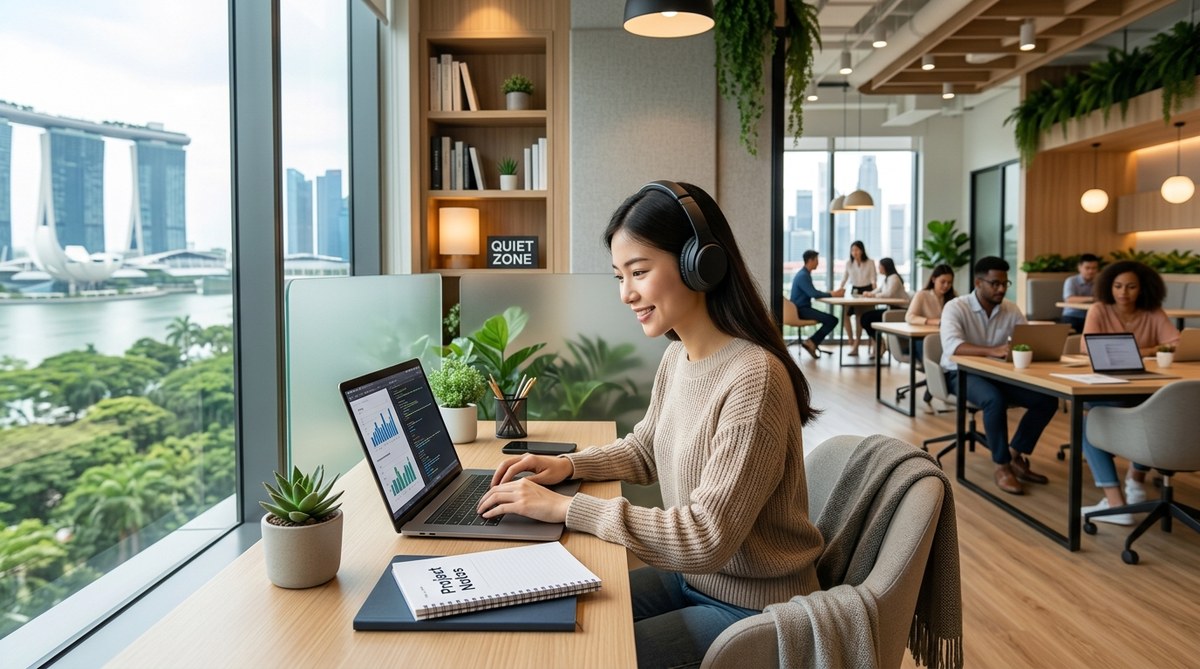
You’ve been working from home for months, maybe years. The solitude felt perfect at first. No small talk by the coffee machine. No unexpected interruptions. Just you, your work, and complete control over your environment.
But lately, the walls feel closer. The silence feels heavier. You’re wondering if there’s a middle ground between the isolation of home and the overwhelming energy of a traditional office.
Coworking spaces keep popping up in your research. But the photos show open layouts filled with people. The descriptions mention networking events and community activities. Everything seems designed for extroverts who recharge through social interaction.
Here’s what you need to understand: introverts absolutely can thrive in coworking spaces, but success requires choosing the right environment and setting clear boundaries from day one.
Introverts can thrive in coworking spaces by selecting environments with quiet zones, establishing clear social boundaries, and using membership types that match their energy levels. Success comes from treating coworking as a tool for structure and occasional connection, not constant networking. The right space respects your need for solitude while offering community when you want it.
Understanding What Drains and Energizes You
Introversion isn’t about being shy or antisocial. It’s about how you process stimulation and where you get your energy.
Introverts recharge through solitude. Social interaction, even positive exchanges, depletes your mental battery. This doesn’t make you weak or antisocial. It makes you human with a specific wiring pattern.
Coworking spaces present a unique challenge because they combine elements that help introverts (structure, separation from home, ambient presence of others) with elements that drain them (potential for interruptions, social expectations, sensory stimulation).
The key is recognizing your specific triggers:
- Does background noise help or hinder your focus?
- Do you prefer complete solitude or just control over when interactions happen?
- How many hours can you handle being around people before needing to retreat?
- Does visual stimulation (seeing others work) motivate you or distract you?
Your answers determine which coworking features matter most. Someone who works well with ambient noise might thrive in an open workspace. Someone who needs silence will prioritize spaces with dedicated quiet rooms or private offices.
Why Coworking Might Actually Suit Your Personality
The assumption that coworking spaces only work for extroverts misses several advantages these environments offer introverts.
Structure without social obligation. Working from home requires massive self-discipline. Every distraction lives within arm’s reach. Coworking creates external structure. You get dressed, commute, and enter a designated work environment. This ritual helps many introverts shift into work mode more effectively than any home office setup.
Ambient accountability. You don’t need to interact with anyone to benefit from their presence. Seeing others focused on work creates gentle accountability. It’s harder to scroll social media for an hour when someone might glance at your screen.
Controlled social interaction. Home isolation means your only human contact might be video calls with clients or colleagues. That’s not healthy long-term. Coworking lets you control the dose. Exchange brief greetings. Share a table without conversation. Attend one event per month. You decide.
Professional separation. Many introverts struggle with work-life boundaries at home. Your bedroom becomes your office. Your kitchen table hosts client calls. Coworking creates physical separation that helps you mentally disconnect after work hours.
The psychology behind coworking shows these benefits apply regardless of personality type, though the optimal environment varies significantly.
Choosing the Right Space for Your Energy Levels
Not all coworking spaces are created equal. Some cater to high-energy networking. Others prioritize quiet productivity. Your job is finding the match.
Features That Matter for Introverts
Quiet zones or dedicated silent areas. This is non-negotiable for most introverts. You need guaranteed access to low-stimulation environments. Ask specific questions during tours: Are quiet zones actually enforced? Can you book them in advance? What percentage of total space is designated quiet?
Private offices or phone booths. Even if you primarily use open workspace, having escape options matters. Phone booths let you take calls without audience. Small private offices offer retreat space when you’re overstimulated.
Flexible membership options. Start with part-time access. Many spaces offer 5-day or 10-day monthly passes. Test your tolerance before committing to unlimited access. You might discover you work best with 2-3 coworking days per week, not five.
Community culture. Visit during normal working hours. Observe how people interact. Are conversations happening everywhere or contained to specific areas? Do people respect headphones as a “do not disturb” signal? Is there pressure to attend social events?
Layout and density. Some spaces pack desks tightly to maximize capacity. Others provide generous spacing. More space between desks means less sensory input and fewer accidental interactions.
When choosing your first coworking space, prioritize spaces that explicitly mention quiet areas and respect for different working styles in their marketing.
Setting Boundaries That Protect Your Energy
Joining a coworking space doesn’t obligate you to become a social butterfly. Clear boundaries protect your productivity and mental health.
Practical Boundary Strategies
Establish your routine immediately. Arrive at consistent times. Sit in similar areas. This predictability reduces social uncertainty. People learn your patterns and stop treating you as a newcomer requiring introduction.
Use visual signals. Headphones communicate “I’m focused” even when nothing is playing. Facing away from high-traffic areas reduces eye contact and casual interruptions. Choosing corner seats minimizes approaches from multiple directions.
Master the polite exit. When someone initiates conversation, you don’t need to be rude to protect your time. Simple phrases work: “I’m on a deadline right now, but let’s catch up at lunch sometime.” Most people respect direct communication better than awkward avoidance.
Schedule social time strategically. Rather than feeling guilty about avoiding interaction, schedule it intentionally. Attend one community lunch per month. Join one workshop that interests you. This controlled engagement satisfies social needs without overwhelming you.
Communicate your preferences. If someone repeatedly interrupts, address it directly: “I tend to work in deep focus blocks. Can we schedule a specific time to chat?” Most people appreciate clarity over guessing.
The goal isn’t isolation. It’s control. You decide when and how to engage rather than reacting to constant social demands.
Membership Types That Match Your Tolerance
Different membership structures suit different introvert needs. Understanding your options prevents overpaying for access you won’t use or underestimating what you need.
| Membership Type | Best For | Energy Consideration |
|---|---|---|
| Hot desking (unlimited) | Introverts who want daily structure but minimal commitment | Requires tolerance for different neighbors daily |
| Dedicated desk | Those who need consistent personal space and routine | Reduces daily decision fatigue and social uncertainty |
| Private office | Maximum control over environment and interactions | Higher cost but complete autonomy over space |
| Part-time passes | Testing tolerance or mixing home and coworking | Flexibility to retreat home when energy is low |
| Virtual office | Need business address without physical presence | Zero social obligation, minimal introvert tax |
Most introverts benefit from starting with part-time access. This lets you test your tolerance without financial commitment. You might discover you thrive with three coworking days and two home days. Or you might find daily structure helps your productivity enough to justify unlimited access.
Understanding coworking membership types in detail helps you match your energy patterns to the right commitment level.
Common Mistakes Introverts Make
Even with good intentions, introverts often sabotage their coworking experience through predictable patterns.
Mistake 1: Choosing spaces based solely on price. Budget matters, but the cheapest space might lack quiet areas or cram too many people into limited square footage. This creates constant stimulation that drains you faster. The true value of coworking includes intangible factors like appropriate stimulation levels.
Mistake 2: Never attending any community events. Complete avoidance creates awkwardness. You become “that person who never participates.” Attending just one event per month or quarter normalizes your presence without overwhelming you.
Mistake 3: Feeling guilty about using quiet spaces. You’re paying for access to all amenities. Quiet zones exist for people who need them. Use them without apologizing.
Mistake 4: Trying to match extrovert energy. You don’t need to be the most social member. You don’t need to know everyone’s name. Attempting to force extroverted behavior exhausts you and feels inauthentic.
Mistake 5: Ignoring your body’s signals. If you’re consistently drained after coworking days, something needs adjustment. Maybe you need more home days. Maybe you need a different space with better quiet areas. Don’t push through chronic exhaustion.
Many common coworking mistakes apply universally, but introverts face unique challenges around energy management and social expectations.
Managing Social Expectations and Networking Pressure
Coworking spaces often promote community and networking as primary benefits. This creates pressure for introverts who joined primarily for structure and productivity.
“I joined a coworking space to escape home isolation, not to network constantly. The guilt about skipping events was worse than the isolation. Once I gave myself permission to participate selectively, everything improved. I attend quarterly workshops and skip everything else. Nobody cares as much as I thought they would.” – Sarah, freelance writer
The networking pressure is often self-imposed. Most coworking members are busy with their own work. They’re not tracking your attendance at social events or judging your participation level.
Reframe networking as optional, not obligatory. You’re paying for workspace, not social obligations. Any networking that happens is a bonus, not a requirement.
Focus on quality over quantity. Building one or two meaningful connections over six months matters more than collecting 50 business cards at mixers. Introverts typically excel at deeper relationships anyway.
Use asynchronous networking. Many coworking spaces have Slack channels or member directories. You can engage digitally when you have energy, then retreat when you don’t. This plays to introvert strengths.
Recognize that presence is participation. Simply showing up consistently makes you part of the community. You don’t need to be the loudest voice or most active participant.
The realistic look at networking expectations for introverts shows that success doesn’t require constant socializing.
Creating Your Ideal Coworking Schedule
The flexibility of coworking lets you design a schedule that matches your energy patterns rather than forcing you into daily attendance.
Sample Schedules for Different Introvert Types
The Deep Focus Introvert (2-3 days per week)
1. Monday and Wednesday at coworking space for structured work
2. Tuesday, Thursday, Friday at home for deep concentration
3. Attend one community lunch per month
4. Use private office or quiet zone exclusively
The Social Battery Manager (4 days per week)
1. Monday through Thursday at coworking space
2. Friday at home to recharge
3. Arrive early (7-8am) when space is quieter
4. Leave before afternoon when energy peaks
5. Skip all evening events
The Routine Seeker (5 days per week)
1. Daily coworking for maximum structure
2. Same desk, same arrival time, same departure time
3. Lunch alone or with one regular lunch buddy
4. Participate in one structured workshop per quarter
5. Use consistent quiet zone location
The Hybrid Experimenter (flexible)
1. Book days based on weekly energy assessment
2. Home for client-heavy days requiring multiple calls
3. Coworking for administrative work needing structure
4. Adjust monthly based on project demands
5. Maintain minimum 2 days per week for consistency
Your ideal schedule might combine elements from multiple patterns. The key is intentional design rather than defaulting to daily attendance because “that’s what members do.”
Practical Tools for Managing Stimulation
Even in well-designed spaces, introverts need strategies for managing sensory input and social demands.
Physical tools:
– Noise-canceling headphones (even without music playing)
– Laptop privacy screen to reduce visual exposure
– Small desk plant or object to personalize temporary space
– Blue light blocking glasses to reduce visual fatigue
– Portable white noise machine for inconsistent quiet zones
Digital tools:
– Calendar blocking for “deep work” periods
– Auto-responder for Slack during focus time
– Pomodoro timer apps to structure breaks
– Task management system to reduce decision fatigue
– Time-tracking to monitor energy patterns
Behavioral tools:
– Scheduled breaks away from space (walk, coffee shop, park)
– Regular check-ins with yourself about energy levels
– Permission to leave early on overwhelming days
– Consistent lunch routine (alone time or scheduled social)
– End-of-day decompression ritual before going home
These tools aren’t crutches. They’re professional strategies for managing your work environment effectively. Eliminating distractions and staying focused in shared spaces requires intentional systems.
When Coworking Might Not Be Right for You
Honesty matters. Coworking isn’t universal solution for every introvert.
You might struggle if:
– You have sensory processing sensitivities beyond typical introversion
– Your work requires absolute silence for extended periods
– You’re in crisis mode with mental health and need minimal stimulation
– Your budget makes the membership a significant financial stress
– Available spaces in your area lack proper quiet zones
– You work odd hours when coworking spaces are closed
Alternative approaches:
– Library memberships for occasional structure
– Coffee shop rotation for ambient presence without commitment
– Home office with strict boundaries and scheduled social activities
– Part-time traditional office rental
– Coworking day passes only when specifically needed
The remote work burnout recovery process sometimes requires solutions beyond coworking, especially during intense recovery periods.
Testing Before Committing
Most coworking spaces offer trial periods or day passes. Use them strategically to assess fit before signing contracts.
Your Testing Checklist
Visit multiple times:
1. Morning visit to assess early atmosphere
2. Midday visit during peak occupancy
3. Late afternoon to observe energy as day progresses
4. Different days of week (Monday energy differs from Friday)
Evaluate specific factors:
– Actual noise levels in “quiet” zones
– How staff enforce quiet policies
– Member respect for personal space
– Availability of preferred seating
– Stimulation level in common areas
Test your reactions:
– Energy level after 4-hour session
– Productivity compared to home baseline
– Social interaction frequency and quality
– Commute impact on daily energy
– Recovery time needed after coworking days
Ask direct questions:
– “What percentage of members work in quiet zones versus open areas?”
– “How do you handle noise complaints?”
– “Can I book the same desk daily if I want consistency?”
– “What’s your policy on members declining social events?”
– “Do you have peak hours when the space feels crowded?”
This testing phase prevents expensive mistakes. A three-month contract at the wrong space costs more than a week of day passes at multiple locations.
Building Your Support System
Success as an introvert in coworking spaces often requires external support and accountability.
Find your people. Not everyone in coworking spaces is an extrovert. Other introverts are there, usually working quietly in corners. A simple “I appreciate how focused this space stays” can identify kindred spirits without forced networking.
Communicate with your household. If you live with others, explain why you’re sometimes more drained on coworking days. They need to understand you’re not being antisocial when you need quiet evenings after being around people all day.
Work with a therapist or coach. If you’re using coworking to address isolation or build social skills, professional support helps you process the experience and develop strategies for challenges.
Join online communities. Reddit, Discord, and other platforms have communities for introverted remote workers. Sharing experiences and strategies with people facing similar challenges provides validation and practical tips.
Track your patterns. Keep notes about what works and what doesn’t. After three months, you’ll have data showing which days, times, and spaces support your best work.
The strategic approach to avoiding isolation through coworking requires ongoing adjustment, not a one-time decision.
Your Energy, Your Rules
Can introverts thrive in coworking spaces? Absolutely. But thriving looks different for you than for the extrovert who attends every happy hour and knows everyone’s name by week two.
Your version of thriving might mean working quietly in the same corner desk five days a week, exchanging brief nods with familiar faces, and attending one community lunch per quarter. That’s not failing at coworking. That’s using the space exactly as it serves you.
The structure helps your productivity. The ambient presence reduces isolation without demanding constant interaction. The physical separation from home protects your work-life boundaries. These benefits don’t require you to become someone you’re not.
Start small. Test your tolerance. Adjust your approach based on actual experience, not assumptions about what coworking “should” look like. Give yourself permission to use these spaces in ways that honor your energy patterns rather than fighting them.
Your introversion isn’t a limitation to overcome. It’s a characteristic to accommodate while building a work environment that supports your best output. Coworking spaces can absolutely be part of that environment when chosen and used intentionally.