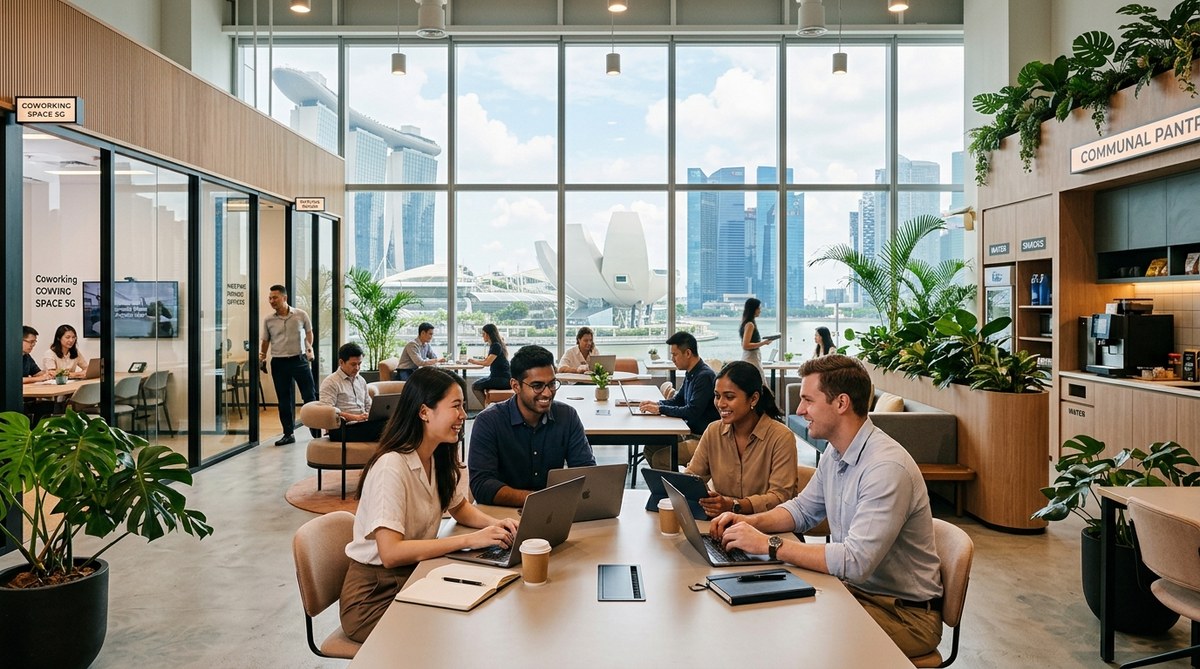
The way we work in Singapore has changed. The old model of renting a fixed office for three years, commuting to the same desk every day, and working in isolation from other professionals is fading. In its place, a more flexible, human, and connected way of working is taking over. Coworking spaces are not just a passing trend. They are becoming the backbone of how freelancers, startups, and even large companies operate in 2026. If you are a millennial or Gen Z professional trying to figure out where to set up your laptop each day, this shift matters to you.
Coworking spaces are the future of work in Singapore because they offer flexibility that traditional leases cannot match. They cut overhead costs, provide built-in networking opportunities, and let you scale your workspace up or down as your business changes. In 2026, these spaces are also adding smart technology, wellness amenities, and community events that help you stay productive and connected.
Why Flexibility Is the New Currency
Think about your last year of work. Did you need the same amount of space every month? Probably not. Some months you might have been traveling, working from home, or meeting clients at cafes. Other months you needed a private room for a team sprint. Traditional offices lock you into a rigid schedule. You pay for space you do not use.
Coworking spaces solve this problem. You can buy a day pass when you only need a desk for a few hours. You can get a monthly membership when you need consistency. And if your team grows from two people to ten, you can upgrade your plan without breaking a lease. This flexibility is especially valuable for startup founders who do not know what their headcount will look like in six months.
In Singapore, where commercial rent in areas like Raffles Place or Tanjong Pagar can be steep, paying only for the space you use makes financial sense. If you are curious about how the numbers stack up, take a look at this cost-benefit analysis of coworking vs traditional offices.
The Three Pillars of Modern Coworking
To understand why coworking spaces are winning, you need to look at three specific areas where they outperform traditional setups.
| Aspect | Traditional Office | Coworking Space |
|---|---|---|
| Lease term | 1 to 3 years minimum | Month-to-month or daily passes |
| Upfront cost | Large deposit, renovation fees | Low or zero deposit |
| Community | Isolated to your team | Access to dozens of other professionals |
| Amenities | You pay extra for internet, cleaning, coffee | All included in one monthly fee |
The table above shows the basics. But the real magic happens in the community column. When you work next to a graphic designer, a software developer, and a marketing consultant every day, you start to build a network naturally. You do not have to attend awkward networking events. The connections happen over coffee.
How to Choose Your First Coworking Space
If you are new to this, the options can feel overwhelming. Singapore has dozens of spaces, from boutique hubs in Tiong Bahru to large operators in the CBD. Here is a simple process to narrow it down.
-
Define your work style. Do you need silence to code? Look for spaces with dedicated quiet zones. Do you take client calls all day? Find a space with soundproof phone booths. If you are unsure about what to look for, read this guide to matching your work style to a space.
-
Set a budget. Coworking in Singapore ranges from around $300 per month for a basic hot desk in a suburban area to over $800 for a dedicated desk in Orchard Road. Know your ceiling before you start touring.
-
Take a trial day. Most spaces offer a free day pass. Use it. Work there for a full day. Test the internet speed. Check the noise level at 10 AM and 3 PM. See if the coffee is drinkable. This is the only way to know if a space fits you.
-
Ask about community events. Some spaces host weekly lunches, skill-sharing sessions, or happy hours. If you want to build your network, these events are gold. If you prefer to keep your head down, make sure the space does not force participation.
What 2026 Coworking Spaces Look Like
The coworking spaces of 2026 are not just rows of desks. They are designed environments. You will find biophilic design with lots of plants and natural light. You will see standing desks and ergonomic chairs as standard. Many spaces now include podcast studios, nap pods, and even on-site gyms.
Technology has also improved. Booking a meeting room is done through an app. The internet is enterprise-grade with redundant fiber lines. Some spaces use AI to track occupancy and adjust lighting and air conditioning to save energy. If you want to see the full list of modern amenities, check out this rundown of must-have features in 2026.
“The best coworking spaces feel like a third place. Not home, not the office, but something in between where you can focus and also feel part of a community.” – A Singapore-based startup founder who has used coworking spaces for four years.
Common Mistakes New Members Make
Jumping into coworking without a plan can lead to frustration. Here are the most common errors people make and how to avoid them.
-
Picking the wrong location. A beautiful space in the CBD is useless if you live in the east and hate the commute. Choose a space near an MRT station that is on your regular route. For ideas, see this list of spaces near MRT stations.
-
Ignoring the membership terms. Some spaces charge extra for printing, meeting room credits, or after-hours access. Read the fine print. Ask what is included in your base fee.
-
Staying too long at a hot desk. Hot desking is great for short visits, but if you work from the same space five days a week, a dedicated desk often saves money and gives you storage. Compare the options in this hot desk vs dedicated desk breakdown.
-
Not using the community. You pay for more than a desk. You pay for access to people. Introduce yourself to at least one new person each week. You never know where a conversation might lead.
The Productivity Boost You Did Not Expect
Working from home sounds great until you realize your bed is three feet away and your refrigerator is calling your name. Coworking spaces create a psychological separation between home and work. When you walk into a space designed for productivity, your brain switches into work mode.
Many members report getting more done in four hours at a coworking space than in eight hours at home. The ambient noise of a busy workspace actually helps some people focus better than complete silence. If you struggle with distractions, learn about techniques to stay focused in shared spaces.
Building Your Network Without Trying
One of the biggest advantages of coworking spaces is the organic networking. You are not forced to attend a mixer. You just happen to be at the coffee machine at the same time as someone who needs your services. This type of connection feels natural.
For freelancers, this can be a game changer. Instead of cold emailing potential clients, you meet them in person. For startup founders, you might find your next co-founder, investor, or beta tester just by sitting in the right seat. If you want to make the most of these opportunities, read this guide to networking in coworking spaces.
What the Data Says About the Shift
The numbers back up what many workers already feel. In 2026, the demand for flexible workspace in Singapore continues to grow. More companies are adopting hybrid work models. Employees want choice. They do not want to be tied to a single desk in a single building five days a week.
Coworking operators are responding by offering hybrid memberships that let you split your time between multiple locations. You can work from a hub near your home on Monday and a hub near your client’s office on Tuesday. This flexibility is what the future of work looks like. It is not about where you work. It is about how you work best.
A Realistic Look at the Costs
Let us talk money. A monthly coworking membership in Singapore can cost anywhere from $200 to $1,200 depending on the location and type of membership. That might sound expensive compared to working from home for free. But compare it to renting a small private office. A 100-square-foot office in a central location can easily cost $2,000 per month plus utilities, internet, and cleaning fees.
For most freelancers and small teams, coworking is cheaper. It also removes the headache of managing utilities, fixing the printer, and buying coffee supplies. Everything is included. If you want to see a detailed breakdown of what you should budget for, check out this cost analysis of coworking in Singapore.
Your Next Step
The future of work in Singapore is not a single trend. It is a collection of small shifts in how we value our time, our space, and our connections. Coworking spaces sit at the center of all those shifts. They give you the freedom to work where you want, when you want, while still being part of something larger than your own laptop screen.
If you have been on the fence, try it for a week. Buy a day pass at a space near your home. See how it feels to separate your work life from your home life. Notice how your focus changes when you are surrounded by other people who are also working hard. The future is already here. You just need to walk through the door.