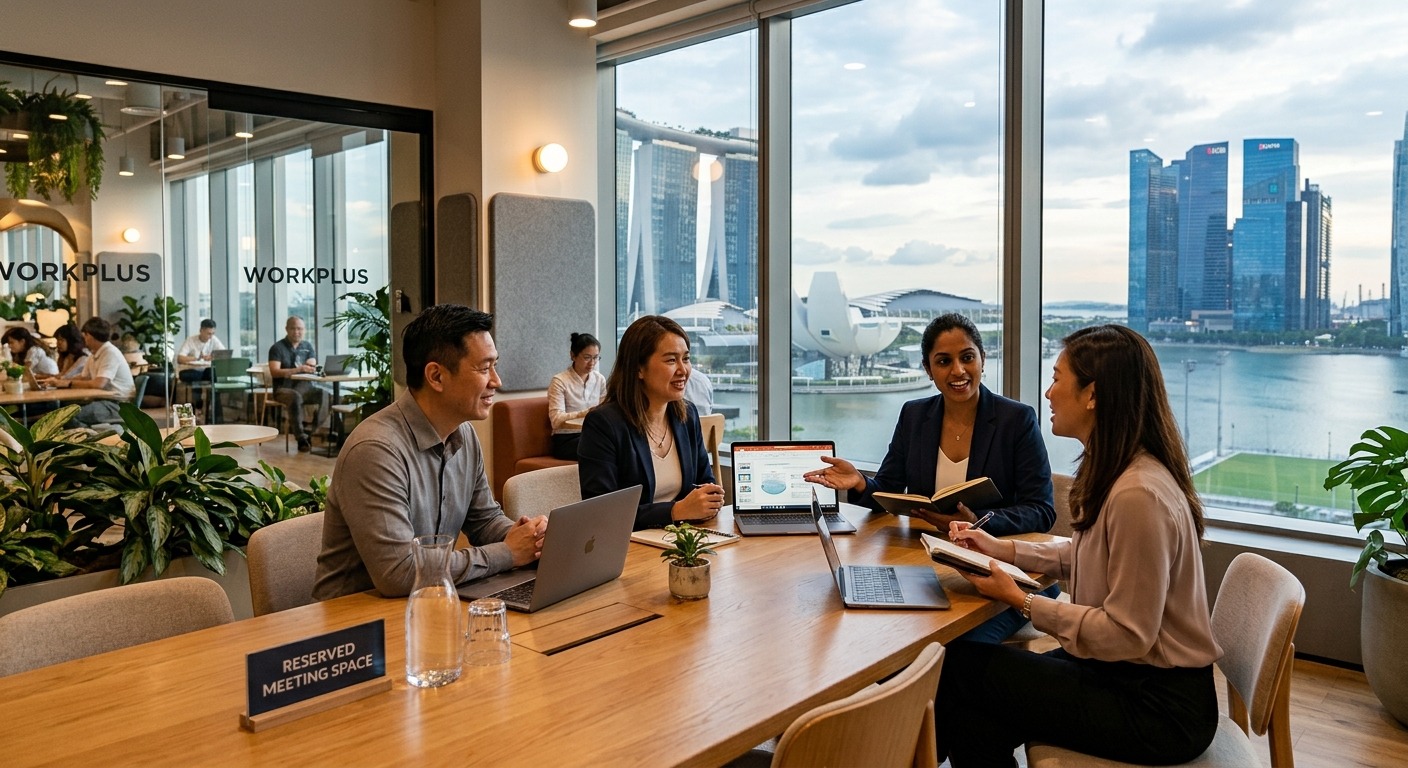
Running a client meeting from a coworking space in Singapore is not the bold experiment it once was. Freelancers, consultants, and startup founders do it every week across spaces in the CBD, Tanjong Pagar, one-north, and Raffles Place. But pulling it off in a way that makes clients feel confident takes more thought than just showing up with a laptop. The wrong room, a patchy connection, or a scheduling thread that stretches across five emails can quietly chip away at the impression you are working hard to build. This article covers the practical side: what to book, how to show up, and how to keep the logistics light on both sides of the table.
What to Get Right
- Always book a private meeting room for client-facing sessions, not an open desk or lounge area.
- Camera angle, lighting, and audio quality shape how clients perceive you on video calls.
- Variable weekly schedules need a scheduling tool that reflects your real-time availability.
- Letting clients self-select a time slot removes the friction of back-and-forth email threads.
- Always include the time zone in any meeting invite sent to regional or international clients.
Booking the Right Room Before Your Client Arrives
The most important decision you make before any client meeting is whether to book a private meeting room. Hot desks and open lounges work well for focused solo work, but they are the wrong setting when a client is involved. Sound carries easily. Other people’s calls bleed into yours. The client on the other end of the line, or sitting across the table, notices every interruption, even if they are polite enough not to mention it.
Most coworking spaces in Singapore offer bookable meeting rooms by the hour. Depending on your membership tier, a set number of hours may already be included each month, or you may need to top up with additional credits. Either way, secure the room before the day arrives. Busy spaces along Shenton Way, Robinson Road, and within towers like Guoco Tower and Capital Tower tend to fill their meeting rooms during peak slots, particularly late morning and the late afternoon window before close of business. Booking at least a day ahead keeps you from scrambling at the last minute.
Before confirming your reservation, check what the room actually includes. A good meeting room should have a display screen or television with a reliable HDMI or wireless casting option, strong Wi-Fi or a wired connection point, and enough seating for everyone attending. Plan to arrive at least fifteen minutes early. Test the screen, log into your video call platform, and pull up your presentation before anyone joins. Arriving right on time to troubleshoot an HDMI cable is one of the fastest ways to undermine the credibility you have spent time building.
Looking and Sounding Professional on Video Calls
A large share of client meetings today happen over video. Regional clients based in Kuala Lumpur, Jakarta, or Manila rarely fly in for every conversation. Clients in Hong Kong or Tokyo often prefer a thirty-minute call over a half-day of travel. This has become the standard way of working, and Singapore’s official guidance on flexible work arrangements reflects how deeply remote and hybrid ways of working have taken hold in the local professional context. Your video setup now matters as much as your physical meeting room.
Camera angle is the first thing to address. Position your webcam or laptop camera at eye level, not angled upward from a low desk. A stack of books or a basic laptop stand solves this immediately. Next, consider your light source. Sit facing a window or a lamp rather than putting the light source behind you. A backlit setup turns you into a silhouette on screen, which reads as unprepared to anyone watching.
A clean, neutral meeting room background in a coworking space projects credibility far more effectively than a blurred or virtual background, which can pixelate, flicker at the edges, or disappear entirely when you move. Most established coworking spaces in Singapore have rooms that look presentable on camera. If yours does not, ask at the front desk whether a different room is available for that slot.
Audio is where many professionals fall short without realising it. Built-in laptop microphones pick up every ambient noise in the room, from air conditioning hum to the background chatter of other members working nearby. A quality pair of earphones with a built-in microphone, or a compact USB microphone, makes a noticeable difference to how your voice comes across. Clients should not have to strain to follow what you are saying, or ask you to repeat yourself mid-presentation.
Managing Your Availability When Your Week Never Looks the Same
Working from a coworking space often means a week that shifts. You might have a five-day membership but protect certain mornings for focused work. Some days you might work from a different location across the city, or manage a half-day appointment outside of your normal hours. That flexibility is one of the central reasons many people choose this setup in the first place. But it creates a communication challenge: how do you let clients schedule time with you without turning every request into an extended negotiation?
A static calendar with fixed hours does not capture this kind of week-to-week variation. Sending clients a list of open slots every Monday morning is tedious to maintain and easy to forget. The back-and-forth of “are you free Thursday?” followed by “Thursday is full, how about Friday at 11?” followed by “11 does not work for me either” is a minor but real drain on everyone’s time. For a client who already has a full plate, this kind of friction accumulates.
The cleaner approach is to use a flexible meeting scheduler that reflects your actual real-time availability. You define the parameters, set the windows when you are open for calls, and share a single link. Clients choose from what is genuinely available without any email exchange required, and the appointment drops directly into both calendars. For someone whose open hours shift week to week based on workspace bookings, project demands, and personal commitments, this is not a minor convenience feature. It is what keeps the client-facing experience feeling organised even when your underlying schedule is anything but fixed.
Coordinating Meetings Across APAC Time Zones
Singapore sits at GMT+8, which puts it in a genuinely practical position for APAC-facing business. Kuala Lumpur is just an hour behind. Hong Kong, Manila, and Taipei share the same time zone. Tokyo and Seoul are an hour ahead. Perth sits in the same zone. Sydney, depending on daylight saving, runs two to three hours ahead. This spread is manageable, but it requires deliberate attention rather than assumptions.
The most common error is sending a meeting invite without specifying the time zone. “Tuesday at 2pm” is ambiguous to a client who regularly works across multiple countries. They may assume their local time; you may assume yours. A missed meeting caused by this kind of oversight is difficult to recover from gracefully. Always include a time zone label in the invite body or the event title. SGT, Singapore Standard Time, or GMT+8 all communicate the same information clearly. Pick one and use it consistently across all client correspondence.
It also helps to define a clear window for client calls and hold to it rather than leaving yourself available at any hour. Being open to calls across the entire day sounds accommodating, but it leads to a fragmented schedule and inconsistent energy across your working week. A simple, consistent policy, such as keeping calls between 10am and 5pm SGT, gives your clients a workable framework and keeps your own day from spilling out in every direction.
The Small Details That Make Clients Feel at Ease
The room is booked, the camera is set up, and the invite is sitting in the client’s calendar. There are a few smaller habits that separate a meeting that feels sharp and considered from one that feels rushed or improvised.
Confirm the meeting the day before. A short message with the time, format, and either the call link or the physical address takes less than a minute to write and prevents the awkward moment where one party shows up at the wrong time or wrong format. If the client is coming in person, include the building name and floor number alongside directions to reception. Coworking spaces are often tucked inside large multi-tenanted towers, and finding the right floor in a building like Marina One or Capital Tower for the first time is not always straightforward. Giving them clear arrival instructions is a small gesture that clients genuinely appreciate.
For video meetings, resend the join link as a direct message or email about an hour before the session, rather than relying solely on the original calendar invite. Some people do not open calendar events until they are ready to join the call, and a buried link creates unnecessary friction on their side. Have your documents, notes, and slides open before the call begins. There is nothing more deflating than screen-sharing a cluttered desktop while you hunt for the right file. Keep a glass of water within reach. A dry throat mid-presentation is a small distraction, but it compounds if you ignore it.
After the Meeting: Staying Sharp Without a Permanent Desk
The follow-up is where many coworking professionals lose ground without realising it. When the meeting ends and you leave the room, you are back in an open space or heading out through the lobby. There is no permanent desk to return to, no corner office where you sit down and type up notes at your leisure. The transition moment between the meeting and the follow-through is exactly where details fade fastest, particularly in a dynamic shared environment.
Build a simple habit around the five minutes immediately after the meeting closes. Before you leave the room, write down the key decisions made, any commitments you took on, and the agreed next step. Then send a brief message to the client while everything is still fresh, even just two or three sentences confirming what was discussed and what happens next. This takes very little time and signals to the client that you are attentive and follow through on what you say, two things that matter enormously when you are working outside the conventional office structure.
If your coworking space has a quiet zone or a small breakout area, use it for that immediate post-meeting period rather than moving straight back into the open floor. A few minutes of relative quiet is enough to consolidate the essentials before the rest of the day takes over. Treat it as part of the meeting itself, not something optional to squeeze in later.
Professionalism Is the Constant, Even When the Office Is Not
The assumption that a coworking setup is somehow less polished than a traditional office is fading steadily in Singapore. Clients increasingly work with consultants, freelancers, and small teams who operate without a fixed address, and they have largely come to judge professional relationships on preparation, communication, and follow-through rather than lobby decor or a corporate address on a business card.
What that shift asks of you is intentionality. Without a permanent office to handle the defaults by design, you have to be more deliberate about the room you book, the equipment you use, the scheduling experience you create for clients, and the follow-up you commit to. That deliberateness, done consistently, produces a client experience that feels dependable and sharp regardless of where you are working from that week.
The coworking model in Singapore gives you real advantages to work with: low overhead, location flexibility across a city with strong infrastructure, access to professional meeting spaces on demand, and a working environment that keeps you focused and connected. The professionals who get the most out of these spaces are the ones who treat those advantages as tools rather than defaults, showing up prepared for every client interaction and building the systems that make consistency feel natural over time.