
Your team is split. Half your people work from home on Mondays. Three show up to the office on Tuesdays. Everyone needs a meeting room on Thursdays, but nobody wants a 12-month lease on a space that sits empty most of the week.
Sound familiar?
Hybrid work is now the norm in Singapore, but most office setups were built for a different era. Traditional leases lock you into fixed costs. Home offices isolate your team. And cobbling together coffee shop Wi-Fi for client calls? That’s just unprofessional.
Coworking spaces solve this. They give hybrid teams exactly what they need: flexible desks, professional meeting rooms, and a place where your scattered team can actually work together when it matters.
Coworking spaces provide hybrid teams in Singapore with flexible workspace options that eliminate long-term leases, reduce overhead costs, and create professional environments for both in-office and remote workers. They offer scalable memberships, on-demand meeting rooms, and collaborative spaces that adapt to changing team sizes and schedules without the commitment of traditional office rentals.
Why hybrid teams struggle with traditional office setups
Traditional offices were designed for everyone to show up at 9am and leave at 6pm.
That model doesn’t fit hybrid work.
You’re paying rent for empty desks. Your team members fight over meeting rooms on the two days everyone comes in. Remote workers feel disconnected from the people who do show up.
The math doesn’t work either. A small office in Singapore’s CBD costs $4,000 to $8,000 per month. Add utilities, internet, cleaning, and furniture, and you’re looking at $6,000 minimum. For a space that sits half-empty most days.
Coworking spaces flip this model. You pay only for what you use. Need five desks on Tuesdays and Thursdays? Done. Need a meeting room for three hours on Friday? Book it. Your costs scale with your actual usage, not your worst-case scenario.
How coworking spaces adapt to hybrid schedules
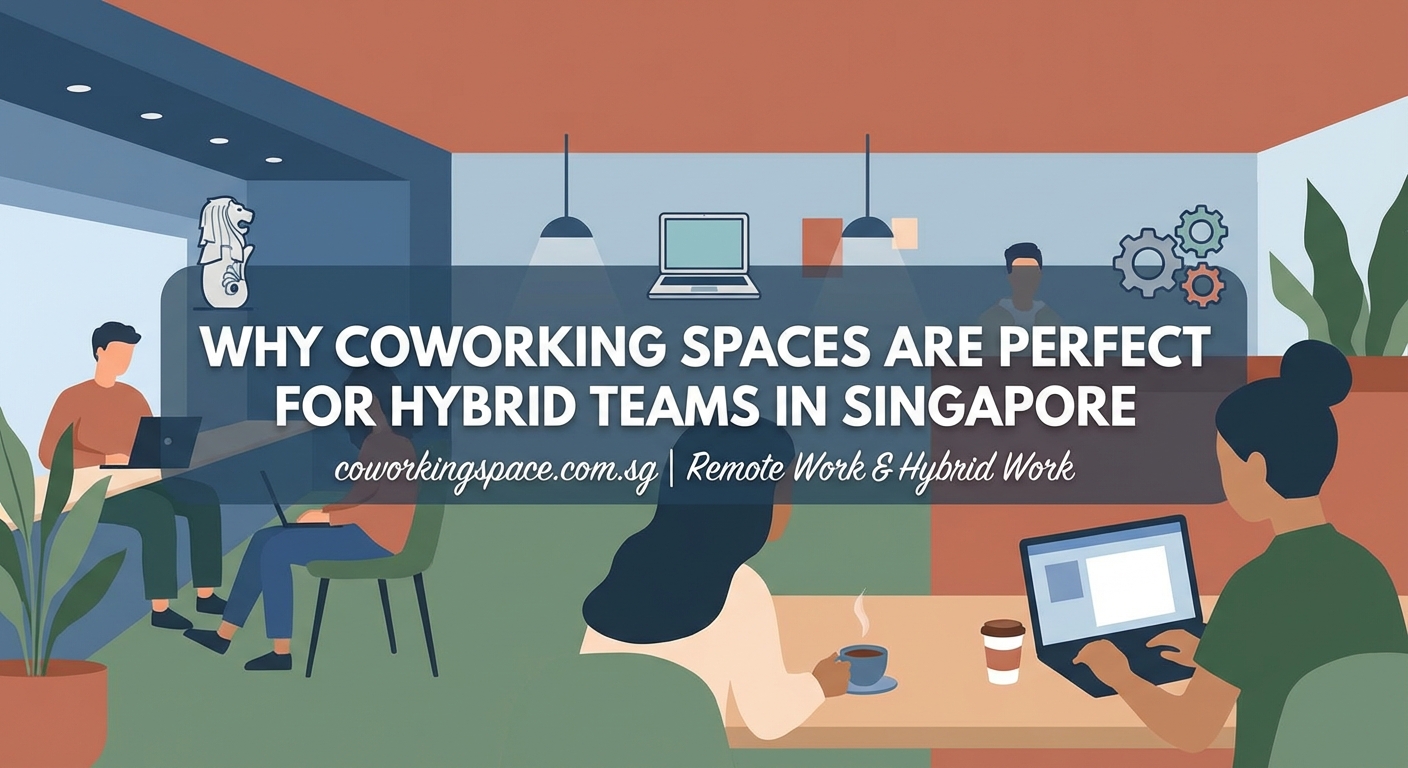
Hybrid teams need flexibility. Coworking spaces deliver it through multiple membership types that match how your team actually works.
Here’s how most Singapore coworking spaces structure their offerings:
- Hot desks: Drop in whenever you need a workspace. Perfect for team members who come to the office once or twice a week.
- Dedicated desks: Your own desk that’s always available. Great for people who split their time 50/50 between home and office.
- Private offices: Lockable space for your core team, sized from 2 to 20 people. Ideal for days when everyone needs to be together.
- Meeting room credits: Book conference rooms by the hour. No need to reserve space you’re not using.
This flexibility solves the biggest hybrid work challenge: unpredictable schedules. Your team can work from home on focused work days and come into the coworking space for collaborative sessions.
Many spaces also offer understanding coworking membership types: hot desks vs dedicated desks vs private offices that help you pick the right mix for your team’s work patterns.
Setting up your hybrid team in a coworking space
Getting your team started in a coworking space takes planning. Here’s a step-by-step process that works:
-
Map your team’s schedule: Track who works where and when for two weeks. Count how many people need desks on each day of the week.
-
Calculate your space needs: Take your busiest day and add 20% buffer. That’s your minimum desk requirement.
-
Choose your membership mix: Combine hot desks for occasional users, dedicated desks for regular users, and private office space for core team members.
-
Set booking guidelines: Create simple rules for who books meeting rooms, how far in advance, and what happens if plans change.
-
Run a pilot month: Test your setup for 30 days. Adjust based on actual usage, not assumptions.
-
Scale as needed: Most coworking spaces let you add or remove desks with 30 days notice. Use this flexibility.
This approach prevents the two most common mistakes: overcommitting to space you don’t need and underestimating your meeting room requirements.
If you’re new to coworking, how to choose your first coworking space in Singapore: a beginner’s guide walks through the evaluation process in detail.
Cost comparison for hybrid teams
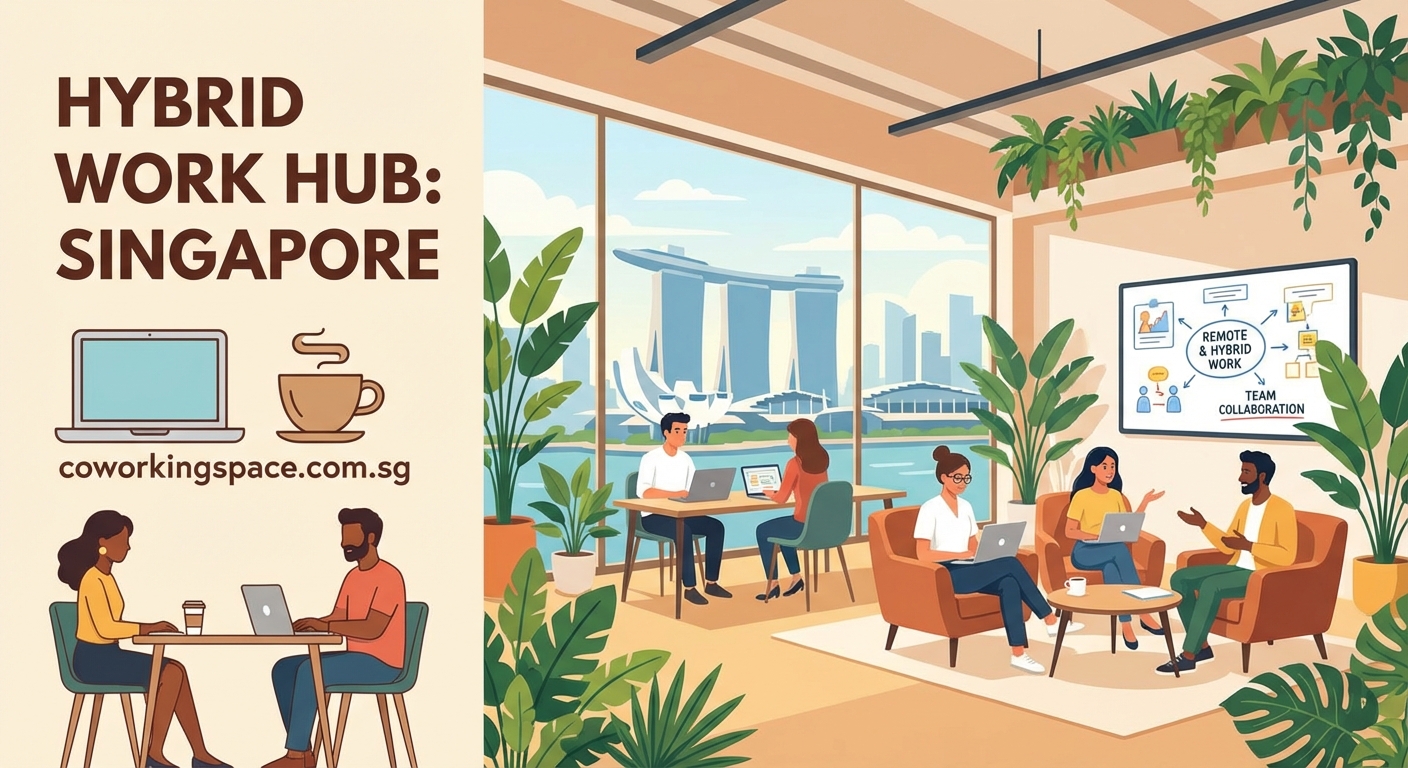
Let’s look at real numbers. Here’s what a 10-person hybrid team might pay:
| Setup Type | Monthly Cost | Included | Hidden Costs |
|---|---|---|---|
| Traditional office | $6,000-$8,000 | Space only | Utilities, internet, furniture, cleaning, maintenance |
| Home office stipends | $3,000-$5,000 | Equipment allowance | No collaboration space, isolation, unprofessional client meetings |
| Coworking space | $3,500-$5,500 | Desks, internet, meeting rooms, amenities | None, all-inclusive |
| Hybrid coworking mix | $2,500-$4,000 | Flexible desk access, meeting rooms as needed | Requires coordination |
The hybrid coworking mix typically includes:
- 3 dedicated desks for team leads
- 7 hot desk memberships for rotating staff
- 10 hours of meeting room time per month
- Access to phone booths and quiet zones
- Professional business address
This setup costs 40-50% less than a traditional office while providing better amenities and more flexibility.
The cost savings become even clearer when you factor in what’s included. High-speed internet, printing, coffee, cleaning, and reception services are all part of your membership. In a traditional office, these add $1,000-$2,000 to your monthly bill.
For teams watching their budget, budget-friendly coworking spaces in Singapore under $300 per month provides options for smaller teams or individual members.
Essential amenities hybrid teams need
Not all coworking spaces are built for teams. Look for these features:
Meeting rooms with video conferencing: Your hybrid team needs to connect with remote members. Rooms should have large screens, good cameras, and reliable audio. Meeting room booking systems: what to expect at Singapore coworking spaces explains what to look for.
Quiet zones: Some team members need focus time. Dedicated quiet areas let them work without distractions, separate from the collaborative open spaces.
Phone booths: Private calls happen. Soundproof booths give your team privacy for sensitive conversations without booking a full meeting room.
Reliable internet: Your entire team depends on connectivity. Look for spaces offering at least 100 Mbps per user, with backup connections. How high-speed internet in coworking spaces boosts your productivity covers the technical details.
Flexible furniture: Your team size changes day to day. Spaces with modular furniture let you create the setup you need, whether that’s individual focus work or team collaboration.
Professional address: Many coworking spaces provide a business address for your company registration and mail handling. This matters for client perception and legal requirements.
“The best coworking spaces for hybrid teams aren’t just about desks. They’re about creating an ecosystem where remote and in-office workers feel equally supported. Look for spaces that invest in technology, not just furniture.”
Managing team coordination in a coworking environment
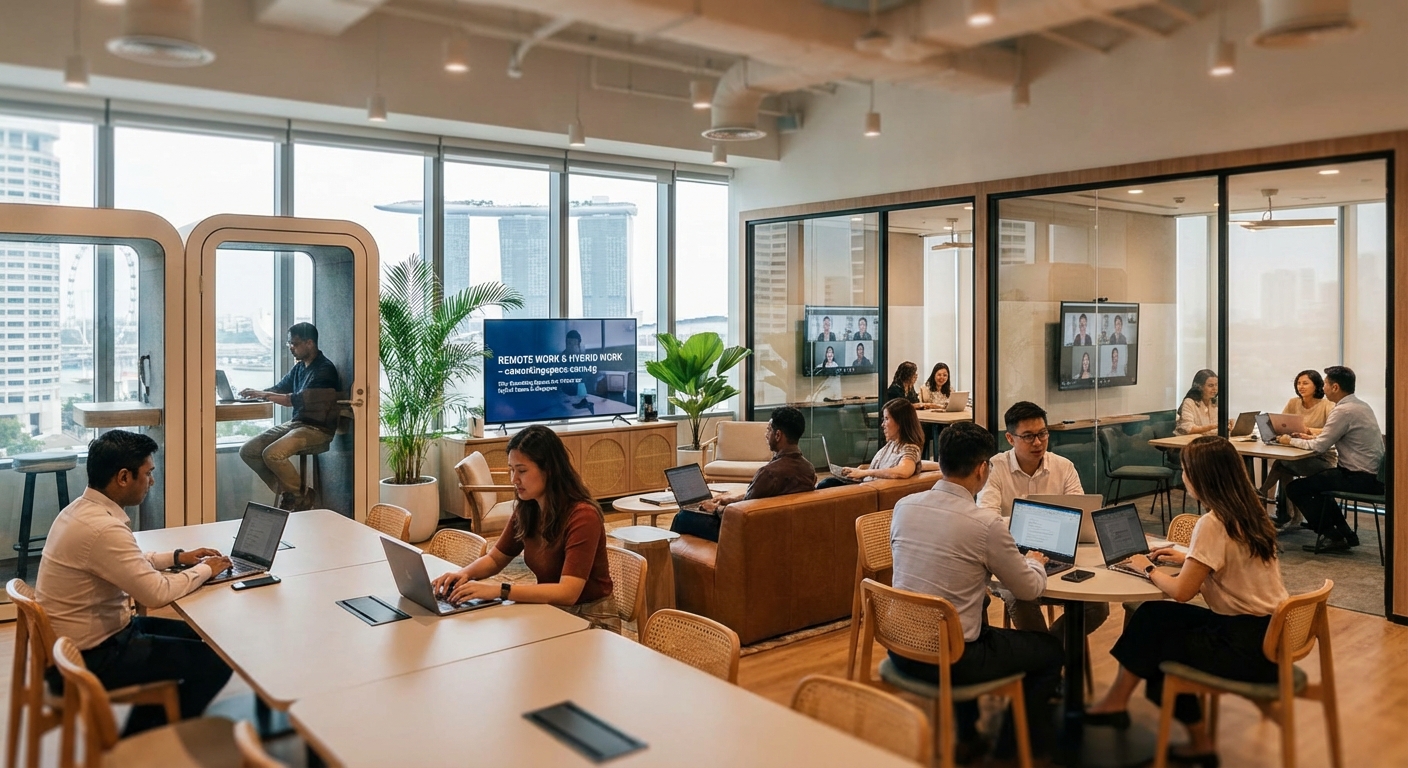
Hybrid work creates coordination challenges. Your team needs systems to stay aligned.
Set anchor days: Pick 1-2 days per week when everyone comes to the office. This creates natural collaboration windows and reduces scheduling friction.
Use booking tools: Most coworking spaces provide apps to reserve desks and meeting rooms. Integrate these with your team calendar so everyone knows who’s coming in.
Create visibility: Use a shared calendar or Slack channel where team members post their location for the week. Simple transparency prevents confusion.
Establish norms: Decide which activities require in-person presence (team meetings, client presentations, brainstorming) and which work remotely (focused work, individual calls, administrative tasks).
Rotate fairly: If you have limited dedicated desks, create a rotation schedule so everyone gets equal access to premium workspace.
The goal is to make the office a destination, not an obligation. Team members should come in because it helps them work better, not because they’re required to show up.
How to build an effective hybrid work schedule in a coworking space provides templates and frameworks for creating these systems.
Location strategy for Singapore hybrid teams
Where you locate your coworking space matters. Consider these factors:
Commute balance: Choose a location that’s reasonable for most team members. Central locations like Raffles Place or Paya Lebar serve multiple neighborhoods well.
Client accessibility: If clients visit regularly, pick a space near MRT stations with professional meeting facilities.
Neighborhood amenities: Lunch options, coffee shops, and banks nearby make the workday easier for your team.
Multiple location access: Some coworking chains offer access to multiple spaces across Singapore. This lets team members pick locations based on their daily schedule.
Popular hybrid team locations include:
- Raffles Place for finance and professional services teams
- Paya Lebar Quarter for tech companies and startups
- Tanjong Pagar for creative and marketing agencies
- One-North for research and development teams
Why Paya Lebar Quarter is becoming Singapore’s hottest coworking hub explains why this area works well for hybrid teams specifically.
Building team culture in shared spaces
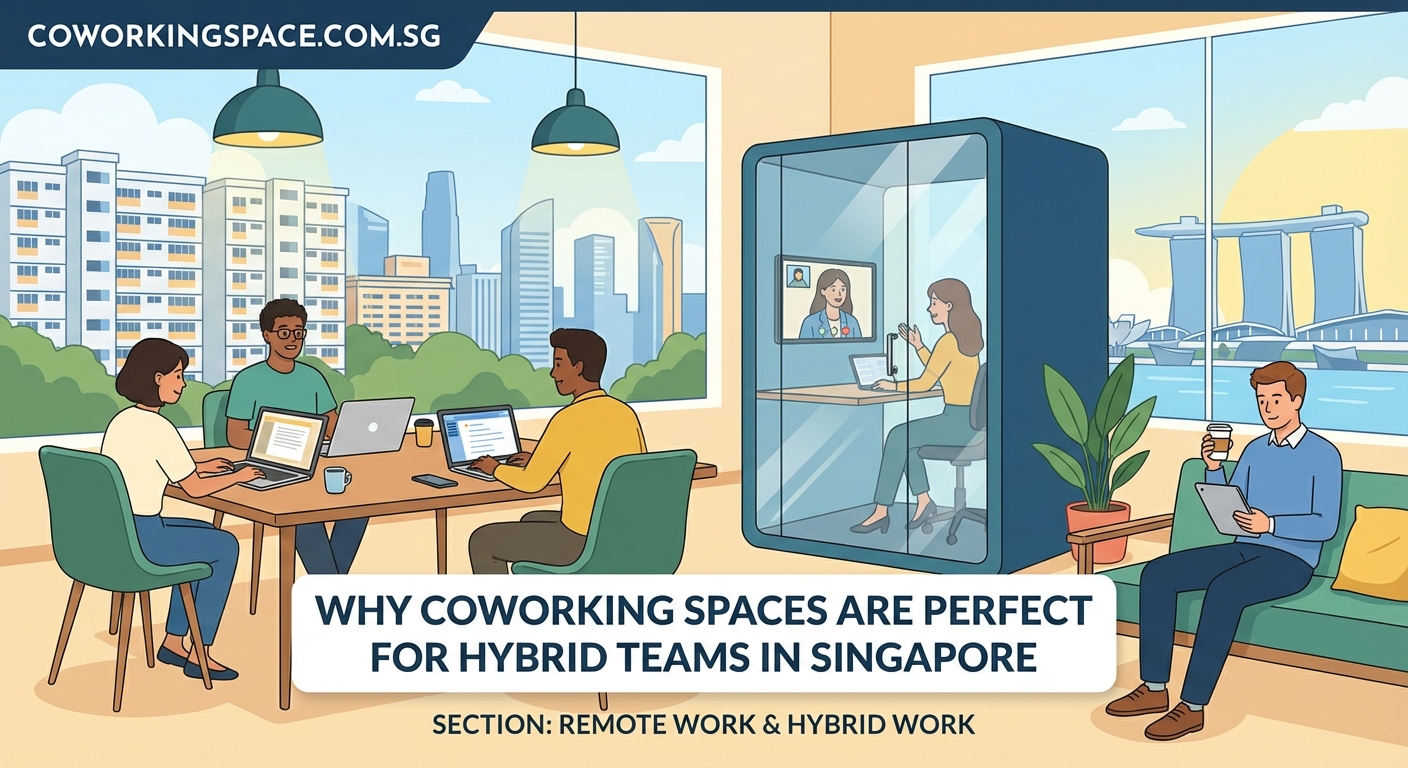
Hybrid work can fragment your team culture. Coworking spaces actually help rebuild it.
Shared experiences: When team members come to the office, they share the same environment. The coffee machine conversations, lunch outings, and casual desk chats create connection.
Community events: Many coworking spaces host networking events, workshops, and social gatherings. These give your team opportunities to interact beyond work tasks.
Cross-company networking: Your team sits near people from other companies. This exposure to different industries and perspectives can spark new ideas and partnerships.
Professional environment: Working in a proper office space, even if shared, creates psychological boundaries between work and home. This helps team members stay focused and professional.
The key is intentionality. Don’t just show up and work in isolation. Encourage your team to participate in community events, introduce themselves to neighbors, and use the collaborative spaces.
The psychology behind coworking: why shared spaces boost productivity explores the research behind these cultural benefits.
Common mistakes hybrid teams make with coworking spaces
Learning from others’ mistakes saves time and money. Avoid these pitfalls:
Overcommitting to space: New teams often reserve more desks than they need. Start small and scale up. It’s easier to add capacity than to pay for empty desks.
Ignoring meeting room needs: Calculate your meeting room hours realistically. Teams often underestimate this and end up scrambling for space or paying overage fees.
Poor onboarding: Don’t assume team members know how to use the space. Create a simple guide covering booking systems, amenities, etiquette, and who to contact for help.
Forgetting about storage: Hybrid teams need somewhere to keep supplies, marketing materials, and personal items. Make sure your coworking space provides lockers or storage options.
Skipping the trial: Most spaces offer day passes or trial weeks. Use them. Test the internet, try the meeting rooms, and see how your team actually works in the space before committing.
5 common coworking mistakes that new members make (and how to avoid them) covers additional pitfalls specific to new coworking members.
Scaling your workspace as your team grows
One of the biggest advantages of coworking spaces is scalability. Your workspace grows with your team.
Month-to-month flexibility: Most coworking memberships adjust with 30 days notice. Hired three new people? Add three more desks next month.
Private office upgrades: Start with hot desks. Move to dedicated desks as your team stabilizes. Upgrade to a private office when you have 5+ people coming in regularly.
Multi-location expansion: As your team grows across Singapore, add memberships at different coworking locations. Your people can work from whichever space is most convenient.
Meeting room scaling: Start with included hours. Add packages as your meeting needs increase. Some spaces offer unlimited meeting room access for larger teams.
This flexibility is impossible with traditional office leases, which typically require 12-24 month commitments and make downsizing expensive.
The best approach is to review your usage quarterly. Look at actual desk utilization, meeting room bookings, and team feedback. Adjust your membership to match reality, not projections.
Technology integration for distributed teams
Hybrid teams need technology that works seamlessly across locations. Coworking spaces provide the infrastructure, but you need the right tools.
Video conferencing: Use consistent platforms across all locations. Make sure your coworking space’s meeting rooms integrate with your preferred system (Zoom, Teams, Google Meet).
Project management: Tools like Asana, Trello, or Monday.com keep everyone aligned regardless of location. Update them consistently so remote and in-office workers have the same information.
Communication platforms: Slack or Teams create persistent communication channels. Use them to share daily updates, ask questions, and maintain connection.
File sharing: Cloud storage (Google Drive, Dropbox, OneDrive) ensures everyone accesses the same documents whether they’re in the coworking space or at home.
Time tracking: If you bill by the hour or need to track project time, use tools like Harvest or Toggl that work from any location.
The goal is location independence. A team member working from the coworking space should have the same access and capabilities as someone working from home.
7 essential tools remote workers need when using coworking spaces provides a comprehensive toolkit for hybrid team members.
Making the transition to coworking
Moving your hybrid team to a coworking space requires planning. Here’s how to make the transition smooth:
Communicate early: Tell your team about the change at least 6 weeks in advance. Explain why you’re making the shift and how it benefits them.
Visit together: Schedule a tour where the whole team can see the space, test the amenities, and ask questions. This builds buy-in.
Create guidelines: Document simple rules about desk booking, meeting room etiquette, guest policies, and expense reimbursement.
Plan the first week: Schedule team lunches, collaborative work sessions, and social time during your first week. Make the space feel welcoming, not transactional.
Gather feedback: After 30 days, survey your team. What’s working? What’s not? Adjust based on real experience.
Celebrate wins: Share success stories about how the new space improved someone’s work or enabled better collaboration. Positive examples encourage adoption.
The transition period typically takes 4-6 weeks. Be patient as your team adapts to new routines and learns the space.
Your workspace should work for you, not against you
Hybrid work is here to stay. Your workspace strategy needs to match this reality.
Coworking spaces give hybrid teams what they actually need: flexibility, professional environments, and cost efficiency. They eliminate the waste of traditional offices while providing better amenities than home offices.
The best time to make the switch is before you sign another long-term lease or realize your current setup is holding your team back.
Start by calculating your actual space needs. Count how many people need desks on your busiest days. Add up your meeting room hours. Compare that to what you’re paying now.
Then visit a few coworking spaces in your area. Test the internet. Try the meeting rooms. Talk to other hybrid teams working there.
You’ll probably find that coworking isn’t just cheaper. It’s better. Your team gets professional workspace when they need it, without the overhead and inflexibility of traditional offices.
That’s exactly what hybrid work should be: the right space, at the right time, for the right cost.