
Building a hybrid work policy isn’t just about letting people work from home a few days a week. It’s about redesigning how your entire organization operates, communicates, and measures success. Companies that rush into hybrid arrangements without proper planning often find themselves dealing with confused employees, frustrated managers, and productivity that swings wildly from week to week.
Successful hybrid work policies require clear guidelines on work schedules, communication protocols, technology infrastructure, and performance metrics. Companies must address equity concerns, establish workspace options, and create systems that support both remote and in-office employees. The most effective policies are flexible yet structured, with regular review cycles to adapt to changing needs and feedback from all team members.
Understanding what hybrid work actually means for your organization
Hybrid work means different things to different companies. For some, it’s three days in the office and two at home. For others, it’s team-based flexibility where departments choose their own schedules. Some organizations let individual employees decide when they come in, while others mandate specific days for entire teams.
Your definition matters because it shapes everything else. A policy that works for a tech startup won’t necessarily work for a financial services firm. A manufacturing company has different constraints than a marketing agency.
Start by asking what problems you’re trying to solve. Are you reducing office space costs? Improving employee satisfaction? Attracting talent from wider geographic areas? Increasing productivity? Your answers will guide your policy design.
Consider your industry requirements too. Client-facing businesses might need more in-office presence. Creative teams might benefit from regular in-person collaboration. Compliance-heavy industries might face regulatory constraints on remote work.
Establishing clear expectations for work schedules and availability
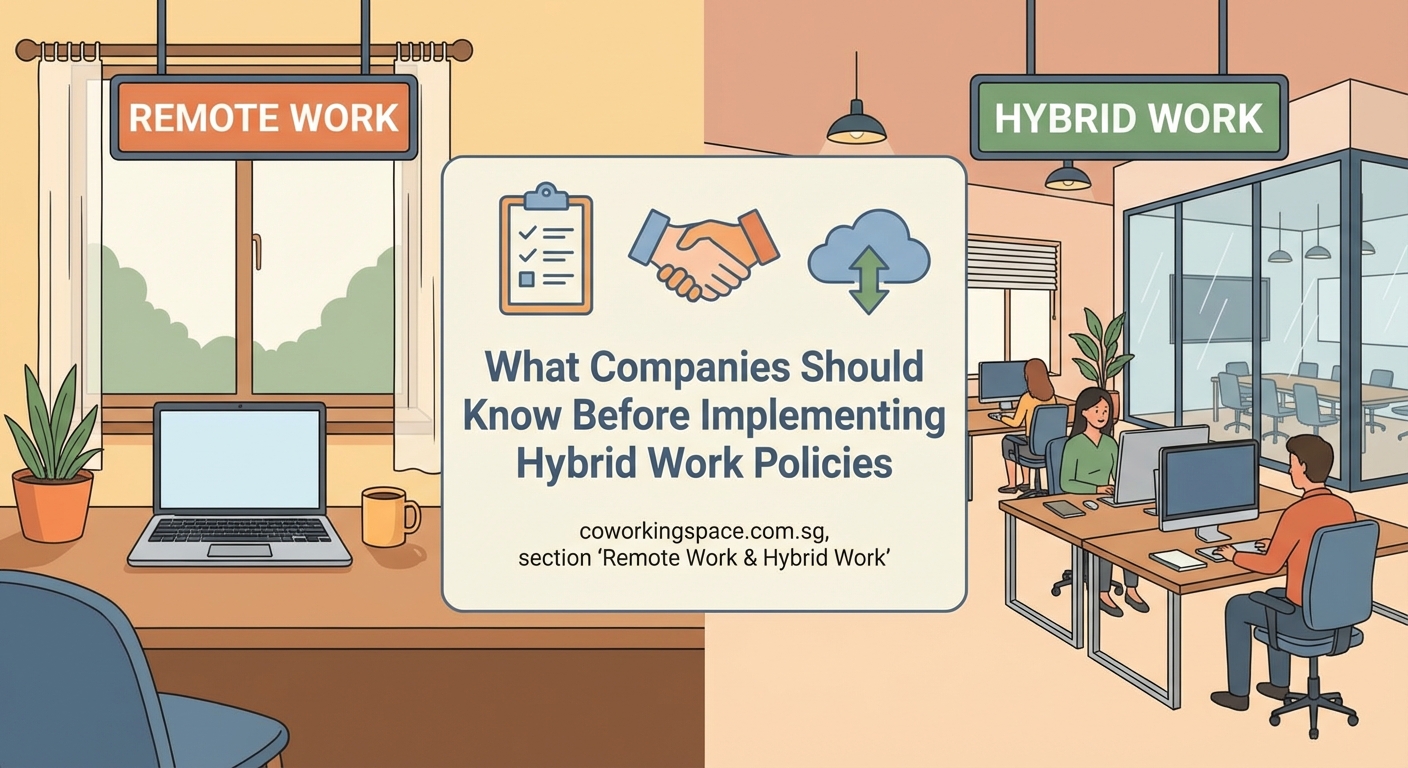
Ambiguity kills hybrid work policies faster than anything else. Employees need to know exactly when they’re expected to be where, and managers need guidelines for making decisions.
Create a framework that answers these questions:
- Which roles are eligible for hybrid work?
- How many days per week can employees work remotely?
- Are there core days when everyone must be in the office?
- What are the required working hours for remote days?
- How far in advance must employees schedule their location?
- Can schedules change week to week or must they stay consistent?
Some companies succeed with fixed schedules where everyone knows Monday and Friday are remote days. Others prefer flexible systems where teams coordinate their own in-office days. Both work, but only if the rules are crystal clear.
Document your expectations in writing. A verbal understanding isn’t enough when conflicts arise or new employees join. Your policy should be detailed enough that someone new to the company can understand it without asking clarifying questions.
Building the technology infrastructure hybrid teams need
Your technology stack makes or breaks hybrid work. Period. Employees working from home need the same access to systems, files, and colleagues as those in the office.
Start with these essentials:
- Reliable video conferencing tools that work seamlessly across devices
- Cloud-based file storage and collaboration platforms
- Project management software that shows who’s doing what
- Communication tools for both synchronous and asynchronous work
- Security systems that protect company data on home networks
- IT support that can troubleshoot remote setup issues
The biggest mistake companies make is assuming consumer-grade tools will work for business needs. Free video calling apps might suffice for small teams, but they fall apart with larger groups or when you need features like recording, transcription, or breakout rooms.
Budget for proper equipment too. Employees working from home need more than a laptop. Think monitors, keyboards, webcams, headsets, and ergonomic furniture. Some companies provide stipends. Others ship complete home office setups. Choose an approach that fits your budget and culture, but don’t skimp here. Poor equipment leads to poor work.
Consider whether you’ll support understanding coworking membership types for employees who need professional workspace outside their homes. This flexibility can solve problems for people with unsuitable home environments.
Creating communication protocols that work across locations
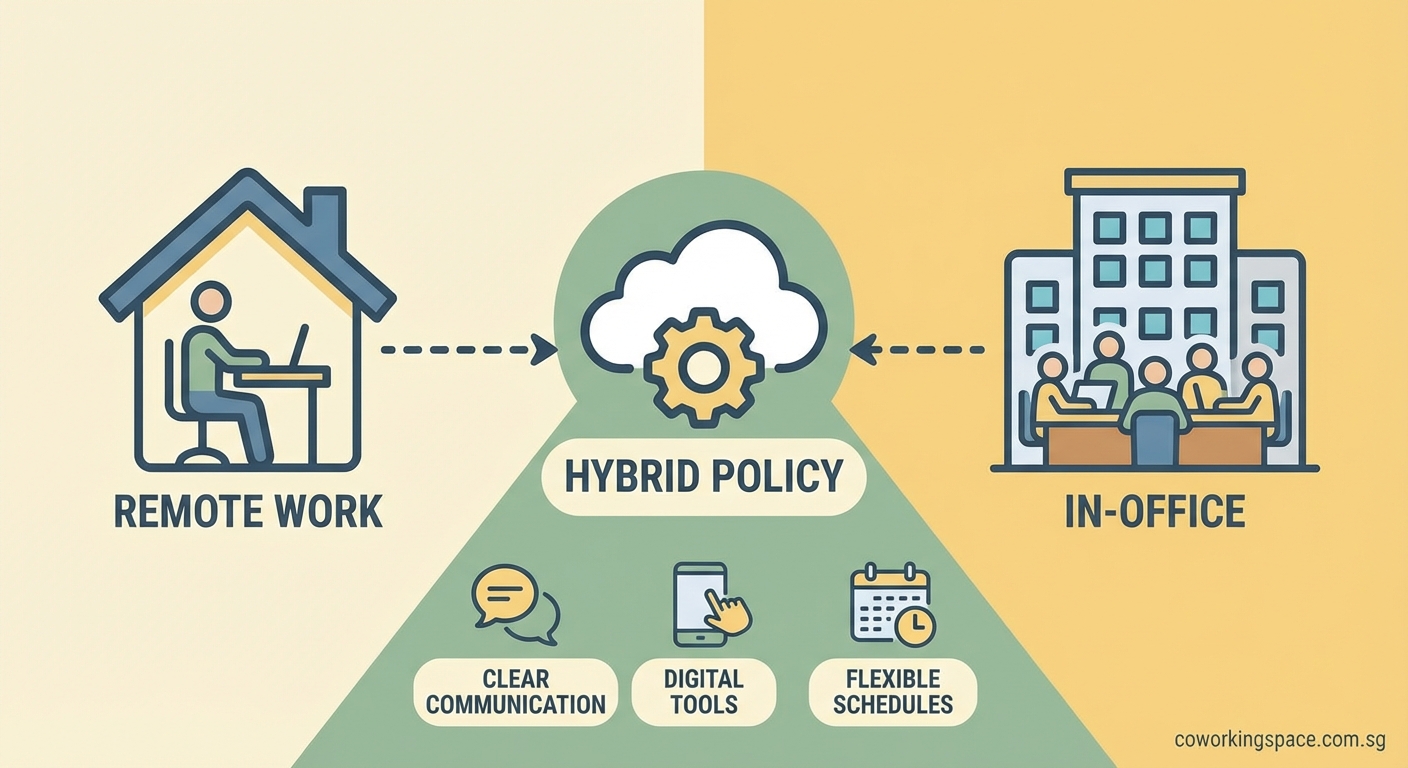
Communication becomes exponentially more complex in hybrid environments. In-office conversations happen naturally. Remote communication requires intention and structure.
Establish protocols for different communication types:
| Communication Type | Best Tool | Response Time Expectation |
|---|---|---|
| Urgent issues | Phone call or instant message | Within 15 minutes |
| Standard questions | Team chat channel | Within 2 hours |
| Project updates | Project management tool | End of day |
| Complex discussions | Video call | Scheduled meeting |
| Documentation | Shared documents | 24 hours for review |
| Company announcements | Email or company intranet | Read within 48 hours |
The table above shows one approach, but customize it for your organization. The key is removing guesswork. Employees shouldn’t wonder whether to send a Slack message, schedule a meeting, or write an email.
Combat meeting fatigue by setting guidelines on when meetings are actually necessary. Not every update needs a video call. Not every decision requires gathering everyone together. Asynchronous communication often works better for information sharing, leaving meetings for genuine collaboration and problem-solving.
Record important meetings so remote employees in different time zones can catch up. Share written summaries after key discussions. Create a single source of truth for decisions so people don’t have to dig through chat histories or email threads.
Addressing equity and inclusion concerns head-on
Hybrid work creates an inherent risk of two-tiered workplaces. Employees who come to the office more often might get more face time with leadership, more spontaneous collaboration opportunities, and more visibility for their work.
This isn’t paranoia. Research shows proximity bias is real. Managers tend to favor employees they see more often, even when remote workers perform just as well or better.
Fight this by implementing specific safeguards:
- Rotate meeting facilitators between remote and in-office employees
- Make all meetings hybrid-friendly, even if most attendees are in the office
- Ensure remote workers get equal consideration for promotions and projects
- Track whether in-office employees receive more opportunities and correct imbalances
- Celebrate achievements publicly in channels everyone can access
- Schedule regular one-on-ones with all team members, regardless of location
Consider whether certain roles or seniority levels should have different hybrid options. Some companies require executives to be in the office more often to maintain visibility and culture. Others do the opposite, having leadership model remote work to legitimize it. Neither approach is inherently right or wrong, but the choice sends a message about what you value.
Pay attention to caregiving responsibilities too. Hybrid work often appeals most to employees with children or eldercare duties. If your policy inadvertently disadvantages these groups, you’re creating legal and ethical problems.
Redesigning performance management for outcomes, not presence
Traditional performance management often relies on observable behaviors. Managers see who arrives early, stays late, and looks busy at their desk. Hybrid work makes this impossible and forces a shift to outcome-based evaluation.
This is actually a good thing. Measuring results instead of activity leads to better performance management. But it requires rethinking how you assess work.
Define clear deliverables for every role. What does success look like? What outcomes matter? How will you measure them? Get specific. “Good customer service” is too vague. “Responding to customer inquiries within 4 hours with a resolution rate above 85%” gives everyone something concrete.
The transition to hybrid work forces companies to finally answer the question they’ve been avoiding: what are we actually paying people to accomplish? Once you answer that honestly, performance management becomes much simpler.
Set expectations at the beginning of projects, not the end. Employees should know exactly what’s expected before they start work, not discover it during their performance review. Regular check-ins help catch problems early and adjust course before small issues become big failures.
Be careful about using surveillance tools to monitor remote workers. Yes, software exists that tracks keystrokes, takes screenshots, and monitors activity. Using it destroys trust and often violates privacy laws. If you don’t trust employees to work without constant monitoring, you have a hiring problem, not a remote work problem.
Rethinking office space for hybrid usage patterns
Your office needs to change when only some employees come in on any given day. The traditional setup of assigned desks and private offices wastes space and money in a hybrid model.
Consider these alternatives:
- Hot desking where employees choose available workstations
- Neighborhood zones where teams cluster together on their in-office days
- Activity-based spaces with areas for focus work, collaboration, and socializing
- Reduced individual workstations with more meeting rooms and collaboration spaces
- Bookable spaces that employees reserve in advance
The goal is creating an office optimized for what can’t happen remotely. Brainstorming sessions. Team building. Complex problem-solving. Client meetings. Use your physical space for these high-value activities instead of replicating what people can do at home.
Think about why coworking spaces are perfect for hybrid teams in Singapore as an alternative to traditional office leases. Coworking gives you flexibility to scale up or down as needs change without long-term commitments.
Some companies maintain smaller headquarters and supplement with coworking memberships for employees who need workspace near their homes. This approach often costs less than maintaining large central offices while giving employees more location options.
Developing policies for equipment, expenses, and workspace standards
Who pays for what in a hybrid arrangement? This question causes endless confusion if you don’t address it upfront.
Create clear policies covering:
- Which equipment the company provides versus what employees must supply
- Whether you offer stipends for home office setup and how much
- How internet costs are handled for remote workers
- Whether you reimburse for coworking space memberships
- What happens to company equipment if someone leaves
- How often equipment gets replaced or upgraded
- Whether employees can expense office supplies for home use
Set minimum standards for home workspaces. Employees need proper internet speeds, adequate lighting, and reasonably quiet environments. You can’t control everything about someone’s home, but you can establish baseline requirements for successful remote work.
Consider tax implications too. Some jurisdictions have complex rules about remote work expenses, home office deductions, and where employees can work from. Consult with legal and tax advisors before finalizing policies.
Insurance matters as well. Your company’s liability insurance might not cover injuries that happen in employee homes. Workers’ compensation rules vary by location. Make sure you understand the legal landscape before rolling out hybrid arrangements.
Training managers to lead distributed teams effectively
Your managers probably learned to lead by watching other managers in traditional office settings. Hybrid work requires different skills, and most managers need help developing them.
Invest in training that covers:
- Running effective hybrid meetings where everyone participates equally
- Giving feedback and coaching remotely
- Building team cohesion across locations
- Spotting signs of burnout or disengagement in remote workers
- Coordinating work across different schedules and time zones
- Making fair decisions without proximity bias
Managers often struggle most with the loss of informal information. In offices, they overhear conversations, notice body language, and pick up on team dynamics naturally. Remote work requires more intentional check-ins and explicit communication.
Teach managers to schedule regular one-on-ones with all team members, not just when problems arise. These conversations build relationships and surface issues early. They’re even more critical in hybrid settings where casual hallway chats don’t happen.
Some managers resist hybrid work because they worry about losing control. Address these concerns directly. Help them understand that micromanaging never worked anyway and that focusing on outcomes produces better results than monitoring activity.
Planning for team building and culture maintenance
Company culture doesn’t happen automatically when people work in different locations. You need intentional strategies to build and maintain it.
Schedule regular in-person gatherings. Quarterly all-hands meetings, annual retreats, or monthly team lunches give people face-to-face time. These events matter more in hybrid environments because they’re the primary opportunity for relationship building.
Create virtual social opportunities too. Some companies host online coffee chats, virtual happy hours, or remote game sessions. These work better when they’re optional and genuinely fun, not mandatory team-building exercises that feel like work.
Celebrate wins publicly and frequently. Share customer success stories, project completions, and individual achievements in channels everyone can see. Recognition matters even more when people aren’t physically together to high-five or congratulate each other.
Consider how building a personal productivity system that works in any coworking environment helps employees maintain consistency across locations. Systems that work anywhere make transitions between home and office smoother.
Onboarding new employees requires extra attention in hybrid settings. They need to learn your culture, build relationships, and understand how work gets done without the natural immersion that happens in full-time office environments. Assign mentors, schedule extra check-ins, and consider requiring more in-office time during the first few months.
Establishing feedback loops and iteration processes
Your first hybrid work policy won’t be perfect. Accept that now and build in mechanisms for improvement.
Collect feedback regularly through:
- Quarterly surveys asking specific questions about what’s working and what isn’t
- Focus groups with employees at different levels and locations
- Manager roundtables to discuss challenges and share solutions
- Exit interviews that ask departing employees about hybrid work experiences
- Data analysis on productivity, collaboration, and employee satisfaction metrics
Actually use the feedback you collect. Nothing frustrates employees more than being asked for input that gets ignored. Share what you learned, explain what you’re changing, and be honest about what you can’t change and why.
Set a regular review schedule for your policy. Every six months, look at whether your rules still make sense. Business needs change. Technology improves. Employee preferences shift. Your policy should evolve accordingly.
Be willing to experiment. Try different approaches with different teams. Some might need more structure while others thrive with more flexibility. Learn from what works and what doesn’t, then adjust your overall policy based on real experience.
Navigating legal and compliance requirements
Hybrid work creates complex legal issues that vary by location, industry, and company size. Don’t try to figure this out alone. Get proper legal counsel.
Key areas to address include:
- Where employees can legally work from
- Tax implications of remote work across different jurisdictions
- Labor law compliance in multiple locations
- Data privacy and security regulations
- Workers’ compensation and insurance coverage
- Wage and hour laws for non-exempt employees
- Accommodation requirements under disability laws
Some companies allow employees to work from anywhere. Others restrict remote work to specific states, provinces, or countries. Both approaches have valid reasons, but the restrictions usually come down to legal and tax complexity rather than preference.
Document everything. Written policies protect both you and your employees. They provide clarity when disputes arise and demonstrate good faith compliance with regulations.
Stay current on changing laws. Remote work regulations continue evolving as governments figure out how to handle distributed workforces. What’s legal today might not be tomorrow, or vice versa.
Preparing for common challenges before they become crises
Certain problems show up repeatedly in hybrid work environments. Prepare for them in advance rather than scrambling when they happen.
The collaboration gap: Remote workers miss out on spontaneous conversations and quick questions. Solution: Schedule regular office days for teams that need high collaboration. Create dedicated communication channels for different topics. Encourage over-communication rather than under-communication.
The timezone tangle: Teams spread across locations struggle with scheduling. Solution: Establish core hours when everyone must be available. Rotate meeting times so the burden doesn’t always fall on the same people. Record meetings for those who can’t attend live.
The technology breakdown: Video calls freeze, files won’t open, and systems crash at the worst times. Solution: Invest in redundant systems. Train everyone on backup communication methods. Have IT support available during all working hours across time zones.
The boundary blur: Remote workers struggle to separate work and personal life. Solution: Encourage clear start and end times. Model healthy boundaries from leadership. Make it acceptable to be offline outside working hours.
The career stall: Remote workers worry they’re being overlooked for opportunities. Solution: Create transparent processes for promotions and project assignments. Actively seek input from remote employees. Track whether opportunities are distributed fairly.
Building flexibility into rigid structures
The best hybrid work policies balance structure with flexibility. Too much structure feels restrictive and defeats the purpose of hybrid work. Too much flexibility creates chaos and confusion.
Find the middle ground by establishing clear defaults with room for exceptions. For example, require three office days per week but allow managers to approve different arrangements for specific situations. Set core meeting hours but let teams adjust them when needed.
Create approval processes for special circumstances. Employees might need temporary full-remote arrangements for family situations, medical issues, or other life events. Having a process in place makes these requests easier to handle fairly.
Build in regular schedule reviews. What works in summer might not work in winter. What works for current projects might not work for future ones. Allow teams to adjust their hybrid schedules periodically based on changing needs.
Consider whether how to build an effective hybrid work schedule in a coworking space offers additional flexibility for employees who need professional workspace options beyond home and office.
Remember that flexibility means different things to different people. Some employees want schedule flexibility. Others want location flexibility. Some want both. Design policies that accommodate various needs without creating unfair advantages.
Making hybrid work sustainable for the long term
Hybrid work isn’t a temporary pandemic response anymore. It’s a permanent shift in how many companies operate. That means thinking beyond initial implementation to long-term sustainability.
Budget appropriately for ongoing costs. Technology subscriptions, equipment replacements, office space modifications, and training programs all require continued investment. Underfunding hybrid work leads to deteriorating experiences and eventual failure.
Develop internal expertise. Train HR staff, managers, and IT teams on hybrid work best practices. Build knowledge within your organization rather than relying entirely on external consultants.
Stay connected to broader trends. Join professional networks, attend conferences, and learn from other companies’ experiences. Hybrid work continues evolving, and staying informed helps you adapt.
Measure what matters. Track productivity, employee satisfaction, retention, recruitment success, and cost savings. Use data to demonstrate the value of your hybrid work policy and identify areas needing improvement.
Plan for growth. Your hybrid work policy should scale as your company grows. What works for 50 employees might not work for 500. Build systems and processes that can expand without complete overhauls.
Moving forward with confidence and clarity
Creating a successful hybrid work policy takes time, thought, and willingness to adapt. The companies that do it well treat it as an ongoing process rather than a one-time project.
Start with clear goals. Understand why you’re implementing hybrid work and what success looks like for your organization. Let those goals guide every decision about schedules, technology, space, and policies.
Communicate relentlessly. Over-communicate expectations, changes, and reasoning behind decisions. Answer questions before people ask them. Make information easily accessible to everyone.
Trust your employees. Hybrid work only works when you believe people will do their jobs without constant supervision. If you can’t trust your team, fix your hiring and management practices before implementing hybrid arrangements.
Remember that perfect is the enemy of good. You won’t get everything right immediately. Launch with a solid foundation, gather feedback, and improve continuously. The companies that wait for perfect policies never launch at all.
Your hybrid work policy should serve your business goals and your employees’ needs simultaneously. When you find that balance, you’ll build a workplace that attracts talent, maintains productivity, and adapts successfully to whatever comes next.