
Working from home seemed perfect until the isolation set in. Your dining table became your desk, your bedroom turned into a meeting room, and the line between work and life blurred completely. You’re not alone in wondering whether there’s a better way to structure your work environment.
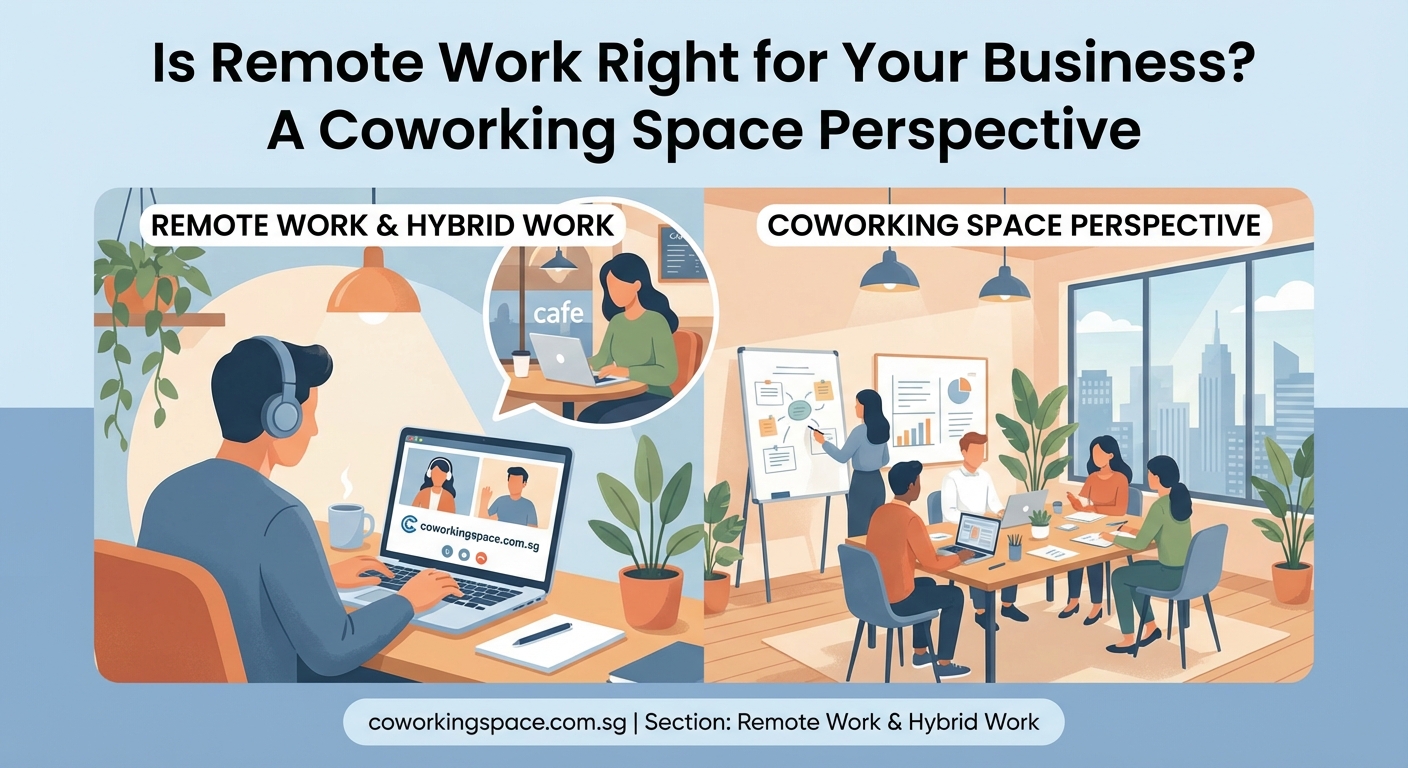
Remote work offers flexibility and cost savings, but coworking spaces provide structure, community, and professional amenities. The best choice depends on your work style, team needs, budget, and whether you value independence over social interaction. Many professionals find success with a hybrid approach that combines both options strategically throughout the week.
Understanding What Remote Work Really Means
Remote work gives you the freedom to work from anywhere. Your home, a café, a library, or even a park bench.
You control your schedule. You avoid the commute. You save money on transport and lunch.
But remote work also means managing your own environment. You handle your internet connection. You create your own workspace. You maintain your own discipline.
For some people, this works beautifully. For others, it becomes a challenge.
The reality is that working from home requires strong self-management skills. You need to separate work time from personal time. You need to resist distractions. You need to stay motivated without external structure.
What Coworking Spaces Bring to the Table

Coworking spaces offer a middle ground between traditional offices and remote work.
You get a professional workspace without signing a long lease. You access amenities like meeting rooms, printers, and coffee stations. You work alongside other professionals who understand the value of focused work time.
The structure helps. You leave home, go to work, and return home. This separation creates mental boundaries that remote work often lacks.
Understanding coworking membership types helps you find the right fit for your working style and budget.
Breaking Down the Real Costs
Let’s talk numbers.
Remote work appears cheaper at first glance. No membership fees. No commute costs. No lunch expenses.
But look closer.
You pay for home internet upgrades. You buy office furniture. You increase your electricity bill. You might even rent a larger apartment just to have a dedicated workspace.
Add coffee shop visits when you need a change of scenery. Calculate the cost of occasional coworking day passes. Include the productivity losses from home distractions.
Coworking spaces charge a monthly fee, but that fee includes everything. Internet, furniture, utilities, coffee, meeting rooms, and professional space.
Breaking down the true value shows how the math often favors coworking for full-time professionals.
| Cost Factor | Remote Work | Coworking Space |
|---|---|---|
| Monthly workspace fee | $0 | $200-800 |
| Internet upgrades | $50-100 | Included |
| Furniture and equipment | $500-2000 upfront | Included |
| Utilities increase | $30-80 | Included |
| Coffee and refreshments | $100-200 | Included |
| Meeting space access | $50-150 per use | Included or discounted |
| Professional address | $30-100 | Often included |
Productivity Patterns That Matter
Your productivity depends on more than just having a desk and internet.
Remote workers often struggle with three specific challenges.
First, interruptions from family or roommates. Your partner needs help. Your kids want attention. Your roommate starts a loud phone call.
Second, the lack of social accountability. Nobody sees if you start work late. Nobody notices if you take a three-hour lunch. Nobody cares if you spend half the day on social media.
Third, the absence of environmental cues. Your brain associates your home with relaxation. Trying to work in that same space creates cognitive friction.
Coworking spaces solve these problems naturally. You’re surrounded by other people working. The environment signals focus time. The social presence creates gentle accountability.
The psychology behind coworking explains why shared spaces often boost output without requiring extra effort.
Team Collaboration Needs
Managing a remote team requires different tools and approaches than managing a colocated team.
Video calls replace hallway conversations. Chat messages replace face-to-face check-ins. Scheduled meetings replace spontaneous brainstorming.
Some teams thrive in this environment. Others struggle.
Coworking spaces offer a hybrid option. Your team can work remotely most days and meet at the coworking space for collaboration sessions. You get the best of both worlds.
Why coworking spaces are perfect for hybrid teams shows how this model works in practice.
Social Connection and Mental Health
Humans need social interaction. Remote work can feel isolating, especially for people who live alone.
You might go days without meaningful face-to-face conversations. You might start talking to your plants. You might find yourself looking forward to grocery shopping just to see other humans.
This isolation affects mental health. It reduces motivation. It increases anxiety. It makes work feel harder than it should.
Coworking spaces provide casual social interaction without forcing deep relationships. You say hello. You chat during coffee breaks. You occasionally grab lunch together.
This light social contact makes a bigger difference than most people expect.
Remote workers’ guide to avoiding isolation offers strategies for maintaining connection while working independently.
Professional Image Considerations
Your work environment affects how clients perceive you.
Taking video calls from your bedroom with laundry in the background sends a message. Meeting clients at a coffee shop feels casual. Using your home address for business registration raises questions.
Coworking spaces provide professional meeting rooms. You can host client meetings in a proper conference room. You can use a business address for your company registration. You can take video calls from a professional setting.
This matters more for some businesses than others. A freelance writer might not care. A financial consultant probably should.
Making the Decision Process Easier
Choosing between remote work and coworking spaces requires honest self-assessment.
Ask yourself these questions:
- Do you maintain productivity without external structure?
- Does your home have suitable workspace without compromising your living space?
- Do you have reliable internet and necessary equipment?
- Can you separate work time from personal time effectively?
- Do you feel energized or drained by working alone?
- Does your business benefit from a professional address and meeting space?
- Will you actually use the coworking space if you pay for it?
Your answers reveal which option suits you better.
How to choose your first coworking space helps if you decide to try coworking.
Testing Before Committing
You don’t need to make a permanent choice immediately.
Most coworking spaces offer day passes or weekly trials. Use them.
Spend a few days working from a coworking space. Notice how you feel. Track your productivity. Pay attention to whether the environment helps or hinders your work.
Similarly, if you’re considering switching to full-time remote work, try it gradually. Work from home one or two days per week before going all-in.
The best workspace decision isn’t the one that looks good on paper. It’s the one that actually improves your daily work experience and output.
Common Mistakes People Make
Many people choose based on cost alone. They pick the cheapest option without considering productivity losses or mental health impacts.
Others follow trends. They work remotely because everyone else does, or they join a coworking space because it seems trendy.
Some ignore their personality type. Introverts force themselves into busy coworking spaces. Extroverts isolate themselves at home.
Common coworking mistakes helps you avoid these pitfalls if you choose the coworking route.
The Hybrid Approach That Works
Many successful professionals don’t choose one option exclusively.
They work from home on focused task days. They use coworking spaces for meeting days or when they need social energy. They visit coffee shops for creative thinking sessions.
This flexibility requires discipline. You need to plan your week intentionally. You need to match your environment to your work type.
But the results often justify the effort.
Building an effective hybrid work schedule provides a framework for making this approach work.
Equipment and Technology Needs
Remote work requires you to own everything. Your laptop, your monitor, your chair, your desk, your webcam, your microphone.
These costs add up. A proper ergonomic setup can easily cost $2,000 or more.
Coworking spaces provide most of this equipment. You bring your laptop and headphones. Everything else is there.
Essential tools remote workers need covers what you should invest in regardless of your workspace choice.
When Remote Work Makes Perfect Sense
Some situations strongly favor remote work.
You travel frequently for work. You need complete schedule flexibility for family reasons. You work across multiple time zones regularly. You have a perfect home office setup already.
You’re deeply introverted and genuinely prefer working alone. You live in an area without good coworking options. Your work requires absolute privacy or specialized equipment.
In these cases, remote work often beats coworking spaces.
When Coworking Spaces Win
Other situations point toward coworking spaces.
You live in a small apartment without room for a proper office. You share your space with family or roommates. You struggle with home distractions. You feel isolated working alone.
You need to meet clients regularly. You want to separate work and home life clearly. You value professional amenities and community events.
What makes a coworking space different explains the unique benefits that traditional offices and home offices can’t match.
Addressing the Burnout Factor
Remote work burnout affects more people than most realize.
Working from home means you’re always at work. Your laptop sits in the corner, calling to you during dinner. You check email before bed. You start work earlier because you’re already home.
This constant availability exhausts people. The lack of commute removes the mental transition between work mode and home mode.
Coworking spaces create physical separation. You leave work behind when you leave the building. This boundary protects your mental health.
Location Flexibility Considerations
Remote work lets you work from anywhere with internet. You can travel. You can move cities without changing jobs. You can visit family for extended periods.
Coworking spaces tie you to a location. Your membership works at specific locations. You can’t easily work from another city without finding a new space.
Some coworking networks offer multiple locations or reciprocal agreements with other spaces. This helps, but it’s not as flexible as pure remote work.
Building Your Decision Framework
Create a simple scoring system.
Rate each factor from 1 to 10 based on importance to you:
- Cost sensitivity
- Need for structure
- Social interaction preference
- Professional image requirements
- Productivity in different environments
- Work-life separation needs
- Equipment and amenity access
- Location flexibility requirements
Then rate how well each option (remote work, coworking, hybrid) serves each factor.
The numbers will clarify your best choice.
Finding the Right Workspace for Your Season
Your needs change over time.
Early in your career, you might value the networking opportunities of coworking spaces. Later, with established clients and routines, remote work might suit you better.
During busy project phases, you might need the focus of a coworking space. During slower periods, working from home might make more sense.
Parents with young children have different needs than empty nesters. People in small apartments have different constraints than those with spare rooms.
Choose for your current season, not for some idealized future version of yourself.
What Really Matters in the End
The remote work versus coworking space debate isn’t about finding the objectively best option. It’s about finding what works for you, right now, given your specific circumstances.
Your productivity matters more than following trends. Your mental health matters more than saving a few hundred dollars per month. Your actual work output matters more than theoretical advantages.
Try both approaches if you can. Pay attention to how you feel and what you produce. Trust your experience over anyone else’s advice, including this article. Your work environment should serve your goals, not the other way around.
The right choice is the one that helps you do your best work while maintaining the life you want to live.