Finding a place to stay in Singapore for a few months shouldn’t feel like signing your life away. You need furniture, decent internet, and a lease that doesn’t lock you in for years. Most traditional rentals require 12-month commitments, hefty deposits, and don’t come with a single piece of furniture. For remote workers, digital nomads, and business travelers, that setup makes zero sense.
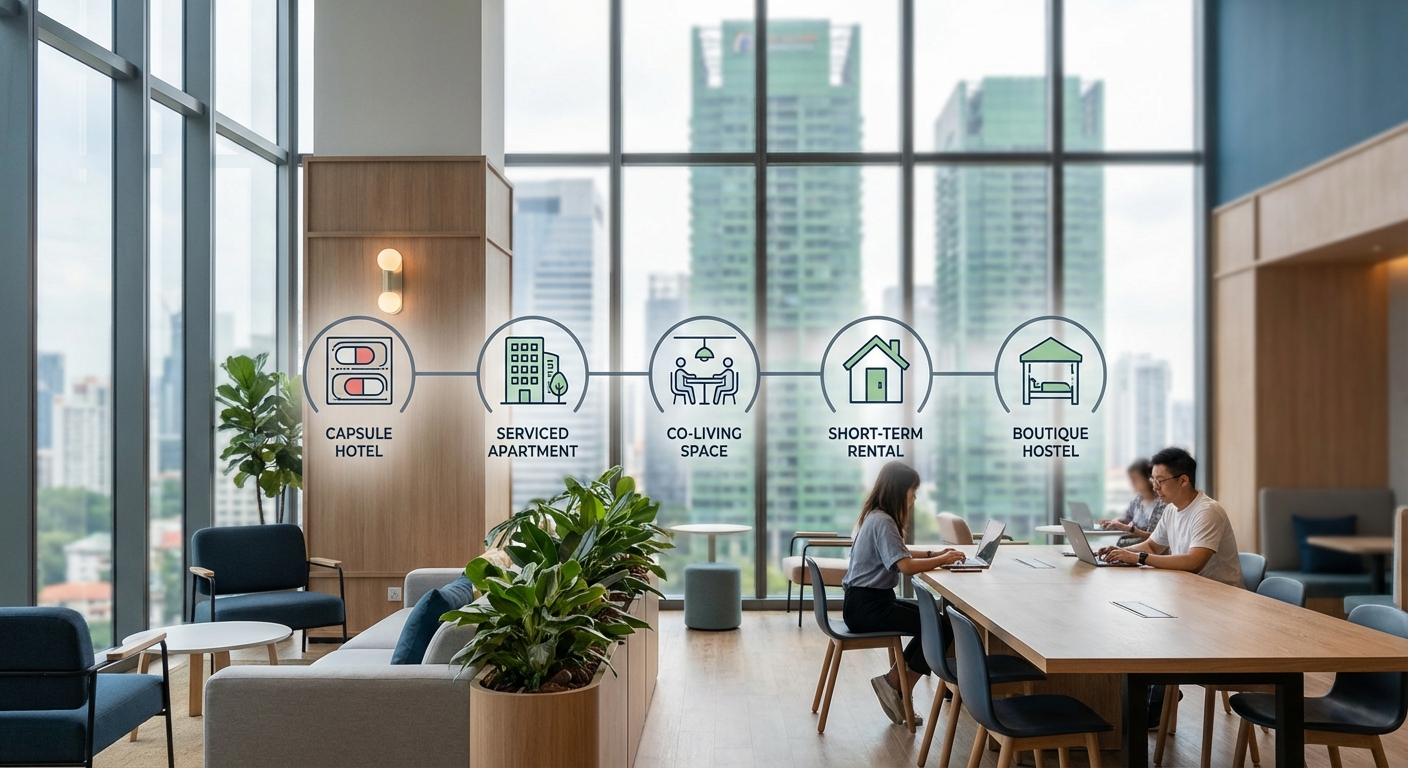
Short term housing Singapore options range from serviced apartments and co-living spaces to hotel residences and flexible HDB rentals. Remote workers should prioritize fiber internet, furnished units, flexible lease terms of 1 to 6 months, and locations near MRT stations. Budget between SGD 1,800 to SGD 4,500 monthly depending on location and amenities. Always verify internet speeds and workspace setups before committing to any rental agreement.
Understanding the short term housing landscape in Singapore
Singapore’s rental market traditionally caters to long-term tenants. Most landlords want 12 to 24-month leases. That works fine for expats relocating with their companies, but it creates friction for anyone needing flexibility.
Short term housing fills that gap. These options come furnished, include utilities, and offer month-to-month or quarterly leases. You can move in with just your laptop and clothes.
The trade-off is cost. Flexibility commands a premium. You’ll pay more per month than a traditional lease, but you avoid furniture costs, utility setup fees, and the risk of breaking a long contract.
Serviced apartments built for business travelers
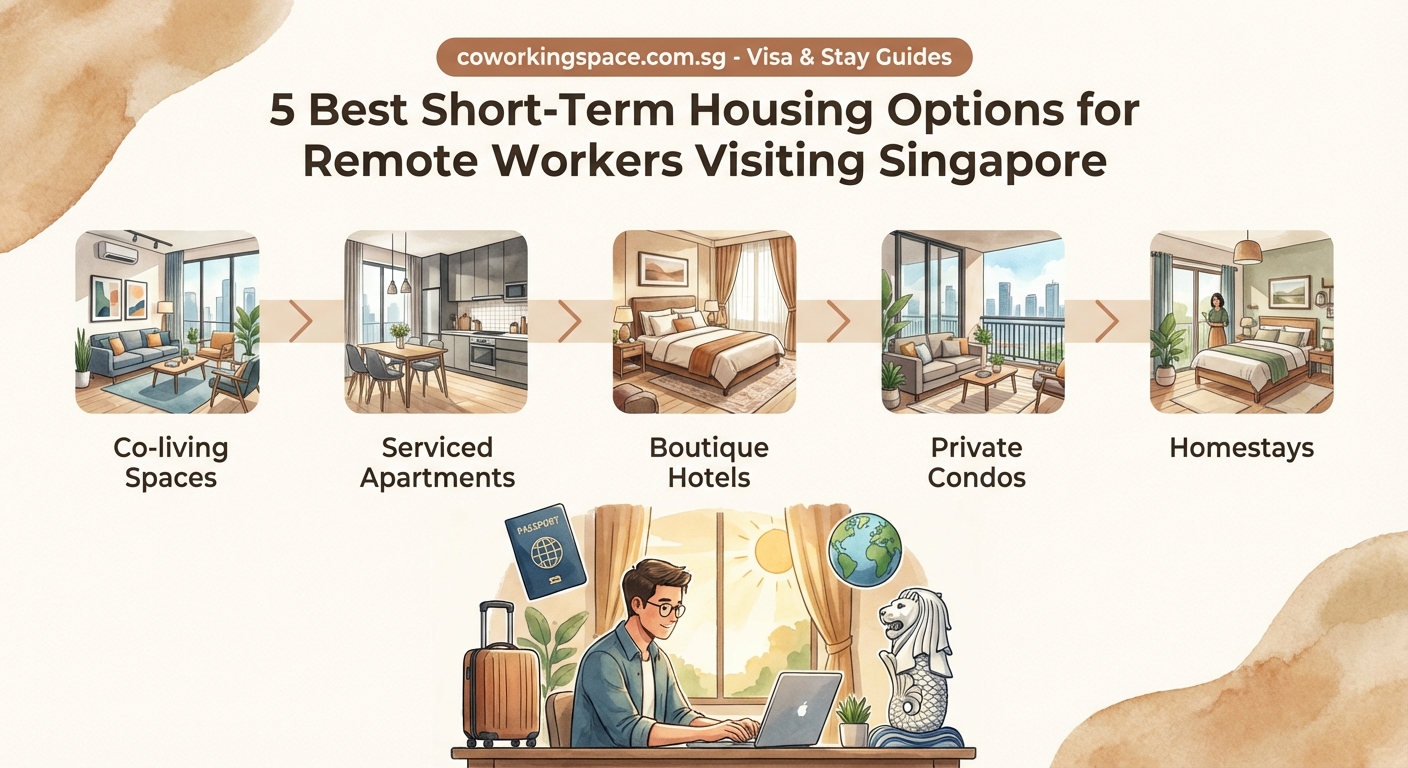
Serviced apartments function like hotel rooms but with full kitchens, living areas, and weekly housekeeping instead of daily service. They’re designed for business travelers who need a home base for weeks or months.
Most serviced apartments include:
- Fully furnished bedrooms and living spaces
- Equipped kitchens with appliances
- High-speed fiber internet (usually 500 Mbps or faster)
- Weekly cleaning and linen changes
- Access to gym and pool facilities
- 24-hour security and reception
Popular operators like Oakwood, Ascott, and Fraser Residence dominate this space. Expect to pay SGD 3,000 to SGD 5,000 monthly for a one-bedroom unit in central locations like Orchard or Marina Bay.
The internet quality tends to be reliable since these properties cater to business guests. Most provide dedicated work desks, though the chairs aren’t always ergonomic. If you’re planning to work from your unit regularly, understanding coworking membership types can help you decide whether to supplement your housing with a proper workspace.
Where to find serviced apartments
Start your search on these platforms:
- Contact operators directly through their websites for better rates
- Check aggregator sites like Booking.com or Agoda for deals
- Look at corporate housing specialists like Nestpick or HousingAnywhere
- Browse property management companies that handle multiple buildings
Book at least two months ahead for better availability and pricing. Last-minute bookings during peak business seasons (September to November) can cost 30% more.
Co-living spaces designed for remote workers
Co-living represents a newer model. These properties combine private bedrooms with shared common areas, kitchens, and often coworking spaces. They target young professionals, freelancers, and digital nomads.
The model works well if you value community over privacy. You get your own bedroom and bathroom, but share living spaces with other residents. Many co-living operators organize social events, networking sessions, and skill-sharing workshops.
Lyf by Ascott, The Working Capitol Residences, and Hmlet lead this category in Singapore. Monthly rates range from SGD 1,800 to SGD 3,500 depending on room size and location.
“Co-living solved my isolation problem when I moved to Singapore for three months. Having built-in community meant I didn’t spend weekends alone, and I actually landed two clients through connections I made at resident events.” – Maria Chen, freelance designer
Internet speeds in co-living spaces typically match serviced apartments. The difference lies in workspace availability. Many co-living buildings include dedicated coworking areas, meeting rooms, and phone booths. This setup eliminates the need for a separate coworking space membership, though some residents prefer the separation between home and work.
Hotel residences for maximum flexibility
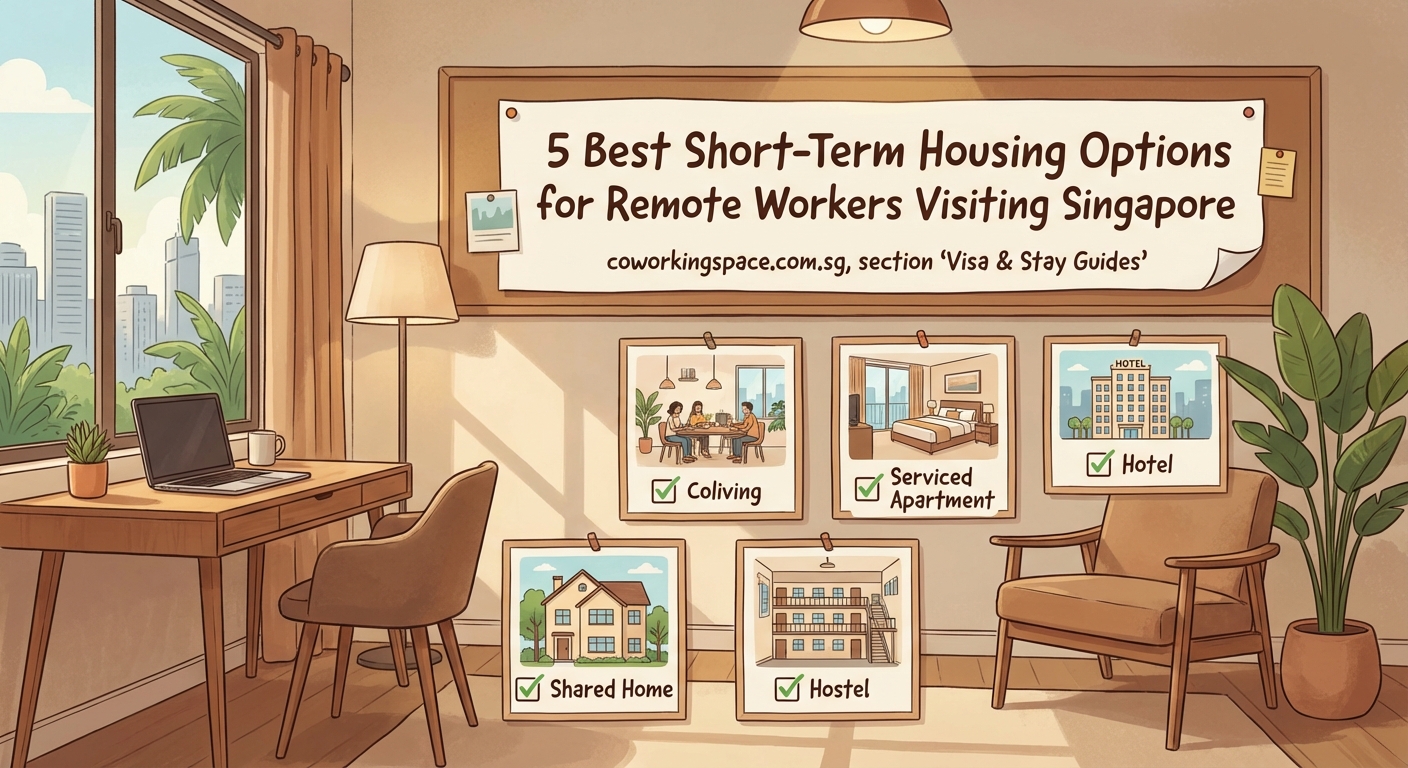
Hotel residences sit between hotels and serviced apartments. They offer hotel services like daily housekeeping, concierge, and room service, but with apartment-style layouts including kitchens and separate living areas.
This option costs the most but provides maximum flexibility. You can book by the night, week, or month. No minimum stay requirements. No security deposits. You can extend or cut short your stay with minimal notice.
Properties like Oakwood Studios, Citadines, and Pan Pacific Serviced Suites operate in this space. Expect SGD 4,000 to SGD 6,000 monthly for a studio or one-bedroom unit.
The main drawback for remote workers is workspace setup. Hotel residences prioritize leisure travelers, so work desks might be small and chairs uncomfortable. Internet is usually reliable but sometimes capped or throttled after certain usage thresholds. Always confirm unlimited data before booking.
Flexible HDB and condo rentals through platforms
Some landlords now offer short-term rentals of HDB flats and private condos through platforms like Airbnb, Nestpick, and local agencies. These options provide more space and local neighborhood experiences at lower costs than serviced apartments.
You can find entire two-bedroom HDB flats for SGD 2,500 to SGD 3,500 monthly in areas like Tiong Bahru, Novena, or Geylang. Private condos in similar areas range from SGD 3,000 to SGD 4,500.
The catch is consistency. Each property is different. Internet quality varies wildly. Some units come with fast fiber, others have basic broadband that struggles with video calls. Furniture quality ranges from brand new to decades old. You need to verify everything before committing.
| Housing Type | Monthly Cost (SGD) | Flexibility | Internet Quality | Workspace Setup |
|---|---|---|---|---|
| Serviced Apartments | 3,000 – 5,000 | Medium (monthly minimum) | Excellent | Basic desk included |
| Co-living Spaces | 1,800 – 3,500 | High (monthly, some weekly) | Excellent | Shared coworking areas |
| Hotel Residences | 4,000 – 6,000 | Very High (nightly possible) | Good (verify caps) | Limited, small desks |
| Private Rentals | 2,500 – 4,500 | Medium (case by case) | Variable (must verify) | Varies by unit |
Questions to ask before booking any private rental
- What is the actual internet speed, and can the landlord provide a speed test screenshot?
- Is the internet connection fiber or cable? (Fiber is far more reliable)
- What furniture is included in the bedroom and living area?
- Is there a proper work desk and chair?
- What are the neighborhood noise levels during work hours?
- How far is the nearest MRT station?
- Are utilities included or billed separately?
- What is the cancellation policy if you need to leave early?
Get answers in writing before transferring any deposits. Singapore’s rental laws favor landlords, so protect yourself with documentation.
Extended stay hotels for ultra-short commitments
If you need housing for just a few weeks while you figure out longer-term plans, extended stay hotels work well. These properties offer discounted weekly or monthly rates compared to nightly bookings.
Ibis Budget, Hotel Boss, and Fragrance Hotel chains provide basic but functional rooms with desks and Wi-Fi. Weekly rates start around SGD 400 to SGD 700 depending on location and season.
These hotels won’t win design awards, but they solve the immediate problem of having a place to sleep and work while you search for better options. The internet usually works fine for basic tasks, though streaming and large file uploads might be slow.
Think of extended stay hotels as a bridge solution. Use them for your first two weeks in Singapore while you visit neighborhoods, tour co-living spaces, and meet with landlords for longer-term rentals.
Location factors that matter for remote workers
Where you live in Singapore dramatically affects your daily experience. The island is small, but commute times and neighborhood character vary significantly.
Remote workers should prioritize:
- Proximity to MRT stations (under 10 minutes walk)
- Neighborhood with cafes, restaurants, and coworking spaces
- Quiet enough for video calls during business hours
- Access to grocery stores and daily necessities
- Reasonable distance to the airport if you travel frequently
Central areas like Novena, Tiong Bahru, and Tanjong Pagar offer the best balance of convenience and cost. You’ll pay more than outer neighborhoods but save hours of weekly commute time if you need to attend meetings or use coworking spaces.
Avoid purely residential HDB estates far from MRT lines. The cost savings disappear when you factor in taxi fares and lost time. Singapore’s public transport is excellent, but only if you live near it.
If you value being near other remote workers and digital nomads, areas with established coworking communities tend to have better supporting infrastructure like cafes with good Wi-Fi and quiet corners for calls.
Internet requirements you cannot compromise on
Your housing internet connection makes or breaks remote work. Video calls, file uploads, cloud software, and screen sharing all demand reliable, fast connections.
Minimum acceptable specs:
- Download speed: 100 Mbps (200+ Mbps preferred)
- Upload speed: 50 Mbps (100+ Mbps preferred)
- Fiber connection (not cable or wireless)
- Unlimited data with no throttling
- Backup option (mobile hotspot with good indoor signal)
Singapore’s fiber infrastructure is world-class. Most modern buildings have access to 1 Gbps connections. The problem isn’t availability but whether your specific unit has it set up properly.
Test the internet during your viewing or first day. Run speed tests at different times. Make a test video call. Upload a large file to your cloud storage. If the connection fails these tests, address it immediately with your landlord or switch properties.
Many remote workers keep a mobile hotspot as backup. Singapore’s 5G coverage is extensive, and mobile data plans are affordable. A 100 GB monthly plan costs around SGD 30 and can save you during internet outages.
Budget planning beyond the monthly rent
Your housing cost is just the starting point. Factor in these additional expenses:
- Utilities (if not included): SGD 100 to SGD 200 monthly
- Internet (if separate): SGD 40 to SGD 60 monthly
- Cleaning services (if not included): SGD 80 to SGD 120 per session
- Laundry (if no in-unit washer): SGD 40 to SGD 60 monthly
- Coworking day passes or membership: SGD 0 to SGD 500 monthly
- Transportation: SGD 100 to SGD 200 monthly
- Groceries and meals: SGD 600 to SGD 1,200 monthly
Your true monthly cost for housing and work setup will be SGD 1,000 to SGD 2,000 above your base rent. Budget accordingly.
Some remote workers find that combining budget-friendly coworking spaces with slightly cheaper housing in outer neighborhoods provides better value than expensive central apartments. You get a proper workspace, community, and still save money overall.
Legal considerations for short-term stays
Singapore has specific rules about short-term rentals that affect your options.
For private properties (condos and landed houses):
- Minimum rental period is three consecutive months
- Rentals under three months violate planning regulations
- Landlords face fines for illegal short-term rentals
- Some condos ban short-term rentals in their bylaws
For HDB flats:
- Minimum rental period is six months for the entire flat
- Room rentals have different rules but still require minimum periods
- Subletting requires HDB approval
- Penalties exist for both landlords and tenants breaking rules
Serviced apartments, hotel residences, and co-living spaces operate under commercial licenses that allow shorter stays. They’re the only truly legal options for stays under three months.
Many landlords still offer short-term rentals despite the rules. The enforcement is inconsistent. But if authorities catch the violation, you could be asked to leave immediately with no recourse. Stick to licensed properties if you need maximum security.
For longer stays, understanding visa requirements and work authorization becomes critical. Tourist visas typically allow 30 to 90 days. Working remotely for foreign clients while on a tourist visa exists in a legal gray area.
Common mistakes to avoid when choosing housing
First-time visitors to Singapore often make these errors:
- Booking sight unseen without video tours or in-person viewings
- Ignoring neighborhood noise levels (Singapore has construction everywhere)
- Assuming all “high-speed internet” claims are accurate
- Underestimating the importance of air conditioning quality
- Overlooking the lack of proper work chairs in furnished units
- Forgetting to check kitchen equipment if you plan to cook
- Not reading the full cancellation policy before paying deposits
The biggest mistake is rushing the decision. If possible, book a hotel or hostel for your first week. Use that time to visit neighborhoods, tour properties, and make an informed choice. The extra hotel cost is worth avoiding a three-month lease in the wrong location.
Making your temporary space work-ready
Even well-furnished short term housing often lacks proper work setups. Budget for these improvements:
- Ergonomic office chair: SGD 200 to SGD 500 (sell it when you leave or donate)
- Monitor stand or laptop riser: SGD 30 to SGD 80
- External keyboard and mouse: SGD 50 to SGD 100
- Desk lamp with adjustable brightness: SGD 40 to SGD 80
- Noise-canceling headphones: SGD 150 to SGD 400
- Portable fan or air purifier: SGD 60 to SGD 150
These items dramatically improve your work comfort and productivity. Most can be purchased at IKEA, Courts, or online through Lazada and Shopee. Resell them on Carousell before you leave to recoup 50% to 70% of the cost.
Some remote workers bring compact versions of essential items in their luggage. A portable laptop stand, compact keyboard, and good headphones don’t take much space but make any temporary workspace functional.
If your housing lacks a proper workspace, consider splitting your time between home and a coworking space. Evaluating coworking spaces efficiently helps you find the right fit without wasting time on tours.
Finding housing that fits your remote work style
Your work schedule and preferences should drive your housing choice.
If you take frequent video calls, prioritize:
- Units with solid walls (not thin partitions)
- Buildings away from construction sites
- Neighborhoods with lower daytime traffic noise
- Spaces with doors you can close for privacy
If you work across time zones, consider:
- Units with separate bedrooms if you share the space
- Neighborhoods with 24-hour food options
- Buildings with quiet hours policies
- Backup internet options for odd-hour calls
If you need deep focus work, look for:
- Buildings with libraries or quiet zones
- Units facing away from main roads
- Neighborhoods with fewer tourists
- Spaces with good natural light and ventilation
Match your housing to your work patterns, not just your budget. A slightly more expensive unit that supports your productivity pays for itself in better work output and less stress.
Settling into Singapore as a temporary resident
Finding housing is just the first step. You’ll also need to:
- Get a local SIM card (available at airport or any mall)
- Set up a bank account if staying longer than a month
- Register your address with your embassy if required
- Learn the MRT system and get a stored-value card
- Find your nearest grocery store, pharmacy, and medical clinic
- Locate coworking spaces, cafes, and backup work locations
- Connect with other remote workers through meetups and online groups
Singapore’s expat community is large and welcoming. Facebook groups, Meetup events, and coworking spaces provide easy entry points for building a social network.
The city-state is incredibly safe, clean, and efficient. Public transport is excellent. English is widely spoken. These factors make Singapore one of the easiest Asian cities for remote workers to adapt to quickly.
That said, the cost of living is high, the climate is hot and humid year-round, and the city can feel sterile compared to more chaotic Southeast Asian destinations. Know what you’re signing up for.
Building a routine that works in temporary housing
Living in short term housing requires different habits than having a permanent home. You need routines that work regardless of your specific unit.
Morning routines matter more when your environment keeps changing. Productive morning routines help you start each day consistently, even if your surroundings are temporary.
Create portable systems:
- Use cloud storage for all work files
- Keep digital copies of important documents
- Maintain consistent wake and sleep times
- Establish a morning routine that works anywhere
- Build a shutdown ritual to separate work from personal time
Your temporary status doesn’t mean your productivity has to suffer. Many remote workers report being more focused during short-term stays because they have fewer distractions and commitments than at home.
When short-term housing makes the most sense
This housing model works best for:
- Remote workers testing Singapore before committing to a longer stay
- Digital nomads spending one to three months in the city
- Business travelers needing a base for project work
- Professionals between permanent relocations
- Freelancers taking extended working vacations
- Startup founders exploring the Singapore market
It works less well for:
- Families with school-age children needing stability
- People planning to stay longer than six months (traditional leases become cheaper)
- Those on tight budgets (long-term leases offer better value)
- Anyone needing to ship significant belongings
Be honest about your timeline and needs. If you know you’ll stay six months or longer, the upfront effort of securing a traditional lease saves money in the long run.
Your next steps for finding housing
Start your search four to eight weeks before your arrival date. This timeline gives you options without forcing rushed decisions.
Follow this sequence:
- Determine your budget including all expenses, not just rent
- List your non-negotiable requirements (internet speed, location, workspace)
- Identify three to five neighborhoods that fit your needs
- Research properties in those areas across multiple platforms
- Contact properties directly for current availability and rates
- Schedule video tours or in-person viewings
- Verify internet speeds and workspace setups
- Review contracts carefully before signing
- Arrange arrival logistics and key collection
- Plan your first week to include backup workspace options
Don’t put all your faith in a single property. Have backup options ready. Singapore’s rental market moves fast, and popular units book weeks in advance.
If you’re combining your housing search with finding a workspace, researching what makes coworking spaces different from traditional offices helps you understand whether you need a separate workspace or if your housing setup will suffice.
Setting up your Singapore base for success
Short term housing in Singapore gives you the flexibility to work from one of Asia’s most connected cities without long-term commitments. The key is matching your housing choice to your work requirements, not just your budget.
Prioritize internet quality, workspace functionality, and location over luxury amenities. A basic but well-located unit with fiber internet beats a fancy apartment with spotty connectivity every time. Test everything before you commit. Read contracts carefully. Budget for the full cost including equipment and backup options.
Singapore makes remote work easy once you have the basics sorted. The infrastructure is world-class, the city is safe and clean, and the location provides easy access to the rest of Southeast Asia. Get your housing right, and everything else falls into place.
Start your search early, verify claims independently, and don’t hesitate to invest in equipment that makes your temporary space work properly. Your productivity and sanity are worth the extra effort.