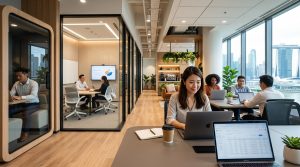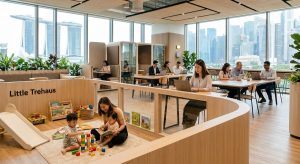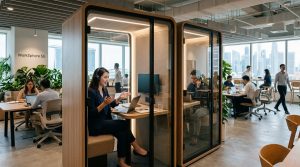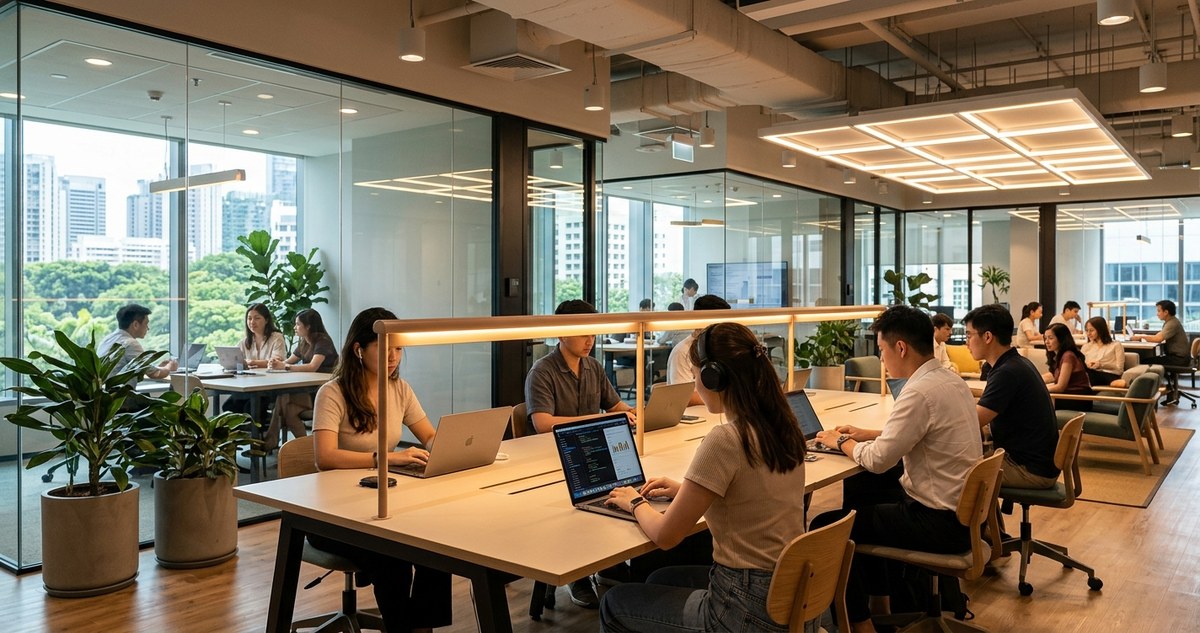
You walk into a coworking space and the lights adjust to your preferred brightness before you even sit down. The color temperature shifts from a cool, focus-enhancing white in the morning to a warmer, relaxed tone as the afternoon wears on. This isn’t a futuristic fantasy. It’s happening right now in the best coworking spaces across Singapore, and it’s becoming one of the most requested amenities for freelancers and startup teams who care about their work environment.
Smart lighting systems are no longer a luxury add-on. They directly improve member productivity, reduce your energy bills by up to 60 percent, and create a premium atmosphere that helps you stand out from competitors. For coworking space managers, investing in smart lighting is one of the highest-ROI upgrades you can make in 2026.
Why Smart Lighting Matters So Much Right Now
The coworking market in Singapore has matured. Members have options. Lots of them. The days when a fast WiFi connection and free coffee were enough to attract members are behind us. Today’s tech-savvy freelancers and startups are looking for spaces that actively support their well-being and productivity.
Lighting is one of the most overlooked factors in workspace design. Bad lighting causes eye strain, headaches, and fatigue. Good lighting can boost focus, improve mood, and even regulate your sleep cycle. Smart lighting takes this further by adapting to the needs of the people in the room, moment by moment.
As a coworking space manager, you’re not just selling desk space. You’re selling an environment where people do their best work. Smart lighting is a direct investment in that promise.
The Core Benefits of Smart Lighting for Coworking Spaces
Let’s break down exactly what you get when you install a smart lighting system. These benefits go beyond just looking cool.
Energy Savings That Actually Matter
Electricity is one of the biggest ongoing costs for any workspace. Traditional lighting stays on even in empty rooms. Smart systems use motion sensors and daylight harvesting to turn lights off or dim them when no one is around.
- Motion sensors detect occupancy and adjust lighting accordingly
- Daylight harvesting dims artificial lights when natural light is sufficient
- Scheduled timers ensure lights are never left on overnight
- Zone control allows you to light only occupied areas
- Real-time energy monitoring helps you track usage patterns
Many operators report energy savings of 40 to 60 percent on their lighting bills after switching to smart systems. That’s money you can reinvest into other amenities or use to keep your membership prices competitive.
Productivity and Focus for Your Members
Different tasks require different lighting. A software developer debugging code needs bright, cool light. A graphic designer working on color-sensitive projects needs consistent, neutral light. A writer brainstorming ideas might prefer warmer, softer illumination.
Smart lighting allows your members to customize their immediate environment. Some systems let them control the lights at their desk through a mobile app. Others use predefined scenes that change throughout the day.
| Lighting Scenario | Color Temperature | Brightness Level | Best For |
|---|---|---|---|
| Deep focus | 5000K to 6500K | 80 to 100 percent | Coding, writing, data analysis |
| Collaborative | 3500K to 4500K | 60 to 80 percent | Brainstorming, team meetings |
| Relaxed | 2700K to 3000K | 40 to 60 percent | Breaks, networking, reading |
| Presentation | 4000K | 70 percent | Client meetings, pitches |
“We installed tunable white lighting in our open plan area last year. Within three months, our member satisfaction scores related to ‘workspace comfort’ went up by 22 percent. People genuinely feel better when they can adjust their light.” – Operations Manager, a Singapore-based coworking operator
Health and Circadian Rhythm Support
Human beings are sensitive to light in ways we’re only beginning to understand. Exposure to bright, blue-enriched light in the morning helps set your internal clock. Exposure to warm, dim light in the evening signals your body to prepare for sleep.
Smart lighting systems can simulate natural daylight patterns throughout the day. This helps members maintain healthy sleep cycles, especially those who spend long hours indoors. It also reduces eye strain and headaches caused by flickering or poorly matched lighting.
For coworking spaces that market themselves as wellness-focused, this is a major selling point.
How to Choose the Right Smart Lighting System
Not all smart lighting systems are created equal. Here’s a practical process to evaluate your options.
-
Audit your current space. Walk through every zone during different times of day. Note where natural light enters, where shadows fall, and which areas feel dim or harsh. This gives you a baseline for what needs to change.
-
Define your zones. Not every area needs the same approach. Open workspaces, private offices, meeting rooms, break areas, and hallways all have different lighting requirements. Map out which zones need tunable white light, which need color-changing options, and which just need efficient on/off control.
-
Choose your control method. Decide whether members will control lights through a mobile app, a physical panel, or automated sensors. App-based control offers the most flexibility but requires members to download software. Sensor-based automation is seamless but gives less individual control.
-
Check compatibility with existing systems. Your smart lighting needs to work with your building management system, security system, and any smart sensors you already have. Look for systems that support open standards like DALI or Zigbee.
-
Plan for installation and maintenance. Some systems require new wiring. Others use wireless controls that are easier to retrofit. Factor in ongoing maintenance costs and whether the manufacturer offers local support in Singapore.
Common Mistakes to Avoid When Installing Smart Lighting
Even a great system can fail if you make the wrong decisions during setup. Here are the most common pitfalls and how to avoid them.
| Mistake | Why It’s a Problem | What to Do Instead |
|---|---|---|
| Over-automation | Members feel like they have no control | Offer manual override options for every zone |
| Ignoring color rendering | Low CRI lights make everything look dull | Choose fixtures with a CRI of 90 or higher |
| Forgetting about glare | Bright lights in the wrong place cause discomfort | Use indirect lighting and diffusers |
| One-size-fits-all approach | Different tasks need different light levels | Create distinct lighting scenes for each zone |
| Skipping the pilot test | You don’t know how members will react | Install a test zone and gather feedback first |
The Business Case for Smart Lighting
Let’s talk numbers. A typical smart lighting retrofit for a 5,000 square foot coworking space costs between $15,000 and $30,000, depending on the system and complexity. The energy savings alone can pay back that investment in 18 to 24 months.
But the real return comes from member retention and acquisition. When a potential member tours your space and sees that you’ve invested in smart lighting, it signals that you care about the details. It tells them this is a premium environment where they can do their best work.
Tech-savvy freelancers and startup teams actively seek out spaces with smart amenities. They compare coworking spaces the way they compare smartphones. They want the best tools available. Smart lighting is one of those tools.
For a deeper look at how technology is reshaping the coworking experience, check out our guide on how AI and smart technology are transforming coworking spaces in 2026.
Integrating Smart Lighting with Other Amenities
Smart lighting works best when it’s part of a larger ecosystem. Consider how it connects with your meeting room booking system. When a member books a meeting room, the lights can automatically adjust to a presentation-friendly scene. When the booking ends, the lights can return to a default state.
Pair smart lighting with your HVAC system for even greater energy savings. If a zone is unoccupied, both the lights and the air conditioning can power down together. This integrated approach maximizes efficiency and creates a seamless experience for members.
Think about your meeting room booking systems and how they can trigger lighting changes automatically. This level of integration is what sets top-tier coworking spaces apart from the rest.
What Members Really Think
We spoke to several regular coworking members in Singapore. Their feedback was consistent. They notice bad lighting immediately. They appreciate good lighting even if they can’t always articulate why.
One freelance developer told us, “I used to get headaches by 3 PM at my old space. I thought it was the screen. Then I moved to a space with smart lighting. The headaches stopped. Now I won’t work anywhere that doesn’t have proper lighting.”
A startup founder added, “When I bring clients to my coworking space, the lighting makes a huge impression. It feels professional and modern. It shows that I chose a workspace that cares about quality.”
These are the kinds of stories that translate into member referrals and positive online reviews.
A Practical Installation Checklist
If you decide to move forward with smart lighting, here’s a checklist to keep your project on track.
- Survey members about their current lighting experience
- Get quotes from at least three different vendors
- Verify that the vendor has experience with commercial spaces, not just homes
- Request references from other coworking spaces or offices
- Install a pilot zone and collect feedback for two weeks
- Train your staff on how to use and troubleshoot the system
- Communicate the upgrade to your members before installation
- Schedule installation during off-peak hours to minimize disruption
- Test every zone thoroughly before declaring the project complete
- Monitor energy usage after installation to confirm savings
Making Smart Lighting Part of Your Brand
Your coworking space has a personality. Smart lighting can reinforce that personality. A creative-focused space might use dynamic color scenes in common areas. A productivity-focused space might emphasize tunable white light that supports deep work. A wellness-oriented space might prioritize circadian lighting that changes throughout the day.
Your lighting choices communicate your values. They tell members what kind of experience they can expect. When you align your lighting strategy with your brand, every interaction with your space feels intentional.
For more ideas on how to create a standout environment, read about 10 must-have amenities every modern coworking space should offer.
The Future of Smart Lighting in Coworking
The technology is evolving fast. We’re already seeing systems that learn from member behavior. A smart system can notice that a particular member always sets their desk lights to a specific brightness and color temperature. Over time, it can predict their preference and adjust automatically when they arrive.
Integration with wearable devices is on the horizon. Your smartwatch could tell the lighting system that you had a poor night’s sleep, and the lights could adjust to help you stay alert without overstimulating you.
Voice control is becoming standard. Members can say, “Set my desk to focus mode,” and the lights respond immediately. This level of convenience is what the next generation of coworking members will expect.
Why This Matters for Your Coworking Space
The coworking industry in Singapore is competitive. Members have more choices than ever. The spaces that thrive will be the ones that offer a genuinely superior experience. Smart lighting is a relatively small investment that delivers outsized returns in member satisfaction, energy savings, and brand perception.
You don’t need to convert your entire space overnight. Start with one zone. Test it. Gather feedback. Learn what works for your specific community. Then expand from there.
If you’re still evaluating whether coworking is the right model for your business, take a look at are coworking spaces worth the cost for a balanced perspective.
Take the First Step Toward Smarter Lighting
Your members deserve a workspace that adapts to them, not the other way around. Smart lighting is one of the most effective ways to deliver that experience. It saves you money, improves your members’ health and productivity, and positions your space as a forward-thinking option in a crowded market.
Start by walking through your space with fresh eyes. Notice where the light falls. Notice how it makes you feel. Then imagine how much better it could be with a system that responds to the people using it.
The technology is ready. Your members are waiting. The only question is whether you’ll make the move this year or watch your competitors do it first.