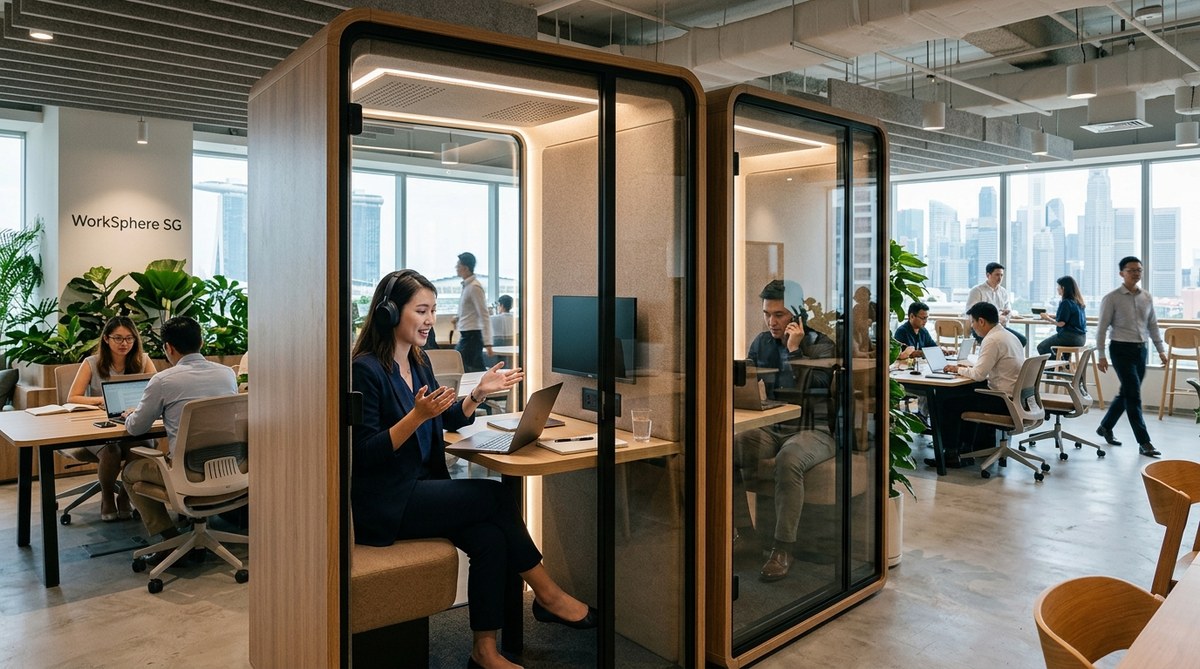
If you manage a coworking space, you already know the struggle. The open floor plan that looked great in photos is now a cacophony of keyboard clacks, background chatter, and someone’s loud Zoom call. Members love the buzz, but they also need quiet time. They need to take a private client call, record a podcast, or just think without interruption. That is why soundproof phone booths for coworking spaces have moved from a “nice to have” to a must-have amenity. In 2026, if your space doesn’t offer them, you are losing potential members to spaces that do.
Soundproof phone booths solve two critical problems in coworking spaces: they give members a private zone for calls and they cut down on distracting noise for everyone else. When you invest in well-designed, well-placed booths, you get happier members, fewer complaints, and a stronger reputation. This guide walks you through what to look for, where to put them, and how to avoid common mistakes.
Why Coworking Spaces Need Soundproof Phone Booths Now More Than Ever
Coworking was built on the idea of shared energy. But that energy comes with a price: noise. Members are doing more video calls than ever. Hybrid work means people hop on and off calls all day. A loud conversation at the next desk can wreck someone’s concentration. And if a member takes a sensitive call in an open area, they risk exposing confidential information to anyone within earshot.
Soundproof phone booths solve both sides. They give the caller a private, acoustically sealed space to speak freely. And they keep that sound from leaking out, so the rest of the space stays calm. This is not just about comfort; it is about productivity. Studies show that open-plan workers lose up to 86 minutes a day to distractions. A well-placed booth can claw back a lot of that time.
What Makes a Phone Booth “Soundproof”?
Not every booth that looks soundproof actually is. True soundproofing depends on the construction materials and seals. Look for these features:
- Thick walls: A minimum of 40mm of acoustic paneling with a dense core. Some booths use layers of mass-loaded vinyl and foam.
- Magnetic seals: Every edge where door meets frame must have a tight, continuous magnetic gasket. Air gaps are the enemy.
- Double-glazed windows: If the booth has glass, it should be laminated and double-paned to block sound transmission.
- Ventilation with baffles: The fan system must move air without creating a noise path. Baffled ducts prevent sound from escaping.
- Solid core door: A hollow door lets sound through. Look for a door that matches the wall thickness.
Expert advice from a workspace acoustics consultant: “The most common mistake is thinking a fabric covered box is soundproof. If you can see daylight around the door, or if you can hear a normal conversation through the walls, it is just a visual partition. Real soundproofing needs mass, seals, and isolation.”
Key Features to Look for When Buying Booths
You do not need to become an acoustics engineer. Just keep this checklist handy when evaluating suppliers:
| Feature | What to Look For | What to Avoid |
|---|---|---|
| Sound rating | STC 30 or higher (35+ is ideal) | STC under 25 |
| Ventilation | Active fan with baffles, quiet mode | Passive vents only |
| Interior lighting | Dimmable LED, warm color temp | Harsh fluorescent |
| Power & data | Built-in outlets, USB ports, cable management | Exposed cords |
| Size | At least 3’ x 3’ interior for one person | Too small to sit comfortably |
| Booking integration | API for app based reservation | No booking system |
| Material durability | Fire rated, scratch resistant surfaces | Cheap MDF that warps |
Where Should You Place Soundproof Phone Booths?
Placement is half the battle. A booth hidden in a corner nobody walks past will not get used. A booth placed right next to the coffee machine will annoy everyone waiting in line. Here is a three step process to decide:
- Map your floor plan. Identify high traffic zones (entry, kitchen, printer) and low traffic corners. You want booths near the action but not in the main walkways. Members need to see them to remember they exist.
- Count your members. A good rule of thumb is one booth for every 20 to 25 hot desk members. If you have a lot of salespeople or remote teams on calls, add more.
- Test positions before committing. Many suppliers offer short-term rentals. Place a booth in a candidate spot, watch how people use it in the first week, then adjust. Move it if the flow feels wrong.
Common Mistakes When Adding Phone Booths (and How to Avoid Them)
| Mistake | Why It Happens | Better Approach |
|---|---|---|
| Choosing a booth with poor ventilation | Budget concern, or not testing it fully | Run a 30 minute test with someone inside. If it gets stuffy, skip it. |
| Installing booths too close to each other | Trying to cluster for efficiency | Leave at least 6 feet between booths. Sound can transmit through shared walls. |
| No time limits or booking rules | Members treat them like personal offices | Set a 30 minute max for calls, and enforce via an app based timer. |
| Ignoring ADA requirements | Oversight during planning | Ensure at least one booth is wheelchair accessible (wider door, interior space). |
| Forgetting about power for laptops | Assumes users only take phone calls | Include a power outlet and a small shelf for a laptop. Many people use them for focused work. |
The Top Benefits You Will See After Installation
When you get the right soundproof phone booths for coworking spaces and place them well, the payoff shows up immediately:
- Happier members. They stop complaining about noise and start praising your thoughtfulness.
- Higher retention. Members are less likely to leave for a quieter space down the street.
- More referrals. Members bring guests who notice the booths and ask about membership.
- Better meeting room utilization. Short calls no longer block full conference rooms, freeing them for team meetings.
- Professional image. Clients visiting your space see that you respect privacy and focus.
How to Make the Most of Your Booths with Smart Policies
Hardware alone is not enough. You need clear rules so everyone gets fair access. Post them inside and on your booking app:
- Reserve in 30 minute blocks. Allow walk up use if nobody has booked.
- No food or drinks (spills ruin acoustic panels).
- Keep voice at a moderate level. Yes, the booth blocks sound, but loud yelling can still be heard.
- Clean the interior daily with a microfiber cloth and mild cleaner.
The Hidden ROI of Soundproof Booths
Some space managers worry about the upfront cost. But consider the math. Losing one member per month because of noise costs you hundreds of dollars in recurring revenue. A booth that costs $3,000 to $5,000 pays for itself in three to four months if it helps you keep just one member. And it can attract new members specifically looking for quiet options.
Booths also let you convert narrow hallways or unused corners into revenue generating zones. Instead of dead space, you create a premium amenity. That is a smart use of every square foot.
Tying It All Together: Soundproof Booths as a Cornerstone of Your Coworking Experience
Coworking spaces thrive on community, but community needs boundaries. Soundproof phone booths provide those boundaries without killing the vibe. They let the open area stay collaborative while giving everyone an escape hatch when they need to focus.
Start small if you must. Buy one booth, place it strategically, and watch how your members react. Then add more based on demand. In 2026, this is not a luxury; it is a baseline expectation. Members expect a space that balances energy with the ability to do real work. Give them that balance, and they will stay.
For more ideas on building a top tier coworking environment, check out our guide on 10 Must-Have Amenities Every Modern Coworking Space Should Offer. And if you are still on the fence about the cost, read Are Coworking Spaces Worth the Cost? Breaking Down the True Value to see how amenities like booths can boost your bottom line.